Separation Anxiety: Sitter Checklist Before Booking
Most pet sitters walk into their first booking believing the client's paperwork will tell them everything they need to know. It won't.
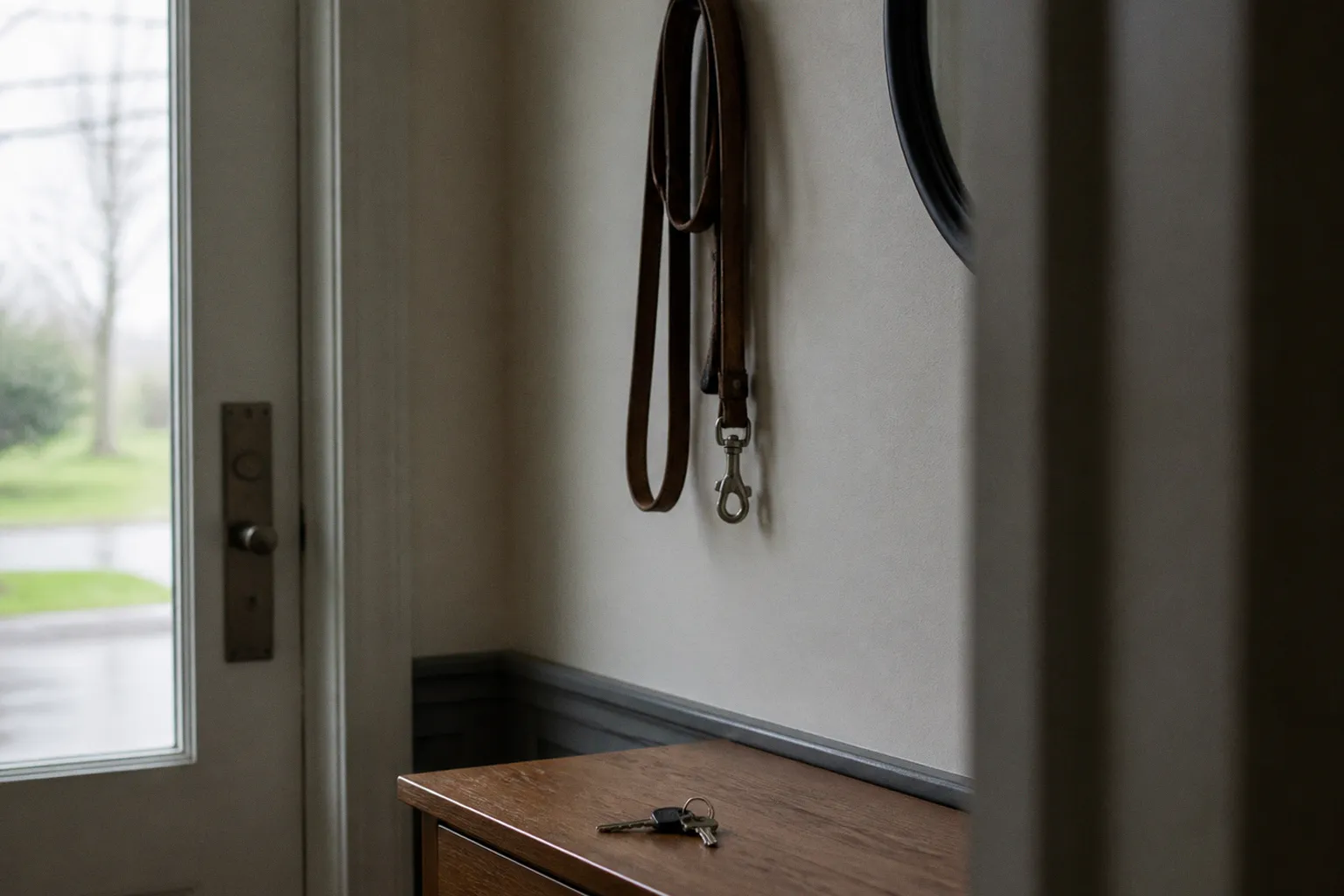
The "anxious dog" box gets checked, the owner mentions the dog "doesn't love when I leave," and then the sitter is left alone in a kitchen at 9 p.m. with a dog already shredding the doorframe. That's not anxiety. That's behavioral fallout that nobody screened for, and it's the single fastest way to burn out a sitter before the second visit.
Here is the blunt truth: dogs with separation anxiety are not difficult because they are dramatic. They are difficult because the disorder is real, it escalates fast, and most sitters arrive unprepared. The professional move is a structured pre-booking protocol that screens the dog's threshold, identifies triggers, and aligns expectations before a single house key changes hands. Below is the working checklist I walk every new client through — built from shelter work, behavior consults, and the wreckage of bookings that went sideways because someone skipped a step.
A dog who can hold it together for six hours at home with the owner present will often detonate the moment the front door closes behind a sitter. Same dog, different exit. That distinction is the whole screening process.
Pre-Booking Assessment and Behavioral Screening
The first question I ask an owner is not "does your dog have separation anxiety." That question gets a useless answer — every owner thinks their dog has a little of it, the way everyone thinks their car idles a little rough. The question that actually matters: what does the dog do in the first ten minutes after the last human leaves the house? The answer is the difference between a manageable booking and a trip to the emergency vet.
A real screening pulls from a structured tool, not vibes. The Malena DeMartini Separation Anxiety Screening Tool is the industry standard for a reason — it forces owners to be specific about behaviors they've been papering over. Whining is not the same as pacing. Pacing is not the same as door scratching. Door scratching at frame level is not the same as door scratching that has already torn through the trim. The granularity matters because each behavior points to a different escalation tier and a different sitter response.
The meet-and-greet is non-negotiable, and it has to happen with the owner present and then again with the owner absent. Two visits. The first confirms the dog is comfortable with the sitter's presence, scent, and handling style. The second — the trial run — is where you watch the actual transition. If a dog cannot get through a 30-minute owner-absent trial without escalating beyond mild vocalization, you are not booking a sitting. You are booking a behavioral case, and the protocol changes completely.
During this phase, I also push hard on the owner's own narrative. Most owners underreport. They will say the dog is "a little stressed" while describing a dog who has cracked teeth on the crate door, ripped through a crate bolt, or bloodied a paw trying to dig through a wall. Underreporting is the sitter's biggest liability. Owners feel guilty. Guilt distorts the picture. Push for the worst case, not the smoothed-over version.
A thorough behavioral screening also means asking about the dog's history with other caregivers. Has the dog ever been left with a pet sitter before? What happened? Has the dog stayed at a boarding facility? Was the facility willing to share incident reports, or did they just say "he was fine"? The more data points the sitter collects before the booking, the fewer surprises during it. And surprises in anxiety cases tend to come with property damage and vet bills attached.
Establishing Thresholds and Alone-Time Limits
Every dog has a number. The number is the maximum duration they can be left alone before the panic response kicks in, and it is the single most important data point a sitter collects. A "standard adult dog" might tolerate six to eight hours in a stable, exercised household. A dog with clinical isolation anxiety might tolerate zero. That gap is the entire booking.
Threshold testing is not a one-shot conversation. It is a structured desensitization sequence where the sitter, working with the owner, practices leaving for progressively longer intervals and tracks the dog's response. Five departures and returns per day is the working minimum for retraining the dog's expectation of the exit cue. Low-key, short, uneventful. No drawn-out goodbyes. No "be a good boy" speeches. The owner walks out and walks back in, and the dog learns that exits do not equal abandonment.
The threshold is not what the dog should be able to tolerate. It is what the dog actually tolerates without escalation. Build the booking schedule around reality, not optimism.
The sitter's job is to map the schedule to that threshold, not the other way around. If the dog can hold for four hours and the client wants a full workday, the booking is the wrong booking. Either the owner adjusts expectations, the sitter increases visit frequency, or the dog gets boarded in a facility with continuous supervision. There is no fourth option where you wing it and hope the dog "gets used to it." They will not. They will get worse.
| Threshold Tier | Alone-Time Tolerance | Booking Implication |
|---|---|---|
| Mild | 4–6 hours, post-exercise | Standard drop-in visits viable; monitor for escalation |
| Moderate | 1–3 hours before vocalization | Multiple daily visits required; no overnight gaps |
| Severe | Under 30 minutes, or zero | Continuous supervision or in-facility boarding only |
| Crisis | Self-injury, destruction of exits | Veterinary referral before any booking is accepted |
This tier table is not a marketing brochure. It is a triage tool. If the owner describes behavior in the crisis row during the screening, the booking conversation has to include a vet — not because the sitter is diagnosing, but because self-injurious panic is a welfare issue that medication and behavior modification need to address before any sitter can ethically step in.
One critical nuance owners miss: the threshold is not static. A dog who tolerates four hours on a calm Tuesday may collapse to 40 minutes on a Saturday when the neighbors have a party. Seasonal noise, schedule disruptions, the owner's travel pattern, even barometric pressure changes — all of it can shift the number. The sitter's job is to build in margin. If the tested threshold is two hours, the booking schedule should target 90 minutes max. Running a booking at the dog's exact ceiling is a gamble. Running it with buffer is a profession.
Environmental Management and Sensory Soothing
Once the threshold is mapped, the next move is environmental control. Most owners think "enrichment" means buying a $60 puzzle toy. Enrichment, in the context of an anxious dog, means engineering the space to reduce sensory triggers before the dog ever registers stress.
Outdoor triggers are the silent killers. A dog who can see the owner's car pull out of the driveway every morning will associate that visual cue with the abandonment event, even when the sitter is the one walking out the door later. Close the blinds. Close the curtains. Remove the dog's line of sight to the exit, the driveway, the street. This sounds trivial. It is not. Visual access to the departure event is one of the highest-correlation triggers for panic escalation.
Audio management runs in parallel. Soothing music, white noise, or a podcast on low volume masks the door sounds, the car sounds, and the silence that follows. DAP (dog-appeasing pheromone) diffusers or sprays can be layered in — the evidence on their efficacy is mixed and varies by individual dog, but the welfare risk of trying is essentially zero, and some owners and practitioners report that dogs seem calmer during the early portion of an absence when a diffuser is running. The sitter's prep includes plugging the diffuser in an hour before the booking begins, not the moment the owner walks out the door, since pheromone dispersal takes time to saturate a room.
Scent is the lever most sitters overlook. A worn t-shirt, a pillowcase, a blanket that has been slept on for a week straight — these items carry the owner's scent profile, which is the dog's primary reassurance cue during the absence. The owner should prepare these items before the booking starts. Asking for them on day one is too late. The smell is freshest when it has been in contact with the owner in the days leading up to the exit, not after. I ask owners to bag the items in a sealed plastic bag between uses to preserve the scent concentration — unwashed, unperfumed, and replaced every few days as the scent fades.
Crating is the most misapplied tool in this whole conversation. A crate can be a den for a dog who has been conditioned to it, or it can be a panic chamber for a dog who treats confinement as part of the abandonment event. Sitters must never assume a crate is safe. Watch the dog's behavior in the crate during the trial run. If the dog is panting, drooling, breaking claws on the door, or escaping through the back of the crate, the crate is not a management tool. It is a hazard.
Some dogs respond to spatial restriction that is softer than a full crate. An exercise pen, a baby-gated room, or a single dog-proofed room with the door closed can offer a contained space without triggering the claustrophobic panic that a wire or plastic kennel provokes. The key distinction is whether the dog perceives the space as a trap or as a manageable boundary. The sitter does not decide this. The dog does — and the trial run is where you find out.
Low-Key Departure and Greeting Protocols
Here is where most owners — and most sitters — blow it. The goodbye ritual. The 45-second "I'll miss you so much, be a good boy, mama loves you" speech at the front door. The lingering eye contact. The drawn-out hug. That kind of drawn-out ritual can amplify the distress of a dog already on the edge, and it teaches the dog that exits equal emotional escalation — which is the exact opposite of what the dog needs to learn.
Low-key departures are the answer. Short, calm, no eye contact, no verbal fanfare. The sitter walks out. The sitter walks back in. The dog is ignored for the first two minutes of the return. No excited greeting. No "you're okay." Just quiet re-entry into the household. This is uncomfortable for owners. It feels cold. It is the most humane thing you can do for the dog, and the professional move is to coach the owner through it before the booking starts, not after the third shredded doorframe.
Practicing five departures and returns per day during the desensitization phase retrains the dog's expectation of the exit cue. The dog learns that the door opening and closing does not predict abandonment. It predicts return. The sitter's role during this phase is to be the boring, predictable, uneventful presence in the household while the threshold work happens. If a sitter is generating excitement, drama, or unpredictable energy during the early booking days, the threshold work will fail.
The return greeting deserves its own emphasis. Owners instinctively want to drop to their knees and smother the dog the second they walk back in. For a secure dog, that is harmless affection. For an anxious dog, it is a reward for the panic state the dog was just in. The dog does not understand "you're okay now." The dog understands "when I spiral, the human comes back and gives me maximum attention." That is the opposite of what desensitization work is trying to achieve. Neutral returns — walk in, set your bag down, ignore the dog for a couple of minutes, then offer calm, low-energy interaction — are not cruelty. They are the protocol.
Medical Coordination and Emergency Preparedness
Severe separation anxiety cases usually involve medication, and the sitter's role here is logistical, not clinical. Pet sitters do not diagnose, do not prescribe, and do not adjust dosages. They administer. The owner's vet has done the prescribing. The sitter's job is to know the medication, the dose, the timing, the route of administration, and the contingency if the dog refuses the dose.
Refusal happens. A dog who is already escalated will sometimes spit out a pill, vomit up a capsule, or refuse food entirely if the medication is wrapped in a treat. The sitter needs a written protocol for refusal before the booking begins: skip the dose and notify the owner, contact the vet, or escalate to emergency triage. These decisions are not made in the moment by a panicked sitter on the floor with a 70-pound dog. They are made on paper, in advance, signed off by the owner.
A pet sitter who accepts a severe anxiety booking without a written medication protocol is not brave. They are uninsured.
Emergency prep runs wider than medication. The sitter needs the closest 24-hour emergency vet, the owner's primary vet's after-hours line, the dog's microchip number, the dog's vaccination status, and the owner's emergency contact — all in writing, all stored where the sitter can reach them without hunting. Crate injuries, escape attempts, paw lacerations, and heat distress are not rare events in anxious-dog bookings. They are expected events. The protocol for them is the difference between a professional sitter and a volunteer.
The sitter should also ask for a signed veterinary release form. Many emergency clinics will not treat an animal without the owner's authorization or a legal release. If the owner is unreachable — on a flight, in a meeting, off-grid — and the dog is bleeding from a crate escape, the sitter's options narrow fast. A pre-signed release with the sitter's name, the dog's identifying information, and a spending cap keeps the sitter out of a legal bind and the dog out of a treatment delay.
The final piece is the owner's expectations. If the owner is hoping that a pet sitter will "fix" the dog's separation anxiety, the booking has already failed before it started. A sitter manages the environment, maintains the routine, administers the medication, and prevents fallout. The actual treatment — the desensitization, the counterconditioning, the threshold work — is a months-long behavior modification plan run by a qualified trainer or veterinary behaviorist. The sitter is support staff for that plan, not a substitute for it.
The Sitter's Pre-Booking Checklist (Working Version)
- Two-visit meet-and-greet: One with the owner present, one with the owner absent for at least 30 minutes.
- Behavioral screening: Use the Malena DeMartini tool or equivalent; force specificity on every behavior reported.
- Threshold test: Map the dog's actual alone-time tolerance through graduated departures and returns.
- Trigger inventory: Document every known trigger — suitcases, thunder, fireworks, doorbells, vehicles — and the dog's specific response to each.
- Scent prep: Confirm the owner has placed worn clothing in the dog's space before the booking begins.
- Environmental setup: Blinds closed, white noise or music on, DAP diffuser plugged in an hour before the first departure.
- Medication protocol: Written, signed, with refusal contingency and vet contact attached.
- Emergency contacts: 24-hour vet, primary vet, owner emergency line, microchip number, vaccination records.
- Departure and greeting training: Coach owner on low-key exits; commit to neutral returns during the booking.
- Crating decision: Confirmed safe or removed from the rotation, based on observed behavior during trial run.
If any of those ten items cannot be answered yes before the first visit, the booking is not ready. Either the owner does the prep work, or the sitter walks. There is no version of this job where you skip the screening and absorb the fallout. The dog pays the price. The owner pays the price. The sitter pays the price. Every time.
The professional move is boring, structured, and on paper. The amateur move is vibes, optimism, and a hopeful "I'm sure it'll be fine." Vibes do not stop a dog from chewing through a door. Protocols do.