Overnight Pet Sitting: Checklist of Essentials for Owners
The most common failure in overnight pet sitting is not a bad sitter. It is an owner who leaves a cheerful paragraph about “feeding twice a day” and assumes the rest will somehow sort itself out.
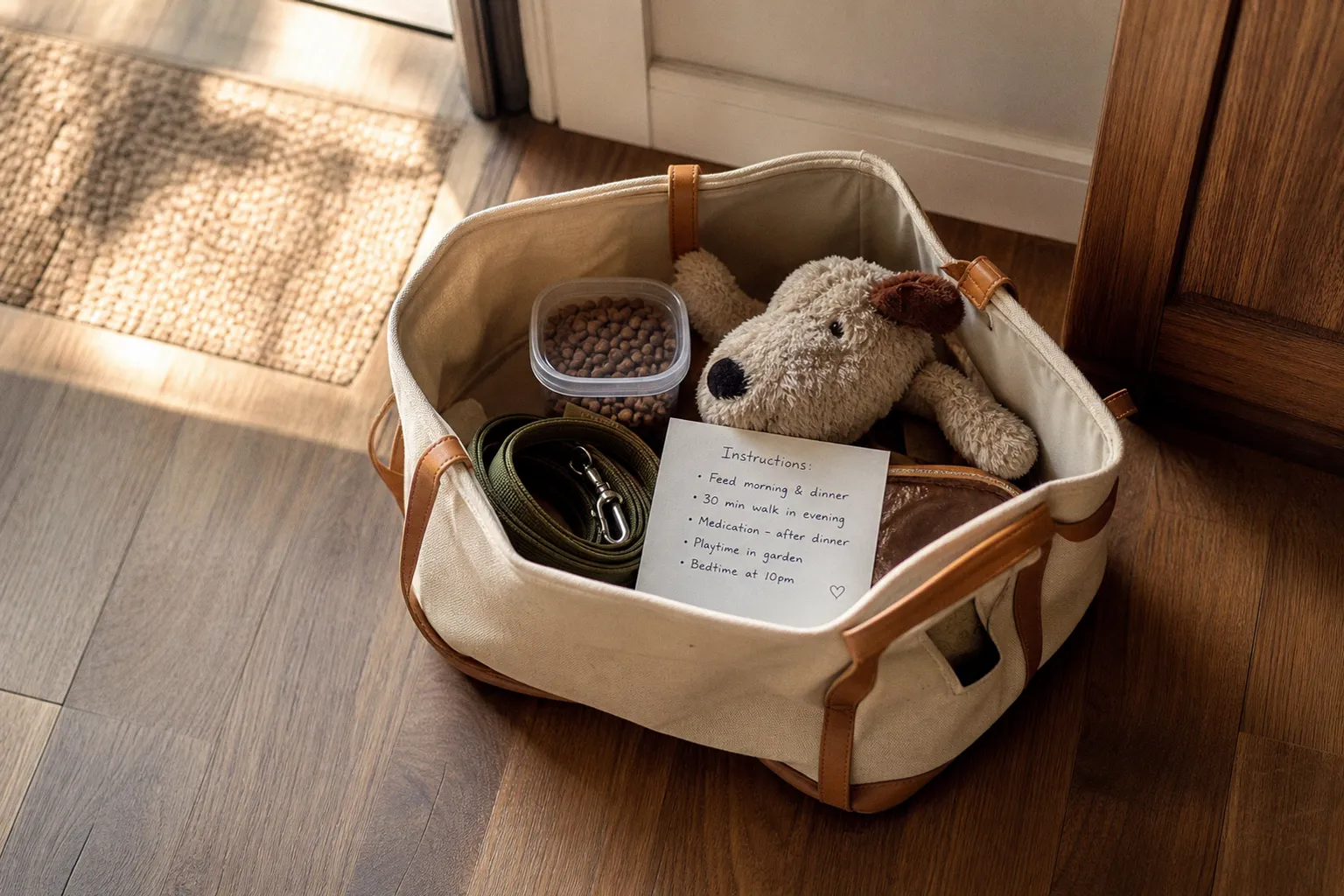
It will not. Not when a dog refuses food on day two, a cat disappears behind the washing machine, the prescription bottle has no dosage instructions, and the owner is six hours into a flight with their phone in airplane mode. In shelter work, this is where we see the behavioral fallout: a frightened animal, a delayed medical decision, and a sitter trying to reconstruct a household they entered 48 hours earlier.
An in home pet sitting checklist for owners is not fussy paperwork. It is the handoff of responsibility. The goal is simple: your sitter should be able to keep your animal safe, fed, medicated, and emotionally steady without needing to guess what you meant.
Medical Readiness: Give the Sitter Authority Before There Is a Crisis
Owners routinely say, “Call me if anything happens.” That sounds responsible until nobody can reach you and the veterinary clinic needs authorization, a payment method, and a clear treatment threshold.
A professional sitter can spot trouble, transport an animal, and communicate with the clinic. They cannot magically become the legal and financial decision-maker just because they are standing in the exam room with your vomiting dog.
Complete a veterinary care authorization form, sometimes called a vet release form, before you leave. It should name the sitter as an authorized agent to seek treatment and make decisions within boundaries you have set. That boundary needs to be specific: a maximum treatment amount or a clear “no limit” instruction.
Do not confuse this document with a guaranteed open door at the veterinary clinic. It is not. Your vet may still need a payment arrangement on file before providing non-emergency treatment. Call the clinic ahead of time and tell them who will be caring for your animals.
Your medical packet should include:
- Your primary veterinarian’s name, address, phone number, and after-hours procedure.
- The closest emergency veterinary hospital and its phone number.
- A signed veterinary authorization naming the sitter.
- The maximum amount the sitter can approve for treatment, or a written no-limit instruction.
- Payment details arranged directly with your veterinary practice. A card on file is far better than asking a sitter to front a large bill.
- Current vaccination records, especially if your sitter may need to transport your pet or coordinate with another care provider.
- A current, clear photograph of every animal in the home. Not the cute puppy photo from four years ago. A photo that would actually help someone identify the animal if they slipped a leash or escaped during a fire alarm.
- Microchip or tattoo registration details, including the current registration number and the company or registry involved.
- Medication names, generic names where applicable, dosage, timing, administration method, and what to do if a dose is missed.
For medications, “the little white pill with dinner” is not an instruction. It is a future mistake waiting for an audience.
If your dog is difficult to medicate, say so. If your cat will only accept a pill inside one particular treat, say so. If medication triggers snapping, hiding, or resource guarding around food, say that too. Your sitter is not judging you. They are deciding whether they need a pill gun, a towel, a second person, or a call to the vet before things go sideways.
A sitter does not need your optimism. They need your animal’s actual medical and behavioral history.
Build a Pet Dossier That Works at 2 A.M.
A sitter should not have to scroll through ten months of text messages to learn that your dog cannot pass a skateboard, your cat has asthma, or your second dog steals the first dog’s meals.
The useful version of pet sitting instructions for owners is short enough to use under pressure and detailed enough to prevent improvisation. This is especially true in multi-pet homes, where routines that feel automatic to you can look like chaos to a newcomer.
Create one page per animal. Put the pages in a folder or share a clean digital copy before the booking begins. Then keep a printed copy in the home. Phones die. Wi-Fi fails. Apps log people out at exactly the moment nobody needs another problem.
Here is the information that belongs in each animal’s profile:
1. Identity and physical basics. Include name, age, breed or mix, sex, weight range if relevant for medication, microchip details, and a recent photo. If two black cats look identical except for a small white patch, write that down.
2. Feeding routine. List exact food, amount, timing, treats, supplements, and feeding location. For animals that guard bowls or steal food, explain the separation routine. “Feed separately” is too vague. Specify doors, crates, baby gates, pickup times, and whether bowls should be removed after a set period.
3. Medication and health monitoring. Note every medication, dose, schedule, and administration method. Add normal baseline information: usual stool, appetite, water intake, mobility, breathing, and energy. A sitter cannot recognize abnormal if nobody has explained normal.
4. Behavioral triggers and handling limits. This is where hard truths matter. Does the dog bark and lunge at other dogs? Freeze around strangers? Guard the couch? Panic at thunder? Bite when nails are handled? Does the cat hide for the first 24 hours and then emerge only at night? Put it on the page.
5. Walk and exercise rules. Give the sitter the route, duration, equipment, and non-negotiables. State whether the dog can greet other dogs, go to dog parks, be off leash, or ride in a car. In many cases, the answer should be no. A few days without a dog park will not ruin a dog. One bad encounter can ruin a lot more.
6. Comfort and decompression routine. Some animals need activity. Others need boredom, quiet, and predictable space. If your newly adopted dog is still decompressing, do not turn an overnight sitter into an enrichment coordinator with a packed social calendar. Keep the environment boring in the best possible sense: familiar meals, familiar routes, familiar sleep space.
A useful dossier separates facts from preferences. “Likes the blue blanket” is a preference. “Will shred bedding if crated with fabric” is a safety fact. Both can be included, but they do not belong in the same mental category.
| Topic | Weak instruction | Usable sitter instruction |
|---|---|---|
| Feeding | “Bella eats in the morning.” | “Bella gets 1 cup of kibble at 7 a.m. in the kitchen, door closed. Remove bowl after 15 minutes. No chicken treats.” |
| Walking | “He likes long walks.” | “Use the front-clip harness and six-foot leash. Walk 25–30 minutes before 9 a.m. Avoid dogs, scooters, and the park entrance.” |
| Medication | “Give her thyroid medicine.” | “Give 0.1 mg tablet at 7 a.m. in pill pocket before breakfast. If refused twice, do not force; text owner and call vet if dose is missed.” |
| Anxiety | “He gets nervous.” | “Thunder causes pacing and escape attempts. Close blinds, use white noise, keep exterior doors locked, and do not leave him in the yard alone.” |
| Cats | “Scoop litter daily.” | “Scoop both boxes by 8 p.m.; Luna urinates outside the box if the covered box is closed. Keep laundry-room door open.” |
Stock for Delays, Not for the Best-Case Scenario
Travel plans fail with boring regularity. Flights are delayed. Roads close. A suitcase arrives in the wrong state. The owner who stocked exactly four meals for a four-day trip has built a brittle plan.
Leave extra food, medication, litter, treats, poop bags, and any essential supplies in one clearly marked location. Do not scatter supplies between a pantry shelf, a basement bin, the back of a closet, and “somewhere in the garage.” That forces a sitter to hunt through your home while trying to maintain a routine.
For a pet sitter preparation checklist, think in layers:
- Daily care supplies: enough food, treats, medication, litter, poop bags, cleaning supplies, and enrichment items for the booked stay plus a reasonable delay buffer.
- Equipment backups: a spare leash, collar, harness, litter scoop, food bowl, and carrier where possible.
- Cleaning and containment: enzyme cleaner for accidents, paper towels, disposable gloves, trash bags, a flashlight, and old towels.
- Emergency basics: bottled water, batteries or charged lights, pet first-aid supplies you know how to use, and a secure carrier for each cat. A general emergency preparedness benchmark is one gallon of bottled water per day per pet.
- Identification: properly fitted collars, legible ID tags, and secure attachment hardware. An ID tag hanging from a flimsy split ring is not a safety system.
For dogs, tell the sitter exactly which gear goes on for every outing. “His leash is by the door” does not explain whether he is safe on a flat collar, whether he can back out of a harness, or whether he needs a double-clip setup.
If your dog has ever slipped equipment, write it in bold. If they react to other dogs, write it in bold. If they have a bite history, write it in bold and discuss it verbally before the booking. A sitter walking blind into that information is not professionalism; it is wishful thinking from the owner.
Cats deserve the same seriousness. A cat sitter dealing with an anxious indoor cat needs to know which doors must remain shut, where the carrier is, whether the cat will bolt toward an open exterior door, and what hiding places are unsafe. Feline environmental enrichment is useful, but stability comes first. Do not ask the sitter to rearrange furniture, introduce new toys, or force interaction with a shy cat because you want “social progress” while you are gone.
Prepare the House Like Someone Is Actually Living There
There is a peculiar industry fantasy that house sitting means a professional should be grateful to sleep on any available corner of the couch while providing full animal care, home monitoring, and emergency response. No. An overnight sitter needs a functional place to sleep, clean linens, privacy, and the basics to eat and wash.
This is not hospitality theater. A rested sitter notices small changes in your pet. An exhausted sitter who had to search for towels, Wi‑Fi, and a working outlet is working uphill before breakfast.
Before the stay, set up:
- Clean sheets, blankets, pillows, and towels.
- A clear sleeping space that is actually available to the sitter.
- Room for luggage and toiletries.
- Refrigerator and pantry space for the sitter’s food.
- Wi‑Fi name and password in writing.
- Alarm codes, camera disclosure, and instructions for arming or disarming the system.
- The location of electrical panels, water shutoff information if relevant, fire extinguishers, and flashlights.
- Trash and recycling schedules, bin locations, and collection-day instructions.
- Clear directions for major appliances the sitter may need: heating, air conditioning, stove, washer, dryer, and any temperamental door lock.
- Parking instructions, building access details, gate codes, and a tested spare key or lockbox plan.
Test the access method before departure. Do not send a sitter a garage code you have not used in months, then discover the keypad battery is dead at 10:30 p.m.
Be direct about cameras. Exterior cameras and entry cameras are common. Hidden indoor surveillance around a sitter’s sleeping or changing area is not acceptable. More broadly, if you are tempted to watch every minute of care through a camera feed, pause and ask whether you have hired a professional or built yourself a remote anxiety machine.
Good overnight care runs on routine, not on a sitter having to decode your house one cabinet at a time.
Create an Emergency Chain That Does Not End With “Try Me Again”
An owner is not always reachable. That is why a secondary local emergency contact belongs in every overnight pet sitting checklist.
Choose someone who can genuinely make decisions, access the home if needed, and take over care if the sitter becomes ill, has a family emergency, or cannot safely remain in the home. A contact who lives three states away and says, “Just do whatever is best,” is not a backup plan.
Give the sitter a simple decision chain:
1. Owner first: Provide your travel itinerary, expected response windows, and preferred contact method. If you are on an international flight, say so.
2. Secondary local contact: Name, phone number, relationship to you, and the authority they have. Can they approve veterinary care? Can they collect the animal? Can they stay overnight if needed?
3. Veterinary contacts: Primary veterinarian first when open, emergency clinic when necessary. Include the authorization and payment arrangement already discussed.
4. Property emergency contact: Building manager, landlord, neighbor, security desk, or trusted person who can assist with a burst pipe, power outage, lock failure, or alarm problem.
5. Transport plan: State whether the sitter may use their own vehicle, whether a carrier is required, and where the carrier, harness, and leash are kept.
This is also the place to spell out your communication expectations. Many owners want an update after each visit or a daily morning-and-evening report. Fine. Agree on it in advance. But do not turn ordinary sitter updates into a cross-examination about whether your dog looked “a little sad” in one photo.
Pets can be unsettled when their people leave. A little withdrawal, altered sleep, or a skipped meal can be part of the adjustment. Repeated vomiting, trouble breathing, collapse, straining to urinate, severe diarrhea, active bleeding, a possible toxin exposure, or a missing animal are not “wait and see” moments. Your sitter should already know what authority they have to act.
The Final Walk-Through Is Where the Gaps Show Up
The best written instructions still benefit from a handoff meeting. Walk the sitter through the feeding routine, outdoor access, litter boxes, sleeping arrangement, supplies, emergency exits, and alarm system. Watch them handle the leash or harness. Show them where the carrier is. Let them ask questions while you are still present.
For dogs with fear, reactivity, resource guarding, or recent rescue history, do not schedule the first overnight stay around your longest trip of the year. Start with a meet-and-greet, then a short daytime visit, then perhaps one practice evening. That is not indulgence. It is risk reduction.
The hard truth from shelter work is that animals do not read our travel calendars. A dog can regress when routine changes. A cat can stop eating because a stranger moved too quickly around a hiding place. A well-meaning sitter can make things worse if they are handed vague instructions and a pet with an undisclosed history.
So do the unglamorous homework. Write the dossier. Sign the veterinary authorization. Put the supplies in one place. Test the key. Tell the truth about the behavior you usually manage around. Then let the sitter do the job you hired them to do: keep your animals safe, stable, and as close to their normal life as possible while you are gone.