Live-in pet sitting or daily visits for high-anxiety dogs?
The difficult part of choosing care for an anxious dog is that the usual booking question—“How many visits per day?”—often arrives before anyone has established what the dog actually experiences when the household leaves.
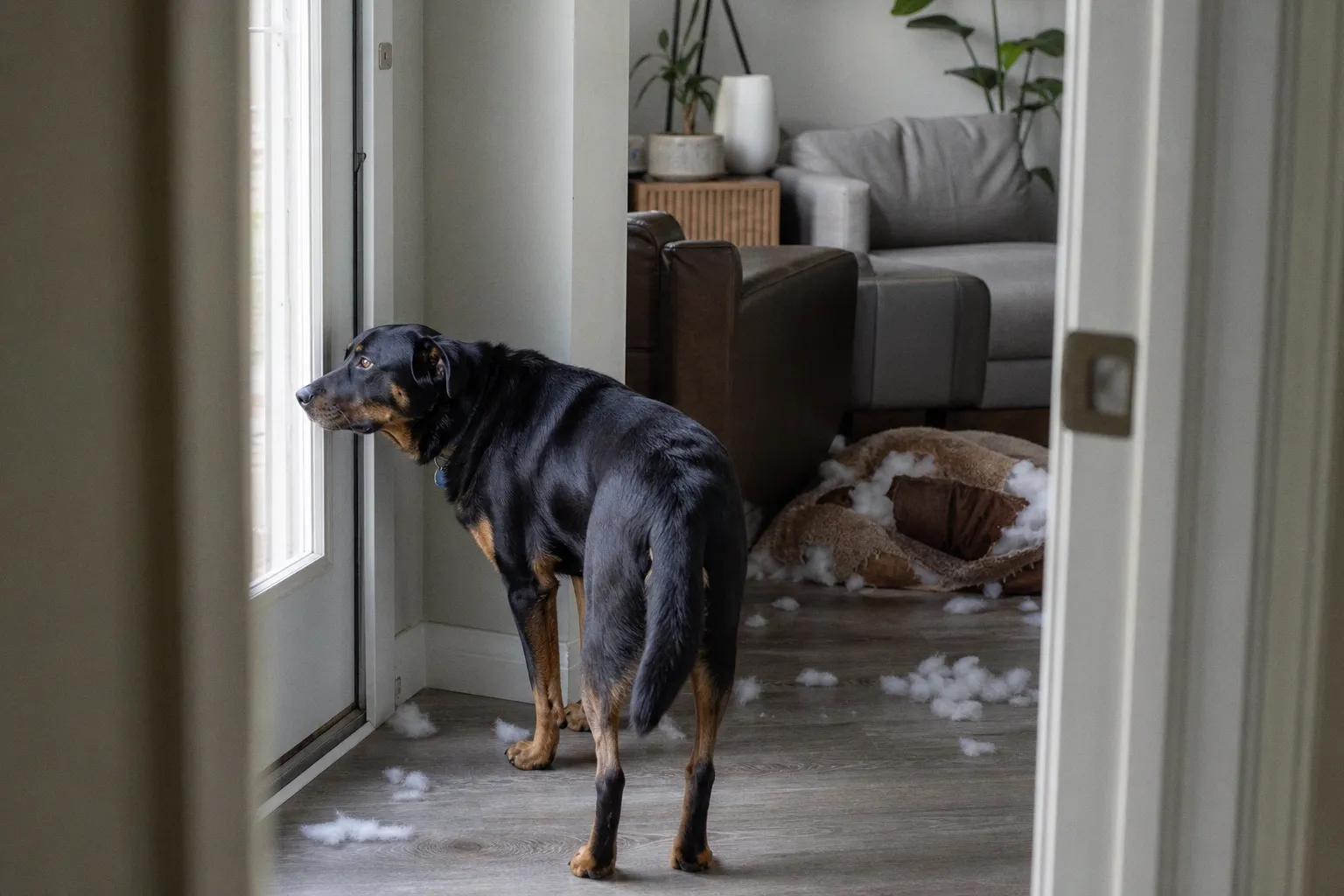
A dog who settles with a familiar neighbor after ten minutes needs a very different plan from a dog who begins pacing, screaming, drooling, scratching at doors, or vomiting within moments of departure.
Compare car rental deals in United Kingdom
See available offersPartner link — DiscoverCars comparisonThat distinction is where the comparison between live-in pet sitting vs drop-in visits becomes useful. Neither format is automatically kinder, safer, or more professional. The appropriate choice depends on the dog’s baseline comfort during absences, whether another person genuinely changes that response, and how clearly the provider defines their on-site hours rather than relying on reassuring but imprecise labels.
For high-anxiety dogs, the care plan is not merely a calendar of feedings and walks. It is a transition phase that needs to preserve routine, reduce avoidable panic, and leave no uncertainty about who is responsible if the dog’s behavior changes.
Start With the First Hour, Not the Booking Package
Owners frequently judge separation anxiety from the evidence left behind: a damaged blind, a chewed crate, an accident on the floor, a complaint from a neighbor. Those details matter, but they do not tell the whole story. Some dogs react to a delivery truck, hallway noise, or a sudden thunderstorm rather than to being alone. Others are uneasy for five minutes and then fall asleep. Still others move from agitation to full panic almost immediately.
The most useful starting point is a departure video, especially covering the first 30 to 60 minutes after the owner leaves. A phone, pet camera, or basic indoor camera can reveal a practical pattern:
- Does the dog settle, shift between resting spots, and engage with a chew or food toy?
- Does the dog watch the door briefly but remain able to lie down?
- Does distress build steadily—pacing, vocalizing, salivating, clawing at exits, or repeated attempts to escape?
- Is the dog reacting to being alone, or to an outside stimulus visible or audible from the window?
- Does the dog calm when a sitter is present, or does the distress continue because the owner specifically is absent?
That final point changes the care decision considerably. A resident sitter can reduce the amount of time a dog is physically alone. Yet a dog whose distress is tightly attached to one particular person may still struggle even with an experienced professional in the home. In that case, live-in care may be valuable management during the owner’s trip, but it should not be presented as a cure.
The right service level is built around the dog’s observed threshold, not the number of visits that sounds generous on a booking page.
Before travel, I encourage families to arrange at least one realistic practice absence with the prospective sitter. The sitter arrives, follows the normal handoff routine, and the owner leaves long enough to observe what happens. This is far more informative than a meet-and-greet where everyone remains in the same room and the dog is understandably sociable.
If the video shows panic almost immediately, that is the point to involve the dog’s veterinarian or a qualified veterinary behavior professional. Repeatedly forcing a panicked dog through long absences can deepen the response. The immediate objective becomes preventing unsafe alone time while a veterinary-directed behavior plan is being established.
What Live-in Care Actually Solves—and What It Does Not
Live-in pet sitting is often the strongest option when the main risk is the dog being left alone for extended periods. It preserves familiarity anchors: the same bed, smells, neighborhood route, feeding setup, and sleeping space. For dogs who are settled by another calm person’s presence, this can make a travel period substantially more manageable than kennel boarding or a series of brief visits.
It also gives the sitter a fuller view of the dog’s day. Appetite changes, loose stool, restless nighttime behavior, reluctance to drink, or unusual reactions to household sounds are easier to notice when care is continuous enough to establish a meaningful baseline.
But “live-in” is not a standardized promise. It may mean a sitter sleeps in the home but works elsewhere for much of the day. It may mean a professional is present from evening through morning with scheduled daytime departures. It may mean a rotating team, not one person. Those arrangements can all be legitimate overnight pet care options, provided they are described accurately and fit the dog’s tolerance.
For a dog with severe separation-related distress, the central questions are operational:
1. Where will the sitter sleep? A dog accustomed to sleeping beside the owner may be unsettled by a sitter who stays downstairs or leaves after the evening walk.
2. How long will the sitter be away during the day? “Live-in” without an absence schedule does not tell an owner whether the dog will face a six-hour gap.
3. Who covers illness, delays, or an emergency? A backup sitter should not be an afterthought, particularly where the dog cannot safely tolerate being alone.
4. How are handoffs handled? If more than one caregiver is involved, the dog needs a planned introduction and consistent notes on medications, triggers, meals, walks, and settling routines.
5. What does the dog do when the sitter steps outside? Even short periods—taking bins out, collecting a delivery, showering behind a closed door—can be relevant for a dog with an extremely low threshold.
The cost of live-in pet sitting reflects these constraints. The rate is not simply payment for sleeping in a spare room; it accounts for the sitter reserving their overnight availability, managing a longer care window, declining other work, and potentially providing highly individualized supervision. A lower quote may still be perfectly appropriate, but it usually signals a different coverage model. The comparison should always be between defined services, not just between price tags.
Daily Visits Work Best When the Dog Can Recover Between Them
Scheduled pet visits are not inherently insufficient for an anxious dog. They are often the cleaner and less disruptive choice for dogs who have mild unease but can settle independently, dogs who become overstimulated by overnight guests, or dogs whose routine is best maintained through predictable meals, walks, enrichment, and rest periods.
A skilled sitter can make drop-in care more supportive than a rushed “potty break” model. The visit may include a decompression walk, a sniff-heavy route instead of high-arousal exercise, medication administration as directed, a food puzzle if the dog can eat while alone, and a short written update that documents mood, elimination, appetite, and behavior.
The problem emerges when visits are being asked to bridge a gap the dog cannot tolerate.
| Care question | Live-in pet sitting | Drop-in visits |
|---|---|---|
| Main strength | Reduces time spent physically alone and preserves home routine | Provides structured care while allowing the dog to rest in its own space |
| Best fit | Dogs who settle with a substitute caregiver or need close observation | Dogs who can remain relaxed between planned visits |
| Key risk | Owners assume “live-in” means uninterrupted 24-hour presence | Visit frequency is mistaken for adequate coverage during panic |
| Information to confirm | On-site hours, sleep location, daytime absences, backup coverage | Exact arrival windows, duration, maximum gap between visits, emergency availability |
| Useful trial | Owner leaves while sitter remains and behavior is observed | Owner recreates the expected gap between visits and reviews video |
There is no veterinary or industry rule stating that every high-anxiety dog requires three, four, or any other fixed number of visits daily. More visits can mean more comfort, toileting opportunities, and more observation—but they do not automatically solve distress occurring in the hours between them.
For example, a dog who rests for four hours after a morning walk and lunch may do well with a carefully timed midday and evening visit. Another dog may become distressed within five minutes of the sitter leaving, making even four substantial visits a poor fit. The first dog needs reliable scheduling. The second needs a different management arrangement.
This is why a professional sitter should be comfortable saying, “I can provide excellent visits, but this dog’s video suggests visits alone may not meet the current need.” That is not a sales tactic for a more expensive package. It is a candid assessment of the transition phase.
Overnight Is Not the Same as 24-Hour Care
One of the most common misunderstandings in pet sitting for separation anxiety is the language around presence. “Overnight,” “live-in,” and “24 hour pet care at home” are often used interchangeably in casual conversation, but they describe very different commitments.
An overnight stay generally confirms that the sitter will be in the home during defined evening and morning hours. It does not necessarily mean the sitter remains there throughout the workday. A live-in arrangement may involve much broader coverage, but still include planned absences for errands, other client appointments, personal responsibilities, or rest. True around-the-clock supervision is a specialized arrangement and should never be assumed from a package name.
A service agreement for a high-needs dog should specify:
- arrival and departure windows for each day;
- the expected overnight location and sleeping arrangement;
- planned periods when the sitter will leave the home;
- whether the dog may be left alone during those periods and for approximately how long;
- whether the sitter may bring the dog to another location, and under what conditions;
- the backup caregiver’s name, introduction plan, and authority to enter the home;
- the communication rhythm, including what qualifies as an urgent update rather than a routine report.
This degree of clarity is not excessive. It gives the owner a real picture of coverage and gives the sitter protection from an impossible expectation. A caregiver cannot responsibly promise “constant care” if they have not defined what happens when they need groceries, face traffic, or must respond to another client emergency.
“Overnight” describes where the sitter sleeps. It does not, by itself, describe how long the dog will be supervised.
For multi-pet households, this clarity becomes even more important. A dog may benefit from human company while a cat becomes stressed by a stranger’s prolonged presence, or one pet may require separation during feeding. The care format should account for the whole household rather than treating the most anxious animal as the only variable.
Build a Care Plan Around Familiarity, Not Performance
An owner preparing an anxious dog for a sitter can unintentionally make the handoff harder by turning it into a major event. The goal is not to persuade the dog that travel week is exciting. The goal is to make the sitter’s presence and the owner’s departure feel as ordinary and predictable as possible.
A workable preparation sequence usually has three phases.
Two to three weeks before travel: establish the sitter as familiar
Arrange several short, low-pressure visits. The sitter can join a walk, refresh water, offer a veterinarian-approved treat, or sit quietly while the owner handles a normal household task. The dog does not need to perform friendliness. A dog who chooses distance but remains calm is giving useful information.
Provide the sitter with a concise behavior profile: preferred handling, walking triggers, safe routes, sounds that cause concern, feeding patterns, sleep habits, and the dog’s early stress signals. “Gets anxious” is too broad to guide care. “Begins scanning the window, stops taking treats, and paces between the front door and kitchen” is actionable.
One week before travel: test the expected arrangement
Run a realistic trial. If the plan is daily visits, recreate a typical gap between visits and review the video. If the plan is live-in care, let the sitter remain in the home while the owner leaves, including for an evening routine if possible.
This is also when the sitter should test practical details: alarm access, leash placement, food portions, medication instructions, gates, crate policy, cleaning supplies, and the best place for the dog to settle. Small operational uncertainty can become significant at 10 p.m. on the first night of care.
Travel days: keep the handoff low-key and documented
The owner should leave with a simple, practiced routine rather than extended emotional goodbyes. The sitter should follow the household’s established sequence for meals, walks, rest, and bedtime as closely as practical.
For a dog already working on separation distress, behavior exercises should not be improvised during a trip. Graduated departures are typically built below the dog’s distress threshold—sometimes starting with mere seconds—and increased only while the dog remains relaxed. A sitter can support the veterinarian’s or behavior professional’s plan, but should not independently decide to test longer absences because the dog “seemed better yesterday.”
Veterinary Authorization Is Part of the Care Format
The more vulnerable the dog, the more the paperwork matters. This is not bureaucratic padding; it is what allows a sitter to act quickly without guessing.
Before departure, the owner should provide current contact details, an emergency contact who can make decisions if the owner cannot be reached, the regular veterinary clinic’s information, and a written authorization for emergency treatment. It is also sensible to notify the veterinary practice that a named sitter has authority to seek care during the travel dates, subject to the limits the owner has set.
The sitter needs to know what constitutes a call, an urgent clinic visit, or immediate emergency care. For an anxiety-prone dog, that plan may include:
- repeated vomiting or diarrhea, especially when paired with lethargy or refusal of water;
- injury from attempts to escape, including damaged nails, bleeding, or broken teeth;
- inability to settle combined with escalating vocalization or frantic behavior;
- refusal of essential prescribed medication;
- a sudden change in elimination, appetite, gait, breathing, or awareness that does not fit the dog’s usual stress pattern.
No sitter should diagnose separation anxiety from one symptom, and no owner should punish destruction or indoor accidents discovered after an absence. Those behaviors may reflect distress, but they can also have medical, environmental, or training-related causes. The useful response is observation, documentation, and veterinary guidance—not blame.
Medication deserves the same discipline. If a veterinarian has prescribed medication as part of a behavioral plan, the sitter can administer it exactly as instructed and record each dose. Changes in dosage, timing, or discontinuation belong with the prescribing veterinarian, not with an anxious owner midway through a trip or a well-meaning caregiver trying to solve a difficult night.
The Better Choice Is the One That Leaves Fewer Unmanaged Hours
For dogs with high anxiety, live-in care is often the better temporary management tool when another trusted person meaningfully reduces distress and the sitter can clearly cover the dog’s vulnerable periods. Daily visits can be excellent care when the dog has demonstrated that they can rest comfortably between them.
The deciding evidence is not a generic service tier, a social-media recommendation, or the comforting phrase “24-hour care.” It is the dog’s recorded response to departure, the sitter’s demonstrated ability to become a familiarity anchor, and a written plan that accounts for every meaningful gap in coverage.
When those pieces are in place, the owner leaves with a realistic expectation rather than a hopeful assumption, and the sitter begins care with a route through the logistics instead of a stack of unknowns. That is the baseline comfort a high-anxiety dog needs most: not perfection, but a stable, well-defined arrangement with fewer surprises.