Sedatives for dogs on flights: is it ever safe?
Every week, in clinics and shelters across the country, the same conversation plays out: an owner is flying next month, the dog is anxious, and they want a pill to “take the edge off.” A lot of them leave the appointment disappointed.
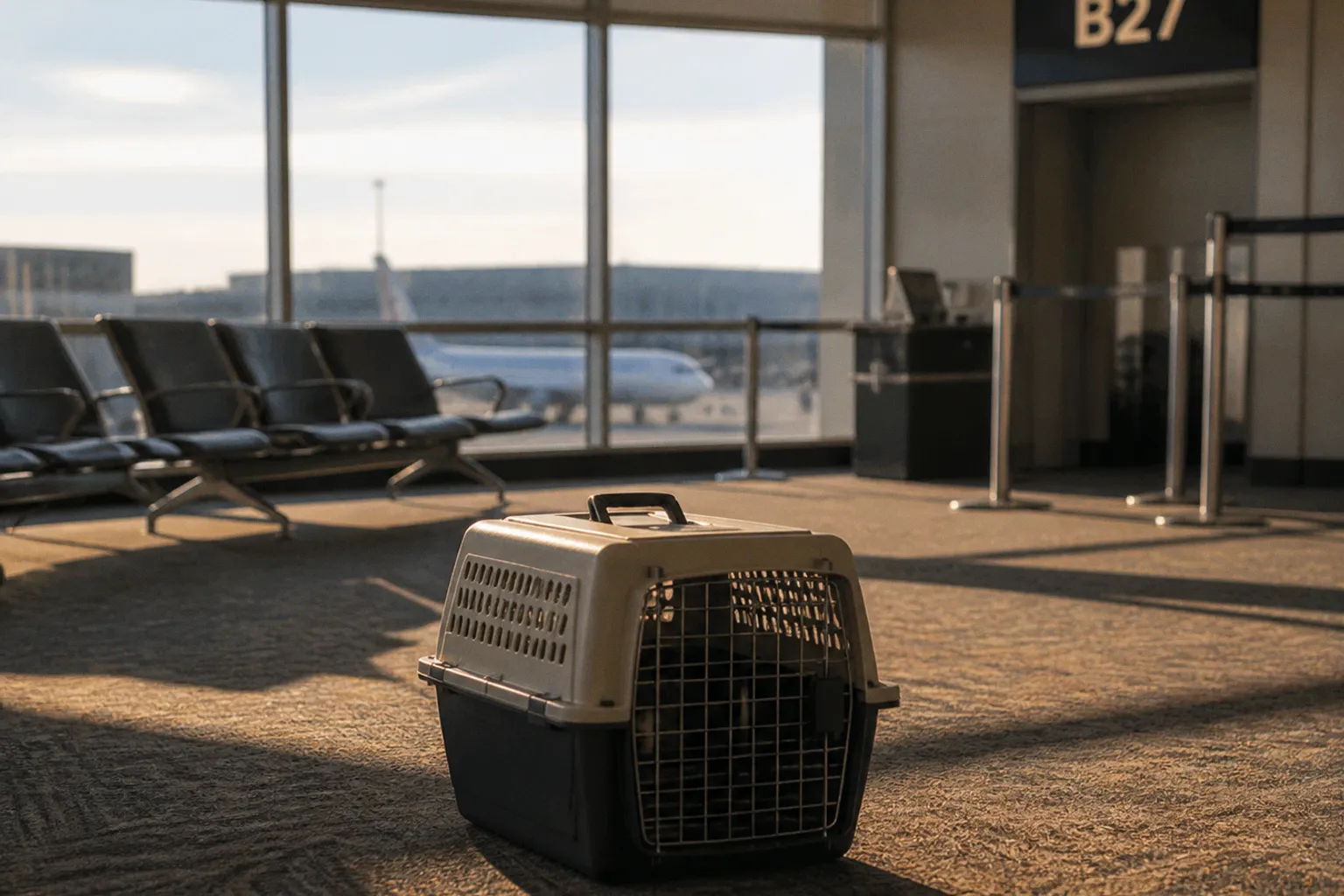
That isn’t gatekeeping, and it isn’t a vet being difficult. The combination of sedative drugs, confinement, handling, and a pressurized aircraft cabin creates risks that are easy to underestimate at ground level. The question behind “can you sedate a dog for a flight?” is not simply whether a drug can make the dog sleepy. It is whether the dog can remain alert enough to respond to a changing environment when no one can provide continuous veterinary monitoring.
The American Veterinary Medical Association and the International Air Transport Association advise against sedating or tranquilizing pets for air travel. IATA’s Live Animals Regulations are influential industry guidance and are used by many carriers and transport professionals, but they are not a universally binding law for every airline or route. Individual carriers set their own conditions of carriage, and those conditions can be stricter than general guidance. Major airlines commonly prohibit or refuse pets that appear sedated, particularly in cargo, and may require a declaration that no sedatives were administered. A prescription does not guarantee acceptance.
That distinction matters. A veterinarian can prescribe a medication for a legitimate medical reason, but the airline still controls whether the animal is fit to travel under its rules. The practical question is not whether an owner has a label on the bottle. It is whether the dog can be accepted, transported, and monitored safely from check-in to arrival.
The Physiological Risks of Sedation at High Altitudes
A pressurized cabin is not the same as sea-level conditions. On most commercial flights, the cabin environment is maintained at a pressure comparable to a moderate elevation rather than ground-level pressure. The air is still breathable, but the partial pressure of oxygen is lower than it is at sea level. A healthy, alert dog generally compensates without difficulty. A dog whose nervous system, circulation, breathing, or temperature regulation has been altered by medication has less room to compensate.
Sedatives do more than make a dog look quiet. Depending on the drug, dose, and individual response, they can affect alertness, coordination, blood pressure, breathing, muscle tone, and the ability to regulate body temperature. Acepromazine is often discussed in this context because it can produce marked tranquilization and can lower blood pressure. It may reduce visible movement without reducing the underlying stress response. That is a dangerous mismatch: the dog can appear manageable while its cardiovascular system is dealing with the combined effects of medication, confinement, handling, and flight.
The respiratory issue is more nuanced than the familiar warning that a sedated dog will simply “run out of oxygen.” A dog’s oxygenation depends on several interacting systems: airway anatomy, ventilation, lung function, circulation, blood pressure, and the ability to respond to changes in demand. Sedation can reduce alertness and muscle tone, blunt normal responses, or worsen obstruction in a dog whose airway is already narrow. Lower cabin oxygen pressure may add to that burden. It does not create a predictable outcome in every dog, but it makes an impaired response harder to tolerate.
A sedated dog may also be less able to reposition its head, clear saliva or vomit, maintain a comfortable posture, or respond to breathing difficulty. In a home environment, an owner may notice a change and seek help. In an aircraft hold, the dog is inside a crate during a period when direct observation and intervention are limited. A problem that begins as excessive drowsiness can become a breathing, circulation, aspiration, or temperature emergency before anyone recognizes what is happening.
A “sleeping” dog in cargo is not necessarily a calm dog. It may be a dog whose warning signals have been chemically muted.
Balance is another concern. Dogs use their muscles, paws, vision, and vestibular system to orient themselves and brace when a surface moves. A crate may be lifted, tilted, placed on a cart, or exposed to vibration and turbulence. A dog that cannot stand steadily is more likely to slide into the crate wall, fall against a water container, or remain in a position that compromises breathing. The crate may be correctly sized for an alert dog who can stand and turn, yet less safe for a dog who is unable to control its own body.
Temperature regulation can also become relevant. Dogs lose heat or become overheated through a combination of circulation, panting, movement, and behavior. Sedation may interfere with some of those responses. Conditions around the aircraft are not identical throughout the journey: the dog may encounter an outdoor loading area, a holding facility, a vehicle transfer, and the aircraft itself. Weather, delays, ground handling, and the length of the journey all matter. A medicated dog may not respond normally when uncomfortable or may not be able to move away from an unfavorable position.
There is a gastrointestinal and aspiration concern as well. Travel itself can cause nausea. Some medications can affect swallowing, muscle tone, or gastrointestinal motility. If a dog vomits while excessively drowsy, the danger is not only discomfort. The dog may be less able to protect its airway or move into a safer position. That is one reason a medication that seems tolerable during a short test at home cannot automatically be treated as safe for an unfamiliar, prolonged transport environment.
The risk is individual, not theoretical. Age, breed, body condition, heart or lung disease, airway anatomy, previous reactions to medication, dehydration, and the interaction between drugs can all change the outcome. A dose that caused mild sleepiness on the living-room floor may produce a much stronger effect after fasting, stress, handling, and hours of confinement.
Why Airlines Strictly Prohibit Sedated Pets on Flights
Airlines restrict sedated pets because the carrier has to make a fitness-for-transport decision without the level of clinical information available in a veterinary hospital. Staff may observe the dog at check-in and during handling, but they cannot perform a full examination, establish a drug level, or predict how an individual animal will respond after takeoff. Their responsibility is to avoid accepting an animal that appears medically compromised or unable to travel safely.
IATA’s guidance against sedation is part of a broader animal-transport framework, not a single worldwide statute. Airlines and national authorities may incorporate parts of such guidance into their own procedures, but the applicable rule is the carrier’s current policy for the route and service you have purchased. Those policies can change, and the policy for a pet traveling in the cabin may not be the same as the policy for an animal traveling as manifested cargo.
A carrier may refuse a dog that appears excessively drowsy, unsteady, weak, confused, or otherwise altered. It may also refuse an animal when the owner discloses medication that conflicts with the carrier’s rules. A veterinarian’s prescription does not override the airline’s conditions of carriage. It does not guarantee boarding, and it does not transfer responsibility for the transport decision from the airline to the prescribing veterinarian.
This is why medication should never be treated as a private detail that can be left out of the travel paperwork. If the airline asks whether the dog has been sedated or medicated, answer accurately. If the airline requires a veterinary statement or a specific declaration, obtain the current form and follow its instructions. Ask about the policy before the journey, not while standing at the cargo counter with a departure time approaching.
The handling environment also explains the conservative approach. Airport and cargo staff are not expected to diagnose a sedative reaction on the ramp. They are looking for an animal that is alert enough to stand, respond, and tolerate the journey. A dog that is glassy-eyed, unable to balance, unusually limp, or difficult to rouse may be treated as unfit for transport. That does not mean the staff know exactly which drug was given. It means the visible condition is concerning, and the safest decision may be refusal.
A refusal can create a second stressful episode for the dog. The animal has already been driven to the airport, handled by unfamiliar people, placed in a crate, and exposed to noise and strange smells. If boarding is denied, the owner may need to arrange ground transport, local boarding, a later flight, or a different route. Costs can rise quickly, but the larger issue is that the dog has experienced the airport process without reaching the destination. Sedation does not make that disruption easier to manage.
Airline policies also tend to focus on the animal’s condition rather than the owner’s intention. “It was only a small dose” or “the vet prescribed it” may explain what happened, but neither statement guarantees that the dog will be accepted. The carrier’s decision is made under its transport rules and the observed condition of the animal.
The Hidden Dangers for Brachycephalic and Vulnerable Breeds
Brachycephalic breeds face an additional challenge because their airway anatomy can make breathing less efficient even before medication is involved. Bulldogs, Pugs, French Bulldogs, Boston Terriers, Pekingese, and other short-muzzled dogs may have narrowed nostrils, an elongated soft palate, excess tissue in the throat, or other features associated with upper-airway obstruction. Snoring is not a reliable measure of respiratory reserve, but noisy breathing, exercise intolerance, heat intolerance, gagging, or previous airway surgery should all prompt a serious transport discussion.
Sedation does not simply remove the sound of anxiety. It can reduce muscle tone and the dog’s ability to adjust its posture or respond when the airway becomes partially obstructed. A dog with a compromised upper airway may need to actively maintain a comfortable position and respond quickly to increased breathing effort. Excessive drowsiness can interfere with those protective behaviors. Reduced cabin oxygen pressure may add physiological demand, while heat, stress, and handling can increase it.
The same concern applies beyond brachycephalic breeds. Senior dogs may have less cardiovascular or respiratory reserve than their owners realize. Puppies may be less capable of maintaining body temperature and coping with prolonged disruption. Dogs with known heart disease, lung disease, anemia, obesity, seizure disorders, endocrine disease, or previous adverse medication reactions require individualized assessment. A soft heart murmur is not automatically a diagnosis of serious disease, but it is a reason not to make assumptions about drug safety.
A dog can also look healthy during an ordinary appointment and still respond unpredictably to travel medication. Veterinary examinations are brief snapshots. They do not reproduce the full combination of fasting, excitement, restraint, crate confinement, aircraft noise, vibration, temperature changes, and hours without direct supervision. The more vulnerabilities a dog has, the less sensible it is to treat sedation as a routine travel accessory.
For these dogs, the right conversation may be whether flying is appropriate at all. Some airlines restrict or exclude certain short-muzzled breeds from cargo, and those restrictions are not arbitrary inconveniences. They reflect the fact that respiratory emergencies can progress quickly and that an aircraft hold is not a veterinary ward. A ground journey may be slower or more expensive, but it removes the cabin-pressure component and can allow more frequent observation and intervention.
That does not make ground transport risk-free. Long car journeys bring their own challenges, including motion sickness, heat, traffic delays, and unfamiliar stops. But the handler can usually observe the dog more often, adjust ventilation and temperature, offer water according to veterinary advice, and seek care if the animal deteriorates. The appropriate option depends on the dog, the route, and the quality of the transport plan—not on a blanket promise that one method is always safe.
Debunking the Myth: Sedatives Do Not Reduce Travel Stress
Owners ask for a sedative because a quiet dog looks like a comfortable dog. In practice, those are not the same thing. A medication may reduce movement, vocalization, or visible resistance while leaving fear and physiological stress largely intact. The absence of barking is not proof that the dog feels safe.
Acepromazine is the clearest example. It can produce tranquilization and muscle relaxation, but it is not a reliable anti-anxiety treatment. It may make a dog less able to flee, brace, or communicate without removing the underlying perception that something frightening is happening. That is why veterinary behavior professionals are cautious about using a drug that changes outward behavior without addressing fear.
A shut-down dog in a shelter is not necessarily relaxed. The dog may be overwhelmed and no longer able to respond normally. Medication can create a similar appearance: lowered posture, slow reactions, little vocalization, and reduced movement. From across the room, that can look like success. From a welfare perspective, it may simply mean that the dog has fewer ways to cope or signal distress.
The pharmacological distinction matters. Some medications used in veterinary practice are intended to affect anxiety, while others primarily cause sedation or muscle relaxation. Trazodone and gabapentin are sometimes discussed as travel medications, but “less sedating than” is not the same as “proven safe for air transport.” Their effects vary by dog, dose, timing, concurrent medications, and medical history. Evidence from a short car ride or a home trial cannot be converted into a blanket guarantee for an aircraft journey.
The airline issue remains separate. Even if a veterinarian believes a medication is medically reasonable for a particular dog, the carrier may prohibit it, require disclosure, or refuse the animal if it appears altered. A prescription never guarantees airline acceptance. Owners should not assume that a drug described as an anxiolytic rather than a tranquilizer will automatically be permitted.
The goal is not to make the dog look quiet. The goal is to make the journey less frightening without taking away the dog’s ability to respond.
Behavioral preparation is more useful because it changes the dog’s relationship with the travel environment. A crate introduced as a resting place is different from a crate first presented at the airport. A dog who has practiced entering, turning around, lying down, and remaining there while the owner moves around the room has more options than a dog encountering all of those demands at once.
The same principle applies to movement and sound. Short, controlled car rides can help some dogs, but only when the experience stays below the point of panic. If every practice trip ends in vomiting, frantic scratching, or prolonged distress, simply increasing the distance is not training. It is repeated exposure without sufficient recovery. A veterinarian or qualified behavior professional can help adjust the plan.
Safe Alternatives for Managing Canine Anxiety During Transit
The safest alternative to routine sedation is preparation that begins well before the departure date. The exact timeline depends on the dog, but meaningful acclimation usually requires repeated sessions rather than a single rehearsal. The carrier should become familiar in ordinary life, not appear only when something disruptive is about to happen.
A practical travel plan may include:
- Crate conditioning. Leave the crate accessible at home, use comfortable bedding that does not interfere with ventilation, and reward voluntary entry. Build duration gradually. The dog should be able to rest in the crate without constant coaxing before air travel is even considered.
- Controlled exposure to travel cues. Practice with the sounds, handling, movement, and short trips that resemble the real journey. Keep the sessions manageable and allow the dog to recover rather than pushing through escalating panic.
- A veterinary review. Discuss airway anatomy, heart and lung health, motion sickness, previous drug reactions, current medications, and whether the dog is an appropriate candidate for the proposed route. “Vet approved dog sedatives for flights” is not a category that guarantees safety; approval must be specific to the dog and does not supersede airline policy.
- Route reduction. A direct flight may reduce transfers, handling, and opportunities for delay. Avoiding extreme heat or cold at departure and arrival can also reduce the environmental load, where the airline and schedule make that possible.
- Accurate airline confirmation. Read the current rules for the exact service, route, aircraft, and travel season. Ask whether any medication is prohibited or must be declared. Keep written confirmation, but understand that written guidance still does not guarantee acceptance if the dog appears unfit at check-in.
- Ground transport when appropriate. A professional pet transport service or a carefully planned car journey may be preferable for a dog that is not a good air-travel candidate. Ground travel still needs breaks, temperature control, secure restraint, and an emergency plan.
- Reconsidering the journey. A temporary move, vacation, or visit may not justify exposing a medically fragile or severely fearful dog to a high-risk transport plan. Sometimes the responsible decision is to delay the trip, use a trusted caregiver, or find a different way to reunite.
| Approach | Potential benefit | Limitation |
|---|---|---|
| Crate conditioning | Builds familiarity and gives the dog a predictable resting space | Requires consistent practice and may not resolve severe panic on its own |
| Counter-conditioning to sound and motion | Reduces the novelty of travel-related triggers | Must be gradual; forcing exposure can make fear worse |
| Medication discussed with a veterinarian | May help with a specific problem such as anxiety or motion sickness | Effects are individual, airline rules still apply, and a prescription never guarantees boarding |
| Pheromone products or pressure garments | May provide a modest benefit for some dogs | Not a substitute for preparation or medical assessment |
| Direct flight and careful scheduling | Can reduce transfers, handling, and temperature exposure | May cost more or be unavailable on the route |
| Ground transport | Avoids cabin-pressure changes and may allow more observation | Takes longer and still carries risks related to heat, motion, and delays |
| Delaying or changing the trip | Removes an unsafe transport demand | May be inconvenient, expensive, or emotionally difficult |
There is no universally “natural” remedy that turns a frightened dog into a comfortable traveler. Pheromones, familiar bedding, calming chews, supplements, pressure wraps, and herbal products may help some individuals, but natural does not mean risk-free. Supplements can interact with prescribed medication, and products are not necessarily evaluated to the same standard as licensed drugs. Discuss them with the veterinarian, especially if the dog has a medical condition or takes other medication.
Motion sickness should be separated from anxiety. A dog that drools, vomits, or becomes nauseated in the car may need a different plan from a dog that panics at confinement. Treating one problem with a sedative can obscure the other. A veterinarian may recommend a medication aimed at nausea, behavior modification, or both, but that recommendation still needs to be reconciled with the airline’s rules.
A home trial is useful only for observing how the dog responds under ordinary conditions. It cannot certify the animal for cargo or predict every effect of flight. Never give an extra dose because the first one seemed ineffective, combine products without veterinary direction, or use medication prescribed for another animal. Do not wait until the day of travel to discover that the dog becomes uncoordinated, vomits, has paradoxical agitation, or is difficult to wake.
The clearest answer to the safety question is also the least satisfying one: routine dog sedation for airline travel is not a reliable way to reduce fear, and it can make a medical emergency harder to detect and manage. In a small number of circumstances, a veterinarian may prescribe medication for a specific problem after considering the dog’s health and the transport plan. That is not permission to medicate secretly, and it is not a guarantee that an airline will accept the animal.
For most dogs, the safer path is to improve the travel experience rather than chemically erase the visible signs of distress. Prepare the crate, reduce the number of transitions, choose the least demanding route, verify the carrier’s policy, and be willing to change the plan when the dog’s health or behavior makes flying a poor choice. A dog that arrives alert, responsive, and able to communicate discomfort is in a much safer position than one that merely looks calm.