Interstate Pet Relocation: Pre-Travel Checklist
The biggest myth about interstate pet relocation is that the USDA is handling it. They're not.
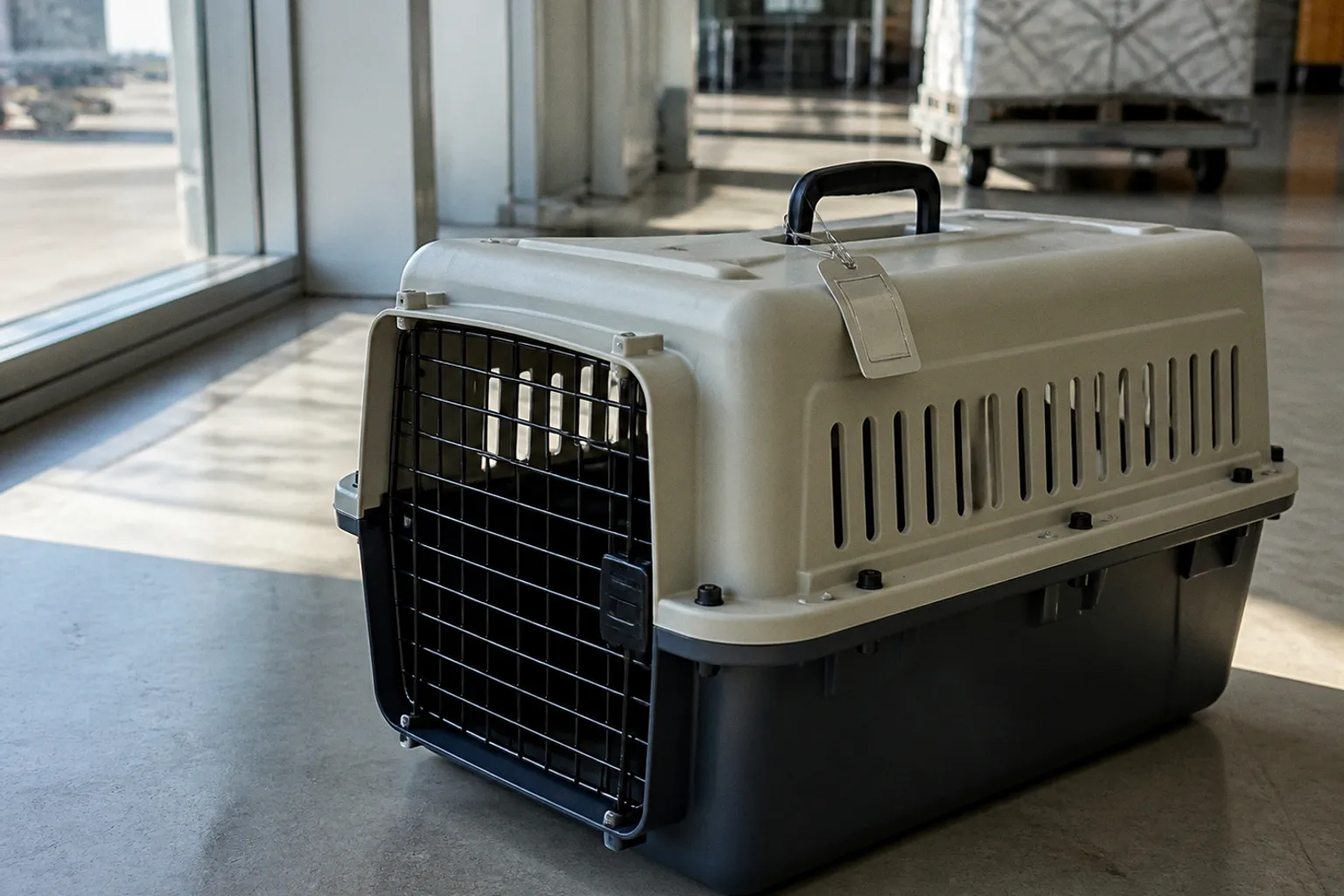
Once you cross a state line with a dog or cat, you're dancing to whatever tune the destination state, your airline, and the cargo hold dictate—and if you get the paperwork wrong, you don't get a polite do-over. You get a dog turned back at the border, or worse, a pet that lands in respiratory distress because you trusted a forum thread over IATA regulations.
This is a working checklist, not a rescue fantasy. Every line below comes from what actually moves pets safely across state lines, whether you're driving them ground transport or shipping them in cargo. Skip what doesn't apply. Don't skip what does.
State Regulations and the CVI Deadline Trap
Let's kill a piece of folklore right away: the USDA Animal and Plant Health Inspection Service does not regulate the interstate movement of pets traveling with their owners. Each state sets its own domestic entry requirements. Rabies vaccination certificates, health certificates, breed restrictions, and even species-specific rules can vary wildly from one state line to the next. Calling APHIS to ask what you need for a move from Texas to Vermont is a waste of everyone's time. You call the destination state's animal health office, or you check their current regulations before you book a single thing.
The Certificate of Veterinary Inspection (CVI)—the document people casually call a "health certificate"—comes with a deadline that's been the downfall of more relocations than bad crates. The standard CVI is valid for 30 days for interstate ground travel. Sounds generous. It isn't. Most U.S. airlines tighten that window aggressively: they want the CVI issued within 10 days of travel, and within 10 days of arrival at your destination. If your vet appointment is 11 days out from the flight, you're already behind.
This is the kind of detail that sounds bureaucratic until you're standing at the cargo counter with a dog in a crate and a clerk pointing at a calendar. Plan your vet visit backward from your travel date, not forward from "sometime next month." If you're relocating strictly by ground, the 30-day window gives you breathing room, but don't use that as an excuse to skip confirming what your specific destination state actually requires beyond a rabies certificate. Some states ask for additional testing or specific vaccine timing.
A CVI valid for 30 days on paper can be rejected by an airline if it's 11 days old at check-in. Plan the vet visit backward from the flight, not forward from "whenever."
Engineering an IATA-Compliant Crate (Most People Get This Wrong)
The International Air Transport Association doesn't write poetry about crate sizes. They write formulas, and the formulas are specific. If you wing it with "looks about right," you're gambling with your dog's ventilation, posture, and joint health.
The standard internal dimensions for a rigid crate are:
- Length = your pet's body length from the nose to the base of the tail (A), plus half the elbow height (B).
- Height = the pet's standing height from the ground to the top of the head or ear tip (D), plus the thickness of any bedding you'll add.
That's not a suggestion. That's the minimum internal dimension. A crate that's even slightly too short forces the dog to hunch, which compresses the chest, which compromises breathing on a flight that already has thinner air than your living room. A crate that's too tall lets the dog get thrown around during turbulence.
Now the part that snub-nosed breed owners need to hear clearly: IATA requires a 10% larger container than the standard formula indicates for brachycephalic dogs—pugs, bulldogs, boxers, Shih Tzus, Frenchies, anything with a smashed-in face. These breeds already struggle with airflow under normal conditions, and a standard-sized crate stacks respiratory stress on top of altitude stress. Buy the bigger crate. The extra cost is irrelevant compared to a respiratory emergency at 30,000 feet.
Here's where the cheap shortcuts get exposed: if you're using a rigid plastic crate assembled from top and bottom halves, plastic clips alone are not acceptable. IATA rules require metal nuts and bolts in every connection hole. Those clips will pop open under the vibration and handling a cargo hold puts them through. Same goes for the door—locking pins must engage the frame by at least 1.6 cm. Anything less and an enthusiastic dog can push out, or worse, the door can fail mid-transit.
If you're building or buying a wooden container, the sides need to be at least 12 mm thick for dogs (6 mm for cats). Sounds overbuilt until you remember your dog is a 70-pound animal that's going to be scared, possibly motion-sick, and potentially trying to dig its way out.
| Crate element | Minimum IATA requirement | Why it matters |
|---|---|---|
| Internal length | A + ½B (nose-to-tail + half elbow height) | Prevents hunching and chest compression |
| Internal height | D + bedding thickness | Prevents head injury during turbulence |
| Size bump for brachycephalic breeds | +10% over standard formula | Reduces respiratory distress at altitude |
| Connection hardware | Metal nuts/bolts in every hole | Plastic clips fail under cargo vibration |
| Door locking pins | Engage frame by ≥1.6 cm | Prevents escape or door failure in transit |
| Wooden side thickness (dogs) | ≥12 mm | Resists chewing and structural failure |
Temperature Risks and the Acclimation Certificate Most People Don't Know Exists
The cargo hold isn't climate-controlled the way your house is. Airlines publish embargoes for extreme temperatures, but there's a window in the middle that trips people up: when ground temperatures at the origin, any connection, or the destination are forecast between 20°F and 44°F, you need an acclimation certificate. This is a signed statement from your veterinarian specifying the lowest temperature your specific animal can safely handle.
If your move involves cargo and the forecast hits the 20–44°F window at any leg, an acclimation certificate isn't optional paperwork—it's the difference between a safe arrival and a hypothermia case.
This is not a generic form. The vet assesses the individual animal—the breed, the coat, the age, the body condition, the health history. A young, healthy Labrador with a thick double coat can tolerate a different range than a senior greyhound with a thin coat. Don't guess. Don't paraphrase someone else's certificate. Get the vet to do the actual assessment, because the airline will check, and because the temperature your vet signs off on is the temperature your pet has to survive.
The reverse risk—heat—gets more attention in the news, but cold is sneakier because people assume "cargo is inside, so it's fine." It isn't. Hold rooms sit on the ramp. Connection cities add up. Build your travel plan around forecasted temperatures at every stop, not just the endpoints. If the route includes a connection city in a cold snap, you may need to reroute, delay, or arrange ground transport for the final leg.
The Sedation Lie and Why Airlines Will Refuse Your Pet
This is the section where I get blunt, because this myth has killed pets.
There's a persistent belief that giving a dog or cat a tranquilizer before a flight "takes the edge off" and makes travel easier. This is dangerous nonsense, and the AVMA and IATA both say so in no uncertain terms. Sedatives like acepromazine lower blood pressure, heart rate, and body temperature. At altitude, where oxygen is already reduced, those three things dropping at once create a perfect storm for respiratory collapse. A sedated animal can't thermoregulate properly. A sedated animal can't shift position if the crate tilts. A sedated animal can stop breathing.
Every major U.S. airline reserves the right to refuse boarding any pet that appears sedated. They will look. The cargo staff is trained to spot the signs: glassy eyes, sluggish movement, an animal that doesn't react normally to handling. If your pet shows up flat and wobbly, they get left on the tarmac while you board the plane. Your move is now stranded, and your dog is in a holding area.
If your dog has genuine travel anxiety, the answer is behavioral prep, not a pill. Desensitization to the crate weeks before the move. Short practice sessions in the car with the crate door closed. Familiar bedding and a worn t-shirt that smells like you. These don't sedate—they create predictability, which is what anxious animals actually need. Talk to a force-free trainer who understands behavioral fallout, not a vet who's willing to write a sedative prescription to make your logistics easier.
Ventilation, Feeding, and the Small Details That Actually Matter
IATA sets a hard floor on ventilation: at least 16% of the total surface area of the four sides of the crate must be ventilated, and those openings must be placed over the upper two-thirds of the sides. This isn't about your pet's comfort—it's about where the hot air accumulates and where fresh air enters. Bottom vents alone don't cut it. Top vents alone don't cut it. The ratio and placement are designed around airflow physics, not aesthetics.
When you deliver your pet to the airport, federal and airline guidelines require that food and water have been offered within the prior 4 hours. A document stating the date and time of the last feeding must be attached to the crate. This serves two purposes: it reduces the chance of motion sickness and vomiting in a confined space, and it gives the ground crew a reference point if a delay strands the animal on the ramp. Freeze a small bowl of water and tuck it in the crate so it melts slowly—better than a bowl of sloshing water that spills and soaks the bedding.
One more thing that isn't in the headlines but ends up in incident reports: bring a second photo of your pet, a recent vet record, and your contact information taped to the crate in a waterproof sleeve. If something goes wrong on a connection, the ground crew has what they need to reach you and act fast without guessing what kind of dog is in front of them.
The Homework Before You Book Anything
If you've read this far and you're still in the "I'll figure it out closer to the date" phase, stop. Interstate pet relocation is a logistics project, not a weekend errand. Here's the work, in order:
1. Confirm destination state requirements through the state's animal health office, not Reddit, not a Facebook group, not your cousin who moved last year.
2. Schedule the vet visit so the CVI lands inside the airline's 10-day window if you're flying—backward from the travel date, not forward from "soon."
3. Measure your dog properly and buy the crate to IATA specifications, with the 10% size bump for any brachycephalic breed.
4. Inspect the crate hardware—metal bolts on every hole, locking pins engaging at least 1.6 cm, ventilation covering 16% of the four sides with openings on the upper two-thirds.
5. Check forecasted temperatures at every leg of the route and get the acclimation certificate signed if any leg hits 20–44°F.
6. Skip the sedative. Use crate desensitization and behavioral prep instead, and accept that a stressed animal is a living animal.
7. Prepare the crate documentation: feeding time log, contact info, second photo, vet records, all in a waterproof sleeve.
8. Plan the food and water timing so the last feeding falls within the 4-hour pre-delivery window, and freeze the water bowl.
Most of the catastrophic outcomes I've seen in rescue and transport aren't from people who didn't love their pets. They're from people who assumed the system would catch their mistakes. The system doesn't catch them. The cargo hold doesn't catch them. The destination state doesn't catch them until it's too late.
You do. That's the job. Now do it before the moving truck shows up.