Protecting Pets During Extreme Heat and Haze: Essential Safety Protocols for Caregivers
The SPCA issued a welfare advisory on Sept 10 as Singapore's 24-hour Pollutant Standards Index crossed 104 in the central region and the day's peak temperature hit 34.5°C.
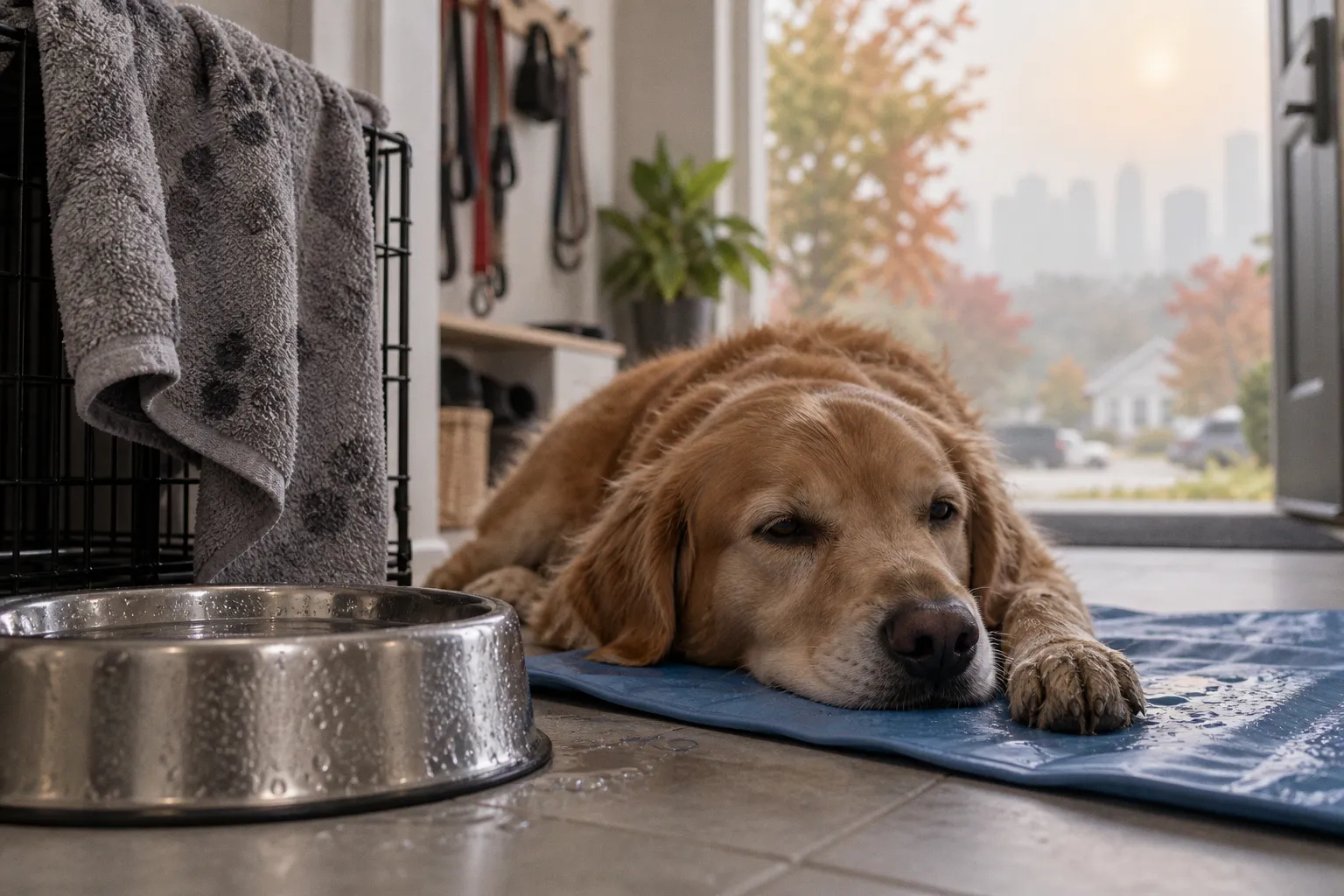
Both readings sit in ranges where pavement substrate temperature and inhaled particulate load become measurable physiological stressors. For professional walkers and sitters, the advisory translates into per-dog screening and route modification — not optional adjustments.
Field parameters: heat, haze, and substrate
The National Environment Agency classifies PSI 101–200 as unhealthy. At 104, PM2.5 — micro-particulates that lodge deep in the lungs and enter the bloodstream — imposes a measurable respiratory and cardiovascular load. In working dogs, the kinetic chain doesn't isolate that stress; elevated respiratory rate drives core temperature up in parallel.
SPCA's pavement-contact test functions as a field gate: hold the back of the hand to the surface for five seconds. If the handler cannot tolerate the contact, the substrate exceeds the safe threshold for paw pads. Run this check before each departure, not as a mid-walk observation.
Additional hard limits from the advisory: no pet in a parked vehicle under any condition — cabin temperature rises faster than ambient — and fresh water within reach at every point of the route.
Per-animal risk escalation
SPCA flagged specific profiles that require shorter, cooler, or indoor-only sessions during this window:
- Brachycephalic, toy, and miniature breeds — compromised upper airway, low thermal dissipation margin
- Pre-existing cardiopulmonary or renal conditions — reduced physiological reserve
- Thick-coated breeds such as huskies and chinchillas — poor passive heat shedding
- Senior dogs — slower thermoregulatory response
Markers to monitor during and after each session: excessive panting, reduced appetite, behavior change. Heatstroke indicators — heavy drooling, bright red gums, vomiting, fainting — are a medical emergency. Stop the session, initiate transport, proceed directly to a veterinary facility.
Indoor mitigation during elevated PSI: PM2.5-rated air purifier, fan or air cooler, shaded and ventilated space. For thick-coated breeds, an air-conditioned baseline is the standard, not an upgrade.
Pre-session protocol
Before each outdoor booking under current conditions:
- Confirm current PSI for the operating region; suspend or shorten outdoor sessions at 101+
- Confirm ambient temperature; at 30°C+ reduce duration, shift to shaded and ventilated routes
- Run the five-second pavement contact test
- Screen the booking roster against escalation profiles
- Verify water access at departure and during the session
- Confirm no segment involves a parked, unattended vehicle
- Have the nearest emergency veterinary facility contact on file
- Log any heatstress indicators in the post-session care record
Adjacent context for handlers managing giant-breed clients: RVC VetCompass released analysis on Sept 15 covering 2.25 million dogs under primary veterinary care in 2019. Of 28,345 giant dogs identified across 29 breeds, a 4,316-dog clinical sample showed 73.8% with at least one disorder recorded (versus 65.8% in a 2016 comparator) and a median age at death of 8.94 years (versus 12.0 across all dogs). The dogue de Bordeaux, Alaskan malamute, and akita were the most represented breeds at a median adult bodyweight of 48.8 kg. Adjust handling load, lifting protocols, and gait observation baseline accordingly — the disorder load is higher from the outset.