Protecting Dogs from Heat Stroke: The Essential 10-Second Pavement Safety Check
A veterinarian cited by creators.yahoo.com frames heat stroke in dogs as a minutes-to-critical event, not a slow deterioration.
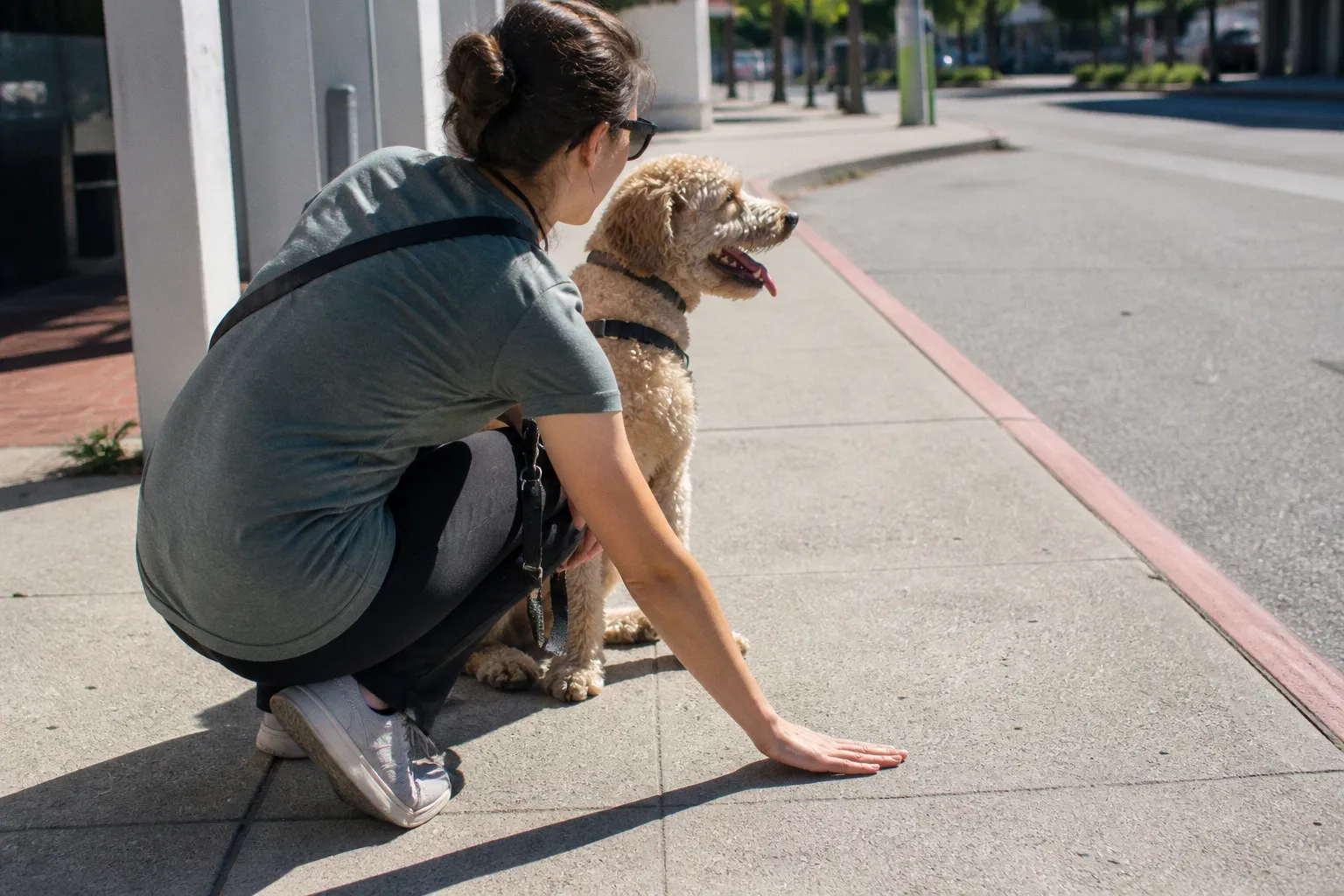
The piece surfaces a field-level screening tool — the 10-second pavement test — designed to be run before any sidewalk, trail, or parking-lot exposure. For handlers running scheduled routes or managing sitters, this is a pre-departure checkpoint, not an advisory footnote.
The Minute-Scale Problem
The clinical framing is binary: heat stroke either escalates inside the handler's response window or it does not. Once core body temperature crosses the threshold where organ damage begins, the timeline to irreversible harm is measured in minutes, not hours. That is why the source positions a contact-time check at the start of the route rather than a symptom-watch mid-walk.
The physical mechanism is direct. Asphalt and concrete absorb solar radiation and re-radiate it back into the pads in contact with them. Canine pads carry less surface area per gram of tissue than human palms and sit closer to ground-level radiant heat. A surface that fails a human contact check at ten seconds will fail a canine contact check faster.
Pre-Walk Screening Protocol
Run before leashing, on every departure:
- Surface check. Press the back of a hand flat against the target surface for a full ten-second count. Any discomfort before the count ends = surface fails. Reroute to grass, dirt, or shaded pavement.
- Time-of-day gate. Peak pavement load runs mid-morning through late afternoon in summer. Schedule primary walks outside this window when feasible.
- Shade inventory. Confirm shade access on the planned route at intervals no greater than ten minutes.
- Water load. Carry a collapsible bowl and enough cool — not cold — water for the planned duration.
- Duration cap. Scale walk length to humidity, not air temperature alone. Humidity impairs the evaporative cooling that panting depends on.
Stop the walk and move to shade if any of these indicators appear:
- Panting disproportionate to exertion
- Thick saliva or sudden drooling change
- Gait shift: stiffness, foot-lifting, or weight relocation
- Bright red or pale gum color
- Disorientation or glazed expression
Standard veterinary thresholds place heat stress onset at core body temperatures above 104°F, with heat stroke territory beginning near 106°F. Once the second threshold is crossed, active cooling and immediate veterinary transport are required in parallel — neither replaces the other.
Pre-Departure Checklist
- Ten-second pavement test passed on planned route
- Walk window avoids peak pavement-load hours, or shaded alternative confirmed
- Water source and bowl packed
- Route duration scaled to humidity, not temperature alone
- Handler aware of nearest emergency vet on the route
- Shade interval marked at no more than ten minutes