Multi-Pet Client Onboarding: A Sitter’s Step-by-Step Guide
Multi-pet households create a load-distribution problem. The sitter is not managing one animal several times.
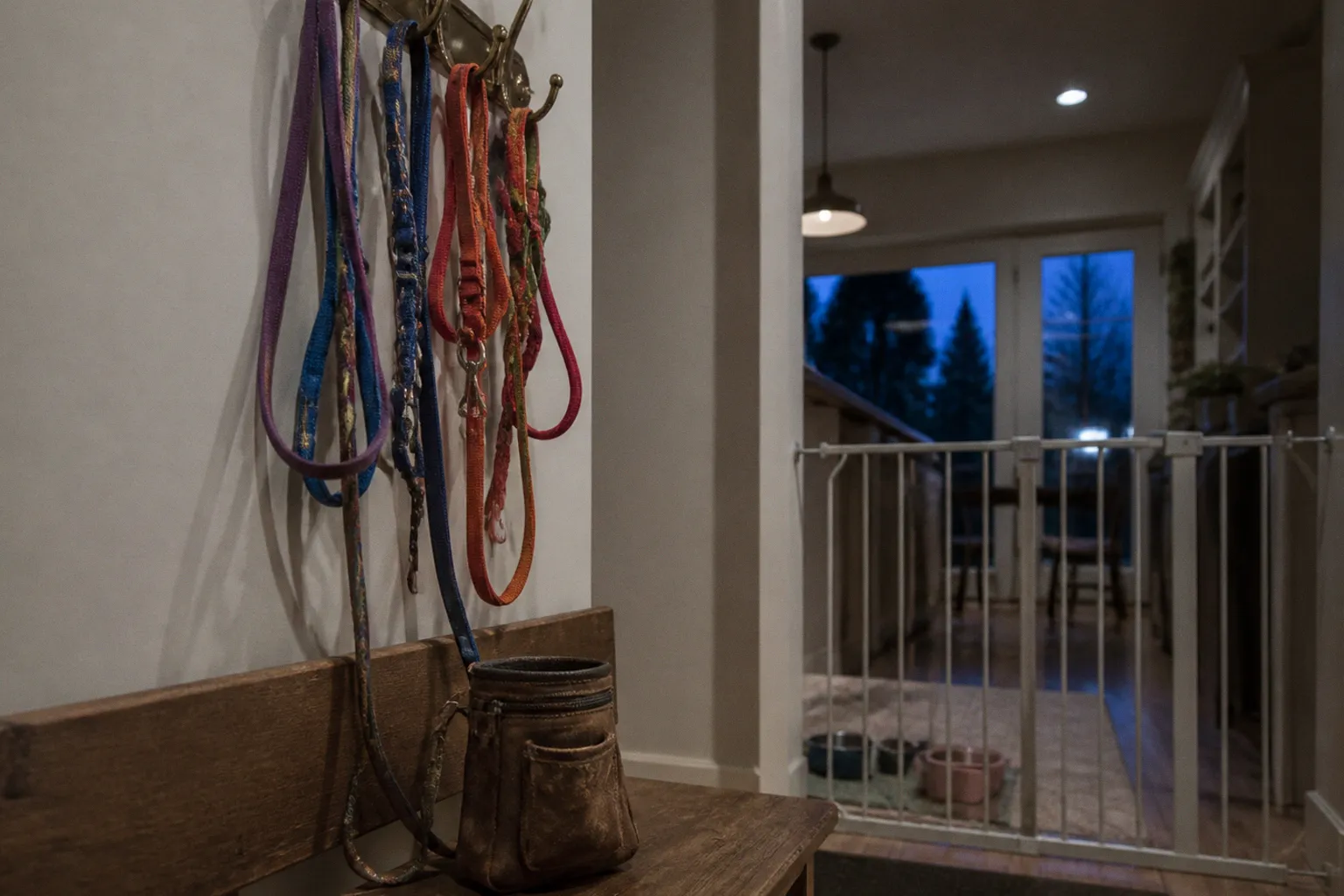
The sitter is managing separate medical, behavioral, dietary, and environmental requirements inside the same operating space.
A single household form is not sufficient. Each pet needs an individual profile, while the household needs a separate group-care plan. Without both layers, critical information is compressed into vague instructions such as “feed them together,” “the dogs get along,” or “the cat hides sometimes.” These statements do not define a safe procedure.
A reliable multi pet sitting client onboarding process must establish five controls before the first visit:
- Individual care data for every pet.
- Group dynamics and separation requirements.
- Feeding and resource-management procedures.
- Emergency authorization for each animal.
- A pricing and scheduling structure that matches the actual workload.
The process is operational, not administrative. It determines whether the sitter can execute care without improvisation.
Start with individual pet profiles
The household is the booking unit. The pet is the care unit.
Create a repeatable profile for every dog, cat, bird, reptile, or small animal included in the service agreement. Do not rely on one shared form with a list of names. Shared forms encourage omission. They also make it difficult to isolate instructions when one pet has a different medication schedule, feeding plan, or trigger profile.
A usable profile should cover the following fields.
Identification and baseline behavior
Record:
- Name, species, breed or type, age, sex, and approximate weight.
- Microchip information if available.
- Current collar, harness, leash, carrier, or enclosure.
- Normal gait, mobility limitations, and tolerance for handling.
- Typical sleep location and preferred resting areas.
- Known triggers, avoidance behavior, and recovery time after stress.
- Response to visitors, door activity, other animals, and restraint.
- Escape behavior, door-dashing risk, and preferred hiding locations.
The weight and mobility information have direct safety value. A large dog with a short, forceful gait loads the leash and handler differently from a small dog with a fast, lateral movement pattern. A senior animal may appear stable at rest but show reduced rear-limb control on stairs or polished flooring. Note the baseline. The sitter needs to detect deviation.
Medical and medication data
Document the condition. Do not record only the medication name.
For each prescription or supplement, specify:
- Dose and concentration.
- Administration route.
- Time window.
- Food requirement.
- Storage requirement.
- Expected response.
- Common adverse signs.
- Missed-dose procedure.
- Veterinary contact for clarification.
“Give one pill at night” is not a complete instruction. “Give 25 mg with the evening meal, do not repeat if refused, contact the clinic if vomiting occurs within the stated interval” is actionable.
Each pet should have a separate veterinary release form. The client should also leave payment details on file with the veterinary clinic when that option is available. The sitter must know which care decisions are authorized without delay and which require client approval.
Diet and elimination
Record food type, portion, preparation, feeding time, treats, supplements, water access, and elimination routine for each animal.
Use measurable quantities. A scoop is not a universal unit. Specify the scoop size, grams, cans, pouches, or number of treats. Note food sensitivities and whether food can be left unattended.
For dogs, include the normal walking and elimination sequence. For cats, record litter type, box location, cleaning frequency, and normal urine or stool output. A cat that stops using the litter box may be signaling stress, pain, obstruction, or environmental conflict. The sitter needs a baseline to identify the change.
A multi-pet care plan has two layers: one profile per animal and one control plan for the household.
Build the household map
Individual profiles describe the animals. The household map describes interaction.
This is the central document for managing multi pet households sitting. It should show where each pet eats, sleeps, waits, hides, and receives medication. Include doors, baby gates, crates, carriers, litter areas, outdoor access points, and storage locations for food and medication.
The map should answer direct operational questions:
1. Which pets can occupy the same room without active supervision?
2. Which pets must be separated during feeding?
3. Which animals can be released from confinement at the same time?
4. Which doors or gates must remain closed?
5. Where does each pet go during medication or equipment handling?
6. Which spaces are unsafe because of stairs, balconies, open windows, toxic plants, or unsecured exits?
7. What is the recovery procedure if one pet escapes its assigned area?
Do not infer compatibility from owner presence. Animals can remain calm when a familiar person controls resources. The same animals may show guarding behavior when the person is absent, the sitter handles food, or access to a favored location changes.
Use a risk matrix, not a general description
Classify each interaction by operating condition:
| Interaction | Normal condition | Main risk | Required control |
|---|---|---|---|
| Dogs during arrival | Loose leashes, controlled entry | Door conflict, leash tension, redirected contact | Enter one dog at a time if needed; secure doors before release |
| Dogs during feeding | Separate feeding stations | Food guarding, rushing, bowl interference | Use rooms, gates, crates, or other physical barriers |
| Cats and dogs | Species-specific access | Chasing, blocking, stress displacement | Maintain elevated or closed cat zones |
| Multiple cats | Shared environment | Litter, food, or resting-area conflict | Duplicate resources and monitor avoidance |
| Medication administration | One pet handled at a time | Ingestion by another pet, bite risk, dose error | Isolate recipient; confirm administration before release |
| Outdoor release | Yard or leash walk | Escape, pursuit, gate failure | Verify containment before opening doors |
This matrix belongs in the pet sitting onboarding checklist because it converts behavioral information into a control procedure. “Friendly” is not a control. “Can share room after feeding, but must be separated during food preparation and bowl removal” is a control.
Run a 45-minute intake when the household is complex
A quick meet-and-greet is often adequate for one uncomplicated cat or one dog with a stable routine. Multi-pet homes need more time. A 45-minute intake meeting is a practical operating window for households with several animals, complex medication, multiple feeding zones, or known conflict.
The additional time is not for social conversation. It is for observation and procedure testing.
During the meeting, move through the home in the same sequence the sitter will use during service.
Phase one: entry and containment
Ask the client to demonstrate the normal entry routine. Observe:
- Which animal approaches the door.
- Which animal attempts to exit.
- Whether leashes, gates, or crates are required.
- How the client prevents crowding.
- Whether keys, alarms, locks, and access codes function.
- Where the sitter can place equipment without creating a conflict.
A sitter should not enter a multi-dog home while holding food, medication, bags, or several leads and allow the animals to determine the first contact. Secure the threshold first. Then establish control of the group.
Phase two: individual handling
Handle or observe each pet separately where appropriate. Check tolerance for:
- Collar or harness contact.
- Paw and limb handling.
- Ear and eye inspection.
- Mouth or medication-related handling.
- Crate or carrier entry.
- Leash attachment.
- Separation from the owner and other animals.
The goal is not to perform a veterinary examination. The goal is to identify the kinetic chain of risk. A dog that resists harness contact can rotate, brace, and pull backward. A sitter who does not know this may lose control before the walk begins.
Phase three: controlled group interaction
Introduce multiple dogs in a planned manner. Use loose leashes. Avoid forced face-to-face contact and tight lead tension. Positive reinforcement can build a neutral association with the sitter and with the presence of other dogs.
Observe the interaction under several conditions:
- Owner present and moving.
- Owner seated or out of the room.
- Sitter handling one dog while another waits.
- Food, treats, toys, beds, or door activity present.
- One dog receiving attention while another is nearby.
The last condition often reveals more than an open-room greeting. Resource conflict may concern food, toys, resting surfaces, access to the owner, or the sitter’s physical proximity.
Phase four: client demonstration
Require the client to demonstrate:
- Meal preparation.
- Feeding separation.
- Medication administration.
- Door and gate management.
- Waste disposal.
- Leash setup.
- Emergency transport preparation.
- Nighttime or overnight settling routine if applicable.
The sitter should repeat the procedure. This is a closed-loop handoff. If the sitter cannot reproduce the routine, the instruction is incomplete.
The meet-and-greet is a field test. It should expose failure points before the first unsupervised visit.
Treat feeding as a controlled operation
Mealtime creates predictable pressure on the household. The pressure comes from resource access, timing, proximity, and movement. A pet that is calm during a walk may become unsafe when another animal approaches its bowl.
Use physical separation. Appropriate controls include:
- Separate rooms.
- Baby gates with sufficient height and stability.
- Crates when the pet is already crate-trained and comfortable.
- Elevated feeding surfaces for cats, where safe.
- Closed doors during preparation, feeding, and bowl removal.
Do not use verbal commands as the primary barrier between animals during meals. Verbal control can fail when food arousal increases. Physical barriers provide a more reliable boundary.
Feeding sequence
A controlled sequence should include:
1. Prepare all food before releasing any pet.
2. Confirm each portion and medication.
3. Place animals in assigned feeding areas.
4. Close or secure the separation points.
5. Deliver the food.
6. Monitor without allowing bowl access between pets.
7. Remove bowls only after the area is clear.
8. Record refusal, vomiting, unusual speed of eating, guarding, or food exchange.
If one animal eats quickly and attempts to access another bowl, the issue is not solved by moving faster. Increase spatial separation. Use a door rather than a low barrier if the animal can push through or reach over the barrier.
For cats, maintain access to elevated retreat zones and avoid forcing a cat to eat in a corridor used by dogs. Environmental control affects intake. A cat that eats only when the room is empty may require a different schedule or a closed room.
Resource guarding protocol
If a pet guards food, toys, beds, people, or doorways, document the resource and the observable behavior. Avoid diagnostic labels unless provided by a qualified professional. Record what the sitter can see:
- Freezing.
- Hard stare.
- Body blocking.
- Growling.
- Lip lift.
- Snapping.
- Chasing another pet away.
- Rapid ingestion.
- Refusal to disengage.
Then define the response. The sitter should not remove a guarded bowl by hand, punish a warning signal, or test tolerance. Remove competing access. Use the separation plan. Escalate to the owner or veterinary behavior resource if the agreed care procedure cannot be completed safely.
Use a decision path for group walks
Walking several dogs is not automatically more efficient. It increases leash entanglement, handler load, turning radius, and the chance of redirected force.
Assess the group in this order:
If the dogs have not been walked together
Start with parallel movement rather than a merged walk. Keep adequate distance. Use loose leashes and observe gait, arousal, pulling direction, and recovery after distractions. Do not begin with a narrow path, busy street, elevator, or uncontrolled greeting.
If one dog has a higher arousal profile
Walk that dog separately or first, depending on the behavior plan. A dog that reaches a high arousal threshold can increase the movement pressure on the rest of the group. The sitter’s objective is not maximum route efficiency. It is stable load distribution and controllable movement.
If the dogs show leash conflict
Separate the walk. Leash tension can transfer through the handler’s arms and trunk, reducing balance and reaction time. A sitter who is managing two incompatible movement patterns may not be able to interrupt a contact event safely.
If the group is stable
Use a fixed order, consistent equipment, and a route with sufficient width. Record duration, distance if tracked, elimination, gait changes, and post-walk recovery. A dog that returns with a shortened stride, persistent licking, or reluctance on stairs may have a pain or paw issue that needs escalation.
Define the care plan in writing
The multi pet care plan template should contain one page or digital section for each pet, followed by a household operations section.
The individual sections should include:
- Feeding and water.
- Medication.
- Exercise and enrichment.
- Toileting or litter care.
- Sleeping and confinement.
- Handling restrictions.
- Emergency contacts.
- Baseline behavior and mobility.
- Acceptance criteria for completed care.
The household section should include:
- Access instructions.
- Alarm and lock procedure.
- Group release order.
- Feeding locations.
- Separation equipment.
- Cleaning procedure.
- Waste and supply locations.
- Visitor restrictions.
- Emergency exit plan.
- Communication schedule.
Avoid vague completion notes. “All good” does not show whether every animal was seen, fed, medicated, or checked. A professional visit record should allow the sitter or manager to confirm:
- Every pet was visually accounted for.
- Every assigned task was completed.
- Any deviation was recorded.
- Any urgent change was communicated.
- The next action is clear.
Scheduling software such as Time To Pet or Precise Petcare can support this process when configured correctly. The software does not replace the care plan. It distributes instructions, visit timing, messages, and records. Poorly entered data remains poor data regardless of platform.
Price the workload, not the pet count alone
Multi-pet pricing should reflect handling time, separation requirements, medication, walking complexity, and travel. A base rate commonly covers up to two dogs or three pets, with an additional fee of approximately $5 to $10 per extra pet per visit or day. These figures are common planning references, not universal industry rules. Local market, service duration, and business model change the final rate.
The number of animals is only one variable. Compare these two bookings:
| Booking profile | Animal count | Operational load | Pricing implication |
|---|---|---|---|
| Two indoor cats, shared routine | 2 | Low handling; standard feeding and litter care | Base visit may be appropriate |
| Two dogs, one cat, separate feeding | 3 | Multiple species; barriers; outdoor handling | Base rate may not reflect time |
| Four dogs, compatible group | 4 | Higher walking and entry load | Additional pet fee or longer visit |
| Two dogs, one medication schedule | 2 | Handling and documentation required | Complexity surcharge may be justified |
| Three pets with one aggressive feeding interaction | 3 | Physical separation and monitoring | Price for control procedures and added time |
| Four pets with overnight care | 4 | Repeated feeding, monitoring, cleanup, and settling | Use an overnight rate with explicit limits |
State the included number of pets, the additional pet fee, the maximum group size, and the conditions that trigger a revised quote. A client should know whether “three pets” means three animals in one routine or three separate care systems.
A welcome packet should cover:
- Base service and duration.
- Included pet count.
- Additional pet rates.
- Medication fees if applicable.
- Overnight scope.
- Cancellation and booking timelines.
- Access and key procedures.
- Communication expectations.
- Use of scheduling and visit-report software.
- Emergency care authorization and financial limits.
Do not bury the multi-pet surcharge in a message after the booking is confirmed. Pricing ambiguity creates operational disputes at the same time the sitter is managing a high-load household.
Emergency protocols must be pet-specific
Emergency authorization is not transferable between animals. Each pet may have different medical history, insurance, veterinary clinic, medication, and treatment limit.
Collect the following for every pet:
- Primary veterinarian.
- Preferred emergency hospital.
- Backup contact.
- Signed veterinary release.
- Medical conditions and current medication.
- Allergies and prior adverse reactions.
- Approved emergency spending limit.
- Client authorization for transport and treatment.
- Instruction for attempted owner contact.
- End-of-life directives if relevant and legally documented.
Define the escalation threshold. The sitter should know which events require immediate transport, immediate veterinary contact, same-day owner notification, or routine reporting.
Examples of high-priority changes include:
- Respiratory distress.
- Collapse or inability to stand.
- Repeated vomiting.
- Suspected toxin ingestion.
- Significant bleeding.
- Seizure activity outside the pet’s documented baseline.
- Sudden abdominal distension.
- Severe lameness or non-weight-bearing.
- Heat stress signs.
- Escape with unknown location.
- Aggression that prevents safe handling.
The sitter should not wait for a client response when delay increases risk. The care agreement must authorize action in advance.
Thermal regulation also belongs in the emergency plan. Dogs may overheat during warm-weather walks, especially when humidity, exertion, coat density, or airway anatomy limits heat loss. Record the indoor cooling plan, outdoor temperature restrictions used by the business, access to water, and signs that require ending the walk. Do not rely on the dog stopping voluntarily.
Test separation anxiety and environmental enrichment
Multi-pet homes can conceal separation problems. The animals may appear settled when the owner leaves one room but become distressed when the sitter separates them for feeding, medication, or walking.
During onboarding, test short, controlled separations where safe. Observe:
- Vocalization.
- Scratching or escape attempts.
- Pacing.
- Panting unrelated to heat or exercise.
- Repetitive movement.
- Door fixation.
- Destruction of barriers.
- Inability to eat or settle.
Record the recovery time. Recovery time is more useful than a simple label such as “has separation anxiety.” A pet that vocalizes for two minutes and settles has a different management plan from one that escalates for thirty minutes and damages a door.
Environmental enrichment should support the care plan, not interfere with it. Use approved food puzzles, scent activities, safe chewing items, elevated cat spaces, visual barriers, and predictable rest periods. Do not introduce a new toy, treat, or feeding device during the owner’s absence unless the client has approved it and the sitter understands the ingestion risk.
For cats, enrichment includes vertical space, hiding options, predictable litter access, and control over social distance. For dogs, enrichment may include sniffing, structured movement, and short training sequences. The correct choice depends on arousal level and physical condition.
Close the handoff with a failure review
Before accepting the first booking, review the household against failure conditions. The sitter should be able to answer each question without asking the client again.
- Can every pet be identified without relying on appearance alone?
- Is each pet’s food portion documented in a measurable unit?
- Are feeding areas physically separated where required?
- Can the sitter secure the entry and exit points before releasing animals?
- Is the group-walk plan based on observed behavior rather than owner expectation?
- Are medications labeled with dose, timing, route, and missed-dose instructions?
- Does every pet have a veterinary release and emergency contact?
- Are financial limits documented?
- Are known bite, escape, guarding, and handling risks written as procedures?
- Is there a defined response if one pet refuses food, hides, vomits, limps, or cannot be safely handled?
- Does the price account for additional animals, longer visits, barriers, medication, and overnight workload?
- Can the sitter complete the care sequence without improvising?
If any answer is no, the intake is incomplete.
The multi-pet client onboarding process is successful when the sitter can reproduce the household routine under controlled conditions. Individual profiles prevent data loss. The household map controls interaction. The extended meet-and-greet exposes conflict. Physical separation manages resources. Written authorization reduces emergency delay. Pricing makes the workload visible before service begins.
A professional sitter does not accept “they usually do fine” as a safety protocol. The protocol is the observed behavior, the defined control, the recorded exception, and the action that follows.