Brachycephalic dog transport: which travel path is safest?
Choosing among brachycephalic dog travel options is not simply a question of distance, price, or convenience.
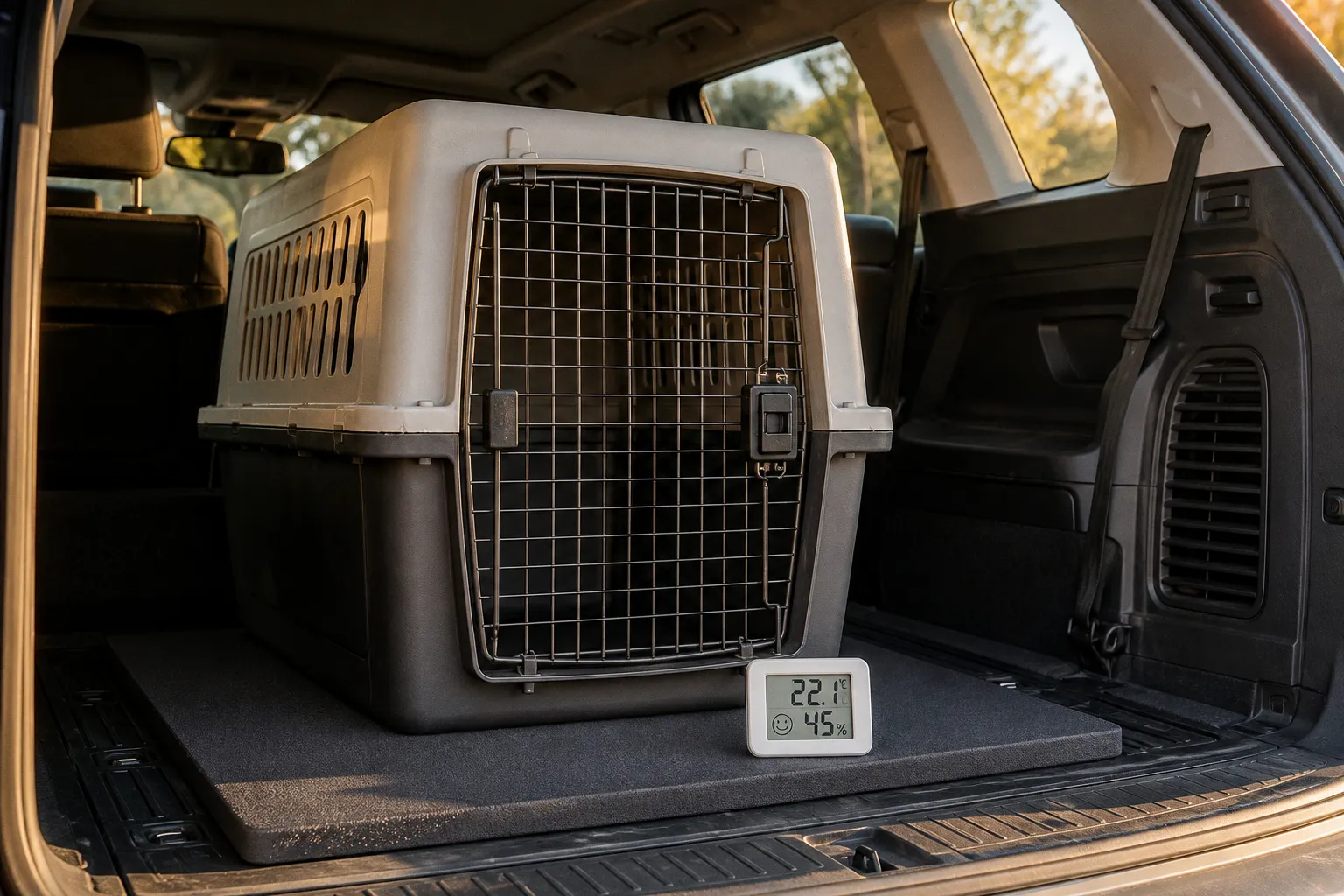
For a French Bulldog, English Bulldog, Pug, Boston Terrier, Shih Tzu, or another short-nosed breed, the transport environment can affect breathing, temperature regulation, and recovery from stress within a relatively short period of time.
Compare car rental deals in United Kingdom
See available offersPartner link — DiscoverCars comparisonThe safest route is usually the one that gives the dog steady airflow, continuous supervision, predictable temperatures, and enough flexibility to stop when the dog needs a break. In practical terms, that generally means climate-controlled ground transport first, in-cabin air travel for eligible small dogs second, and airline cargo transport as the option requiring the greatest caution—and often one that major airlines do not permit at all.
The hidden risks of cargo shipping for snub-nosed breeds
Airline cargo is particularly difficult for brachycephalic dogs because several stressors can occur at once: changes in pressure, heat or cold while the animal is being transferred, unfamiliar handling, delays on the tarmac, restricted observation, and the physical effort of breathing through a narrowed airway.
Flat-faced dogs are already more vulnerable to airway obstruction because their shortened skull structure does not necessarily mean they have a proportionally shortened airway. Many also have narrowed nostrils, an elongated soft palate, or other features associated with brachycephalic obstructive airway syndrome, commonly called BOAS. A dog that appears comfortable in a cool, quiet home may struggle when exposed to excitement, heat, exertion, or prolonged confinement.
Available pet transport safety data indicate that brachycephalic breeds account for approximately 70% of in-flight pet mortalities occurring in airline cargo-hold environments. That figure should not be interpreted as a prediction for every individual dog, but it does show why cargo travel is treated differently for short-nosed breeds than for dogs with longer muzzles.
Most major commercial airlines ban brachycephalic breeds from cargo transport entirely. Airlines that accept some snub-nosed breeds may apply narrower seasonal and temperature rules, including heat embargoes when ground temperatures rise above roughly 75°F to 85°F (23.8°C to 29.4°C). Some cargo programs also restrict transport when ambient temperatures approach 20°F (-6.7°C) or lower.
These limits are not administrative details that can be solved with a veterinary letter. A health certificate or acclimation document does not make cargo travel safe when the underlying route exposes a dog to respiratory and thermoregulation risks. If the airline does not accept the breed, an exception should not be treated as a workable transport plan.
For a brachycephalic dog, the safest transport plan is the one that reduces heat, respiratory strain, and time without direct human oversight—not simply the one with the shortest scheduled duration.
Why cargo risks are difficult to control
Cargo travel often looks efficient on an itinerary because the flight itself may take only a few hours. The dog’s actual transport window is longer. It includes the journey to the airport, check-in, kennel handling, loading, waiting periods, aircraft movement, unloading, and collection at the destination.
During those stages, the owner may not be able to respond if the dog begins panting heavily, becomes distressed, or needs a temperature-controlled environment. A professional handling team can reduce some logistical problems, but it cannot remove the physiological limitations associated with a short airway.
This is also why sedation is not a sensible workaround. The American Veterinary Medical Association and IATA advise against sedating or tranquilizing brachycephalic dogs for air travel. Sedatives can lower blood pressure and suppress respiration, increasing the danger of airway collapse rather than providing reliable comfort.
A dog that is visibly anxious before departure needs a veterinary plan based on its health history, not an improvised sedative administered at home. In many cases, the more effective solution is to change the transport method, reduce the number of transitions, and build familiarity into the preparation phase.
Why climate-controlled ground transport remains the gold standard
Ground transport for flat-faced dogs is generally the most controllable option, particularly for interstate relocation or journeys that can be completed over one or several carefully planned days. A climate-controlled vehicle avoids aircraft pressure changes and cargo-hold handling while allowing the dog to remain under continuous human supervision.
This does not mean that every road journey is automatically safe. A poorly ventilated car, an unplanned summer departure, or a route with excessively long stretches between stops can create many of the same problems that make air cargo unsuitable. The advantage of ground transport is that the logistics can be adjusted in real time.
A professional pet taxi or longer-distance pet transport service should be able to account for:
- Stable temperature control throughout the vehicle, including during loading and unloading.
- A secure travel crate or harness system that prevents movement into unsafe positions.
- Regular rest and hydration opportunities, generally every four to six hours.
- A route that avoids unnecessary transfers, overnight uncertainty, and long periods waiting in direct sun.
- A named handler who can observe breathing, posture, alertness, and signs of overheating.
- A documented veterinary and emergency contact plan for the entire route.
The four-to-six-hour rest interval is a planning baseline rather than a rigid rule. A young, elderly, medically fragile, or highly anxious dog may need more frequent observation and shorter travel segments. Conversely, a calm adult dog in good condition may settle well between scheduled breaks. The coordinator’s role is to preserve the dog’s baseline comfort rather than force the itinerary to match a generic timetable.
Ground transport versus in-cabin flight
The comparison below reflects the practical differences between the two preferred pathways for brachycephalic dog transportation.
| Transport factor | Climate-controlled ground transport | In-cabin commercial flight |
|---|---|---|
| Respiratory environment | No aircraft pressure changes; airflow and temperature can be monitored continuously | Cabin conditions are generally preferable to cargo, but the dog still faces airport stress, confinement, and flight-related pressure changes |
| Human supervision | Continuous supervision by the owner or professional transporter | Direct supervision is possible, but only if the dog remains with the owner or an approved flight nanny |
| Size limitations | Suitable for dogs of many sizes, provided the vehicle and crate are appropriate | Usually limited to small dogs that fit under the seat with the carrier |
| Weight limitations | No standard airline cabin weight restriction | Pet and carrier commonly must remain within an 8–10 kg (15–22 lb) combined limit, depending on the airline |
| Rest and hydration | Stops can generally be scheduled every four to six hours | Opportunities are limited by airport security, boarding, flight duration, and destination procedures |
| Temperature flexibility | Departure time and route can be adjusted around heat and cold | Airline embargoes and airport ground temperatures may restrict travel |
| Best use case | Interstate relocation, larger dogs, medically sensitive dogs, or routes where control matters most | Small, stable dogs that meet airline and carrier requirements and can remain calm in the cabin |
| Main operational concern | Long travel time and the quality of the vehicle and handler | Strict carrier dimensions, airline rules, airport transitions, and limited space under the seat |
For many families, the decision becomes clearer when the dog’s size and clinical history are considered together. A small Pug that fits comfortably beneath an aircraft seat may be a reasonable in-cabin candidate after veterinary review. A larger English Bulldog, or a dog with a history of airway distress, is more likely to require a ground-based plan.
In-cabin flight requirements for small brachycephalic dogs
In-cabin travel is not risk-free, but it avoids the cargo hold and allows the owner or professional flight nanny to observe the dog throughout the flight. For eligible small dogs, it can be a practical alternative when ground travel would take several days or cross a difficult geographic route.
The central constraint is physical fit. The dog and soft carrier commonly must remain within an airline’s combined weight limit, typically around 8 to 10 kg (15–22 lbs), and the carrier must fit under the seat in front of the passenger. These limits vary by airline and aircraft, so a dog that qualifies on one route may not qualify on another.
The carrier must provide enough room for the dog to maintain a natural position without being compressed against the top or sides. At the same time, it must remain within the airline’s approved dimensions. This is one reason in-cabin transport should be planned well before the departure date rather than arranged after tickets have been purchased.
A suitable preparation phase usually includes:
1. Confirming breed and cabin eligibility directly with the airline.
Breed restrictions, carrier dimensions, pet fees, aircraft layouts, and route-specific rules can differ, and a reservation is not complete until the pet has been accepted under the airline’s current policy.
2. Checking the dog’s combined weight and carrier fit.
The dog should be assessed in the actual soft carrier or in a carrier with the same dimensions, because a theoretical weight estimate does not show whether the dog can settle comfortably under the seat.
3. Practicing the full transition sequence.
The dog may encounter a car ride, airport entrance, security screening, waiting area, boarding, cabin noise, and a new location in one day. Short, calm practice sessions help create familiarity anchors around the carrier and handling process.
4. Reviewing the medical baseline with a veterinarian.
Breathing history, previous heat intolerance, obesity, airway surgery, heart disease, age, and anxiety should all inform the transport decision. A dog that is stable at home may still need a more conservative plan for air travel.
5. Planning arrival logistics before departure.
The receiving vehicle should be ready, climate-controlled, and free of unnecessary stops. The first hours after arrival are part of the transport plan because exertion and heat exposure immediately after a flight can add avoidable strain.
A professional flight nanny can provide close supervision during the cabin journey, but that service does not override airline rules or eliminate the dog’s underlying respiratory vulnerability. The handler still needs a clear understanding of the dog’s normal breathing, the signs that indicate distress, and the process for obtaining veterinary support at the destination.
The carrier is part of the safety system
For air travel, the carrier is not merely luggage. It controls airflow, posture, visibility, and the dog’s ability to settle. A carrier that is too small can restrict the head and neck, while one with poor ventilation can trap heat and moisture around the muzzle.
IATA Live Animals Regulations recommend adding 10% to the internal crate dimensions—length, width, and height—for short-nosed breeds when air transport is involved. Airline-approved in-cabin carriers may have tighter external dimensions because they must fit beneath the seat, so the owner may face a genuine trade-off between airline compliance and the dog’s usable internal space.
That trade-off should be resolved before booking. If the dog cannot fit comfortably in an approved cabin carrier, the answer is not to compress the dog into a smaller space or move the dog to cargo without a thorough veterinary and airline review. Ground transport may be the more appropriate route.
Managing thermal stress, breathing, and travel anxiety
Temperature is one of the most significant variables in safe travel for brachycephalic dogs. Short-nosed breeds often have less effective heat dissipation because panting can be mechanically difficult, and stress increases respiratory effort. A hot vehicle, crowded terminal, sunny waiting area, or vigorous greeting at the destination can turn a manageable transition into a medical concern.
A reliable transport plan therefore controls more than the temperature inside the vehicle. It also reduces the number of moments when the dog is exposed to uncontrolled outdoor conditions.
The practical thermal-stress plan
A well-organized itinerary should address:
- Departure timing: Avoid the hottest portion of the day when seasonal temperatures make this possible.
- Vehicle readiness: Pre-cool the vehicle before the dog enters, rather than relying on air conditioning to lower the temperature after loading.
- Loading speed: Keep the dog indoors or in a shaded, ventilated area until the vehicle is ready.
- Stop selection: Choose rest points with shade, quiet surroundings, and access to water; avoid extended pavement walks in hot weather.
- Observation: Watch breathing effort, gum color, posture, responsiveness, and the dog’s ability to settle.
- Arrival control: Move directly into a cool, calm indoor environment instead of adding errands or a long outdoor walk.
A dog that is panting after mild exertion may simply be warm or stimulated, but persistent heavy panting, struggling to breathe, weakness, collapse, blue or gray gums, or an inability to settle requires immediate veterinary attention. The handler should not wait for the next scheduled stop if the dog’s condition is deteriorating.
Anxiety management without suppressing respiration
Travel anxiety deserves a structured response, particularly because excitement and respiratory stress can reinforce one another. The goal is not to make the dog unresponsive; it is to lower the number of unfamiliar variables and preserve the dog’s usual regulation patterns.
Familiarity anchors can include:
- The dog’s regular bedding or a washable blanket carrying familiar household scent.
- A carrier introduced gradually at home, with meals or quiet rest occurring nearby.
- The same harness, leash, water bowl, and feeding routine used during ordinary days.
- A calm handler who knows the dog’s baseline breathing and behavior.
- A transport schedule that leaves enough time for toilet breaks and decompression rather than moving directly from one transition to the next.
Sedation should not be used as a substitute for preparation, and tranquilizing a brachycephalic dog before air travel can increase rather than reduce respiratory risk. Any medication plan must come from the dog’s veterinarian, with the route and transport environment considered together.
Comfort is not a separate layer added after compliance; for a short-nosed dog, temperature control, calm handling, airflow, and regulatory preparation are all part of the same safety system.
Planning the route: regulatory compliance and documentation
Pet relocation can fail even when the physical transport method is sensible, because documentation and timing have not been mapped alongside the journey. Interstate and international travel may involve veterinary certificates, vaccination records, import permits, microchip requirements, parasite treatments, and destination-specific rules.
For more complicated relocations, planning may need to begin up to six months in advance. That does not mean every domestic trip requires half a year of preparation, but it does reflect how quickly timelines become restrictive when several jurisdictions, airline rules, or destination health requirements are involved.
A useful planning file should contain:
- The dog’s permanent identification and current contact details.
- Vaccination and veterinary records in a form accepted by the destination.
- Any required health certificate, import permit, or movement document.
- The airline or transporter’s written breed and equipment requirements.
- The exact carrier or crate measurements, including usable interior space.
- The route, departure windows, scheduled breaks, and overnight arrangements.
- Emergency veterinary contacts along the ground route and near the destination.
- A written medication and feeding schedule, if the veterinarian has prescribed one.
The timing of a health certificate can be especially consequential because some documents are valid only for a defined period. Obtaining paperwork too early may make it expire before arrival, while leaving it too late can eliminate the preferred departure date. This is where a relocation coordinator or experienced pet transport provider can add practical value: not by replacing veterinary advice, but by aligning each administrative step with the actual movement schedule.
Choosing a pet transport provider
When comparing pet transportation services, the provider’s ability to explain its process is more useful than a broad promise that the dog will be treated like family. Ask how the company handles heat, rest stops, vehicle ventilation, emergency escalation, overnight care, and handoff at the destination.
For a pet taxi for a snub-nosed dog, the most relevant questions are operational:
- Is the vehicle climate-controlled for the entire trip?
- Is the dog transported alone or with other animals?
- Who remains responsible for the dog during stops and overnight periods?
- How often are breathing, hydration, and comfort checked?
- What happens if weather makes the original departure unsafe?
- Can the provider show how the crate or harness will be secured?
- Is there a documented handoff process with names, times, and contact numbers?
- Does the company recognize that cargo restrictions and veterinary documents cannot be bypassed through informal exceptions?
A professional provider should be comfortable with a delayed departure when temperatures, aircraft restrictions, or the dog’s condition make the original plan unsuitable. Flexibility is not a sign that the company lacks organization; in this category, it is part of competent risk management.
The safest choice depends on the dog, not only the map
For most brachycephalic dogs, climate-controlled ground transport offers the strongest combination of supervision, temperature control, rest opportunities, and route flexibility. It is particularly appropriate for larger dogs, dogs with a history of breathing difficulty, and relocations where the owner wants direct control over the transition phase.
In-cabin flight can be reasonable for a small, stable dog that fits comfortably in an approved carrier, remains with the owner or a professional flight nanny, and meets the airline’s current restrictions. The cabin is fundamentally different from the cargo hold, but the dog still needs a veterinary review, careful carrier preparation, and a low-stress airport plan.
Airline cargo should generally be treated as unsuitable for brachycephalic breeds unless a specific, current airline policy and veterinary assessment establish otherwise—and many major carriers will not accept these dogs in cargo in the first place. Documentation cannot remove the physiological risks of heat, respiratory strain, or limited observation.
The most reassuring outcome is rarely the fastest-looking itinerary. It is the plan that preserves the dog’s baseline comfort from departure through handoff, with enough preparation to make every transition predictable and enough flexibility to change course when conditions are no longer appropriate. When ground transport is available, it is usually the clearest path to safe travel for brachycephalic dogs; when cabin travel is the only practical alternative, disciplined preparation can make that route more manageable for the right small dog.