Ground Pet Transport vs Air Travel for Dogs
Choosing between ground pet transport and air travel for a dog is rarely a simple question of speed.
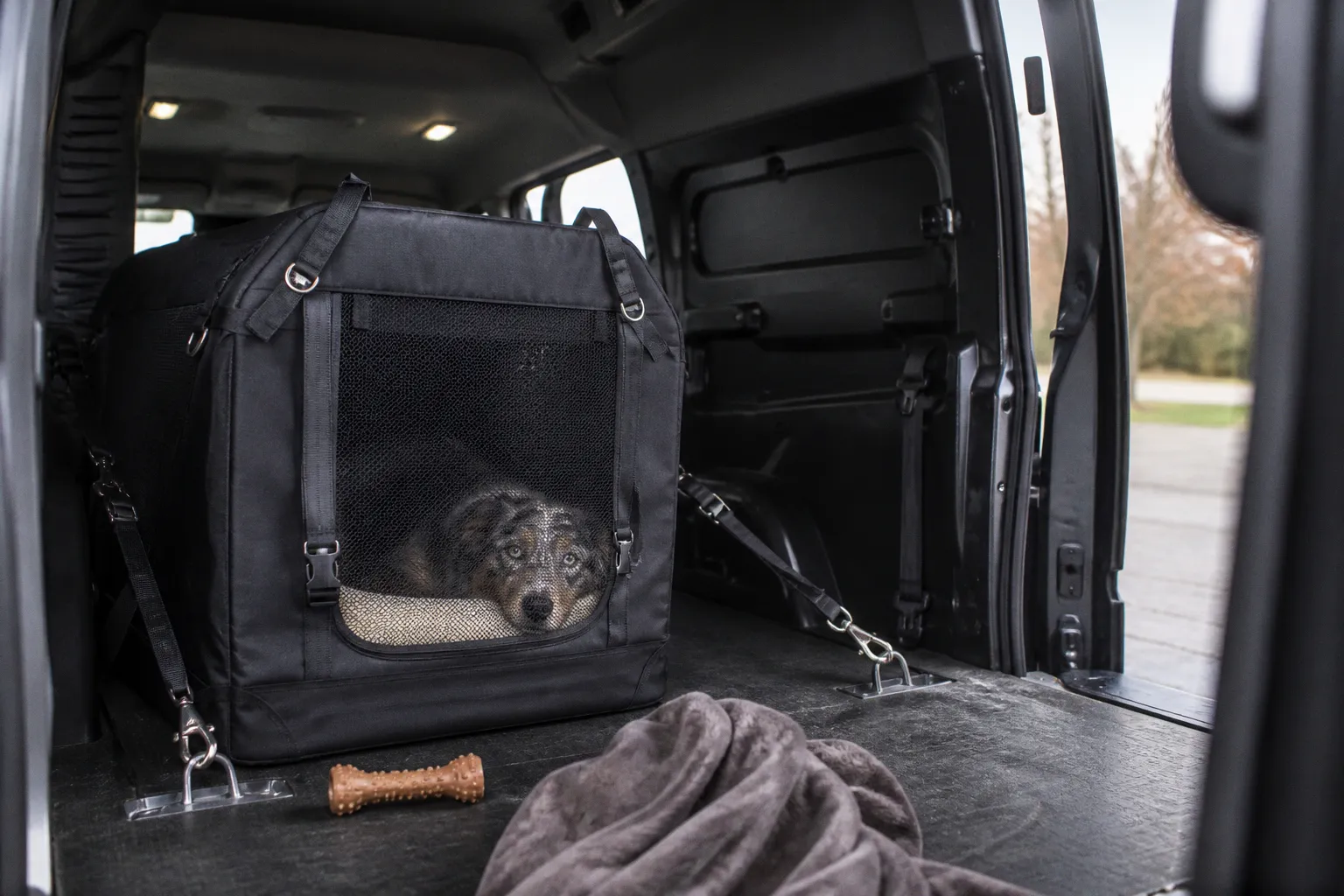
The better option depends on your dog’s age, breed, health, travel distance, number of pets, tolerance for confinement, and the level of monitoring available during the move.
Compare car rental deals in United Kingdom
See available offersPartner link — DiscoverCars comparisonAir travel can reduce a multi-day relocation to a few hours, and it may be the only practical method for an overseas move. Ground transport, however, gives many dogs a more gradual transition phase, with regular observation and fewer changes between handlers, terminals, and loading environments. For senior dogs, anxious travelers, and flat-faced breeds, that difference can be more significant than the time saved in the air.
The right comparison is not “Which method is universally safer?” It is “Which method gives this particular dog the most controlled and appropriate travel experience?”
The first decision: speed versus a manageable transition
For a short or medium-distance interstate move, ground transport often offers a better balance between supervision and travel stress. A professional ground carrier can collect the dog at home, maintain a familiar routine, and complete the route without the airport transfers that make air travel more complicated than the flight duration suggests.
Air travel is more attractive when:
- The destination is overseas or separated by a large body of water.
- The move covers a distance that would require several days on the road.
- The dog is comfortable with crate travel and can safely tolerate the airline’s restrictions.
- The itinerary can be arranged around mild temperatures and minimal connection time.
- The owner can meet all airline, destination-state, and veterinary documentation requirements.
Ground transport is often a stronger candidate when:
- The dog is elderly, medically fragile, or highly anxious.
- The breed has a shortened muzzle, such as a Bulldog, Pug, or similar brachycephalic type.
- Several pets are traveling together.
- The route is under roughly 2,000 miles and can be managed with planned rest and care intervals.
- The owner wants a door-to-door service rather than a sequence of home, terminal, aircraft, and destination pickups.
This does not mean that a nervous dog will automatically enjoy a long drive, or that every flight will be traumatic. The useful distinction is the amount of environmental change involved. Air travel can place a dog through multiple transition points in a short period: departure from home, vehicle transfer, terminal handling, security or airline processing, aircraft loading, flight, arrival handling, and a second ground transfer. Ground transport usually removes several of those handoffs.
The safest transport method is the one that keeps the dog’s health profile, handling needs, and regulatory requirements visible from departure to arrival.
Regulatory standards and the Animal Welfare Act
Commercial pet transport is not simply a matter of placing a dog in a vehicle or purchasing an airline ticket. Professional carriers operate within animal welfare and carrier requirements, while destination states may impose their own health documentation and entry rules.
Under Animal Welfare Act regulations, dogs and cats in commercial transport must not be exposed to ambient temperatures below 45°F (7.2°C) or above 85°F (29.5°C) for more than four consecutive hours during transit or in terminal facilities. During surface transportation, the operator must observe the animals at least once every four hours to confirm that ventilation and ambient conditions remain acceptable.
There is also a shorter temperature limit during the movement or handling of an animal to and from a terminal facility: exposure outside the permitted range should not exceed 45 minutes. That detail matters because a carrier may have a compliant vehicle but still create a weak point during loading, unloading, or terminal transfers.
Basic welfare intervals include:
- Food offered at least once every 24 hours, or every 12 hours for animals under 16 weeks old.
- Water offered at least once every 12 hours.
- Observation during surface transportation at least once every four hours.
- Appropriate ventilation, crate dimensions, and temperature management throughout the route.
- Documentation that meets the receiving state’s requirements.
The USDA does not regulate interstate movement when a pet travels directly with its owner. That does not remove the need to follow the destination state’s rules, which may include a Certificate of Veterinary Inspection, rabies documentation, vaccination records, or specific parasite and health requirements. Commercial transporters, by contrast, must meet applicable federal carrier standards and comply with the receiving state’s requirements.
For air travel, the compliance layer becomes more detailed because the airline adds its own policies to the legal and veterinary requirements. Puppies and kittens must be at least eight weeks old and weaned for at least five days before they can be transported by air. Airlines may apply stricter age, breed, seasonal, temperature, or route restrictions.
A compliant travel crate is part of this process, not an optional accessory. Airline crates generally need sufficient ventilation, secure construction, appropriate size, and an opening area that meets airline specifications; the research basis for airline-compliant crates identifies ventilation openings totaling at least 14% of the crate’s surface area. The exact crate approval and measurement rules should be confirmed with the individual airline before purchase, because a crate that appears suitable may still be rejected at check-in.
Why brachycephalic dogs change the calculation
Flat-faced dogs deserve a separate planning pathway. Bulldogs, Pugs, French Bulldogs, Boston Terriers, and other brachycephalic breeds can have narrower airways and reduced tolerance for heat, exertion, and respiratory stress. At altitude, even within a temperature-controlled aircraft, respiratory compromise can become more difficult to manage.
Many airlines restrict or prohibit brachycephalic breeds from flying, particularly in cargo compartments or during warmer months. Restrictions vary by airline and may also differ according to the individual dog’s age, health status, route, and aircraft type. A booking confirmation is not a substitute for checking breed-specific acceptance rules.
For these dogs, ground transport is commonly the safer starting point because the carrier can monitor breathing, posture, temperature, and stress behavior throughout the route. A ground carrier may also be able to adjust the schedule or seek veterinary assistance more directly if the dog shows signs of distress.
That does not make ground transport risk-free. A long drive in poor ventilation, excessive heat, or an unsuitable crate can create its own respiratory danger. The quality of the operator matters: the vehicle should be climate-controlled, the route should include realistic rest and observation intervals, and the company should explain how it responds to a dog that develops breathing difficulty.
Sedation should not be treated as a standard solution for either method. Veterinary and airline guidance generally discourages or prohibits sedating pets for air travel because of potential respiratory and cardiovascular risks at altitude. For an anxious dog, the appropriate preparation may instead involve a veterinary assessment, gradual crate conditioning, familiar bedding, and a transport plan that reduces unnecessary handling.
Cost dynamics: per-pet air fees versus distance-based ground rates
Price comparisons become misleading when they treat a dog’s ticket as the entire cost of air travel. Air transport commonly involves several separate charges, while ground carriers often price by distance, route, household, or service level.
Typical domestic air costs may include:
| Cost component | Typical range or structure | Planning implication |
|---|---|---|
| In-cabin airline pet fee | $95–$200 each way | Usually applies per pet and requires the dog to fit under the seat in an approved carrier |
| Domestic air cargo | $400–$1,200 per pet | Often separate from the owner’s ticket and subject to airline availability |
| IATA-approved crate | $75–$300 | A required purchase for many cargo arrangements |
| Certificate of Veterinary Inspection | $75–$250 | Cost varies by veterinary practice and destination requirements |
| Ground transport under 1,000 miles | $500–$2,000 | Often priced by route or household rather than strictly per dog |
| Ground transport 1,000–2,000 miles | $2,000–$3,800 | Route complexity, timing, and service level can affect the quote |
| Ground transport 2,000–3,000 miles | $3,800–$5,600 | Longer routes may include overnight planning or multiple care phases |
| Ground transport 3,000–4,000 miles | $5,600–$7,400 | Door-to-door coordination can become a major part of the total cost |
These figures are planning ranges, not guaranteed quotations. Fuel prices, seasonal demand, pickup and delivery complexity, shared versus private transport, medical needs, and the number of stops can all change the final amount.
The most important pricing distinction is that air cargo charges are commonly calculated per pet. Ground transportation may be priced for the route or household, so a family moving three dogs can find the total ground quote more competitive than three separate cargo bookings, three crates, and three veterinary certificates.
In-cabin travel is a different category again. It can be relatively inexpensive, but it is only available when the dog meets the airline’s size and carrier requirements, and when the owner is traveling on the same flight. It is not a substitute for professional pet shipping when the dog cannot fit safely beneath the seat or the owner is unable to accompany the animal.
How to compare quotes without missing the real cost
A ground transport quote should explain whether it includes:
- Home pickup and delivery.
- Private or shared transportation.
- Crate use or crate rental.
- Feeding, watering, medication administration, and exercise breaks.
- Overnight boarding if the route cannot be completed in one day.
- Status updates and emergency contact procedures.
- Additional mileage for remote locations or difficult access.
- Surcharges for brachycephalic breeds or special handling.
A reported surcharge for brachycephalic ground transport may be approximately $0.15 per mile, although individual carriers set their own pricing. The surcharge itself is less important than what it funds: climate control, additional monitoring, route restrictions, or a handling plan adapted to the dog’s breathing and heat tolerance.
For air travel, ask whether the quote includes the airline pet fee, cargo booking, crate, health certificate, ground transfers, and any destination handling. An inexpensive flight can become a substantially different relocation budget once the dog must travel to and from the airport and remain within a narrow departure window.
Operational realities: who is watching the dog?
The central practical difference between ground pet transport and air travel is not only where the dog travels. It is how often the dog is directly observed and how quickly a problem can be recognized.
A professional ground carrier should be able to describe the observation schedule in plain language. Federal standards require observation at least once every four hours during surface transportation, but a strong operator may provide more frequent checks, particularly for senior dogs, anxious travelers, puppies, or animals with medical instructions. The carrier should know whether the dog is drinking, urinating, vomiting, panting unusually, attempting to escape the crate, or showing signs of overheating.
Ask how the company records care. A written transport log may include:
1. Time of departure and each scheduled observation.
2. Water and food offered, including whether the dog accepted them.
3. Bathroom breaks and exercise opportunities.
4. Medication administration, if prescribed and authorized.
5. Temperature or climate-control checks.
6. Changes in behavior, breathing, appetite, or mobility.
7. Arrival handoff details and the identity of the receiving person.
Air travel has a different monitoring pattern. During the flight, the dog is not available for routine owner observation, and cargo handling may involve periods in airport facilities before and after the aircraft leg. That does not mean the dog is unattended for the entire journey, but it does mean the owner has less control over the timing and environment of each transition.
The airport itself can also be the most difficult part for a sensitive dog. Noise, unfamiliar handlers, conveyor systems, vehicle movement, and waiting periods may be more stressful than the flight. Temperature management is particularly important during hot or cold weather, because the dog may spend time in ground equipment or terminal areas before loading.
If flying is necessary, the strongest itinerary is usually the simplest one: direct routing, minimal connection time, mild weather, confirmed breed acceptance, and a destination pickup that begins as soon as the dog is released. Avoid building the plan around an optimistic schedule that leaves no margin for delays, weather changes, or airline handling issues.
Crates, familiarity anchors, and travel anxiety
A crate should be large enough for the dog to stand, turn around, and lie down naturally, but it should not be so oversized that the dog is thrown against the sides during vehicle movement. The crate must also be structurally sound, escape-resistant, and appropriate for the transport method.
Preparation should begin during the transition phase, not on the morning of departure. A dog that only enters a crate when something unpleasant is about to happen may associate the crate with separation and loss of control. Gradual practice can establish the crate as a baseline comfort space:
- Leave the crate open at home with familiar bedding inside.
- Feed occasional meals near or inside it without forcing the dog to enter.
- Build from brief door closures to longer calm periods.
- Practice short vehicle trips before attempting a full transport route.
- Use the same bedding, scent item, and feeding routine where the carrier permits.
- Keep labels and instructions clear without covering ventilation openings.
These familiarity anchors are especially useful for dogs traveling with a professional carrier, because they preserve a small amount of home routine during an otherwise unfamiliar process. Food should not be changed immediately before travel, and the carrier should receive clear written instructions about meal timing, water preferences, medications, allergies, and emergency contacts.
A dog with travel anxiety may need a veterinary discussion well before departure. The objective is not simply to make the dog quiet; it is to create a plan that preserves safe breathing, normal temperature regulation, and appropriate responsiveness. A veterinarian may also identify whether the dog’s age, heart condition, airway status, orthopedic limitations, or medication schedule makes one transport method more suitable.
Planning an interstate or long-distance relocation
Interstate pet relocation works best when the route is built backward from the arrival date. Start with the receiving state’s requirements, then work through the veterinary appointment, transport booking, crate preparation, and delivery window.
A practical planning sequence looks like this:
1. Confirm the destination rules.
Determine whether the receiving state requires a Certificate of Veterinary Inspection, specific vaccination records, a current rabies certificate, or other documentation. Requirements can differ even between neighboring states.
2. Assess the dog’s travel profile.
Record age, breed, weight, medical conditions, medication schedule, previous travel behavior, crate tolerance, and heat or respiratory sensitivity. This profile should guide the method rather than being added after a booking is made.
3. Choose the transport category.
Compare direct in-cabin travel, air cargo, shared ground transport, private ground transport, or a combination of owner travel and professional pet taxi service.
4. Build the timeline around documentation.
Veterinary certificates may have limited validity windows, and airlines can impose their own timing rules. Booking the appointment too early can create paperwork that expires before departure; booking too late can leave no room to correct an incomplete record.
5. Confirm the handoff.
Identify who will release the dog, who will receive the dog, which identification documents are required, and how the carrier will contact both parties during delays.
6. Plan the first hours after arrival.
The dog may need quiet access to water, a familiar meal, a bathroom break, and uninterrupted rest. A busy welcome or immediate change in food can make post-travel stress harder to interpret.
For routes under 1,000 miles, ground transport may be completed within a manageable operational window, depending on the carrier’s schedule and whether the service is shared or private. Longer routes require more careful planning around overnight care, driver changes, rest periods, and the dog’s ability to tolerate extended confinement. A low price is not useful if the itinerary depends on unrealistic driving hours or leaves no plan for delays.
For overseas relocation, air travel is usually unavoidable, but the ground portions still deserve the same level of scrutiny. The dog may travel by pet taxi to the departure airport, be handled by airport staff, fly as cargo or in cabin, and then transfer to another vehicle at the destination. The international flight is only one segment of the complete transport chain.
Which option fits your dog?
The following comparison can help organize the decision without turning it into a universal rule:
| Factor | Ground pet transport | Air travel |
|---|---|---|
| Travel speed | Slower, particularly over several states | Faster for long distances and required for many international routes |
| Direct supervision | Frequent vehicle-based observation and easier care adjustments | Less owner visibility, with airline and terminal handling between flight segments |
| Brachycephalic breeds | Often more adaptable when climate-controlled and professionally monitored | Commonly restricted or prohibited by airlines because of respiratory risk |
| Multiple pets | May be cost-effective when priced by household or route | Fees, crates, and documentation usually apply per pet |
| Temperature exposure | Managed throughout the vehicle route, but weather still affects scheduling | Requires careful coordination around aircraft, terminal, and ground-handling temperatures |
| Documentation | Primarily destination-state and carrier requirements | Airline rules are added to veterinary and destination requirements |
| Door-to-door service | Commonly available | Usually requires separate airport transfers |
| Best fit | Anxious, senior, medically sensitive, or flat-faced dogs when the route is practical | Long-distance or international moves when the dog meets airline and veterinary requirements |
A healthy, confident dog traveling a very long distance may do well by air when the itinerary is direct and professionally managed. A senior dog moving between nearby states may be better served by ground transport even if the drive takes longer. For a household with several pets, the cost structure may make ground transport more reasonable than purchasing separate airline arrangements.
The carrier’s operating standards are as important as the method. Ask who physically handles the dog, how often observations occur, what happens during delays, how temperature is monitored, and what the emergency escalation process looks like. A clear answer is more useful than a broad promise that the company “cares about pets.”
The decision should reduce variables, not simply reduce hours
Ground pet transport versus air travel is ultimately a choice between different forms of complexity. Air travel minimizes time in transit but adds airline restrictions, terminal handling, temperature windows, crate requirements, and often per-pet expenses. Ground transport takes longer but can provide a more continuous care routine, particularly when the carrier offers door-to-door service and a documented monitoring process.
For brachycephalic dogs, elderly travelers, anxious dogs, and multi-pet households, the balance often favors a well-run ground option. For international relocations or extreme distances, air travel may be necessary, provided the dog is medically suitable and the itinerary meets every airline and destination requirement.
A carefully planned move should leave you with more than a booking confirmation. You should have a route, a care schedule, documentation dates, crate and feeding instructions, a named handoff contact, and a realistic response plan for delays. When those pieces are in place, the transport method becomes easier to evaluate—and the dog’s transition into the new home becomes substantially more predictable.