Why Off-Leash Recall Is a Critical Heat Safety Protocol for Tampa Dogs
Tampa pavement reaches 130°F in summer. All Dogs Unleashed Tampa now frames off-leash recall as a thermal regulation intervention, not just obedience: a dog that returns on the first command can be removed from hot asphalt before paw pad damage occurs.
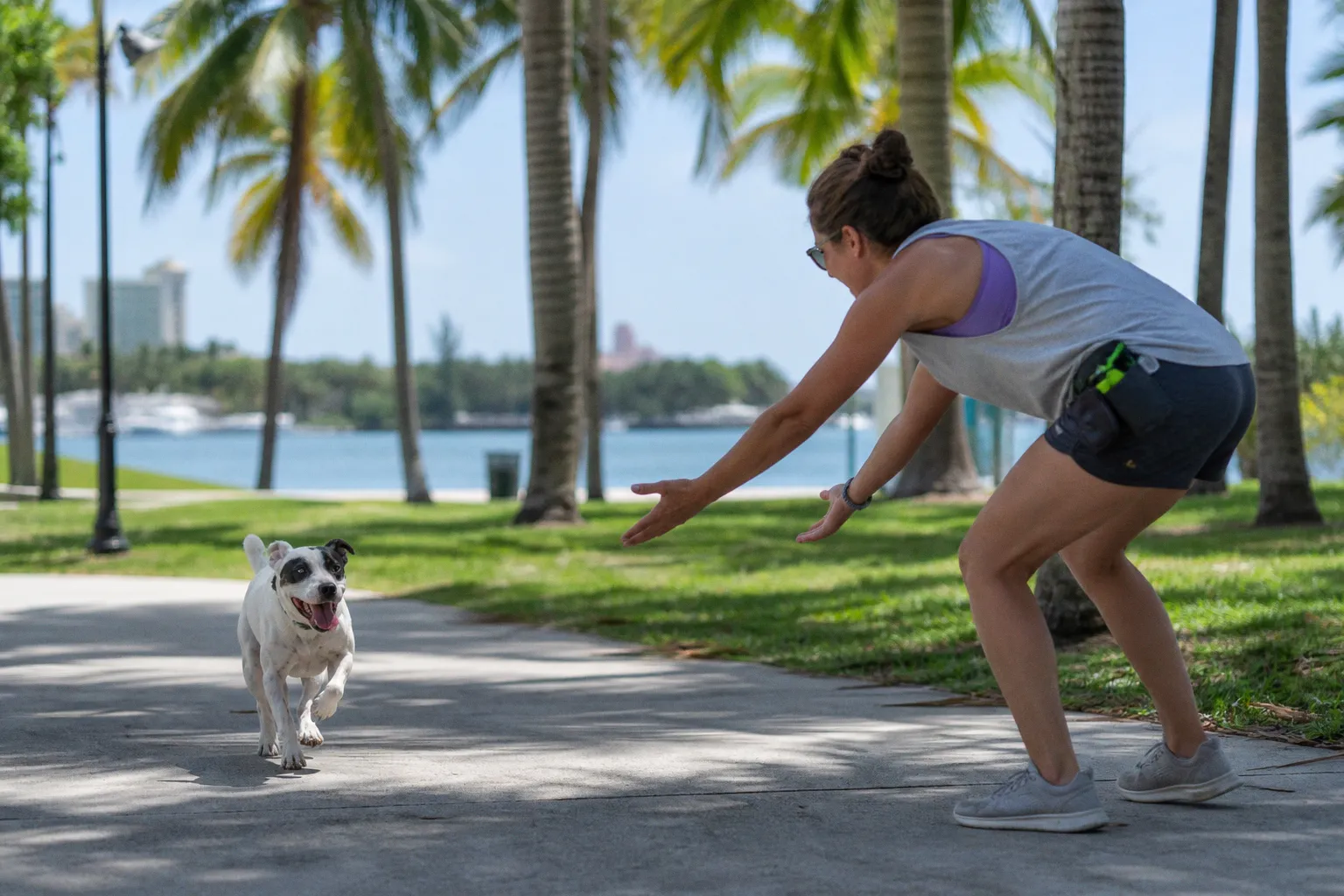
For professional dog walkers and pet sitters operating in high-heat environments, this reframing shifts recall from a convenience metric to an injury-prevention protocol with measurable compliance targets.
The Thermal Load Problem
Asphalt absorbs and retains solar radiation at rates exceeding ambient air temperature significantly. A surface reading of 130°F — confirmed in Tampa's current conditions — places sustained paw-to-surface contact in a damage-risk zone. The kinetic chain during leash pulling compounds exposure: a dog lunging forward extends ground contact per stride; a dog resisting a corrective tug plants weight on a single pad surface. Both patterns increase cumulative thermal load on soft tissue.
A reliable recall eliminates both scenarios. The dog disengages from the heat source on the first command, reducing ground contact to a single stride sequence.
Recall vs. Heat-Safety Recall: Operational Parameters
Standard recall and heat-safety recall differ in tolerance margins. Walkers should evaluate client dogs against these thresholds:
- Response time: ≤1.5 seconds from command to turn initiation. Delayed response equals additional paw pad exposure on a surface that is actively transferring heat.
- First-command compliance: Must be 100%. A second-attempt recall adds multiple seconds of asphalt contact. In a heat context, that margin matters.
- Distance threshold: Functional recall at 15–30 feet. This is the typical engagement range when a dog is ahead of a handler on a sidewalk or path.
Handlers working with dogs that lack off-leash reliability should default to a 6-foot maximum leash length on hot surfaces. This preserves manual control over stride patterns and total contact duration.
Pre-Season Checklist for Professional Walkers
Before scheduling summer routes:
- Surface temperature audit. Press the back of your hand flat against asphalt for 7 seconds. If discomfort occurs, surface temperature exceeds safe contact thresholds. Reroute or abort.
- Recall latency test. In a low-distraction environment, time each client dog from command to turn initiation. Flag any animal exceeding 2 seconds for restricted-surface walking only.
- Route mapping. Identify shaded alternatives for every segment of your walk paths. Asphalt in direct sun and asphalt under tree canopy can differ by 40°F or more.
- Gait observation. Document dogs that resist leash guidance with forward lunging. These animals exhibit extended ground contact per stride and carry higher thermal injury risk.
- Scheduling shift. Dogs without verified first-command recall should be walked exclusively on grass or dirt surfaces during peak heat hours. No exceptions.
Off-leash recall is not a convenience feature. On a 130°F surface, it is the difference between a normal walk and a veterinary visit.