Why You Must Inspect Your Dog for Grass Seeds After Every September Walk
According to the Daily Express, citing UK grooming suppliers and veterinary guidance, post-walk coat checks are now standard protocol through the close of grass seed season.
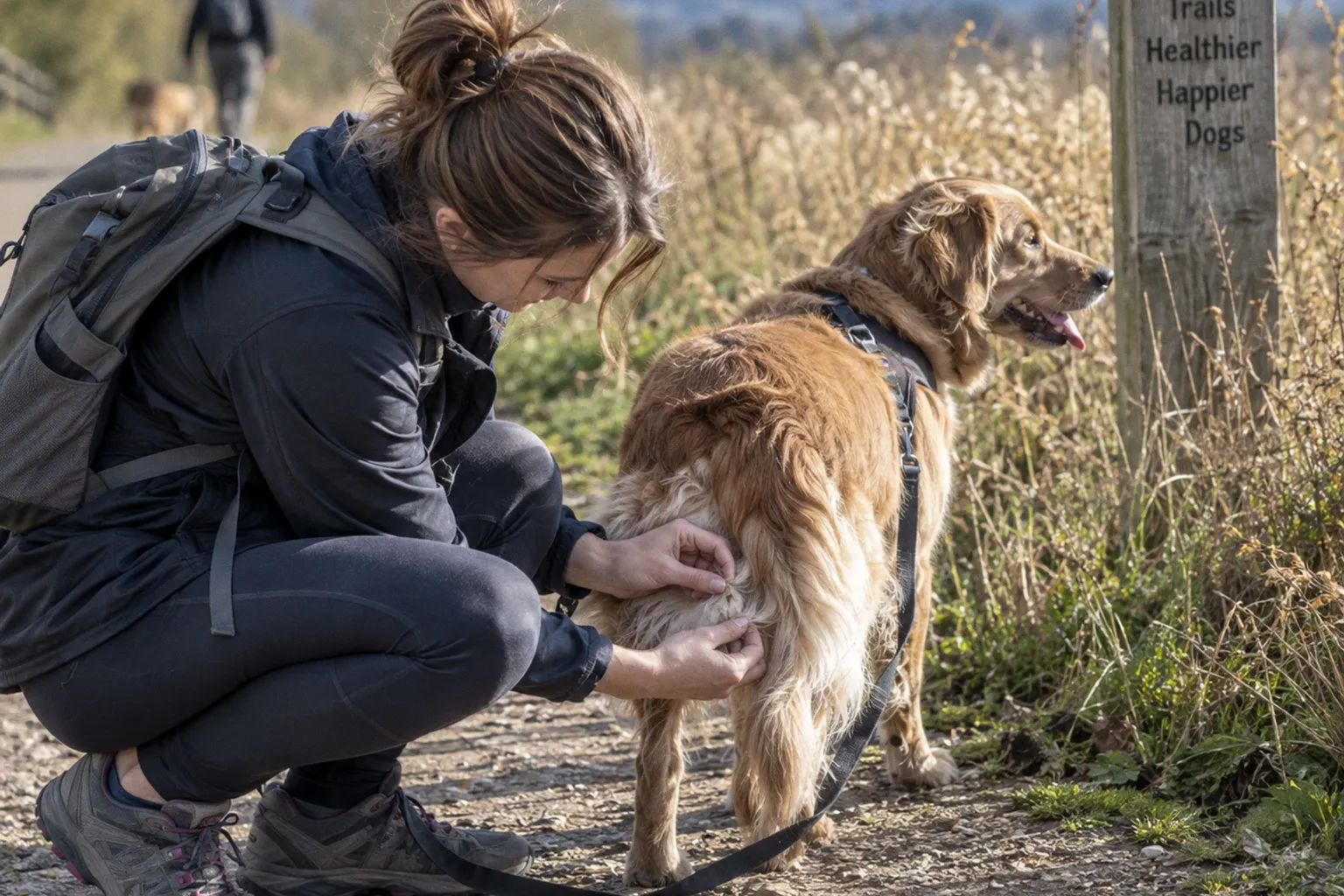
The mechanism of injury is mechanical: barbed seeds migrate in one direction only, embedding deeper into tissue with each step, head shake, or skin flexion. September marks peak exposure as dried summer grasses shed their full seed load, and the season runs from June through the end of the month.
The Mechanism of Injury
Grass seeds from common meadow and verge grasses carry a barbed architecture that permits forward travel and prevents backward extraction. Once lodged between toes, inside the ear pinna, or against the conjunctiva, continued locomotion drives the seed along the kinetic chain of the affected limb or head. Documented outcomes include severe infection, abscess formation, and ocular injury from seed migration into sensitive tissue. Groomers across the UK report discovering seeds that have been embedded for up to a week before detection, with owners noting only intermittent licking or head-tilting behavior.
High-Risk Profiles and Terrain
The exposure profile concentrates in breeds with feathered feet, pendulous ear carriage, or retained summer coat density. Springer spaniels, cocker spaniels, and doodle variants present the highest grooming-frequency encounters according to suppliers in the trade. Terrain risk concentrates in un-mown verges, overgrown meadows, and any boundary strip where July and August grasses have dried in place. Walking line selection away from these zones reduces seed contact probability at the source. Surface seeds must be removed immediately; any seed suspected of burrowing requires veterinary assessment without delay.
Field Protocol
Execute the following steps at the conclusion of every September walk:
- Inspect the interdigital webbing of all four paws; spread each toe and examine the dorsal, ventral, and lateral surfaces.
- Examine both ear pinnae and visible canal opening; note odor deviation, discharge, or head-tilt indicating early infection.
- Lift the tail and examine the perianal region and ventral abdomen.
- Brush the coat against the grain, focusing on feathering at the forelimbs, hocks, and tail base where seeds lodge first.
- Clip hair between toes and around ear openings to reduce seed retention; maintain this trim throughout the season.
- Remove surface seeds with fingers or a fine comb; do not pull on embedded material, as breakage complicates extraction.
- Contact a veterinary professional immediately if a seed is suspected in the eye, ear canal, or nasal passage, or if the dog displays lameness, repeated head-shaking, or persistent pawing at the face.
Request a seed check at the next grooming appointment. The procedure is standard in the UK trade but rarely requested by owners, according to suppliers in the industry.