Veterinary Guidelines for Safe Dog Walking Temperatures
Daily News reports a veterinarian has identified a specific ambient temperature threshold above which canine walking protocols should change. The published figure gives professional walkers and sitters a defined decision point rather than a judgment call.
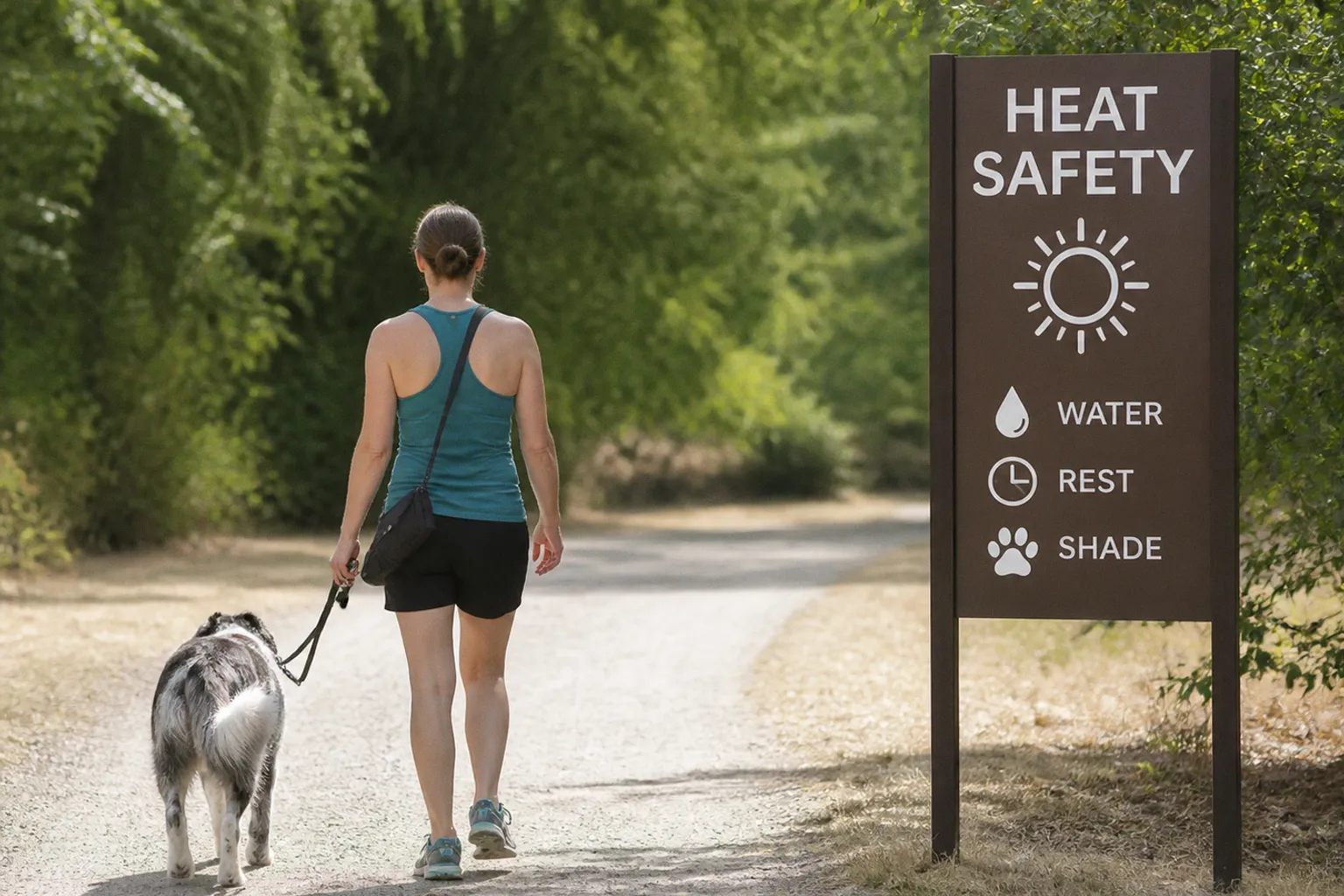
This converts a grey area into a measurable operational parameter.
Thermal Mechanics of Pavement
Pavement absorbs solar radiation and re-radiates heat into the contact surface. Surface temperature tracks above ambient air temperature by a margin that widens under direct sun and narrows under cloud cover. The kinetic chain starts at the paw pads: sustained contact above tissue tolerance thresholds produces thermal injury before ambient conditions register as uncomfortable to a human handler. Air temperature is not surface temperature. Treat them as separate variables.
Humidity disrupts evaporative cooling through panting. Effective heat dissipation drops as relative humidity rises, independent of the air thermometer. This decoupling means two days at the same air temperature carry different risk profiles based on moisture content. A 24°C day at 80% humidity is a higher thermal load than a 24°C day at 30% humidity. Air temperature alone is an incomplete input.
Risk Modifiers by Subject
The published threshold assumes an average subject. Individual dogs shift the effective threshold up or down.
- Brachycephalic breeds: compromised upper airway reduces convective heat loss. Apply the published threshold at a lower air temperature.
- Dense double coats and dark pigmentation: additional insulation and increased radiant heat absorption. Lower the effective threshold.
- Geriatric, neonatal, and cardiac-compromised animals: reduced thermoregulatory capacity. Treat every warm-condition day as elevated risk regardless of the nominal figure.
- High-drive working dogs: sustained exertion generates metabolic heat faster than ambient cooling. Shorten route duration before you shorten the route.
Field Protocol
1. Measure pavement surface temperature with an infrared thermometer at the route start and midpoint. Record the delta above ambient air temperature.
2. Conduct the seven-second contact test: press the back of the hand to the walking surface. If the handler cannot hold full contact for seven seconds, the surface exceeds canine tissue tolerance. Choose shaded substrate.
3. Schedule high-exertion segments during pre-dawn or post-sunset windows through warm months. Peak ground temperature lags peak air temperature by roughly two to three hours.
4. Carry water at a baseline of 0.5 L per dog per hour of activity. Increase volume for brachycephalic or thick-coated subjects.
5. Monitor for heat stress indicators during transit: excessive panting beyond baseline, thick or excessive drooling, stumbling, bright red or pale gum color, glassy eyes. Stop activity immediately on any single indicator.
Parameters to Track
The published threshold functions as a tripwire, not a guarantee. Pavement temperature, humidity, breed anatomy, coat type, and individual conditioning all modulate the actual risk to a specific animal. Walkers and sitters should log conditions on each outing — air temp, surface temp, humidity, route duration, subject breed and age. Build a dataset that reflects your local microclimate and your route mix. The published number initiates the protocol. The logged data refines it.
Review your route inventory for non-negotiable pavement segments. Identify alternatives now, before conditions force the decision mid-walk.