New UK Safety Rules for Children and Banned Breed Dogs at Home
The UK government has issued formal guidance outlining what counts as compliance, and the operational gaps that create risk.
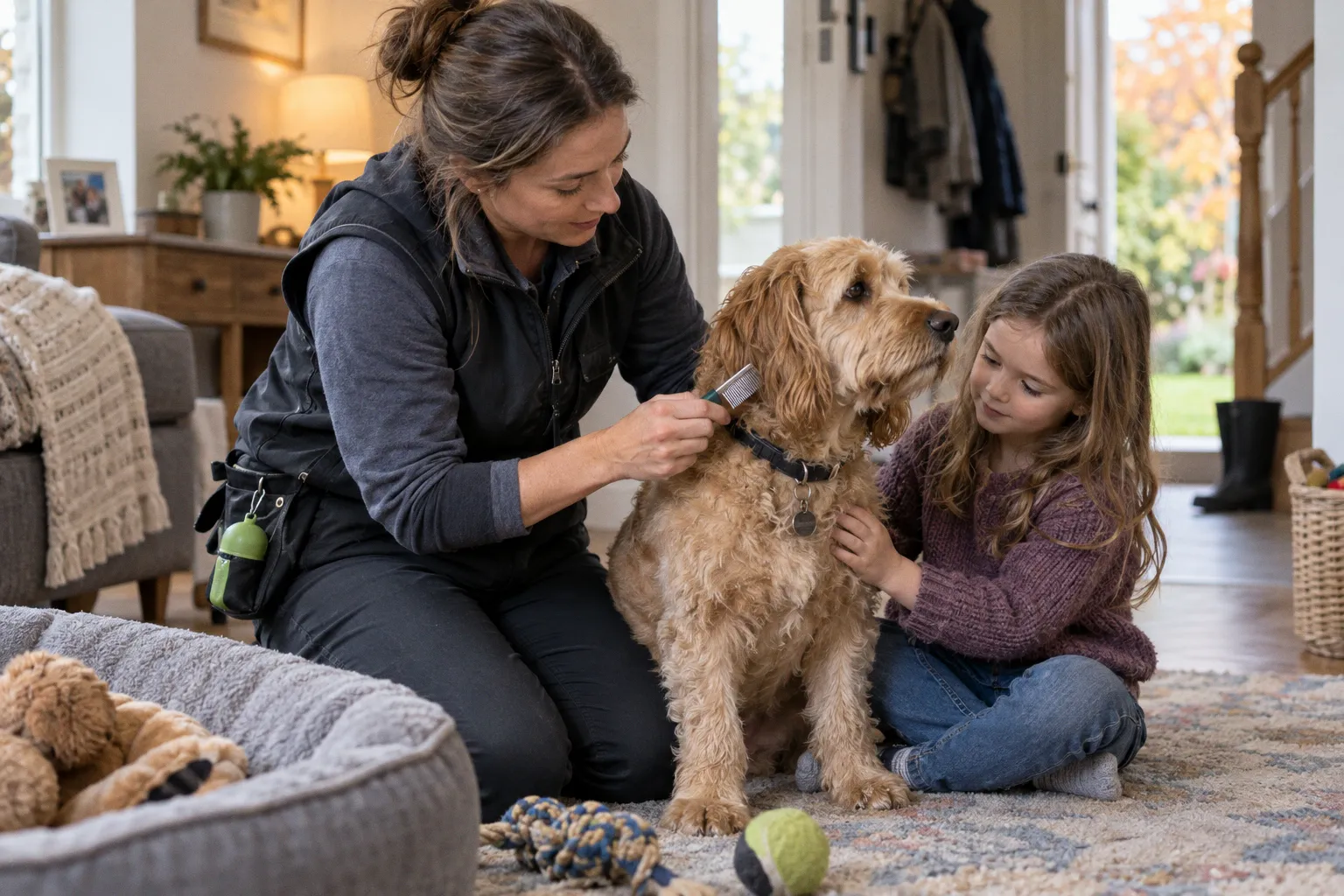
Children Under 12 Cannot Be Left Unsupervised With Banned Breed Dogs in UK Homes
From 1 November 2026, UK owners of banned breed dogs must ensure no child under 12 has close contact with their animal in a private place — including the home and garden — without appropriate adult supervision. The UK government has issued formal guidance outlining what counts as compliance, and the operational gaps that create risk. For dog walkers and pet sitters entering these environments, the requirements directly affect service delivery and liability.
Legal Baseline
The rule is not advisory. A child under 12 may only be in proximity to a banned breed dog when an adult aged 18 or older is physically present and positioned to intervene. Supervision must be in person. Per the government guidance, cameras, baby monitors, video doorbells, and similar devices do not meet the threshold. They cannot substitute for an adult capable of acting.
Supervisory Planning Points
Government guidance identifies predictable supervision gaps that owners and carers should plan around. Adult capacity to monitor breaks down during:
- Sleep, including night hours
- Cooking, cleaning, or other tasks involving leaving the room
- Arrival or departure from the home, including door management
- Brief absences where no other adult remains present
If supervision cannot be sustained, the dog and child must be physically separated before the gap occurs. Planning the separation before it is needed is the operative protocol — not reacting once a child and dog are already in the same room without an adult.
Physical Separation Protocol
Any barrier used must prevent contact from either direction. According to the guidance, the barrier should be:
- Secure enough that the dog cannot go over, under, through, or around it
- Secure enough that the child cannot reach through, over, or around it
- Sufficient to stop any physical touch between dog and child
A private garden or enclosed outdoor space is identified in the guidance as a valid separation tool, provided the enclosure itself meets the barrier criteria.
Risk Conditions That Reduce Tolerance for Contact
The guidance lists states in which a dog is more likely to react unexpectedly. Separation should be applied preemptively when the dog is:
- Stressed or overwhelmed
- Unwell or in pain
- Sleeping or eating
- Guarding a resource such as food, toys, or resting space
- Physically unable to move away from the child
Young children, particularly those under 12, face elevated risk of dog-related injury in the home, and most incidents involve a dog the child already knows. Unfamiliarity is not the variable; proximity without a functioning adult is.
Compliance Checklist for Walkers and Sitters
- Confirm whether any dog on the assignment is a banned breed before arrival.
- Confirm the age of any child present in the household.
- Confirm an adult aged 18+ will be physically present throughout the visit.
- If supervision breaks, do not assume remote monitoring counts. Halt contact and separate.
- Identify and verify the barrier between any child and any banned breed dog before the visit begins.
- Document the supervision arrangement and any deviation in your service notes.
This guidance is UK-specific and applies in private settings. Public space rules and regional variations are not covered by this publication.