Shelter Dog Transport: Volunteer Driver Checklist
The romantic version of rescue transport is a smiling dog in a bandana, a volunteer with a full tank, and a handoff photo for social media.
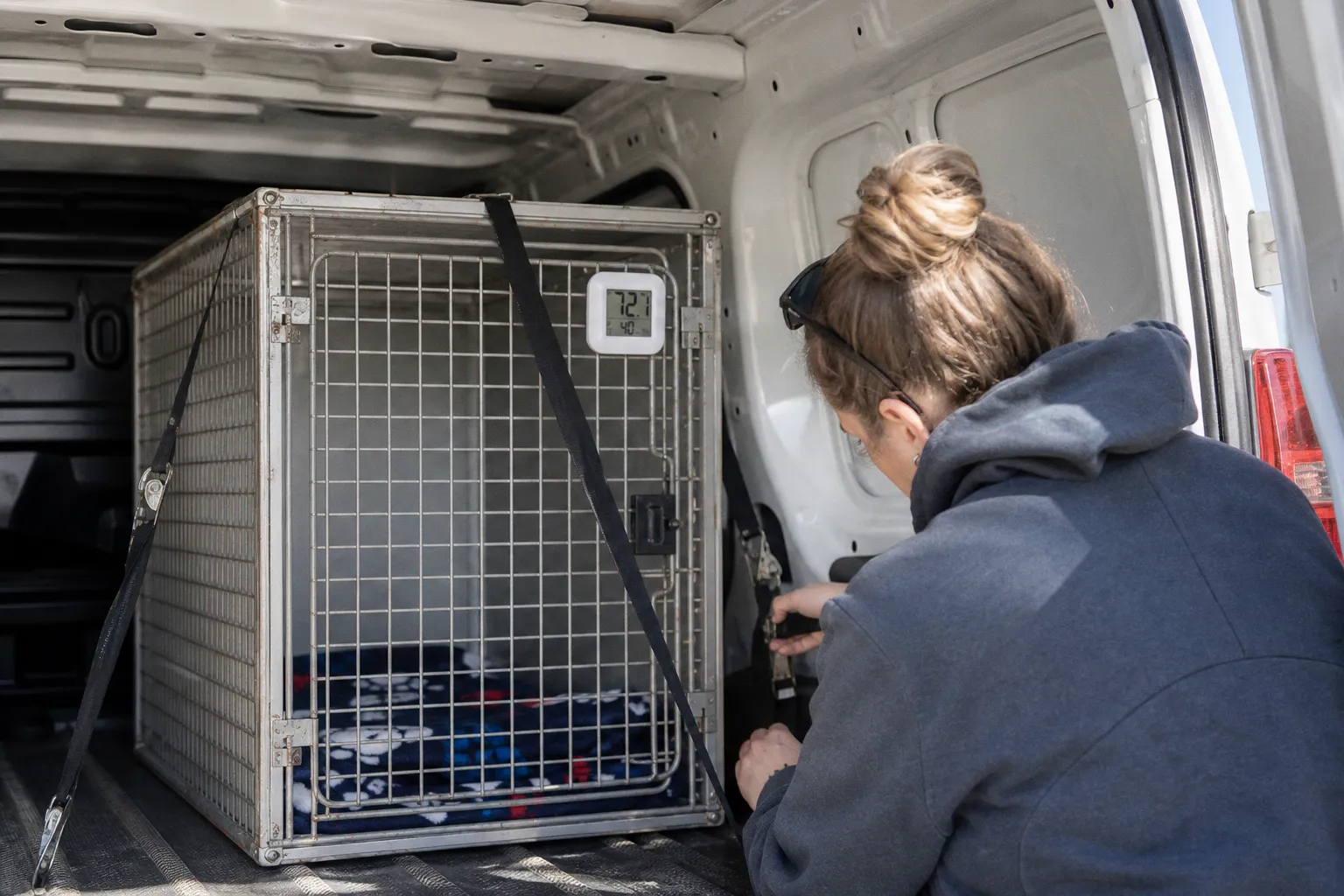
The real version is less cute and much more useful: a stressed animal in an unfamiliar crate, paperwork that must match the dog in front of you, a temperature gauge you actually look at, and no room for improvisation at a gas station.
A shelter dog transport volunteer is not “just giving a dog a ride.” You are moving an animal through the most unstable part of its rescue timeline: after intake, before decompression, often between unfamiliar people, and sometimes across long distances. A loose collar, one skipped sanitation step, or a vehicle that gets too hot can create behavioral fallout, medical risk, or an escape that ends the entire mission badly.
This shelter dog transport volunteer checklist is the working version—the one for drivers who want to be helpful without becoming the weak link in a rescue chain.
Transport is not a road trip for dogs. It is controlled containment with a destination.
Medical readiness and documentation come before the engine starts
The dog may look healthy. That is not the standard. The paperwork, recovery status, and transport clearance are the standard.
Before accepting a transport leg, confirm that every dog has a health certificate signed by a licensed veterinarian. Depending on the states involved, the required veterinary credentials can vary, so do not assume that a certificate accepted on one route will automatically satisfy another jurisdiction. The sending rescue or transport coordinator should confirm the route-specific requirements. Your job is to make sure the documents physically travel with the dog.
Keep the health certificate, vaccination records, medication notes, feeding instructions, and emergency contacts together in a waterproof sleeve. Not loose in a tote. Not in somebody’s email inbox. Not “with the next driver, probably.” Physical documents need to stay attached to the dog’s transport record from handoff to handoff.
A few medical rules are not negotiable:
1. No dog goes directly from surgery into a vehicle. Dogs need at least 48 hours of recovery after spay/neuter or another surgical procedure before transport clearance. Sedation, anesthesia, pain medication, nausea, bleeding, and surgical complications do not become less real because a receiving rescue has kennel space waiting.
2. Puppies must be at least eight weeks old to travel alone. Younger puppies can travel only with their mother. Transporting underage puppies separately is not rescue efficiency. It is a health and welfare gamble.
3. Medication instructions must be written, not relayed from memory. Ask what the medication is, what time it was last given, what time it is due next, whether it needs food, and what side effects trigger a call to the coordinator or veterinarian.
4. Know the dog’s feeding status. Adult dogs may not need a full meal during a short transport leg, especially if they are anxious or prone to carsickness. Young animals have different needs and must be offered food at appropriate intervals. “I thought somebody else fed them” is how you get avoidable trouble.
5. Ask whether the dog has known handling restrictions. Bite history, resource guarding, panic in crates, barrier reactivity, motion sickness, fear of men, fear of leashes, and escape history are not embarrassing footnotes. They are operational information.
The hard truth is that rescues sometimes work under pressure. A kennel needs to clear. A foster backed out. A transport route is already built. None of that changes what the dog needs. If the recovery window has not passed or the documents are missing, the dog does not go.
Medical handoff questions worth asking out loud
At pickup, do not settle for “He’s good.” That phrase has launched plenty of preventable messes.
Ask:
- Is this dog cleared for transport today, including any post-surgery recovery requirement?
- When did the dog last eat, drink, urinate, and defecate?
- Has the dog received medication today? What and when?
- Has the dog shown coughing, vomiting, diarrhea, lethargy, nasal discharge, or loss of appetite?
- Does the dog have a history of crate panic, fence climbing, leash biting, or escape attempts?
- Is the dog safe to handle by one person, or does the transfer require two?
- Who is the next contact if the dog becomes medically or behaviorally unstable?
Write the answers down. A volunteer pet transport preparation plan built on memory lasts until the first missed handoff.
Climate control is not comfort—it is a safety requirement
The driver’s seat can feel fine while the kennel area is turning into an oven or a refrigerator. This is especially true in vans, SUVs with covered cargo areas, and vehicles with crates positioned away from direct airflow.
The animal housing area must stay between 60°F and 85°F. Put a visible thermometer in the kennel area, not on the dashboard and not on your phone’s weather app. The temperature that matters is the temperature where the dog is breathing.
A dog in transport cannot simply move to a cooler room, stretch out on tile, or find a shady corner. It is confined. That makes your vehicle environment part of the dog’s welfare plan.
| Vehicle condition | What it means for the dog | What the driver does |
|---|---|---|
| Cabin feels comfortable but cargo area is warmer | Heat can build around crates with poor airflow | Check the kennel-area thermometer, adjust ventilation, reposition only if safe |
| Direct sun hits the crate | Temperature rises fast; dog cannot escape the heat | Use safe window shades, increase climate control, avoid placing crates in sun paths |
| Cold air blows directly into a crate | Stress, chilling, and discomfort, especially for small or short-coated dogs | Redirect vents; provide dry bedding without blocking airflow |
| Vehicle is parked for fuel or a handoff | Climate control may stop or weaken quickly | Never leave dogs unattended in a vehicle without maintaining safe temperature |
| Weather shifts during a long route | A stable morning setup may become unsafe by afternoon | Recheck the kennel area at every stop, not just at departure |
Do not use loose blankets as a substitute for temperature management. Bedding can help a dog settle and reduce sliding, but it does not fix poor airflow. It can also become soaked, shredded, or contaminated during a stressful trip.
Crates need to be secured so they cannot slide, tip, or turn into projectiles under hard braking. A crate should allow the dog to stand, turn, and lie down, but “bigger” is not automatically better. Too much open space can throw a dog around during turns. The point is stable containment, not a mobile living room.
If you are transporting more than one dog, do not stack assumptions on top of crates. Dogs from different shelters, unknown histories, or separate intake groups should not share a crate or interact during transport stops. They may carry different disease risks. They may fight. One may guard water, bedding, or the exit. They are strangers under stress, not instant road-trip friends.
A quiet dog in a crate is not always a calm dog. Sometimes it is a dog shutting down. Keep observing.
Handling fearful dogs: the escape happens in the “easy” moment
Most transport escapes do not happen at highway speed. They happen during a rushed handoff, a bathroom break, a photo opportunity, or that two-second decision to open a door because “he seemed friendly.”
Fearful shelter dogs are often experts at becoming unavailable. They can back out of equipment, flatten themselves under a seat, launch from a hatchback, or bite when cornered. This is not spite. It is survival behavior, and transport is full of triggers: engine noise, strange voices, fuel stations, unfamiliar smells, leash pressure, and people leaning over them.
Use double-leashing for fearful, newly rescued, or escape-prone dogs. A common setup is a properly fitted slip lead combined with a collar or harness. The point is redundancy. If one piece of equipment fails, the dog is still connected to you.
Check fit every time the dog changes hands. Only one finger should fit under the collar, harness, or slip lead. More space than that can become an exit route. A frightened dog does not need much room to reverse out of gear.
Here is the practical handling sequence that prevents most avoidable disasters:
1. Secure the receiving space before opening the crate. Vehicle doors closed. Gates closed. No bystanders. No loose dogs nearby. If you are in a parking lot, the dog should remain contained in the crate until the next driver is ready and connected.
2. Attach the leash before the dog leaves confinement. Do not open the crate door and then reach for the collar. That is backwards. The dog’s line of escape should never be more organized than your restraint system.
3. Use one handler whenever possible. Multiple hands, voices, and leash pressure can turn a nervous dog into a spinning mess. A second person is useful for a difficult transfer, but only when roles are clear.
4. Do not test sociability at a rest stop. No greetings with strangers, no introductions to another transport dog, no “let’s see if he wants to stretch his legs.” A dog can be gentle in a kennel and still panic on asphalt beside traffic.
5. Move deliberately, not slowly for the sake of theater. Calm handling is controlled and boring. It is not whispering to a dog while leaving a vehicle door open.
6. Keep the dog in its assigned crate during travel. Riding loose in the cabin creates distraction, injury risk, and an escape opportunity at every door opening. It also makes an emergency stop much worse.
If a dog becomes difficult to handle, stop trying to win a confidence contest. Close the crate if you safely can. Reduce noise. Contact the coordinator. The rescue world has a bad habit of rewarding people who “make it work” right up until the dog disappears into a tree line. Do not be that story.
Long-distance relays need a schedule, not optimism
A relay transport works when every person understands that they are part of one operation, not independent volunteers doing adjacent favors.
For long-distance routes, two drivers per vehicle are recommended. Rotate driving shifts every four to five hours or roughly 250 to 300 miles. This is not just about fatigue; tired drivers miss exits, rush handoffs, forget to check crate latches, and make sloppy decisions around stressed animals.
All transport vehicles should stop at least every four to six hours for a visual welfare check, fresh water, and feeding for young animals. A stop is not automatically a public exercise break. For many shelter dogs, staying secured in the crate for a structured check is safer than being exposed to an unfamiliar roadside environment.
At each stop, look for actual changes:
- Heavy or strained panting that does not match the vehicle temperature
- Drooling, vomiting, or repeated retching
- Diarrhea or soiled bedding
- Coughing, nasal discharge, or labored breathing
- A dog pressed rigidly into the back of the crate or thrashing against it
- Chewed equipment, damaged crate doors, or shifted latches
- Empty or overturned water containers
- A sudden drop in responsiveness or inability to stand normally
Water should be refreshed, not merely topped off. Dirty bowls spread contamination and make it harder to judge how much the dog is actually drinking. If a dog will not drink, note it and notify the coordinator rather than forcing water into a frightened animal.
The handoff itself deserves more discipline than it usually gets. Confirm the dog’s identity by crate tag, paperwork, and physical description. Confirm the next driver’s phone number before you unload. Confirm the destination and the next scheduled contact. If the dog has medication or a handling warning, say it directly.
A clean handoff sounds like this: “This is Luna, blue crate, female, medical sleeve is attached. She ate at 9:00, drank at 11:30, no medication due until this evening. She is double-leashed because she backs out of a harness. She has not been removed from the crate. Your next driver is expecting you at 2:15.”
That is not overkill. That is how details survive a 700-mile route.
Build your animal rescue transport gear list before pickup
The gear list does not need to look tactical. It needs to cover the boring failures that happen every day.
- Approved, secure crate or carrier with a functioning latch and no sharp damage.
- Backup slip lead and correctly fitted collar or harness for double-leashing where needed.
- Visible kennel-area thermometer to verify the 60°F to 85°F range.
- Waterproof document sleeves for health certificates, vaccine records, medication notes, and contacts.
- Fresh water and travel-safe bowls that can be cleaned and refilled without creating a soaked crate.
- Disposable gloves, absorbent towels, and waste bags for accidents and cleanup.
- Sanitizing supplies appropriate for crates and vehicle surfaces.
- Extra bedding that is clean, dry, and easy to replace.
- Flashlight and phone charger for late handoffs or roadside issues.
- Coordinator and emergency veterinary contacts saved in your phone and written on the transport sheet.
You do not need to buy a branded “rescue transport kit” from somebody who discovered tote bags and a logo. You need functional equipment, backups for failure points, and the willingness to replace worn gear before it causes a problem.
Sanitation is where good intentions usually get lazy
Transport can move dogs to safety. It can also move infectious disease from one facility, foster network, or vehicle to another if sanitation is treated as an optional chore.
Crates and vehicle surfaces must be thoroughly cleaned and sanitized before and after each trip. Use industry-standard disinfectants or a properly prepared 10% bleach-water solution where appropriate for the surfaces being cleaned. Follow the product instructions, including contact time. Spraying something and immediately wiping it off may make the crate smell cleaner. It does not reliably sanitize it.
Remove organic material first. Feces, urine, vomit, hair, and mud interfere with disinfectants. Clean first, then disinfect. The order matters.
Pay attention to the places volunteers routinely miss:
- Crate door latches and handles
- Floor seams and cargo-area corners
- Seat backs or tie-down points near crates
- Water bowls and food containers
- Leashes, slip leads, and harness straps
- Shoes and floor mats after a soiled-crate cleanup
- Blankets reused from a previous dog
Do not shuffle dogs between dirty crates because the route changed. Do not let a “clean-looking” carrier skip sanitation because the last dog did not have an accident. Infectious disease is not always visible, and shelters deal with a rotating mix of unknown histories.
If a dog becomes ill during transport—persistent vomiting, diarrhea, coughing, acute lethargy, respiratory distress, or any condition that makes continued travel questionable—contact the coordinator immediately. Separate the dog from others as safely as the vehicle setup allows. Do not casually continue to the next handoff because the schedule says so.
The schedule serves the animals. It does not outrank them.
The work after the drop-off is still part of the transport
A transport run is not finished when the receiving person takes the leash. The vehicle still needs cleaning. Equipment still needs inspection. The coordinator may need a final status update. If anything went wrong—temperature drift, crate damage, a missed medication time, vomiting, refusal to drink, an escape attempt—that information belongs in the record.
Do not bury a problem because you feel embarrassed. Rescue organizations cannot fix patterns they do not know about. A dog that fought the crate door for three hours may need a different transport plan next time. A vehicle that runs warm in the cargo area may need a different crate position or a different vehicle entirely. A recurring handoff location may be unsafe.
There is a broader hard truth behind all this. Shelter dog relocation is often described as a simple bridge from overcrowding to adoption. Sometimes it is. But transport does not erase fear, illness risk, poor socialization, or the decompression time a dog will need after arrival. It merely gets the dog to the next chance.
That is enough. It is meaningful work. But it has to be done like work.
Before you volunteer, do the demanding homework: inspect your crate setup, test the temperature in the actual kennel area, learn how to fit a slip lead, pack your sanitation supplies, and ask the coordinator what happens if a dog cannot safely continue. If those questions make a transport group uncomfortable, that is useful information.
The best volunteer drivers are not the ones who post the sweetest arrival photo. They are the ones whose dogs arrive documented, contained, hydrated, uninjured, and boringly accounted for.