Rescue dog relocation: volunteer relays or professional transport?
Five days. A ten-month-old hound mix sitting in a Texas partner shelter and a vetted foster family waiting in Vermont.
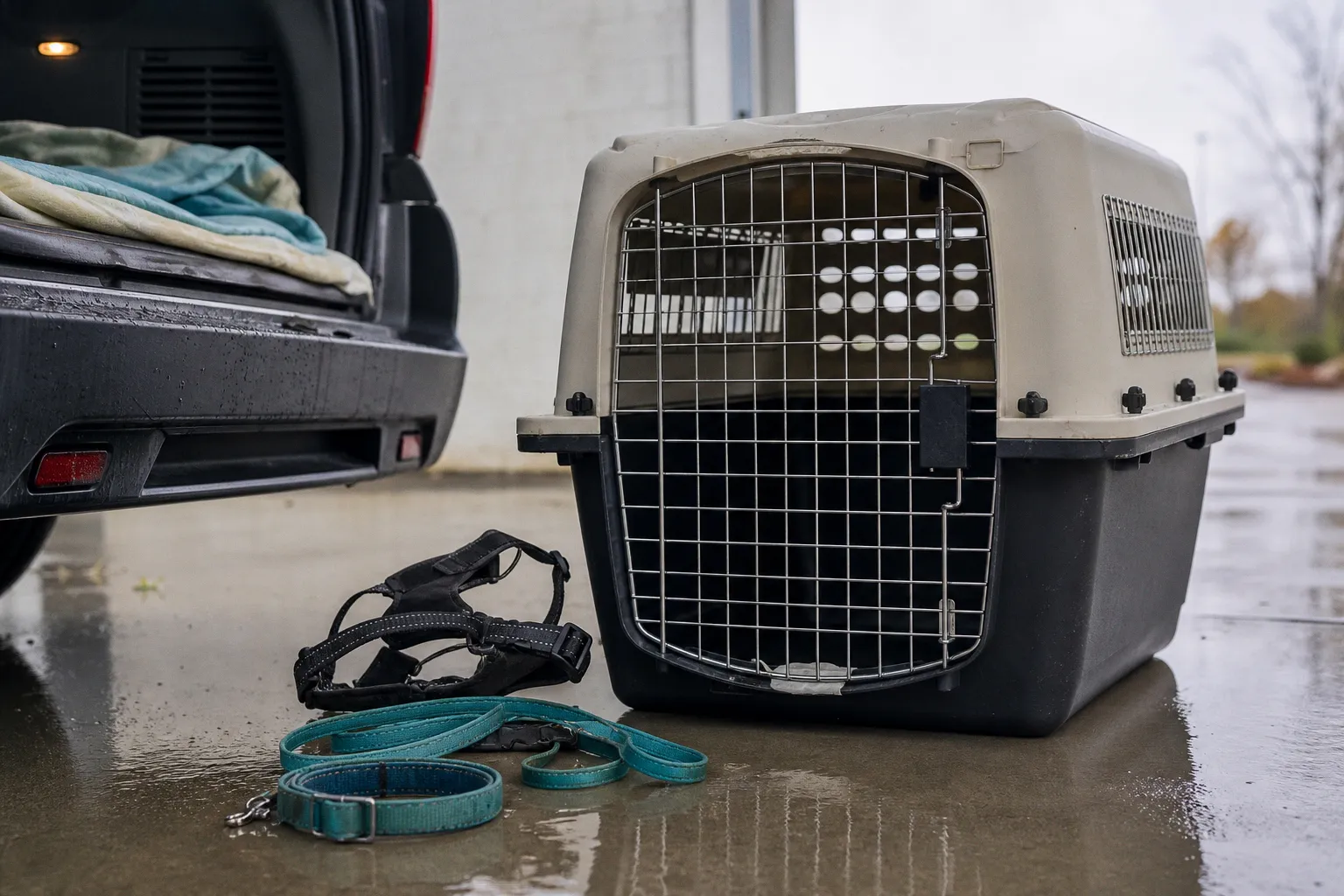
That is the kind of logistical puzzle that lands on a relocation coordinator’s desk every week, and it almost always arrives with the same two words attached: how do we move this dog? The honest answer is that there is no single best path — there is only the path that has been thought through.
Compare car rental deals in United Kingdom
See available offersPartner link — DiscoverCars comparisonThe question behind rescue dog relocation: volunteer relays vs professional transport is not whether strangers with cars are kinder than a paid carrier, or whether a company logo guarantees competence. It is whether this particular dog can travel this particular route with reliable custody, secure handling, clean records, appropriate environmental control, and a plan for the moment something goes sideways.
A “volunteer relay” and a “professional transport service” are operational descriptions, not moral categories and not automatic indicators of quality. A relay can be admirably run or dangerously improvised. A paid carrier can be fully licensed and methodical, or it can be a single driver with a website. Before a dog leaves a kennel, read the operational facts in front of you. The label on the van matters less than the system around the dog.
The Operational Mechanics of Volunteer Relay Logistics
A volunteer rescue relay, at its best, is a tightly choreographed sequence of short ground-transport legs handed off from one trained driver to the next along a preplanned route. One long-standing volunteer network, Kindred Hearts Transport Connection, publishes an average leg length of roughly one to one and a half hours per driver and circulates a final run sheet to the sending shelter, receiving rescue, and participating drivers only after all legs are filled.
That last detail is worth pausing on. The run sheet goes out after the route is locked. It means the dog is not halfway through a trip when someone discovers that the next driver is unavailable, the meeting point has changed, or a well-meaning volunteer has decided to improvise a detour.
A good relay is not merely a chain of people willing to drive. It is a chain of custody.
The dog’s entire trip should be arranged before the dog moves: origin and destination confirmed, every handoff timed, drivers identified, behavior notes transferred, emergency contacts shared, and a contingency plan ready if weather, traffic, illness, or a vehicle problem disrupts the schedule. The handoff is the weakest seam in any relay, which is why competent organizations make it visible rather than treating it as a casual parking-lot exchange.
A useful handoff record includes the dog’s name and identifying details, the time and location of transfer, current behavior notes, feeding and water information, medication status, the identity of the next person responsible, and instructions for what to do if the dog’s condition changes during the next leg. If a dog has become shut down, carsick, overstimulated, or unusually reactive, the next driver needs that information before accepting the leash.
A private ground-transport company may run the same origin-to-destination move with a smaller team of drivers over longer shifts, sometimes using overnight boarding at a partner kennel, foster home, or pet-friendly hotel. That can reduce the number of physical handoffs, but it introduces other operational questions: how long is the dog confined between breaks, where does the dog sleep, who supervises overnight, and how does the carrier separate unfamiliar animals?
Costs also resist easy comparison. A volunteer relay may involve donated time but still require fuel reimbursement, supplies, veterinary paperwork, lodging, coordination, or emergency changes to the route. A professional trip may include driver wages, vehicle maintenance, insurance, climate-control equipment, overnight care, and administrative overhead. The final figure depends on the route, distance, number of animals, vehicle type, lodging needs, medical paperwork, and whether ground or air transport is involved. The only meaningful comparison is a written one for the exact trip being planned.
| Parameter | Volunteer relay | Professional ground carrier |
|---|---|---|
| Typical leg structure | Sequence of short legs, often around 1–1.5 hours per driver | Longer scheduled driving segments, sometimes with overnight stops |
| Chain of custody | Multiple handoffs between volunteers | Usually fewer handlers, though staffing varies |
| Operational strength | Local networks and short individual driving commitments | Dedicated vehicles, established routes, and formal operating procedures where well run |
| Main vulnerability | A missed or poorly documented handoff | Long confinement periods, staffing gaps, or opaque overnight arrangements |
| Documents to request | Run sheet, handoff procedure, emergency contacts, behavior notes | Contract, itinerary, insurance information, animal-care protocol, health-document requirements |
| Cost variables | Fuel, route changes, supplies, lodging, coordination | Route, vehicle, staffing, insurance, lodging, paperwork, animal-care needs |
A “volunteer” label tells you who may be driving. It does not tell you whether the trip is trained, documented, insured, or safely managed.
The strongest question for either model is not “Who is cheaper?” It is: “Who has custody of this dog at every point between the shelter door and the foster’s door?” If nobody can answer that cleanly, the transport is not ready.
Safety Protocols and Flight Risk Management in Transit
Every newly rescued dog should be treated as a flight risk during the first days of relocation. That is not an accusation about temperament. It is an honest reading of circumstances.
A dog pulled from a shelter, placed in a crate, transferred between unfamiliar vehicles, and carried through new territory has lost every familiarity anchor at once. The dog may have been friendly during an intake photo, calm in a kennel, or easy to leash at the shelter. None of that reliably predicts what happens at a highway rest stop after hours of noise, vibration, unfamiliar smells, and interrupted sleep.
Volunteer handbooks used by rescue organizations commonly treat double security as a baseline rule. The standard arrangement is two independent means of control outside the vehicle or crate: for example, a properly fitted harness and collar with separate leashes, or a martingale collar paired with a slip lead. The point is redundancy. If one clasp breaks, a leash slips, or a dog backs out of a harness, there is still another point of attachment.
Crate transport can be appropriate, especially for dogs already comfortable in crates, but the critical moments are usually outside the crate: loading, unloading, handoffs, emergency veterinary visits, and bathroom breaks. A dog does not need to be aggressive or difficult to become lost. It needs only one open door and one frightened decision.
When assessing volunteer pet transport safety or a commercial carrier’s safety practices, ask for the protocol in writing. A coordinator-grade answer should cover the basics without vagueness:
- Two independent means of physical control whenever the dog is outside a secured crate or enclosed vehicle.
- A no-off-leash rule at fuel stops, rest stops, hotels, handoff sites, and veterinary facilities unless the dog is inside a fully enclosed secure area.
- A documented handoff procedure, including a review of current behavior, feeding, medication, and any stress signs before the next driver accepts custody.
- A disruption plan for breakdowns, severe weather, an ill driver, a dog refusing to load, or a medical concern during transit.
- A contact ladder that tells the driver exactly whom to call first, second, and third if the dog is injured, ill, missing, or unmanageable.
- Secure vehicle loading procedures that prevent one door from opening directly into an unsecured environment.
The wording matters. “We’re all dog people” is not a transport protocol. “The dog remains double-leashed until secured inside the next vehicle, and the next driver confirms the crate latch before the first driver releases custody” is a transport protocol.
Drivers should also know the dog’s stress signals. Panting can be heat, anxiety, motion sickness, pain, or simple excitement. Repeated lip-licking, drooling, freezing, frantic crate digging, diarrhea, vomiting, refusal to drink, and sudden withdrawal all deserve attention. The correct response may be a quieter break, a call to the coordinator, a veterinary consult, or a decision to pause the trip. What it should not be is punishment for a dog reacting to an overwhelming situation.
Good transport is not the absence of drama in a group chat. It is the presence of a plan before the drama begins.
Federal Oversight and the Animal Welfare Act Standards
This is where the volunteer-versus-professional framing stops being sufficient and the operational facts become decisive. Under USDA APHIS guidance, an airline, motor carrier, or other business that takes custody of covered animals and transports them “for hire” can be regulated under the Animal Welfare Act. APHIS specifically addresses hired drivers who take responsibility for shipping animals when the owner is not physically present.
The practical point is simple: the threshold is not whether an operator calls itself “professional.” It is whether animals are being transported for compensation in a regulated commercial arrangement.
If a rescue is paying a company to move a dog across state lines, ask direct questions about licensing or registration where applicable, vehicle standards, insurance, transport records, and standard operating procedures. Do not settle for a generic assurance that the driver is “USDA certified” unless the operator can explain what that means for the service being offered.
Volunteer relays can occupy a different legal position, particularly where drivers are donating time or receiving limited reimbursement. But legal status is fact-specific. It can depend on the structure of the trip, the role of the organizing entity, the nature of compensation, the animals involved, and the jurisdictions crossed. A volunteer label should never be used as a shortcut around due diligence.
For covered operations, the Animal Welfare Act standards are concrete. They address the equipment and conditions that keep a transport vehicle from becoming an unmonitored holding space:
- A primary enclosure must be strong enough for transport, free of injurious sharp points, adequately ventilated, and designed so an animal can be removed in an emergency.
- The enclosure needs a solid leak-proof bottom or a leak-proof waste-collection arrangement.
- Auxiliary ventilation is required in the animal cargo space when ambient temperature reaches 85°F (29.5°C).
- Cargo-space temperature may not exceed 85°F or fall below 45°F (7.2°C) for more than four hours at a time.
- Dogs and cats must be observed at least every four hours, with veterinary care sought at the closest available facility when an animal is in obvious physical distress.
These standards are not a complete welfare plan. They are a minimum legal floor for covered transport, not a substitute for judgment. A timid dog may need quieter handling than the regulation can describe. A senior dog, brachycephalic dog, nursing mother, medically fragile animal, or dog recovering from surgery may need a route and schedule that are inappropriate for a standard multi-animal run even if every crate technically meets the rule.
The federal floor is a floor, not a ceiling. A trustworthy operation can explain how it meets the standard on this trip, with this dog, in these conditions.
For interstate moves that fall under covered commercial transport, a licensed veterinarian’s health certificate is required, showing an inspection performed no more than ten days before delivery for transport. The certificate must indicate that the animal appeared free of infectious disease or physical abnormality that could endanger animals or public health.
That document is not decorative paperwork. It establishes a recent clinical baseline. If the receiving foster reports coughing, diarrhea, lameness, or lethargy after arrival, the sending and receiving teams have a clear record of the dog’s condition before departure.
Environmental Controls and Cargo Space Requirements
Environmental risk in transit is not one single issue with one single cause. Heat, cold, inadequate ventilation, poor crate placement, delayed breaks, motion sickness, stress, crowding, and mechanical problems can all compound one another. The relevant question is whether the operator has a route-specific plan for managing conditions inside the animal space, not whether someone promises that the van is “climate controlled.”
The federal thresholds are useful reference points for covered commercial operators: auxiliary ventilation at 85°F and a cargo-space range that does not remain above 85°F or below 45°F for more than four hours. But those numbers should prompt more questions, not end the conversation.
For a warm-weather trip, ask where temperature is monitored, who can see the readings while driving, whether the animal area is cooled separately from the cab, and what happens if cooling performance drops in traffic. A driver may be comfortable in the front seat while crates in the rear are receiving less airflow. “The air conditioning was on” is not the same as knowing the cargo environment remained suitable.
For cold-weather transport, the questions reverse but do not disappear. Is the cargo space heated? Are crates placed away from drafts? Is the vehicle parked outdoors overnight? Can heat be maintained during fuel stops or mechanical delays? Dogs transported after shelter intake may already be stressed, underweight, recently shaved for medical care, or poorly acclimated to the conditions they are entering.
Vehicle configuration matters as much as the thermostat. Crates should be secured so they cannot shift under braking or turns. They need ventilation that is not blocked by luggage, blankets, stacked equipment, or adjacent crates. The dog needs enough room to stand, turn, and lie down naturally, without so much unbraced space that the body is thrown around during sudden movement.
For regulated operations, primary enclosures must be ventilated on at least two sides and should be free of damaged welds, exposed hardware, broken latches, or sharp edges. Leak-proof flooring or trays are not merely about tidiness. They limit contamination in the vehicle and keep waste from spreading from one enclosure to another during a long trip.
Food and water procedures deserve the same scrutiny. Under AWA standards, dogs must be offered potable water at least every twelve hours and food at least every twenty-four hours for dogs sixteen weeks or older, with more frequent feeding for younger animals. Yet sound practice is more detailed than an interval on paper. Some dogs are prone to motion sickness and may need a different feeding schedule. Some are too stressed to drink from a shared bowl. Some need medication administered with food. A competent operator records what was offered, what the dog actually consumed, and any change from the planned routine.
Shared bowls at rest stops are an avoidable weak point. Each dog should have a clearly identified water arrangement, and cleaning procedures should be realistic for the pace of the trip. A transport vehicle is not a place for casual assumptions about whose saliva, stool, respiratory secretions, or parasites are moving from crate to crate.
Biosecurity Measures and Interstate Entry Documentation
The final logistical layer is the paper trail, and it is the layer where many moves succeed or fail quietly. Interstate animal rescue relocation is governed partly by the receiving state or territory, not by one simple nationwide rule. A dog arriving in Vermont may face different entry expectations than a dog arriving in Maine, Oregon, or another destination.
Requirements can include a health certificate, proof of current rabies vaccination, import permits, species-specific records, or additional testing and treatment requirements. The receiving state is the regulator of record, so the destination rules need to be identified before the dog leaves the sending shelter. Discovering a missing document after the animal arrives can create unnecessary stress, delay placement, or force the receiving rescue to make decisions under pressure.
The University of Florida Shelter Medicine Program has published a biosecurity baseline designed for international rescue imports that also offers a disciplined way to think about domestic movement. Not every item is legally required for every interstate trip, but the underlying logic is sound: identify the dog accurately, establish health status before loading, reduce avoidable disease exposure, and make sure the receiving team knows what it is accepting.
Useful elements include:
- An ISO-compliant fifteen-digit, 134.2 kHz microchip implanted before the dog is identified for transport.
- Rabies and distemper/parvovirus vaccinations administered ideally three to five days before transport rather than on departure day, allowing time for a vaccine reaction to appear while the dog remains under direct care.
- Visible identification, such as a collar tag with a transport contact number.
- Parasite control appropriate to the dog’s age, medical status, and known exposure risk.
- A physical examination within twenty-four hours of transport confirming that the dog is fit to travel.
These measures reduce problems that otherwise emerge after the vehicle is already moving: vaccine reactions on the road, parasites discovered at the receiving shelter, identity confusion after a collar is lost, or a dog arriving with symptoms that no one can confidently place before or after departure.
Biosecurity also depends on decisions that do not fit neatly on a certificate. Does the sending shelter isolate dogs with respiratory signs before transport? Are crates cleaned between passengers? Are apparently healthy dogs loaded with animals from unknown intake histories? Is a dog with soft stool being watched, treated, or simply pushed onto the next run because a foster is waiting?
There are times when the responsible transport decision is delay. A dog with active respiratory signs, significant diarrhea, unexplained lethargy, a fresh injury, or escalating stress may need stabilization before entering a multi-stop vehicle or relay chain. Rescue work often runs on urgency, and urgency is real. But moving a dog too soon can create a larger welfare problem at every stop that follows.
For moves covered by commercial transport rules, the ten-day health-certificate window is mandatory. For volunteer relays between partner rescues, a health certificate can still be a strong operational safeguard even when it is not explicitly required. It gives the next handler a recent account of the dog’s baseline health and makes clinical responsibility less ambiguous between sending and receiving teams.
Choosing the System That Can Carry the Dog Safely
Volunteer relays and professional carriers can both move dogs safely. They can also both move dogs badly. The useful distinction is not volunteer versus paid. It is structured versus improvised.
A volunteer relay may be the right fit when the organizing rescue has trained and accountable drivers, a locked run sheet, written handoff procedures, secure handling requirements, emergency contacts, and destination documentation settled before departure. Shorter legs can be especially helpful for a dog that benefits from frequent monitoring and lower individual driver fatigue — provided that each transfer is tightly controlled.
A professional carrier may be the right fit when the operator can document applicable regulatory compliance, insurance, vehicle conditions, crate standards, driver oversight, overnight arrangements, and a clear protocol for illness or delay. Fewer handoffs can simplify custody, but only if the carrier does not trade that simplicity for long, poorly monitored confinement or opaque boarding.
Neither approach deserves automatic trust. Costs vary by route and operator. Risks vary by route and operator. A mild-weather run with known foster stops poses different questions than a long summer route through high temperatures, a winter trip involving overnight parking, or a multi-dog transport leaving an overcrowded shelter during a respiratory-disease concern.
The path that is not reasonable, in either category, is the one built from enthusiasm, social-media screenshots, and the assumption that good intentions translate into safe transport. Good intentions are valuable in rescue. They are also not a substitute for secure latches, written records, clean crates, current health information, or an emergency veterinary plan.
When the move is built in advance — route confirmed, custody assigned, handoff records prepared, health documentation scheduled, microchip and vaccination status checked, environmental conditions considered, and emergency contacts posted in every vehicle — the transition from sending shelter to receiving foster becomes predictable.
Predictable is not glamorous. It does not make for a triumphant transport photo. But predictable is what gives a displaced dog the best chance of arriving alive, secure, documented, and ready for the quieter work of becoming home.