Flight volunteers vs cargo for international rescues
For an international rescue, the choice between a flight volunteer and manifest cargo is rarely just a question of price.
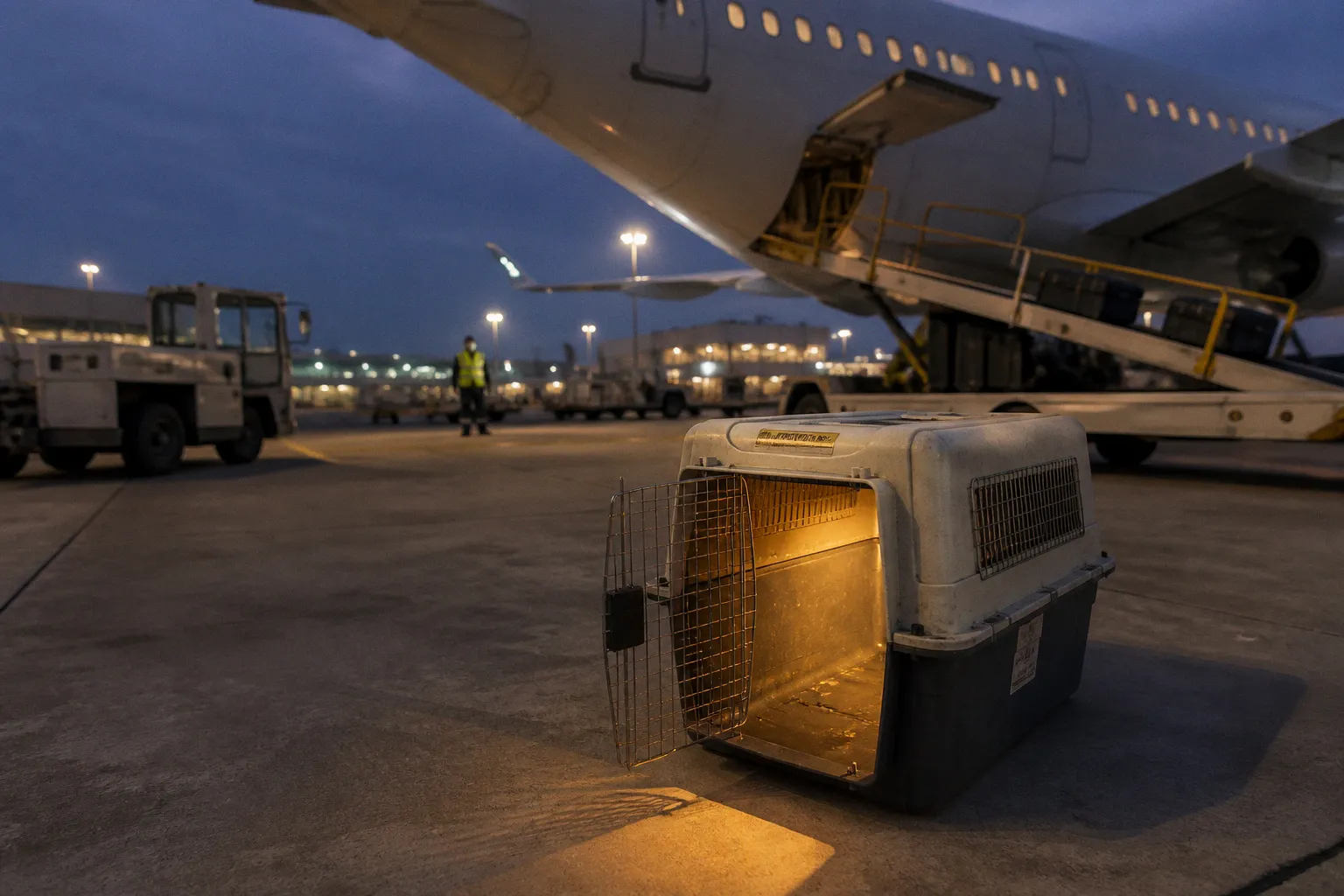
It affects the dog’s travel plan, the rescue organization’s workload, the receiving airport, the import documentation, and the amount of flexibility available when a flight changes or a government requirement is updated.
Compare car rental deals in United Kingdom
See available offersPartner link — DiscoverCars comparisonA flight volunteer can make international rescue dog transport financially realistic, because the dog travels under a passenger’s confirmed itinerary as checked excess baggage or, when permitted, in the cabin. Manifest cargo is a separate freight movement: the dog travels as unaccompanied cargo under an air waybill, with its own booking and handling process. The difference is substantial, but neither option is automatically safer or simpler. The right route depends on the dog’s size, medical and behavioral profile, destination rules, airline policies, and the rescue team’s ability to coordinate every handoff.
The most economical transport method is only useful when it also satisfies the destination’s import rules and gives the rescue team enough control to manage the dog’s transition phase.
The operational difference between a flight volunteer and cargo
A flight volunteer, sometimes called a flight angel or courier, is a passenger who agrees to include a rescue dog on their own international itinerary. The dog may travel in an airline-approved carrier under the passenger’s seat if the airline permits in-cabin transport, or as checked excess baggage when the dog is too large for the cabin and the route supports that service.
The volunteer is not generally expected to pay the dog’s travel costs personally. The rescue organization or adopter typically arranges and covers the relevant fees, while the volunteer provides the passenger booking that makes the movement possible. This distinction matters when a rescue is building a budget: the volunteer reduces the cost of creating a separate shipment, but does not make the transport free.
Manifest cargo follows a different chain of custody. The rescue or its logistics provider books the dog as unaccompanied freight, prepares the air cargo documentation, and coordinates drop-off, loading, arrival handling, and collection. The dog is not attached to a passenger’s ticket, even if the same aircraft also carries ordinary travelers.
In practical terms, the two options differ across five operational points:
| Parameter | Flight volunteer | Manifest cargo |
|---|---|---|
| Booking structure | Dog travels under or alongside a passenger’s confirmed itinerary | Dog has a separate cargo booking and air waybill |
| Typical cost pattern | Usually a fraction of standalone cargo fees, although airline and handling charges still apply | Can reach several thousand dollars, often around $3,000 to more than $5,000 depending on size and route |
| Scheduling | Depends on finding a volunteer traveling on a suitable route and date | More independent of volunteer availability, subject to cargo capacity and airline acceptance |
| Human support during travel | A passenger is present for the airport journey and may manage the handoff | Professional cargo and ground-handling teams manage the freight process |
| Best operational advantage | Lower cost and a more accessible route for many adoptions | Greater control over booking a dedicated transport movement |
The table provides the outline, but the decision is made in the details. A volunteer itinerary with multiple connections may be less practical than a direct cargo route. Conversely, cargo may be financially impossible for a small rescue even when it offers a more predictable booking process.
When a flight volunteer is the practical choice
For many international rescues, the flight volunteer model is the first option explored because it can reduce the cost of flying rescue dogs dramatically. A manifest cargo shipment may cost several thousand dollars, while a dog traveling on a passenger itinerary often involves a much smaller set of airline and handling fees.
That difference can determine whether a dog moves at all. An adopter may be able to contribute toward a passenger-linked transport fee, while a cargo quotation in the $3,000–$5,000-plus range creates a barrier that cannot be resolved through ordinary fundraising.
The model is particularly workable when the following conditions align:
- The dog is healthy enough for air travel and has completed the required veterinary preparation.
- The dog’s size and weight fit the airline’s approved transport method.
- A volunteer is already traveling on a route that reaches the correct destination airport.
- The rescue can confirm the dog’s reservation and documentation before the volunteer’s departure.
- The receiving party can collect the dog promptly and complete any required customs, agricultural, or veterinary inspection steps.
- The airline accepts the animal on that specific route, aircraft, season, and connection pattern.
In-cabin travel can offer a valuable familiarity anchor because the dog remains near a passenger throughout the flight, but it is only available to smaller dogs that fit inside an airline-approved carrier under the seat. A commonly used combined weight threshold is about 8 kg, or 17.6 lb, including the dog and soft carrier. Airline limits vary, and the carrier must usually meet precise dimensions, so a dog that appears small enough at home may still be refused if the carrier cannot be safely stowed.
For larger dogs, checked excess baggage may be possible, but the phrase should not be treated as a universal guarantee. Some airlines restrict or suspend checked-pet transport on particular aircraft, routes, or temperature conditions. Others do not offer the service at all. A reservation confirmation for the passenger is therefore not the same as confirmation that the dog is accepted.
The rescue coordinator should obtain explicit airline approval for the animal, the crate or carrier, the route, and each connection. This is part of regulatory compliance, not an administrative detail to resolve at the airport. Without it, the volunteer may arrive with a valid passenger ticket but no authorized way to move the dog.
The scheduling constraint
The main weakness of the flight volunteer model is availability. A rescue cannot always choose the most direct or least complicated itinerary; it must often work with the travel dates offered by volunteers. That can create a longer holding period in the origin country or require the dog to remain with a foster family while the correct passenger route is found.
This is manageable when the rescue treats the transport as a phased plan rather than a single booking:
1. Route feasibility: Confirm the destination country, entry airport, airline restrictions, connection rules, and the dog’s transport category.
2. Volunteer matching: Find a passenger whose itinerary supports the correct airport and date, rather than accepting any international traveler.
3. Veterinary preparation: Complete the required examination, identification, vaccinations, tests, certificates, and import paperwork within the destination’s validity windows.
4. Airline confirmation: Reserve the dog through the airline’s approved process and document the confirmation in the transport file.
5. Origin handoff: Arrange crate delivery, airport check-in, and a named contact who knows exactly where responsibility transfers.
6. Arrival reception: Confirm who will collect the dog, where the dog will be released, and what happens if inspection or baggage handling takes longer than expected.
This sequence protects the dog from a common coordination failure: the volunteer is available, the adopter is ready, but one veterinary document has expired or the airline has not accepted the animal.
When manifest cargo is the better route
Cargo becomes more attractive when the rescue needs scheduling control, when a suitable volunteer cannot be found, or when the dog’s size and route make passenger-linked travel impractical. It may also be the only viable option when the airline does not permit the animal to travel as checked baggage or when the passenger itinerary contains connections that introduce too many handoff points.
A cargo booking is not automatically a rougher or less humane arrangement. It is a different logistics system, with professional freight handling and a separate documentation process. The cargo route should still be reviewed carefully, but it should not be described using assumptions about unpressurized or unheated holds; those claims are not reliable across carriers and routes. The rescue needs the airline’s actual handling specifications for the proposed shipment.
The strongest operational advantages of manifest cargo are control and independence:
- The rescue is not waiting for a volunteer’s personal travel schedule.
- The booking can be built around the dog’s route instead of around a passenger’s plans.
- Cargo specialists may coordinate the air waybill, crate specifications, airport handling, and arrival release process.
- A large dog may be easier to accommodate in an approved cargo crate than in a passenger-linked baggage arrangement.
- The movement can be planned as a formal shipment, which may suit organizations handling multiple international transports.
The cost is the obvious limitation. Standalone air cargo for an international rescue dog can reach $3,000 to more than $5,000, depending on the dog’s size, route, carrier, origin and destination handling, and related requirements. The quoted figure may not include every local expense, so the rescue should ask for a complete movement budget rather than comparing a cargo charge with only the airline fee for a flight volunteer.
A realistic cargo budget may need to account for:
- Veterinary appointments and destination-specific testing.
- Identification and vaccination work.
- Official health certificates or government endorsements.
- Crate purchase or rental.
- Origin airport acceptance and handling.
- Air waybill or cargo agency fees.
- Arrival handling, customs, and inspection.
- Ground transport from the arrival airport to the adopter or foster placement.
- Contingency arrangements if the flight is delayed or the dog cannot be released immediately.
Cargo also requires a receiving plan that is more precise than simply asking someone to meet the flight. The dog may need to be collected from a cargo terminal rather than a passenger baggage area, and terminal hours, release procedures, and inspection requirements can differ by airport.
Cargo costs more because it creates an independent freight movement; the real comparison is not cheap versus expensive, but lower cost with volunteer dependency versus higher cost with greater scheduling control.
Regulatory compliance can decide the route before comfort does
Rescue teams naturally focus on the dog’s comfort, but international transport begins with entry eligibility. If the dog cannot legally enter the destination, neither a flight volunteer nor a cargo booking solves the problem.
Requirements may include microchip identification, rabies vaccination, waiting periods, laboratory testing, parasite treatment, health certification, import permits, and arrival inspection. The exact combination depends on the origin country, destination country, transit countries, dog’s age, vaccination history, and current disease-control rules. These rules can change, which is why a transport file should be checked against current official requirements rather than copied from an older rescue case.
Thailand provides a useful example of how origin-country classification can change the airport plan. Because the United States Centers for Disease Control and Prevention classifies Thailand as high risk for rabies, dogs arriving from Thailand must enter the United States through one of six designated international airports: Los Angeles, Atlanta, Miami, New York’s JFK, Philadelphia, or Washington Dulles. A volunteer itinerary that lands at another U.S. airport may be convenient for the passenger but unusable for the dog.
That requirement affects more than the final flight. The rescue must review:
- Whether the volunteer’s first U.S. landing point is an approved entry airport.
- Whether the dog remains compliant during any transit through another country.
- Whether the airline accepts the dog on every leg, not only the international segment.
- Whether the arrival team can manage inspection and onward travel from the approved airport.
- Whether the dog’s documents remain valid through the actual travel date.
A route that appears shorter on a map may create additional regulatory complexity if it involves a transit country with its own animal-entry rules. This is one reason a professional coordinator maps the entire itinerary before discussing the final price.
Comfort, stress, and the dog’s transition phase
The transport method is only one part of the dog’s experience. A shelter dog may already be coping with unfamiliar housing, new handlers, veterinary procedures, and a change from kennel life to foster placement. The goal is not to promise a stress-free flight, which no responsible coordinator can guarantee, but to build enough baseline comfort and predictability around the movement.
A flight volunteer can provide a familiar human presence during the passenger journey, particularly when the dog travels in the cabin. However, the airport itself may be loud and crowded, and the volunteer may not be able to remain with the dog during every formal handling stage. A larger dog traveling as checked baggage may move through a separate airport process, even though the volunteer is responsible for presenting the animal at check-in.
Cargo removes the passenger from the dog’s immediate travel structure, but it may offer a more formalized handling sequence. The dog is checked into the cargo system, moved according to the shipment plan, and collected through the designated cargo process. The quality of that experience depends on the carrier, route, ground handlers, crate preparation, and the timing of each transfer.
Preparation should be tailored to the individual dog rather than based only on the transport category. A rescue may work on:
- Crate familiarity: Introduce the crate gradually, using meals, bedding, and calm rest periods so it becomes a known space rather than an object associated only with departure.
- Familiarity anchors: Include an approved item carrying a familiar scent when airline and veterinary rules allow it, while keeping the crate uncluttered and safe.
- Handling tolerance: Practice brief, calm examinations of paws, collar, ears, and body, because airport staff and veterinary personnel may need to handle the dog.
- Feeding timing: Follow the airline’s and veterinarian’s instructions rather than experimenting with a large meal immediately before travel.
- Medication decisions: Use sedatives only when specifically directed by a veterinarian; sedation can create additional risks during air transport and should never be treated as a routine calming solution.
- Arrival decompression: Give the dog a quiet, controlled first period with water, a bathroom opportunity, and limited introductions before beginning a busy adoption schedule.
The receiving home is part of the transport plan. A dog that has traveled internationally may need a gradual transition phase, even when the flight itself went smoothly. The adopter or foster caregiver should know the dog’s feeding routine, leash setup, medical history, known triggers, and expected adjustment pattern before pickup.
A practical decision map for rescue coordinators
The best method is usually identified by eliminating routes that cannot meet the dog’s legal, physical, or operational needs. Cost comes into the decision, but it should not be the first and only filter.
Start with the dog
Record the dog’s approximate weight, dimensions, age, health status, behavior around confinement, and ability to tolerate handling. A dog that technically fits an in-cabin weight limit may still be too tall or long for the carrier required under the seat. A large dog may need an airline-approved crate and a route that accepts that crate type.
The rescue should also identify whether the dog is traveling as an adoption placement, a foster transfer, or part of a larger rescue mission. The destination arrangement affects the documentation, the receiving party, and the amount of post-arrival coordination required.
Map the route before soliciting volunteers
The phrase “flight volunteer program for dogs” can make the process sound informal, but the matching must be precise. The volunteer’s itinerary should be checked against:
- Approved entry airports.
- Airline pet policies on every segment.
- Aircraft and route restrictions.
- Connection duration and airport changes.
- Customs or veterinary inspection requirements.
- The final ground journey to the adopter or foster home.
A volunteer flying to the wrong airport is not a usable transport resource, even if the destination city appears nearby. The same applies to a volunteer whose airline does not accept pets on the relevant flight.
Compare the full cost, not the headline fee
For the cost of flying rescue dogs, the useful comparison is the full delivered cost from the shelter or foster location to the receiving home. A flight volunteer may have a lower airline charge but require additional ground transport, an overnight foster stay, or a second domestic flight. Cargo may have a higher initial quote but provide a direct movement to an airport with better onward connections.
A simple internal comparison can include:
| Cost area | Passenger-linked transport | Manifest cargo |
|---|---|---|
| Airline animal fee | Usually lower than standalone cargo, but route-specific | Often a major portion of the shipment |
| Crate or carrier | Carrier for cabin or approved crate for checked travel | Approved cargo crate generally required |
| Documentation | Required | Required, often with cargo-specific paperwork |
| Origin handling | Passenger check-in or designated animal acceptance | Cargo terminal acceptance and handling |
| Arrival handling | Baggage or designated release process | Cargo terminal, customs, and inspection process |
| Ground transport | May be needed from passenger airport | May be needed from cargo terminal |
| Contingency reserve | Needed for missed connections or schedule changes | Needed for delays, storage, or rebooking |
The rescue should request written confirmation of what each estimate includes. A low quote that excludes arrival handling is not necessarily a lower-cost option.
Confirm responsibility at every handoff
A transport plan should name the person or organization responsible for the dog at each stage:
1. Origin shelter or foster caregiver.
2. Local veterinary or documentation contact.
3. Airport check-in or cargo acceptance team.
4. Flight volunteer, when applicable.
5. Airline or ground handler during transit.
6. Arrival inspection or release authority.
7. Adopter, foster caregiver, or receiving rescue.
8. Ground transport provider for the final leg.
This is where an experienced coordinator adds practical value. The plan must specify not only who is expected to act, but what they will do if the dog is delayed, a document is questioned, the crate is damaged, or the receiving person is not yet permitted to collect the animal.
A written emergency contact sheet should be shared with everyone who has a role. It should contain the booking reference, dog identification details, veterinary documents, origin and arrival contacts, the receiving address, and the escalation contact for the rescue organization. Personal phone numbers should be current, and the team should know which contact is authorized to make a rebooking or welfare decision.
Common failure points in passenger and cargo transport
International rescue movements often become difficult at the boundaries between organizations. The dog may be ready while the airline confirmation is pending, or the volunteer may be confirmed while the import certificate is still being processed. These are planning gaps, not bad luck.
The most frequent weak points include:
- Treating a volunteer’s willingness to help as airline approval.
- Assuming that an airline’s general pet policy applies to every aircraft and route.
- Booking a passenger to a convenient airport that is not authorized for the dog’s entry.
- Using a crate that meets one carrier’s dimensions but not the operating airline’s requirements.
- Allowing veterinary documents to expire while waiting for a volunteer date.
- Failing to distinguish passenger baggage release from cargo-terminal release.
- Planning the flight without securing the dog’s onward ground transport.
- Sending incomplete or inconsistent dog identification information across the paperwork.
- Giving the adopter a pickup time before the arrival and inspection process is confirmed.
- Treating a rescue dog’s behavioral adjustment as complete at the moment of arrival.
These problems are preventable when the rescue uses a single transport file and assigns one person to maintain the current version. Multiple well-meaning coordinators can otherwise work from different dates, crate measurements, or document sets.
For teams managing repeated movements, it is useful to maintain a route library with airline contacts, approved airports, crate specifications, government requirements, and known cargo terminals. That information still needs to be rechecked for each case, but a maintained baseline reduces avoidable omissions.
Flight volunteer vs cargo for rescue dogs: making the final decision
A flight volunteer is usually the stronger option when cost is the limiting factor, the dog fits the airline’s approved travel category, a suitable passenger is available, and the route can satisfy every import requirement without excessive connections. It is often the difference between an adoption being financially possible and remaining delayed.
Manifest cargo is usually the stronger option when the dog is too large or unsuitable for passenger-linked travel, when volunteer schedules cannot support the required route, or when the rescue needs a booking structure that does not depend on an individual traveler. The higher cost can be justified when it buys a workable route, clearer responsibility, and a better-controlled handoff sequence.
Neither choice should be made from the label alone. The meaningful comparison is between two complete transport plans: one built around a passenger itinerary and one built around a freight booking. Each plan should show the legal entry route, airline acceptance, crate or carrier requirements, veterinary validity, total cost, named handoffs, arrival release process, and the dog’s first hours after collection.
International rescue transport becomes manageable when those elements are assembled in the right order. First establish eligibility, then confirm the route, then secure the airline movement, and only after that finalize the volunteer or cargo schedule. With that structure in place, the dog arrives with more than a ticket: there is a documented plan for safety, continuity, and a calm transition into the foster or adoptive home.