Pet transport routes: direct vs shared interstate travel
Choosing between a direct and shared pet transport route is rarely a simple question of speed.
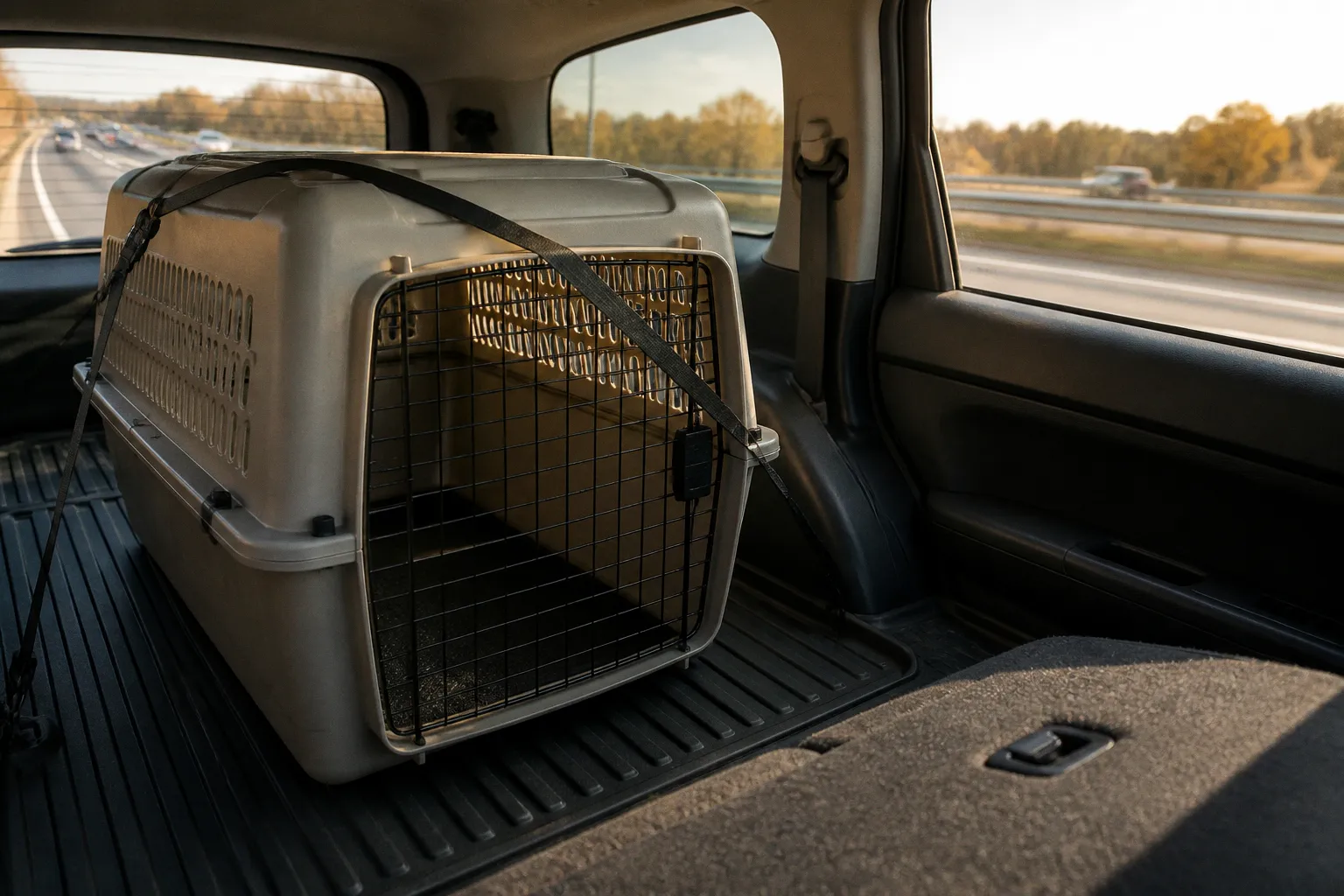
The decision affects your dog’s schedule, the number of transitions during the trip, the level of personal attention available in transit, and the amount of flexibility required from you at pickup and delivery.
Compare car rental deals in United Kingdom
See available offersPartner link — DiscoverCars comparisonFor a long-distance move, the practical difference is this: shared ground pet transport combines several animals and households along one route, while private transport assigns the vehicle and driving schedule to your pet or your family’s animals. Neither option is automatically the safer choice. The quality of the carrier’s planning, regulatory compliance, vehicle standards, communication, and handling procedures matters more than the label attached to the route.
The right comparison is therefore not simply “cheap versus expensive.” It is a question of which transport model provides the most appropriate transition phase for your pet’s age, health, temperament, crate tolerance, and delivery deadline.
A lower transport price usually buys flexibility, not the same route at a discount.
The economics of pet transit: what the route price actually covers
The clearest difference between shared and private ground transport is cost. Shared routes generally distribute mileage and operating expenses across several clients, while private routes place the full vehicle, driver, and scheduling commitment around one household.
Typical ground transport ranges are:
| Transport model | Common mileage range | What the price usually reflects |
|---|---|---|
| Shared ground transport | $0.50–$1.00 per mile | Shared vehicle costs, multiple pickups and deliveries, route-based scheduling |
| Private or direct ground transport | $1.00–$3.00 per mile | Dedicated vehicle and driver, direct routing, fewer transitions, individualized timing |
For a 1,000-mile interstate move, those ranges suggest approximately $500–$1,000 for shared transport and $1,000–$3,000 for private transport before any additional services or route-specific fees. The estimate is useful as a planning baseline, but it should not be treated as a complete quote. A carrier may calculate mileage from the actual route rather than a straight-line distance, and the final price can also reflect overnight boarding, difficult access roads, medication administration, extra animals, oversized crates, holiday scheduling, or a request for door-to-door service.
Shared transport is often the more economical choice when the pickup and delivery locations sit close to an established route. It becomes less predictable when the carrier must make a substantial detour for one household. A low per-mile figure may therefore be offset by a long wait for the next available route or by added mileage to reach a rural address.
Private transport has a higher base cost because the carrier is not filling unused capacity with other clients. You are paying for control over the route, pickup window, stops, and communication pattern. That can be a reasonable trade when a dog has significant travel anxiety, a medical routine that does not fit a group schedule, or a delivery deadline that cannot move.
What to ask before comparing quotes
Two estimates can look similar while describing very different services. Before selecting a carrier, ask whether the quoted price includes:
- Door-to-door pickup and delivery, or only terminal-to-terminal service.
- The pet’s own crate, a carrier-provided crate, or a separate crate fee.
- Overnight stays if the route cannot be completed in one driving period.
- Feeding, watering, medication, and cleaning support during transit.
- Regular status updates, including photographs or location notifications.
- Additional charges for puppies, senior dogs, multiple pets, or special handling.
- A defined pickup window and a realistic delivery range rather than a guaranteed hour.
- Cancellation, rescheduling, and weather-delay terms.
The quote should also identify whether the route is direct in the operational sense. Some businesses use “private” to mean that only your pets are booked, but the trip may still include a planned overnight stop or a driver change. That is not necessarily a problem; it simply needs to be clear before the transition begins.
Shared routes and direct routes create different travel experiences
Shared ground pet transport typically operates as a coordinated route with several pickups and drop-offs. Your dog may spend more time in the vehicle because the driver is serving other households, and the pickup date may depend on when the carrier has enough bookings to build an efficient route.
That structure can work well for confident adult dogs who tolerate vehicle travel, settle in a familiar crate, and do not require a tightly timed medication schedule. It can also be a practical option when your own schedule has several days of flexibility. In return for the lower cost, you accept a broader delivery window and more movement around the primary travel plan.
A private pet taxi interstate service follows a more controlled arrangement. The carrier can generally design a route around one household, reduce unnecessary stops, and coordinate pickup and delivery more closely with your timing. The dog is not being transferred between unrelated clients, and the driver’s attention is not divided among several families at each stop.
That does not mean a private route is always faster in total hours. A carrier may still need legally required rest periods, feeding and watering intervals, vehicle checks, and weather-related pauses. A direct route reduces logistical interruptions, but it does not eliminate the physical requirements of safe transport.
Shared versus private: the operational trade-off
| Planning factor | Shared ground route | Private direct route |
|---|---|---|
| Price | Lower cost per mile in many cases | Higher cost because the vehicle and schedule are dedicated |
| Scheduling | Pickup and delivery depend on the carrier’s route | More control over timing and appointment windows |
| Stops | Multiple client pickups and deliveries | Fewer route-related interruptions |
| Transit pattern | May include a longer route or broader delivery window | Usually more direct and individualized |
| Best fit | Flexible owners and dogs comfortable with vehicle travel | Time-sensitive moves, anxious pets, or complex care routines |
| Communication | Updates may follow a group route schedule | More individualized communication is often possible |
| Main planning risk | Uncertainty around exact timing | Higher cost and limited availability |
The central question is whether your pet benefits more from schedule flexibility or from route control. A dog who becomes distressed with every loading event may be better served by fewer transitions, even if the private option requires a larger budget. A stable, crate-trained dog with no medical concerns may manage a shared route comfortably when the carrier has a well-organized handling system.
USDA Class T compliance is the baseline, not a luxury feature
When a commercial business transports animals across state lines in the United States, it is federally required to obtain USDA Class T registration under the Animal Welfare Act. This applies to commercial interstate transport generally, including both shared and private ground services. The registration requirement is not a substitute for good care, but it is a basic indicator that the carrier operates within the federal framework governing covered animal transport businesses.
As of April 22, 2026, major pet transport platforms including CitizenShipper require active pet transporters to hold valid USDA Class T registration. That platform requirement can make initial screening easier, but owners should still ask the individual transporter for current registration information and clarify how the trip will be operated.
A professional carrier should be able to explain:
- Which business entity is responsible for the transport.
- Whether the trip crosses state lines and falls under commercial interstate rules.
- How the vehicle is ventilated, secured, and cleaned between animals.
- How often the animals are observed during the route.
- How feeding, watering, and medication instructions are recorded.
- What happens if weather, road closures, illness, or a vehicle problem changes the plan.
- Who has authority to make veterinary decisions if an urgent issue develops.
Registration does not tell you whether a driver communicates well or whether your dog will be handled thoughtfully at a busy pickup. It does, however, place the carrier within a regulatory structure that includes requirements for observation, access to water, feeding intervals, and environmental conditions.
Direct routing reduces avoidable disruption; compliance protects against the disruptions no responsible carrier should ignore.
Observation, feeding, and hydration during the route
A long-distance transport plan should be specific about care intervals rather than relying on broad assurances such as “your dog will be checked regularly.” USDA rules require operators of surface transport conveyances to observe animals at least once every four hours to confirm adequate ventilation and acceptable temperatures.
For feeding, dogs and cats aged 16 weeks or older must be fed at least once every 24 hours. Animals under 16 weeks must be fed at least once every 12 hours. All dogs and cats in commercial transit must be offered potable water at least once every 12 hours, and food and water must be offered within four hours before transport begins.
These are regulatory minimums, not necessarily the best individualized schedule for every dog. A young puppy, a senior dog, or an animal with a medical condition may need a more detailed plan. Some dogs refuse food during travel but will drink if water is offered calmly. Others become nauseated after eating immediately before movement. The carrier should discuss the dog’s normal routine, not simply announce that a standard feeding window will be followed.
Before pickup, provide written instructions covering:
1. Normal meal timing and portion size. Include the food brand, preparation method, and whether the dog eats more reliably from a familiar bowl.
2. Water preferences. Note whether the dog drinks from a bowl, bottle, or travel dispenser, and send a familiar vessel if appropriate.
3. Medication. State the exact dose, timing, storage needs, and whether medication must be given with food.
4. Toileting routine. A dog who usually needs a walk shortly after eating may require a different stop plan from a dog who uses a travel pad.
5. Stress behaviors. Tell the carrier about pacing, drooling, vocalizing, crate-biting, escape attempts, or motion sickness.
6. Veterinary contacts. Supply the regular veterinarian’s details and authorize emergency care procedures in writing before departure.
A shared route may still meet these standards, but the care plan needs to be integrated into a schedule serving multiple animals. A private route gives the carrier more room to adapt, although the same federal intervals and safety responsibilities still apply.
Temperature management is part of route planning
Temperature exposure is one of the areas where a carrier’s operational details matter more than a reassuring description of the service. USDA standards state that dogs and cats must not be exposed to ambient temperatures above 85°F or below 45°F for more than 45 minutes while being moved to or from a terminal facility or primary conveyance.
That 45-minute limit is particularly relevant during loading, unloading, and transfers, when an animal may be outside the vehicle or waiting in a staging area. It is not enough for a company to say that the vehicle has air conditioning or heating. A sound plan should address how the carrier limits exposure during the entire handoff process.
Weather can affect shared routes more noticeably because multiple pickups and deliveries increase the number of loading events. A carrier may need to adjust the sequence, delay a stop, or move an animal into a climate-controlled area while another pet is collected. Private transport generally offers fewer handoffs, but it is still subject to road conditions, mechanical issues, and extreme weather across several states.
Ask how the carrier handles:
- Summer pickups in areas where the temperature may exceed the federal threshold.
- Winter loading when wind chill and icy surfaces slow the handoff.
- Overnight stops in regions with different temperatures from the departure location.
- Vehicle breakdowns or extended roadside delays.
- A dog who cannot safely remain crated for a prolonged loading sequence.
- Weather advisories that make the original departure date unsuitable.
The best transport plan includes a contingency window rather than treating the scheduled date as immovable. If your move is tied to a lease start, flight, military transfer, or closing date, build a buffer between the pet’s delivery and your own non-negotiable appointment. Shared transport usually needs the wider buffer, but even a private route can be delayed for sound safety reasons.
Preparing your dog for the transition phase
The transport route is only one part of the journey. A dog who has never spent time in a travel crate may find a direct, uninterrupted drive harder than a shared route with more opportunities for movement and breaks; another dog may become increasingly distressed each time an unfamiliar person approaches the vehicle. Temperament and prior experience should shape the choice.
Begin preparation several weeks ahead when possible. The goal is not to force the dog to “get used to it” in a few days, but to create baseline comfort around the specific conditions of travel.
Four preparation phases
1. Crate familiarity. Keep the travel crate open in the home, add familiar bedding if the carrier permits it, and let the dog enter voluntarily. Meals, treats, and quiet rest inside the crate can make it part of the normal environment rather than a signal that something disruptive is about to happen.
2. Short vehicle sessions. Start with the engine off, then progress to brief drives and gradually longer trips. Watch for drooling, repeated yawning, panting unrelated to heat, vomiting, or frantic movement, and discuss persistent symptoms with your veterinarian.
3. Handling rehearsal. Practice clipping a leash, moving through a doorway, and settling after being lifted or guided. Your dog may be comfortable with you but cautious with a driver, so clear instructions about preferred handling can reduce the pressure of the first handoff.
4. Departure routine. Keep the final meal, bathroom break, medication, and crate loading sequence as predictable as possible. A familiar blanket, toy, or food container can serve as a familiarity anchor, provided it does not create a choking or entanglement risk.
Do not introduce a new sedative, calming supplement, food, harness, or crate system on the day of departure. If travel anxiety is significant, speak with your veterinarian in advance about options and test any prescribed plan before the interstate trip. The carrier should know what has been tried and what reactions were observed.
Choosing a route by the dog’s needs, not the marketing label
A shared route may be appropriate when:
- The dog is a healthy adult with reasonable vehicle tolerance.
- Your pickup and delivery dates can move within a defined window.
- The route follows a well-established corridor with experienced drivers.
- The dog does not need frequent medication or highly individualized handling.
- Your budget favors a lower mileage rate.
- You have arranged a buffer around housing, work, or travel commitments.
A private direct route may be the stronger fit when:
- The dog has severe travel anxiety or reacts poorly to repeated loading events.
- The animal is elderly, recovering from treatment, or following a precise care schedule.
- You are transporting several pets whose routines need to remain together.
- A narrow delivery window is necessary, but you still have a contingency plan.
- The destination is difficult to reach through a shared route.
- Avoiding unrelated stops is more valuable than minimizing the price.
There are also cases where neither route should proceed without veterinary guidance. A dog with uncontrolled vomiting, respiratory disease, recent surgery, heat intolerance, or a condition that worsens with stress may require a specialized medical transport plan or a delay. A carrier can manage logistics, but it should not be placed in the position of improvising medical decisions that belong with your veterinarian.
Building a reliable long-distance relocation plan
Once you have selected the transport model, turn the arrangement into a written timeline. Start with the delivery date you actually need, then work backward through carrier availability, veterinary paperwork, crate preparation, medication refills, and the handoff appointment.
A practical planning sequence looks like this:
- Four to six weeks before departure: compare shared and private quotes, verify USDA Class T registration, review the carrier’s insurance and emergency procedures, and reserve the route.
- Two to four weeks before departure: schedule a veterinary review if health, medication, or interstate documentation requires attention; begin longer vehicle practice sessions.
- One week before departure: confirm the route, pickup window, driver contact, delivery address, feeding instructions, and weather policy in writing.
- The day before: pack food in clearly labeled portions, prepare medications, print or organize records, and confirm that the crate is secure and appropriately sized.
- At pickup: give the driver the dog’s written care plan, verify identification details, record the crate and dog’s condition, and confirm the next communication point.
- During transit: expect updates according to the carrier’s stated schedule, while recognizing that an update may be delayed by a safe handling stop or a changing route.
- At delivery: allow the dog to decompress in a quiet area, offer water, provide a small familiar meal if appropriate, and observe for signs of exhaustion, gastrointestinal upset, or unusual distress.
The paperwork should match the operational plan. Confirm microchip information, vaccination records, veterinary contact details, medication instructions, emergency authorization, and the exact person permitted to receive the pet. If another family member, boarding facility, or relocation coordinator will accept delivery, provide that person’s full contact information before departure.
The decision comes down to control, tolerance, and margin
For the pet transport direct vs shared route decision, there is no universal winner. Shared ground pet transport usually offers a lower cost and can work efficiently for flexible owners and dogs with a stable travel baseline. Private transport costs more, but it can reduce route complexity, narrow the delivery window, and provide a more individualized care structure.
Use the cost ranges as a starting point, then evaluate the actual route, the carrier’s compliance, and your dog’s likely response to the transition. A professionally managed shared route is preferable to an expensive private service that cannot explain its observation schedule or temperature plan. Conversely, a private pet taxi interstate arrangement may be justified when repeated stops, uncertain timing, or divided attention would create unnecessary strain.
The safest outcome is a transport plan with clear responsibility at every stage: who collects the dog, who observes the animal, who provides food and water, who responds to a delay, and who receives the pet at the destination. When those details are settled before departure, the journey becomes a manageable logistics project rather than an open-ended source of worry.