Pet Relocation Options: Which Travel Path Fits Your Dog?
Choosing among long distance pet relocation options is rarely a simple matter of comparing a flight time with a mileage rate.
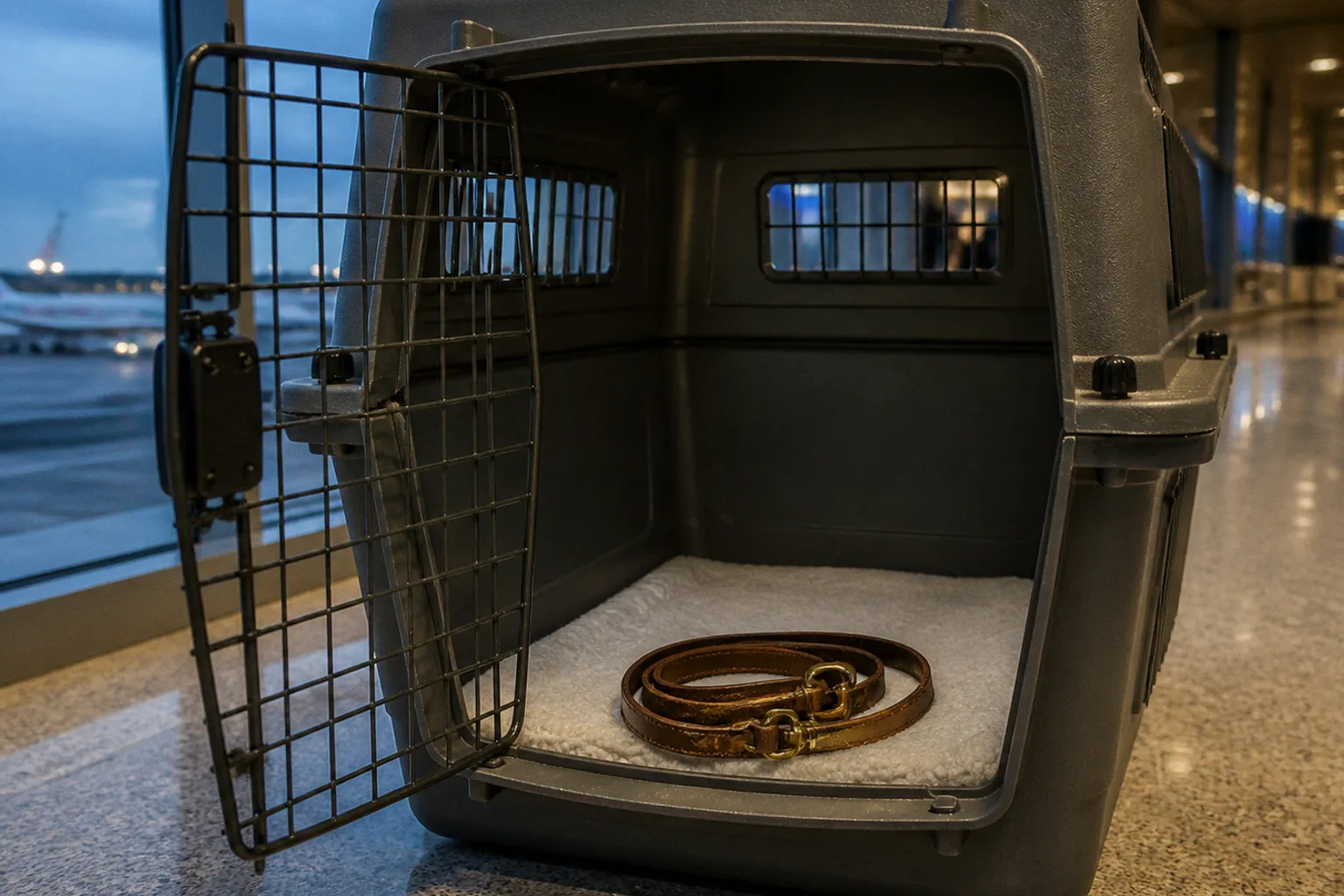
The right travel path depends on the dog in front of you: their size, breed, age, health status, tolerance for confinement, sensitivity to noise, and ability to remain settled through a major transition phase. The route, season, destination rules, and the quality of the transport provider can be just as decisive.
Compare car rental deals in United Kingdom
See available offersPartner link — DiscoverCars comparisonFor some dogs, in-cabin air travel offers the shortest and most familiar arrangement available. For others—particularly flat-faced breeds, senior dogs, or pets with pronounced travel anxiety—a ground transport plan provides a more controlled environment, even though the trip may take several days. The objective is not to find the fastest option at any cost. It is to build a travel plan that preserves baseline comfort while meeting airline, veterinary, and regulatory requirements.
Start with the dog, not the distance
A cross-country move can look straightforward on a map and still be demanding for a dog. A direct flight may take only several hours, but airports add check-in procedures, waiting periods, unfamiliar handling, security activity, and exposure to loud mechanical environments. Ground transport may reduce airport-related disruption, but a multi-day drive creates its own requirements around rest, feeding, toileting, medication, and overnight care.
A practical first assessment should consider five factors:
- Physical profile: size, age, current health, mobility, and any breathing or cardiac concerns.
- Breed-related risk: brachycephalic breeds often have reduced tolerance for heat, stress, and restricted airflow, which affects whether cargo transport is available at all.
- Behavioral stress profile: some dogs settle in a crate after a short adjustment period, while others become increasingly distressed when exposed to noise, motion, or unfamiliar handlers.
- Route complexity: a direct domestic route is a different logistical problem from a connection, a border crossing, or an international relocation with destination-specific entry rules.
- Season and weather: air cargo schedules may be restricted when temperatures are too low or too high, and summer embargoes are common in hot-climate destinations between May 1 and September 30.
The most suitable path is therefore a fit between the dog and the operating conditions. A small dog who can remain calm in an airline-compliant carrier may be a strong candidate for cabin travel. A large, healthy dog may be better suited to a professional ground transporter if cargo restrictions, heat, or airport handling create unacceptable complications. A dog with a significant medical condition may need veterinary input before either option is considered.
The best relocation plan is not the one with the fewest travel hours; it is the one that keeps the dog’s physical and emotional load within a manageable range.
Air travel: in-cabin versus cargo logistics
Airline pet travel options generally fall into two distinct arrangements: the dog travels in the cabin with the owner or handler, or the dog travels as live-animal cargo in a temperature-controlled area of the aircraft. These are not interchangeable versions of the same service. They involve different restrictions, different handling environments, and different levels of owner visibility.
In-cabin travel
In-cabin travel is usually the most reassuring air option when the dog is small enough to fit comfortably in an approved carrier beneath the seat. The exact weight and dimension limits vary by airline, and the relevant measurement is often the combined weight of the pet and carrier rather than the dog alone. Because these limits are carrier-specific, a booking should never be based solely on a general weight estimate.
The carrier must also provide enough space for the dog to stand and sit fully, turn around normally while standing, and lie down in a natural position. A soft-sided bag that fits the airline’s under-seat dimensions is not automatically appropriate simply because it is marketed for pets. The carrier needs adequate ventilation, secure closures, absorbent lining, and dimensions that work for both the animal and the airline’s cabin policy.
Cabin travel can preserve several familiarity anchors:
- the dog remains close to a known person;
- the owner can observe changes in breathing, posture, or distress;
- there is no cargo-hold transfer process;
- the dog’s usual blanket or scent item can often travel with them, provided the item fits safely inside the carrier.
The limitations are equally concrete. The dog generally remains confined for the flight and airport process, and there may be restrictions on removing the animal from the carrier inside the terminal or aircraft. Connections increase the time spent in transit and create additional opportunities for delays. A dog who is calm at home but reacts intensely to crowds, engines, or confinement may not experience cabin travel as the low-stress option it appears to be.
Cargo travel
Cargo transport may be the only air option for larger dogs, but it introduces a more complex chain of custody. The dog is handled through airline cargo procedures and may be exposed to airport noise, loading operations, waiting areas, and aircraft conditions that are not visible to the owner. Jet engine noise in cargo aircraft can exceed 85 decibels, which is one reason a dog’s noise sensitivity deserves consideration rather than being treated as a minor behavioral detail.
Airlines also apply seasonal temperature controls. Cargo-hold pet transport is commonly restricted when ground or ambient temperatures fall below 45°F (7°C) or rise above 85°F (29.5°C). These restrictions may apply at the origin, destination, or connecting airport, so a route that appears available in a booking system can still become unsuitable when local weather changes.
Flat-faced breeds face a more fundamental barrier. Because of airway and thermoregulation concerns, most major U.S. airlines restrict or prohibit brachycephalic dogs from cargo-hold shipping. For these dogs, ground transport is often the primary practical alternative, not merely a preference.
Air travel also has minimum age requirements: dogs must be at least eight weeks old and fully weaned before flying. That threshold does not mean every eight-week-old puppy is ready for a complex route. It simply establishes a basic airline requirement; health, vaccination status, developmental readiness, and destination rules may impose additional conditions.
Ground transport: slower by design, more adjustable in practice
Ground transport is often the most adaptable option for a long-distance move, particularly when a dog cannot fly in cargo or when the owner wants to avoid airport handling. Professional pet transportation services may operate as private vehicles, shared routes, or scheduled relocation networks. Each model changes the dog’s amount of personal space, the number of animals traveling, the schedule, and the way rest stops are managed.
A coast-to-coast ground relocation across the continental United States generally takes three to five days. That timeframe is substantially longer than a direct flight, but the additional hours are not necessarily spent in one uninterrupted crate period. A properly managed route includes planned breaks, feeding and medication instructions, vehicle monitoring, and documented handoffs or updates.
Private pet chauffeur services
A private pet chauffeur service is designed around one household’s schedule and the dog’s individual needs. This can be useful when the pet has medication timing, mobility limitations, severe travel anxiety, or a need for a quieter vehicle environment. The principal tradeoff is cost: a dedicated vehicle and driver cover the full route for one relocation, so a private arrangement can exceed the price of domestic air shipping even when ground travel is otherwise described as economical.
Before booking, ask how the provider handles:
- rest and toileting intervals;
- overnight accommodation, if the route requires it;
- feeding, medication, and water instructions;
- vehicle temperature monitoring;
- emergency veterinary decisions;
- driver substitutions and unexpected delays;
- owner updates and delivery confirmation.
A professional service should be able to explain its operating process without relying on vague assurances. The value of ground transport lies in control and continuity, so those features need to be visible in the plan.
Shared and scheduled ground transport
Shared ground transport can reduce the per-mile burden when several pets travel along a common route. The vehicle may carry dogs from different households, and the schedule can be less flexible than a private move. This is not automatically a negative arrangement, but it changes the suitability assessment for dogs who become distressed around unfamiliar animals or need frequent individualized attention.
Ground transport rates commonly fall within a broad range of approximately $0.50 to $2.00 per mile, while a cross-country relocation may cost about $500 to $3,500 or more depending on distance, service model, timing, and the level of private support required. These figures are planning ranges rather than guaranteed quotes. Mileage alone does not reveal whether the vehicle is private, whether overnight care is included, or how many stops are built into the route.
Breed, age, and thermoregulation change the decision
The phrase “safe pet travel” has to be applied to the specific dog and operating environment. A healthy young retriever and an elderly French bulldog may be traveling between the same two cities, but they do not have the same risk profile.
Brachycephalic dogs—including many bulldogs, pugs, Boston terriers, and similar short-muzzled breeds—can face airway compromise and difficulty regulating body temperature under stress. Cargo restrictions are therefore common, and a plan that depends on cargo availability may fail at the first airline review. Ground transport can offer more control over ventilation, temperature, breaks, and observation, although a long vehicle journey still requires careful management.
Senior dogs may need a different evaluation. Reduced mobility can make repeated transfers uncomfortable, while chronic conditions may be affected by changes in routine, hydration, or medication timing. A dog who has recently undergone surgery, experienced respiratory symptoms, or developed unexplained exercise intolerance should not be placed into a relocation schedule without veterinary guidance.
Travel anxiety also deserves a practical, not sentimental, assessment. Signs may include persistent panting when the temperature is controlled, repeated attempts to escape confinement, vocalization that does not settle, drooling, trembling, vomiting, or an inability to rest. These behaviors do not automatically rule out travel, but they indicate that preparation should begin before departure and that the transport format needs to minimize avoidable triggers.
Familiarity anchors can help during the transition phase:
- a well-fitted carrier or crate introduced well before departure;
- a washable blanket carrying the dog’s familiar home scent;
- consistent feeding times where the route permits;
- written instructions for the transporter rather than verbal details provided at handoff;
- a clear record of medications, dietary restrictions, and the dog’s normal settling cues.
Sedation should not be treated as a default solution for making air or ground travel easier. Any medication decision belongs with the dog’s veterinarian, who can assess the animal’s health, the intended route, and the possible effects of the drug under travel conditions.
When a breed restriction removes cargo travel from the table, the decision becomes clearer: redesign the route around the dog’s airway and temperature tolerance instead of trying to force the original itinerary.
Regulatory compliance is part of the itinerary
Documentation is not an administrative afterthought. A missing health certificate or an unsuitable carrier can interrupt a carefully timed relocation, leaving the dog and handler in an unfamiliar terminal or transport facility while the issue is resolved.
For air travel, a veterinary health certificate is typically issued shortly before departure, often within 10 days of the flight. It confirms that the dog is healthy enough to travel and complies with the health requirements applicable to the destination. International routes can require additional documentation, vaccinations, microchip records, import permits, or quarantine arrangements, and the exact requirements depend on the destination country. There is no universal international pet passport process that removes the need to check the rules for the specific place of arrival.
The carrier is another compliance point. Under IATA container requirements, the dog must be able to stand and sit fully, turn around normally while standing, and lie down in a natural position. The container must also meet airline-specific construction, ventilation, and dimension standards. A crate that works for one airline or one aircraft type may not be accepted on another route.
When a commercial U.S. ground transporter operates as an intermediate handler, the business must be licensed and regulated under the Animal Welfare Act by USDA-APHIS, with Class T certification applying to this type of transportation activity. This does not eliminate the need to assess the provider’s actual practices, but it gives the owner a concrete compliance question to ask before booking.
A useful planning file should contain:
1. The dog’s veterinary health certificate and relevant medical records.
2. Vaccination and identification information required by the destination.
3. Airline or transporter booking confirmation.
4. Carrier or crate dimensions and any airline approval details.
5. Feeding, medication, and emergency-care instructions.
6. Contact details for the owner, transporter, destination caregiver, and veterinarian.
7. A written handoff plan identifying who is authorized to receive the dog.
Build the documentation timeline backward from the departure date. Health certificates have limited validity windows, and destination requirements may involve processing time that cannot be compressed at the last minute.
Comparing the travel paths
The following comparison is a planning framework rather than a substitute for a carrier’s current rules or a veterinarian’s assessment.
| Factor | In-cabin air travel | Air cargo | Professional ground transport |
|---|---|---|---|
| Typical travel duration | Several hours for a direct flight, plus airport time | Several hours in the air, with cargo processing and possible connections | About 3–5 days for a cross-country U.S. route |
| Best fit | Small dogs who can remain comfortably in an approved cabin carrier | Larger dogs who meet airline, breed, health, crate, and weather requirements | Dogs restricted from cargo, owners seeking continuity, or routes poorly served by air |
| Owner visibility | Highest when the owner travels with the dog | Limited during airport and aircraft handling | Depends on provider, but scheduled updates and handoffs should be available |
| Main constraints | Carrier size, under-seat rules, cabin availability, connection limits | Breed prohibitions, temperature embargoes, crate rules, cargo handling | Longer duration, mileage, overnight logistics, and provider quality |
| Cost planning range | Airline-specific; often lower than a private vehicle for long routes | Domestic air transport for a medium dog may range from about $500 to $2,000 | Approximately $500 to $3,500 or more cross-country |
| Weather sensitivity | Delays and route disruption may still occur | Strongest restriction because of temperature embargoes | More route flexibility, but the vehicle must maintain safe temperatures |
| Stress considerations | Airport crowds, confinement, engine noise, and connections | Cargo handling, noise, separation, and limited owner observation | Prolonged vehicle travel, unfamiliar handlers, and shared-vehicle exposure |
The important distinction in ground pet transport versus air shipping is not simply speed. It is the distribution of risk and control. Air concentrates the journey into a short window but may expose the dog to strict eligibility and weather constraints. Ground spreads the journey over several days and allows more adjustment, but only when the provider has a disciplined care protocol.
Cost: compare the service model, not just the headline quote
Air travel can appear inexpensive when the comparison includes only the airline ticket or cargo fee. The full cost may also include a compliant crate, veterinary examination, health certificate, destination documentation, airport handling, ground transfers, and possible overnight arrangements.
For a medium dog traveling domestically by air, the total transport cost may fall in the range of $500 to $2,000, depending on the airline arrangement and route. International pet shipping is substantially more complex and may total approximately $1,950 to $6,000 or more once documentation, coordination, handling, and destination requirements are included.
Ground relocation may be quoted by mileage, by route segment, or as a bundled service. A low mileage rate does not necessarily represent the lowest final price if it excludes overnight care, crate provision, medication administration, or delivery to the final address. Conversely, a higher quote may reflect a private vehicle, one-on-one handling, shorter transfer chains, and more detailed communication.
When reviewing estimates, separate the quote into:
- transportation itself;
- veterinary and documentation costs;
- crate or carrier requirements;
- airport or terminal handling;
- overnight lodging and care;
- private versus shared vehicle use;
- pickup and final delivery;
- cancellation or weather-delay terms.
This makes the comparison more transparent and prevents a low initial number from becoming an expensive revision after the booking has been made.
Building a workable relocation timeline
A reliable plan begins several weeks before the move whenever the schedule allows. The first phase is suitability and route selection: identify whether the dog can travel in the cabin, whether cargo is prohibited or seasonally unavailable, and whether a ground transporter can cover the route with appropriate rest and care arrangements.
The next phase is preparation. Introduce the travel crate or carrier gradually, maintain normal meals and exercise, and document the dog’s baseline behavior. This record helps the transporter distinguish ordinary travel behavior from a meaningful change in condition. If the dog has not previously tolerated confinement, preparation should not be postponed until the departure week.
The documentation phase follows the destination’s requirements. Confirm the airline or transporter’s current rules, schedule the veterinary visit within the accepted health-certificate window, and keep both digital and printed copies of the paperwork. For international travel, begin much earlier because destination rules may involve additional approvals or quarantine conditions.
The final phase is handoff and monitoring. Provide written instructions, label food and medication clearly, confirm the next update point, and ensure the receiving person has a realistic arrival window rather than a single fixed time. Delays are easier to manage when the care plan already accounts for them.
The right choice is the one that remains workable under pressure
For many small, calm dogs who meet the carrier requirements, in-cabin air travel offers the most direct path and the closest owner supervision. Cargo may be appropriate only when the dog, breed, crate, season, route, and airline rules all align. For brachycephalic dogs and other pets facing cargo restrictions, professional ground transport may be the practical route from the beginning.
Ground transport is not automatically cheaper, and air travel is not automatically less stressful. The more useful question is which option provides the strongest combination of physical safety, regulatory compliance, predictable handling, and baseline comfort for this particular dog.
A well-organized relocation does not remove every uncertainty. It does, however, move the important decisions into the preparation phase, when there is still time to change the route, correct the documentation, or choose a different transport model. With the right timeline and a provider whose process is clear, the move becomes a managed transition rather than a last-minute sequence of avoidable complications.