Pet Taxi Checklist: What to Prepare Before Pickup
Most dogs do not get carsick simply because they are “anxious travelers.” A large meal shortly before departure can make nausea much more likely, and motion, heat, unfamiliar handling, and stress can compound the problem.
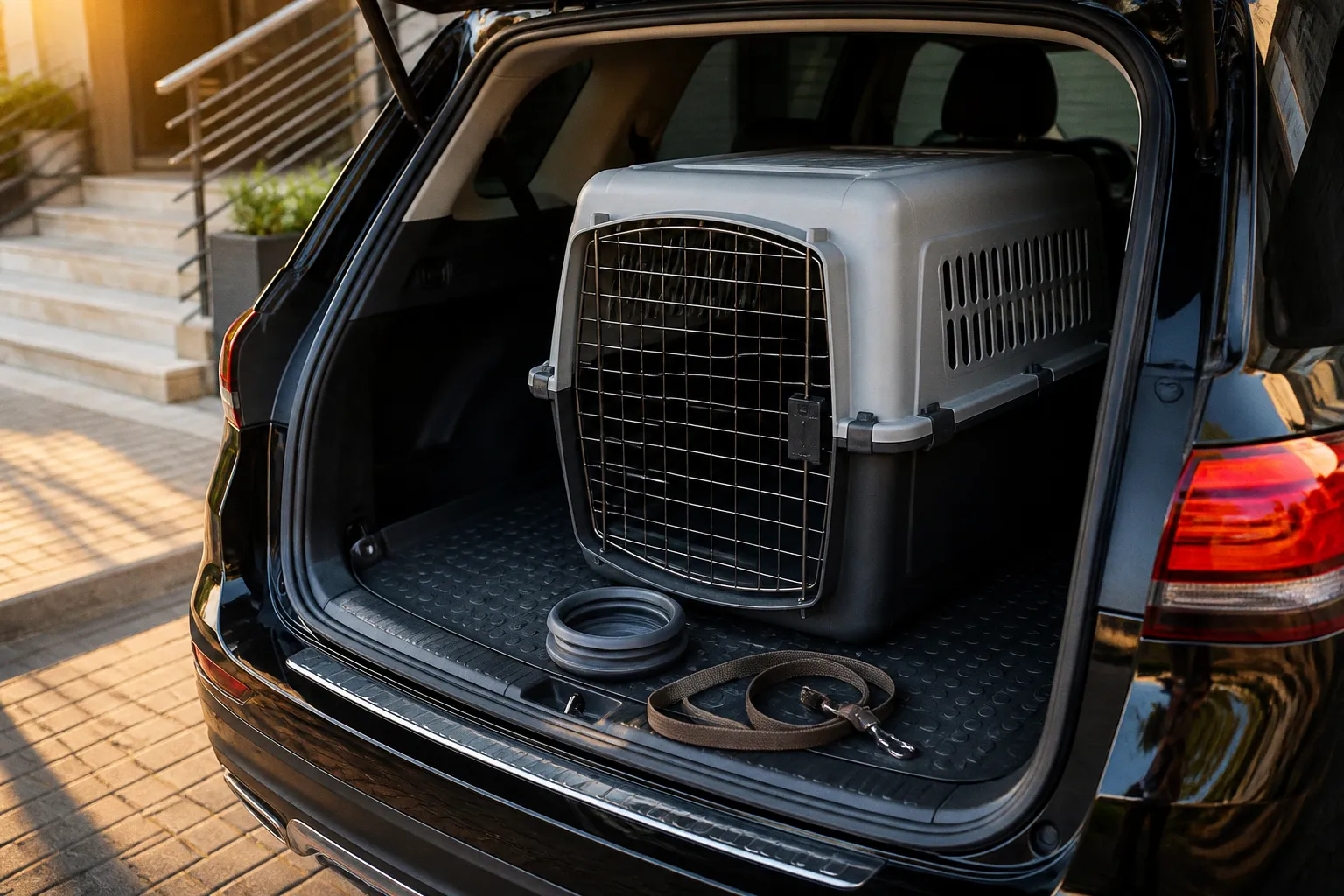
The same is true of restraint: when a dog arrives distressed, it is tempting to call the whole episode behavioral, even when the crate shifted, the harness was poorly fitted, or the dog spent the trip being thrown against the side of the vehicle.
That is the first hard truth of pet taxi preparation: the details that look boring on paper often determine whether the ride is uneventful or turns into a medical and behavioral mess.
I’ve worked intake at shelters and rehabilitation for over a decade. I’ve seen dogs come back from transport looking as if they have been through a war—not necessarily because the driver did anything wrong, but because nobody on the sending end bothered to provide the right food schedule, accurate medical information, a suitable restraint, or an honest description of the dog. A pet taxi is not a glamorous Uber for Labradoodles. It is logistics involving a living animal that cannot tell you its neck hurts, the crate is too hot, or the harness is rubbing under one leg.
If you treat pickup like handing over a suitcase, you are making the driver guess. That is how preventable problems become transport emergencies.
Optimizing Pre-Trip Nutrition and Hydration
The most common preparation mistake is feeding on the normal schedule right up to pickup. I understand the logic: the dog is facing a long car ride, so the owner wants to make sure it has eaten. The problem is that a full stomach in a moving vehicle can worsen nausea, especially when the dog is already stressed or unused to travel.
A large meal shortly before departure may lead to vomiting, diarrhea, or refusal to eat later. It can also make the dog less comfortable in a crate, where there is little room to move away from the mess. For many dogs, a smaller meal earlier in the day is a better starting point than a full bowl immediately before the vehicle arrives.
A practical pet taxi service preparation checklist should include:
- Avoid a large meal in the few hours before pickup. The exact timing depends on the dog’s age, health, normal feeding schedule, and route length.
- If the dog needs food before travel, offer a reduced portion rather than trying to “top it off” before departure.
- Keep treats modest. A few treats used to guide the dog into the crate are different from a heavy snack or a full meal.
- Tell the provider when the dog last ate and approximately how much.
- Pack the dog’s usual food in a sealed, labeled container if the journey is long enough to require feeding.
- Do not introduce a new food, chew, supplement, or rich treat on the day of transport.
Water should not be withheld simply because the dog is traveling. Dogs still need access to normal hydration, particularly in warm weather or during longer routes. Offer water as usual before pickup and provide a collapsible bowl or other practical container for stops. The transport provider should know whether the dog drinks eagerly, needs encouragement, or has a medical reason for a specific fluid schedule.
The goal is not to send the dog into the vehicle dehydrated. The goal is to avoid combining a heavy stomach with movement and stress.
Some dogs cannot safely follow a standard pre-trip feeding routine. Puppies, dogs with diabetes, animals prone to hypoglycemia, and pets with gastrointestinal or other medical conditions may need food at a specific time. Older dogs and animals recovering from illness also deserve more individualized planning. If your veterinarian has given feeding instructions, write them down and hand them to the driver rather than relying on a rushed verbal explanation at the door.
The written plan should include:
- Time and amount of the last meal.
- Whether water should be offered normally or on a veterinary schedule.
- Any medication that must be given with food.
- Signs that should prompt the driver to contact you or seek veterinary help.
- Emergency contact details for your veterinarian.
A driver cannot safely improvise around diabetes, medication timing, or a history of severe motion sickness. If the dog’s needs exceed what the provider can reasonably manage, that needs to be established before booking.
A note on motion sickness
Motion sickness and travel anxiety can overlap, but they are not interchangeable. A dog that drools, swallows repeatedly, licks its lips, vomits, or develops diarrhea may be physically nauseated. A dog that trembles, pants, vocalizes, freezes, or tries to escape may be frightened. Some dogs show both patterns.
Do not borrow medication from another pet or use a sedative recommended in a social media group. Ask your veterinarian whether the dog needs an anti-nausea plan, a behavior plan, or both. If medication is prescribed, find out whether it should be tested at home first and what side effects the driver should watch for.
A lighter pre-trip meal may reduce the chance of motion-related stomach trouble, but the right feeding plan is the one that fits the individual dog—not a universal fasting rule.
Mandatory Safety Restraints and Vehicle Security
A calm dog still needs a secure restraint. “My dog is well behaved in the car” is not a safety system. A dog that normally lies quietly can panic after a sudden brake, attempt to exit at a stop, or interfere with the driver. In a collision, an unsecured animal can also injure itself, the driver, or another passenger.
The minimum acceptable setup is generally one of two options:
- A crate appropriate for the dog’s size and condition, secured so it cannot slide, tip, or shift during normal driving.
- A properly fitted, vehicle-compatible safety harness designed for transport and attached according to the manufacturer’s instructions.
A soft-sided carrier may be useful for some short trips, but it is not automatically a crash-protection device. The same applies to a regular walking harness, a collar, or a leash looped around a headrest. A restraint needs to be appropriate for the vehicle, the dog’s body shape, and the kind of movement expected during transport.
When speaking with a provider, ask specific questions instead of accepting a general promise that the dog will be “secured.” Find out:
- What type of crate or harness will be used?
- Is the crate anchored to the vehicle?
- Where will the dog ride?
- How are brachycephalic, elderly, large, or mobility-limited dogs accommodated?
- What happens if the dog escapes from a collar or backs out of a harness?
- Is the driver trained to handle a dog that panics or becomes difficult to safely move?
If you are supplying the crate, assemble it before pickup and check every latch, hinge, door pin, and strap. A crate that works in the living room can fail in a vehicle if the door is bent, the fasteners are missing, or the floor mat slides under the dog’s feet. Remove loose objects that could become dangerous during braking. If bedding is used, it should provide traction without reducing ventilation or allowing the dog to become tangled.
For crate size, the dog should generally be able to stand, turn around, and lie down in a natural position. More space is not always safer. An excessively large crate allows the dog to be thrown farther inside during abrupt movement. Too little space creates its own problems, particularly for dogs with arthritis, long bodies, orthopedic injuries, or respiratory limitations.
The safest location depends on the vehicle and the restraint system, but a loose dog should never ride in the front seat. An airbag is designed around an adult human occupant, not a dog sitting on a lap or standing near the dashboard. A pet taxi provider should have a clear policy about passenger placement and should not treat front-seat access as a comfort perk.
Check the fit before pickup
Do not wait until the driver arrives to discover that the dog can reverse out of the harness. Put it on at home and watch the dog move. Check for rubbing around the armpits, neck, chest, and groin. Make sure the dog can breathe, sit, and lie down without the straps shifting into a dangerous position.
For crates, let the dog enter and exit several times before the trip. Test the door with the dog inside while you remain nearby. If the animal immediately throws itself against the sides, bites the bars, or shows signs of panic, the issue is not going to disappear because a driver is standing on the porch with a clipboard.
A safe handoff also means using a leash and collar with current identification even when the dog will travel inside a crate. Doors open during loading, unloading, and roadside stops. The dog should not be transferred in an open parking lot without a secondary means of control.
A calm temperament is helpful, but it does not replace an anchored crate, a correctly fitted harness, or a driver who knows the vehicle’s safety procedure.
Organizing Essential Medical Records and Documentation
Every pet taxi operator asks for some version of the same information, and many owners hand over a folder assembled years ago without checking whether anything inside is still current. That folder is only useful if the driver can find the relevant document quickly.
The important records are not decorative proof that the dog has visited a veterinarian. They are the information someone may need during a delay, a medical event, a boarding intake, or an emergency clinic visit.
Keep the following together in a waterproof folder or clearly labeled digital file:
| Document or detail | Why it matters | What to check before pickup |
|---|---|---|
| Vaccination records | A boarding facility or destination may require proof, and records may matter after an incident | Confirm the dates and the destination’s current requirements |
| Recent health information | Some providers or destinations require a health certificate or similar documentation | Check how recent the document must be and whether an examination is needed |
| Primary veterinarian’s contact details | The driver should not have to search for the clinic during an emergency | Include the clinic name, phone number, address, and after-hours instructions |
| Emergency contact information | The owner may be unavailable while the vehicle is moving | Provide a second person who can authorize care if appropriate |
| Medication list | A driver needs to know what has been given and what is due next | Include dose, timing, storage instructions, and relevant side effects |
| Microchip details | A lost dog is easier to reunite with its owner when the registration is current | Confirm the phone number and email linked to the chip |
| Feeding and hydration instructions | Prevents guesswork during long routes or delays | Write down the last meal and the next planned feeding |
| Destination and handoff details | Avoids confusion at a boarding facility, veterinary clinic, airport, or new home | Include the receiving person’s name, phone number, and access instructions |
The microchip row is where I see some of the most avoidable dysfunction. People chip a dog, never register the chip, and then assume the technology will somehow solve the problem. It will not. Check that the registration points to a phone number and email address you actually monitor during the transport window. The collar tag matters too. Use a number that someone will answer, and make sure the tag is readable.
If the dog has allergies, seizure history, cardiac disease, diabetes, recent surgery, mobility limitations, blindness, deafness, or a history of respiratory trouble, put that information in writing. “The vet knows” is not a handoff plan. The driver needs enough information to recognize a problem and know whom to call.
Medication instructions deserve particular care. A label may be clear to you because you have handled the bottle for months, but a driver may need to know whether a tablet can be hidden in food, whether it must remain refrigerated, and what to do if the dog spits it out. Pack only what is needed for the journey unless the provider specifically requests more, and label every container with the dog’s name.
For interstate, international, or cross-border transport, documentation can become more demanding. Requirements may include vaccination records, health certificates, parasite treatments, microchip information, import permits, or destination-specific forms. Rules change, and timing matters. If a destination requires a treatment within a particular window before arrival, confirm the current requirement with the relevant authority and your veterinarian well before pickup.
A driver can transport the dog. A driver cannot retroactively fix missing paperwork at a border or persuade a facility to accept an animal whose records do not meet its intake rules.
Communicating Behavioral Needs to Your Transport Provider
This is where owners most often edit the truth. They describe the dog as friendly and leave out the resource guarding, separation distress, leash reactivity, noise phobia, crate panic, or bite history. Sometimes they are afraid the provider will refuse the booking. Sometimes they do not consider the information relevant. It is relevant.
A transport provider needs to know what the dog is actually like under pressure, not what the dog is like on its best afternoon at home.
Share:
- Accurate size and physical details. Weight alone is not enough for crate planning. A long-bodied or broad-chested dog may require more space than its weight category suggests.
- Handling history. Explain how the dog responds to strangers, lifting, collar grabs, paws being touched, and being moved through doors.
- Resource guarding. Mention food, toys, bedding, water bowls, and any object the dog may protect.
- Reactivity and aggression. Use plain language. Say whether the dog has lunged, snapped, bitten, or attempted to bite, and identify the circumstances.
- Crate experience. Distinguish between a dog that dislikes being left alone and one that has injured itself trying to escape confinement.
- Separation behavior. Explain whether the dog vocalizes, scratches, drools, soils the crate, or settles after a predictable period.
- Noise and environmental triggers. Sirens, motorcycles, construction, thunderstorms, traffic rumble, and unfamiliar buildings can all change the handling picture.
- Medical behaviors. Include seizure signs, fainting, coughing, overheating, panic-related vomiting, or anything else the driver may need to recognize.
The phrase “he’s fine with everyone” tells a professional almost nothing. Better information sounds like this:
- The dog allows leash attachment from familiar people but backs away from strangers.
- The dog guards food bowls but not toys.
- The dog rides quietly for thirty minutes and then begins panting and pawing at the crate.
- The dog cannot tolerate being lifted and may snap if its hindquarters are touched.
- The dog has never used a crate but can settle behind a baby gate.
- The dog needs a pause before entering a new vehicle.
This level of detail does not guarantee that a provider will accept the booking. It does give the provider a chance to decide whether the route, vehicle, equipment, and staffing are appropriate. That is a useful answer, even when the answer is no.
If the dog has a bite history, provide the circumstances and any required legal or veterinary documentation. Do not conceal an incident because it happened during a specific trigger. A driver may be able to work safely around a known trigger; they cannot plan around information they were never given.
Honest behavior notes do not make a dog difficult. They give the transport provider a chance to avoid putting the dog, the driver, and the public in a situation nobody is prepared to handle.
Consider the handoff, not just the ride
Many transport problems happen at the door rather than on the highway. The dog may be calm in the house and panic when a stranger reaches for the leash. It may bolt when the front door opens. It may refuse to enter the vehicle. It may react to a uniform, a wheelchair, a second dog, or the sound of the ramp.
Tell the provider how pickup should happen:
- Use a side door instead of the front door.
- Keep other pets in another room.
- Have the crate already positioned near the exit.
- Allow the dog to approach rather than reaching over its head.
- Use a specific phrase or treat routine.
- Avoid handling an injured body part.
- Have a second person present for a large or reactive dog.
If the dog is likely to fight the crate, the answer may be postponing the trip and arranging acclimation or professional handling. A same-day struggle is not a training plan.
Comfort Items and Stress Reduction Strategies
The pet industry loves to sell comfort: calming sprays, anxiety wraps, supplements, special playlists, and collars that promise to reveal what a dog is feeling. Some products may help some animals, but none should distract from the basics: secure equipment, manageable temperature, a predictable handoff, honest information, and time to acclimate.
A familiar-smelling item may help some dogs settle because it gives them a recognizable scent in an unfamiliar environment. A blanket, towel, or small piece of bedding from home can be useful, particularly if the dog already rests on it voluntarily. That does not mean every familiar object will calm every dog, or that scent is more effective than every commercial product. Treat it as a low-risk comfort option, not a guaranteed anxiolytic intervention.
Choose an item that is:
- Clean but familiar, rather than freshly washed with a strong fragrance.
- Small enough not to obstruct the dog’s movement or ventilation.
- Free of loose strings, stuffing, or chewable parts if the dog destroys bedding.
- Easy to replace if it becomes soiled.
- Clearly labeled if it will travel with the dog through several handoffs.
For a long route, send a spare if the provider allows it. Pack food, medication, wipes, waste bags, and a familiar item in a clearly marked travel bag. Do not overload the crate with toys or bedding that can shift, block the door, or create a chewing hazard.
Acclimation beats last-minute improvisation
A carrier first introduced on pickup day is not a neutral object. It may smell like a veterinary clinic, make unfamiliar sounds, and close around a dog that has never been confined. That is a lot to add to motion and separation at once.
If there is time before the trip, put the crate or carrier in a common room. Leave the door open. Feed part of the dog’s meals near it and then inside it. Toss treats in without forcing the dog to follow. Once the dog enters comfortably, close the door for short intervals while you remain nearby. Gradually add movement, brief car exposure, and normal household activity.
The pace should be set by the dog’s response. If the animal stops eating, pants heavily, claws at the door, or escalates into escape behavior, backing up a step is more useful than forcing a longer session. Severe panic may require a behavior professional or veterinary plan before transport.
Comfort is also physical. Ask the provider how the vehicle is ventilated and climate-controlled, how often long routes include stops, and how the dog will be monitored. A dog that appears quiet is not necessarily comfortable; freezing, shallow breathing, excessive drooling, and inability to change position can all be signs that something is wrong.
Use medication cautiously
Do not give a sedative simply because the dog is nervous. Medication can affect balance, alertness, temperature regulation, breathing, and cardiovascular function. Those risks may be more significant for brachycephalic breeds, older dogs, dogs with heart or respiratory disease, and animals traveling in hot or cold conditions.
Only your veterinarian should determine whether medication is appropriate, which product to use, and what dose fits that particular dog. Ask whether the medication should be trialed at home before the trip. A first dose should not become an experiment in the back of a moving vehicle.
The same caution applies to supplements. Products marketed as calming aids vary in their ingredients and evidence. If your veterinarian approves one, introduce it before travel so you can observe how the dog responds under controlled conditions. Do not combine several products without veterinary guidance.
The driver is there to transport the dog safely. They are not there to complete a six-hour behavior modification program while navigating traffic. If the animal has severe travel anxiety, the preparation needs to begin before the booking date.
The Prep Window Most Owners Skip
The morning of pickup is too late to discover that the dog cannot tolerate the crate, the health certificate is expired, or the provider does not carry the restraint you assumed was included.
For a long-distance booking, schedule a veterinary conversation well in advance. A transport-specific visit does not need to be elaborate, but it should address whether the dog is fit to travel, whether current conditions affect route planning, and whether the destination has special requirements.
Ask:
1. Is the dog medically fit for the expected duration and conditions of the journey?
2. Does the destination require a current certificate, vaccination, treatment, or permit?
3. What is the plan for motion sickness or travel-related gastrointestinal problems?
4. Should medication timing change during the route?
5. Are there temperature, respiratory, orthopedic, or age-related concerns?
6. What symptoms should cause the driver to stop and seek veterinary help?
At home, do a final rehearsal. Open and close the crate. Check the harness fit. Walk the dog through the planned exit route. Put the paperwork and supplies together. Confirm the pickup time, destination, emergency contacts, feeding instructions, and handoff person with the provider.
A useful packing setup separates the dog’s immediate needs from the documents:
With the dog
- Properly fitted collar with identification.
- Leash and backup leash if appropriate.
- Secure crate or approved transport harness.
- Familiar bedding or towel, if safe for that dog.
- Usual food in a labeled container.
- Collapsible water bowl.
- Prescribed medication with written instructions.
- Waste bags, cleaning supplies, and spare bedding.
- Any destination-required equipment.
With the driver or handoff contact
- Vaccination and health records.
- Veterinary contact information.
- Emergency authorization details.
- Microchip registration information.
- Feeding and medication schedule.
- Behavioral and handling notes.
- Destination address and receiving person’s phone number.
- Notes about access codes, elevators, parking, or a required facility entrance.
The “what to pack for pet taxi” question is not really about filling a large bag. It is about making the right information and supplies available at the moment they are needed. A driver should not have to dig through a grocery sack to find medication or call three people to learn whether the dog is allowed to eat.
Homework Before You Book
Preparation also includes evaluating the pet taxi service itself. A provider that asks only for the dog’s name, pickup address, and payment details is missing the part of the job that determines risk.
Before confirming the booking, ask:
- What restraints are used, and how are they secured?
- Does the vehicle have appropriate ventilation and climate control?
- How are dogs separated from one another?
- What information do they require about medical conditions and behavior?
- What happens if the dog becomes ill, aggressive, or impossible to safely load?
- How are emergency veterinary decisions handled?
- Who is authorized to receive the dog at the destination?
- What is the procedure for delays, breakdowns, or route changes?
- Are the driver and company insured for animal transport?
- Will the dog ever be left unattended in the vehicle?
- How are medications, feeding, water, and bathroom breaks documented?
A good provider may ask uncomfortable questions. That is a positive sign. They should want to know whether the dog bites, whether it can be handled by strangers, whether it has escaped before, whether it has respiratory limitations, and how it behaves around other animals.
Be cautious when a provider dismisses safety questions, says every dog rides the same way, refuses to discuss emergency procedures, or treats medical and behavioral information as an inconvenience. You are not being difficult by asking how the dog will be secured. You are doing the preparation the service should expect from a responsible client.
The cheapest pet taxi is rarely the cheapest pet transport. A low quote can become expensive when poor equipment, an avoidable illness, a missed document, or an emergency veterinary visit enters the picture.
The real work of preparing a dog for a pet taxi happens before the pickup window: the crate practice, the veterinary conversation, the records audit, the restraint check, the careful meal plan, and the honest briefing with the provider. The driver should arrive knowing what the dog needs and what can go wrong—not discovering both through trial and error.
Done properly, pickup is uneventful. The dog is secured, the paperwork is ready, the driver knows how to handle the handoff, and the animal arrives tired but stable. That is the standard to aim for. Not a perfect trip, not a dog who never pants, and not a pile of expensive calming products. Just a transport plan built around the actual animal in front of you.
Do the boring preparation. Skip the marketing promises. Treat the driver like a professional who needs accurate information. Keep water available, avoid a heavy meal before motion, and never assume that a quiet dog is automatically a safe dog.