Pet first aid kit essentials for professional dog walkers
A dog walker’s first aid kit is not a cute pouch of bandages tucked beside the spare leashes.
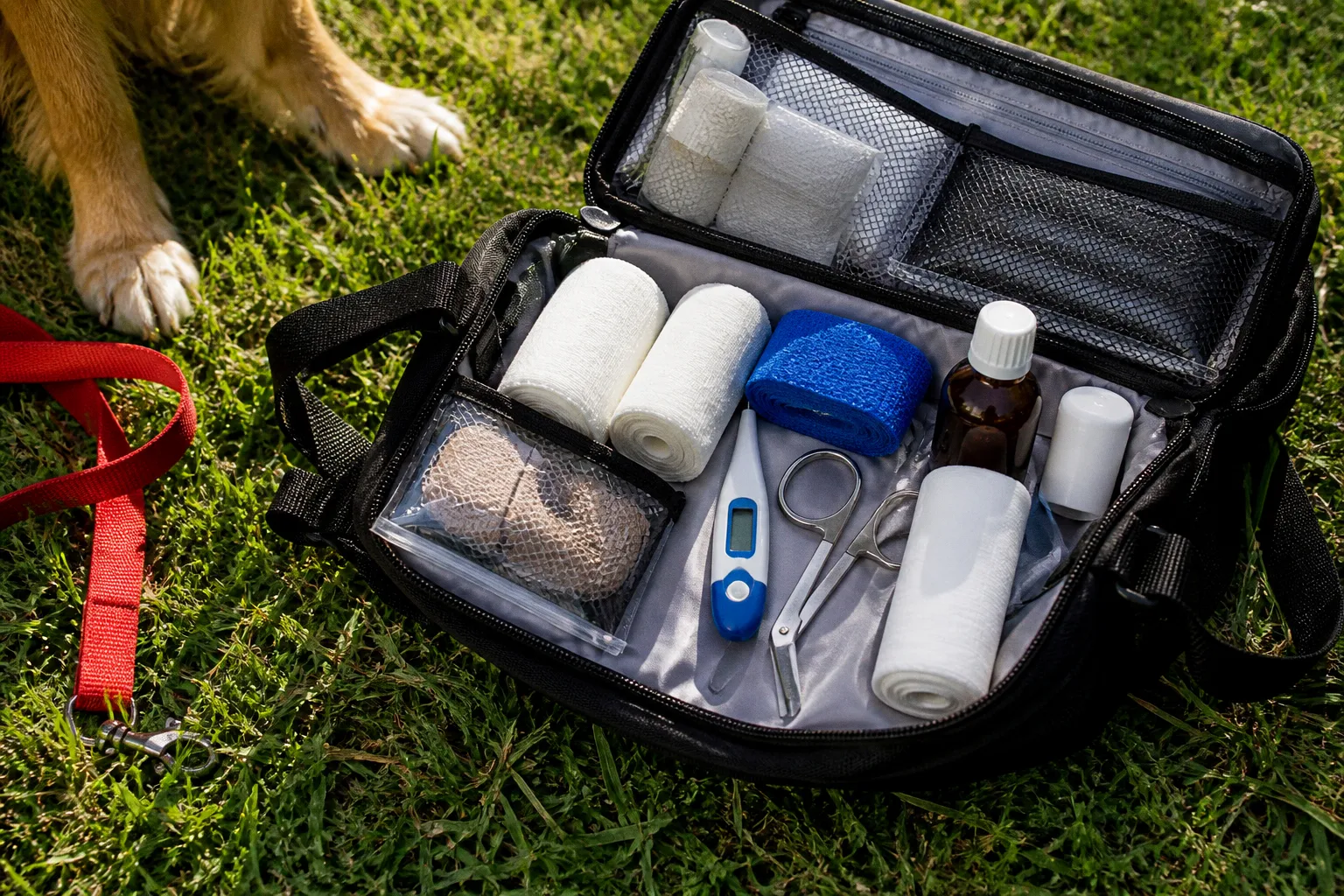
It is the difference between controlled stabilization and chaotic improvisation when a dog is bleeding, overheating, choking, or injured far from the owner and the clinic.
The hard truth is that most people assemble these kits around minor cuts and forget the two things that create the worst behavioral fallout: pain and panic. A normally gentle dog may bite when injured. A loose dog may bolt after a bike collision. A pack walk can turn one puncture wound into three dogs running through traffic. Your kit has to support safe handling, basic assessment, and transport until veterinary care takes over. It does not replace a veterinarian. It buys time.
The American Animal Hospital Association has reported that 25 percent more pets could survive if even one pet first aid technique were used before veterinary treatment. That is not a reason to play doctor in a park. It is a reason to stop arriving at emergencies empty-handed.
The critical role of on-the-go stabilization
Professional dog walking creates a particular kind of emergency problem: distance.
At home, an owner may have a vehicle, a known veterinary clinic, medication records, and another adult to help. On a group walk, you may be carrying several leashes, managing multiple temperaments, and standing on a trail where an ambulance cannot reach you. The injured dog still needs immediate decisions:
- Is the dog breathing normally?
- Is there active bleeding?
- Can the dog walk without collapsing?
- Is the dog conscious and responsive?
- Is the body dangerously hot or cold?
- Can the dog be moved safely?
- Which veterinary hospital can accept the case now?
A first aid kit helps with the first stage: control the situation, reduce additional injury, and get professional help moving. It is not designed to diagnose a torn ligament, identify internal bleeding, or determine whether a dog has suffered a spinal injury. Those are veterinary problems.
A useful kit should be portable enough to carry on every walk, not just on long hikes. If it stays in the car, it is not an emergency kit for the trail. It is a car kit. Keep a compact version on your person and a larger resupply kit in the vehicle.
Some lightweight kits weigh around 199 grams and measure roughly 15 × 10 × 5 centimeters. That is a practical size for a belt bag or walking backpack, but dimensions are less important than access. A tiny kit with no muzzle, no gloves, and three expired gauze pads is not efficient. It is decorative.
A first aid kit is not a substitute for veterinary care. It is a way to prevent a bad situation from becoming worse before veterinary care is available.
Before buying supplies, map the emergencies your service actually creates. A city walker dealing with pavement, traffic, broken glass, and elevator buildings needs different backup from a rural walker managing ticks, heat, uneven ground, and long transport times. The core supplies remain similar, but the quantities and transport plan should change.
Build for the first ten minutes
The first ten minutes are often about containment, not treatment. You need to stop the dog from running, biting, licking a wound, or being trampled by the rest of the group.
Your portable bag should let you:
1. Secure the injured dog without putting your hands near its mouth.
2. Apply direct pressure to bleeding.
3. Cover or protect an open wound.
4. Reduce movement when a limb, back, or neck injury is suspected.
5. Monitor basic signs while arranging transport.
6. Keep the rest of the dogs controlled and away from the emergency.
That last point gets ignored. A dog walker cannot safely treat one animal while four others are pulling toward traffic. A second leash, slip lead, or carabiner may be more useful than another tube of ointment.
Essential wound care and bandaging protocols
A professional dog walker’s wound-care supplies should focus on pressure, protection, and cleanliness. Do not build the bag around a pharmacy shelf of human products. Dogs are not small people with fur.
What to carry for wounds
A sensible portable kit includes:
- Sterile gauze pads in several sizes for direct pressure and wound coverage.
- Rolled gauze for securing a dressing without wrapping too tightly.
- Self-adhering bandage wrap, such as VetWrap, for temporary support.
- Saline wound wash or sterile saline for flushing visible dirt from a superficial wound.
- Disposable nitrile gloves to protect both the dog and the handler.
- Blunt-tipped scissors for cutting bandage material.
- Tweezers for removable surface debris, but not for digging into wounds.
- Clean towels or absorbent cloths for heavy bleeding, wet dogs, or transport.
- A small plastic bag for contaminated dressings and waste.
- A flashlight or headlamp for inspecting wounds in low light.
Human adhesive bandages such as Band-Aids are poor choices for dogs. They catch in fur, pull on skin, and can cause additional pain during removal. Self-adhering wrap is more practical, but it is not harmless. It can become dangerously tight, especially around a limb, if applied with too much tension.
The rule is simple: a temporary dressing should protect the wound while the dog reaches a veterinary professional. It should not become a permanent repair job.
Bleeding: pressure first
For external bleeding, use a clean gauze pad or cloth and apply steady direct pressure. Do not keep lifting the pad every few seconds to inspect the wound. That disrupts clot formation. If blood soaks through, add more material on top rather than peeling away the first layer.
If the bleeding is severe, spurting, rapidly soaking through dressings, or associated with weakness, pale gums, collapse, or a deep wound, treat it as an emergency. Call the veterinary hospital while maintaining pressure and arranging immediate transport.
A tourniquet is not a casual addition to a dog walker’s bag. It requires training and can cause serious damage if applied incorrectly or left in place without proper monitoring. If your work routinely involves remote terrain, take a recognized pet first aid course rather than buying specialized trauma gear and hoping confidence will fill the gaps.
Punctures and bites
Puncture wounds often look smaller than they are. A dog bite can drive bacteria deep into tissue, and the skin may close over the damage. Do not assume that a tiny hole means a minor injury.
Flush visible surface contamination with sterile saline if the dog can be handled safely. Cover the area loosely and contact the owner and veterinary clinic. Do not pour harsh household disinfectants into a deep wound. Do not scrub aggressively. Do not probe for embedded material.
The same applies to injuries from sticks, wire, glass, or fencing. If an object is deeply embedded, leave it in place and stabilize the surrounding area as best you can. Pulling it out may worsen bleeding.
Bandaging without causing a second injury
A bandage that is too loose will slide off. A bandage that is too tight can reduce circulation. Watch for swelling, cold toes, discoloration, increasing pain, or a dog obsessively chewing at the wrap. Those are signs that the dressing needs urgent professional attention.
Never wrap over a suspected fracture as though you are repairing furniture. Immobilize movement as much as possible, keep the dog quiet, and transport under veterinary direction. A makeshift splint can do more harm when it is applied to the wrong injury or fastened too tightly.
Safety restraints and handling injured animals
The most overlooked item in a pet first aid kit is often the one that protects the person providing aid: a muzzle.
Pain changes behavior. Fear changes behavior. A dog that has never shown resource guarding or aggression may bite when a stranger touches a painful paw, chest, abdomen, or face. The dog is not suddenly “bad.” The dog is protecting itself. The result can still be a serious bite.
Carry a properly sized basket muzzle when appropriate, along with a soft muzzle or clean cloth option for situations where a basket muzzle is unavailable. A muzzle must never interfere with breathing, and it should not be used on a dog that is vomiting or struggling to breathe. A soft muzzle restricts panting and is unsuitable for prolonged use, especially in heat.
Do not force a muzzle onto a panicked dog by wrestling with its head. That is how handlers get bitten and dogs escalate. If the dog cannot be safely restrained, create distance, control the environment, and call for veterinary or emergency assistance.
Restraint equipment worth carrying
For professional dog walkers, restraint supplies can include:
| Equipment | Primary use | Main caution |
|---|---|---|
| Slip lead | Securing a loose or injured dog quickly | Never use it to choke or drag a struggling dog |
| Spare standard leash | Replacing a broken leash or creating separation | Check clips and stitching regularly |
| Basket muzzle | Safer handling when a dog may bite | Avoid if breathing or vomiting is compromised |
| Soft muzzle | Short-term bite prevention in limited situations | Restricts panting; never use for heat-stressed dogs |
| Carabiner | Securing leashes to a fixed point or your gear | Use a load-rated, reliable model; do not trust a cheap keychain clip |
| Towel or blanket | Cover, padding, traction, or transport aid | Avoid overheating a distressed dog |
| Plastic bag or heavy-duty carrier bag | Makeshift stretcher for a medium-to-large dog | Use with a second person whenever possible |
A lightweight plastic bag, such as a durable shopping or utility bag, can help transport a medium-to-large dog when used as a makeshift stretcher. A towel or blanket can serve the same purpose. The goal is to reduce bending, twisting, and uncontrolled movement. If a spinal injury is possible, keep the body as straight and supported as you can.
The bag itself is only part of the plan. Practice moving an inert weight with another adult. Decide who controls the head, who lifts the torso, and who opens doors. Emergency transport gets ugly when nobody has rehearsed it.
The leash problem during a group-walk emergency
If one dog is injured during a pack walk, the other dogs are still your responsibility. Build a response plan before you need it:
- Move the group away from traffic, water, steep edges, and other dogs.
- Secure the uninjured dogs to a safe anchor only if the environment and equipment allow it.
- Call the owner or emergency contact while keeping the injured dog supervised.
- Ask a passerby for help only with clear instructions.
- Do not leave an injured dog alone to chase a loose dog unless there is an immediate life-threatening danger.
- Know in advance whether your business permits a second handler or emergency backup.
This is where professional services separate themselves from casual neighborhood walking. The emergency is not only what happened to one dog. It is the chain reaction around that dog.
Vital signs monitoring and emergency tools
A professional dog walker does not need to perform a full veterinary examination. You do need to recognize when the situation is deteriorating and communicate useful information to the clinic.
A digital thermometer is a standard item in a pet first aid kit. Normal dog body temperature is generally around 101 to 102.5 degrees Fahrenheit. A temperature outside that range can be concerning, but a reading is only useful if the dog can be handled safely and the result is interpreted in context.
Rectal temperature measurement can provoke a bite from a frightened or painful dog. Never force the procedure. Use lubrication and a disposable cover if trained to do so, but skip the reading if restraint is unsafe. A safe dog with no temperature reading is better than a bitten walker and a more frightened dog.
Useful monitoring supplies
Carry:
- A digital thermometer with spare batteries.
- Disposable thermometer covers or gloves.
- Lubricant suitable for the procedure.
- A watch or phone timer for counting breathing or pulse intervals.
- Small notebook or incident form.
- Pen that works in wet conditions.
- Phone power bank.
- Emergency contact card with the dog’s name, owner’s number, veterinarian, insurance details if provided, and permission instructions.
- Reflective vest or light for roadside or low-light incidents.
Record what you observe rather than decorating the report with guesses. “Dog became weak after 20 minutes of walking; gums appeared pale; breathing rapid; no known trauma observed” is useful. “Dog seemed weird” is not.
Look for changes such as collapse, inability to stand, labored breathing, unresponsiveness, repeated vomiting, severe weakness, pale or blue-tinged gums, uncontrolled bleeding, seizures, or signs of heat injury. These require urgent veterinary contact. Do not wait to see whether a dog “walks it off.”
Heat emergencies are not solved with optimism
Heat stress can progress quickly, especially in brachycephalic dogs, overweight dogs, seniors, and dogs with heart or airway disease. A dog that is heavily panting, disoriented, weak, vomiting, collapsing, or unable to settle is not simply tired from a good walk.
Move the dog to shade or air conditioning, contact a veterinarian immediately, and follow professional instructions about cooling and transport. Avoid wrapping a hot dog in a heavy blanket. Avoid forcing water into the mouth of a confused or collapsed animal. Carrying water is essential, but water alone is not a heat emergency protocol.
Your bag should include collapsible water bowls, spare drinking water, a cooling towel used according to manufacturer instructions, and a way to contact a clinic. These supplies support the first response; they do not make prolonged exercise safe in dangerous weather.
Toxic exposure and the hydrogen peroxide trap
Hydrogen peroxide at a 3 percent concentration is sometimes included in pet first aid kits to induce vomiting. That does not mean it belongs in every emergency response.
Do not administer hydrogen peroxide unless a veterinarian or poison control expert directly instructs you to do so. Inducing vomiting can be dangerous after ingestion of corrosive substances, sharp objects, petroleum products, or when the dog is unconscious, seizuring, or unable to swallow normally. The wrong intervention can cause aspiration or additional injury.
The same rule applies to human medications. Do not carry pain relievers for dogs as though they were standard first aid. Do not give antihistamines based on a generic internet dose. Dosage and suitability depend on the individual dog, its weight, health conditions, and other medications. Veterinary approval belongs in that decision.
A safer toxic-exposure protocol is:
1. Remove the dog from the substance without putting yourself at risk.
2. Prevent further licking or ingestion.
3. Save the packaging, plant sample, or substance information if it can be done safely.
4. Note the estimated amount and time of exposure.
5. Call the veterinarian or poison control service immediately.
6. Follow instructions exactly, including whether to transport at once.
That is less dramatic than reaching for a bottle. It is also less likely to create preventable damage.
Building a practical portable first aid kit
The best portable dog first aid kit is organized by task, not by random accumulation. Separate bleeding supplies from restraint tools, and keep emergency contacts where you can reach them without emptying the entire bag onto a sidewalk.
A compact setup might look like this:
Immediate control pouch
- Gloves.
- Slip lead.
- Spare leash.
- Muzzle.
- Carabiner.
- Small flashlight.
- Emergency contact card.
Wound-care pouch
- Sterile gauze.
- Rolled gauze.
- Self-adhering wrap.
- Saline.
- Blunt scissors.
- Tweezers.
- Absorbent towel.
- Waste bags.
Monitoring and transport pouch
- Digital thermometer.
- Spare batteries.
- Timer or watch.
- Pen and incident form.
- Emergency blanket.
- Foldable towel or blanket.
- Durable plastic transport bag for larger dogs.
- Water and collapsible bowl.
This is a starting configuration, not a universal prescription. A pet sitter providing in-home care may need additional supplies because the dog’s regular medications, medical history, and home hazards are part of the environment. A dog walker needs speed, visibility, restraint, and transport. A business serving senior dogs or dogs with chronic disease should build client-specific emergency notes into its operating system.
Do not carry prescription drugs for a client unless your agreement, training, and local requirements allow it. Keep medication instructions written by the owner or veterinarian. “Give a pill if he looks uncomfortable” is not an emergency protocol.
Client information belongs in the kit
For each dog, keep accessible information on:
- Owner and secondary emergency contacts.
- Primary veterinarian and nearest emergency hospital.
- Known allergies and medical conditions.
- Current medications.
- Previous bite or handling warnings.
- Muzzle tolerance.
- Heat sensitivity or exercise restrictions.
- Insurance or payment instructions if the owner has supplied them.
- Permission for emergency veterinary treatment.
Phone contacts can fail when a device is damaged, wet, or out of power. Keep a written backup. Also know your route. A first aid kit does not help much if you cannot identify the nearest open clinic or explain where the dog is located.
Maintenance cycles for professional gear
A first aid kit fails quietly. Gauze gets used and not replaced. Saline leaks. batteries die. Emergency numbers change. Wrap becomes dirty. The kit remains zipped and reassuring until the day it is needed.
Check the portable kit at least every six months and after every use. For a busy walking business, a monthly quick check is more realistic. Replace anything wet, contaminated, opened, missing, or expired. Hydrogen peroxide, if carried under a clearly marked veterinary-use policy, must be checked particularly carefully. More importantly, staff should understand that having it in the bag does not authorize casual use.
Use a simple maintenance record:
- Date checked.
- Items used since the last check.
- Expired or damaged supplies removed.
- Batteries tested.
- Emergency contacts confirmed.
- Clinic route and phone number verified.
- Staff member responsible for restocking.
- Any incident that requires a policy update.
Do not hide the kit at the bottom of a backpack under treats and spare poop bags. Put it in a clearly marked, waterproof pouch. Every walker should know where it is without asking.
Training is the part people skip
Supplies do not create competence. A walker who has never practiced direct pressure may freeze during heavy bleeding. Someone who has never handled a frightened dog may approach the muzzle incorrectly. Someone unfamiliar with heat injury may keep walking because the dog is still technically standing.
At minimum, professional staff should be trained in:
- Basic pet first aid.
- Safe approach and restraint.
- Recognition of shock, heat injury, respiratory distress, and poisoning.
- Bleeding control.
- Safe transport of a non-ambulatory dog.
- Incident documentation.
- Emergency communication with owners and veterinary clinics.
- Pack management during a single-dog emergency.
Canine CPR certification can be valuable, but certification is not a magic badge. CPR is an emergency measure with serious limitations, and the priority remains contacting emergency veterinary services and following dispatcher or veterinary instructions. Training should include realistic scenarios, not only a clean classroom mannequin and a laminated certificate.
The kit is the equipment. The protocol is the protection. Without training, you are carrying supplies, not providing preparedness.
The hard truths of professional pet first aid
A dog walker cannot guarantee a dog’s safety. Dogs can trip, collide, ingest something toxic, overheat, panic, or suffer a medical event without warning. Professionalism is not pretending otherwise. It is reducing avoidable risk and responding decisively when risk becomes reality.
That means setting boundaries with clients. A dog with a history of collapse, severe reactivity, uncontrolled resource guarding, or exercise restrictions may not be appropriate for a group walk. A dog that cannot be safely muzzled or transported needs a written emergency plan before it goes on a remote route. An owner who refuses to provide veterinary contacts is not giving you a manageable assignment.
It also means resisting industry theater. Branded pouches, tactical straps, and oversized “survival” kits do not matter if the walker cannot separate dogs, apply pressure, recognize respiratory distress, or make the emergency call. A professional first aid kit should be boring, maintained, and immediately usable.
Start with the essentials:
- A way to control a frightened dog.
- A way to control bleeding.
- A way to protect a wound.
- A way to monitor basic changes.
- A way to transport the dog.
- A way to contact the right people.
- A trained person who knows when to stop improvising.
Then test the system. Put the kit on during a normal walk. Can you reach the gloves with one hand? Can you deploy the slip lead quickly? Is the muzzle the right size? Is the phone charged? Could another staff member find the clinic details? Can two people move the largest dog in your care without dragging it?
That is the homework. Not shopping. Not posting a photo of the bag. Practice the response before the dog is bleeding on a path and everyone is looking at you for the next decision.