Dog Walker Accidents: Pet Insurance Coverage Traps
A dog can sustain a paw-pad laceration, leash-related neck injury, bite wound, heat injury, or vehicle trauma during a routine walk. The medical question is immediate.
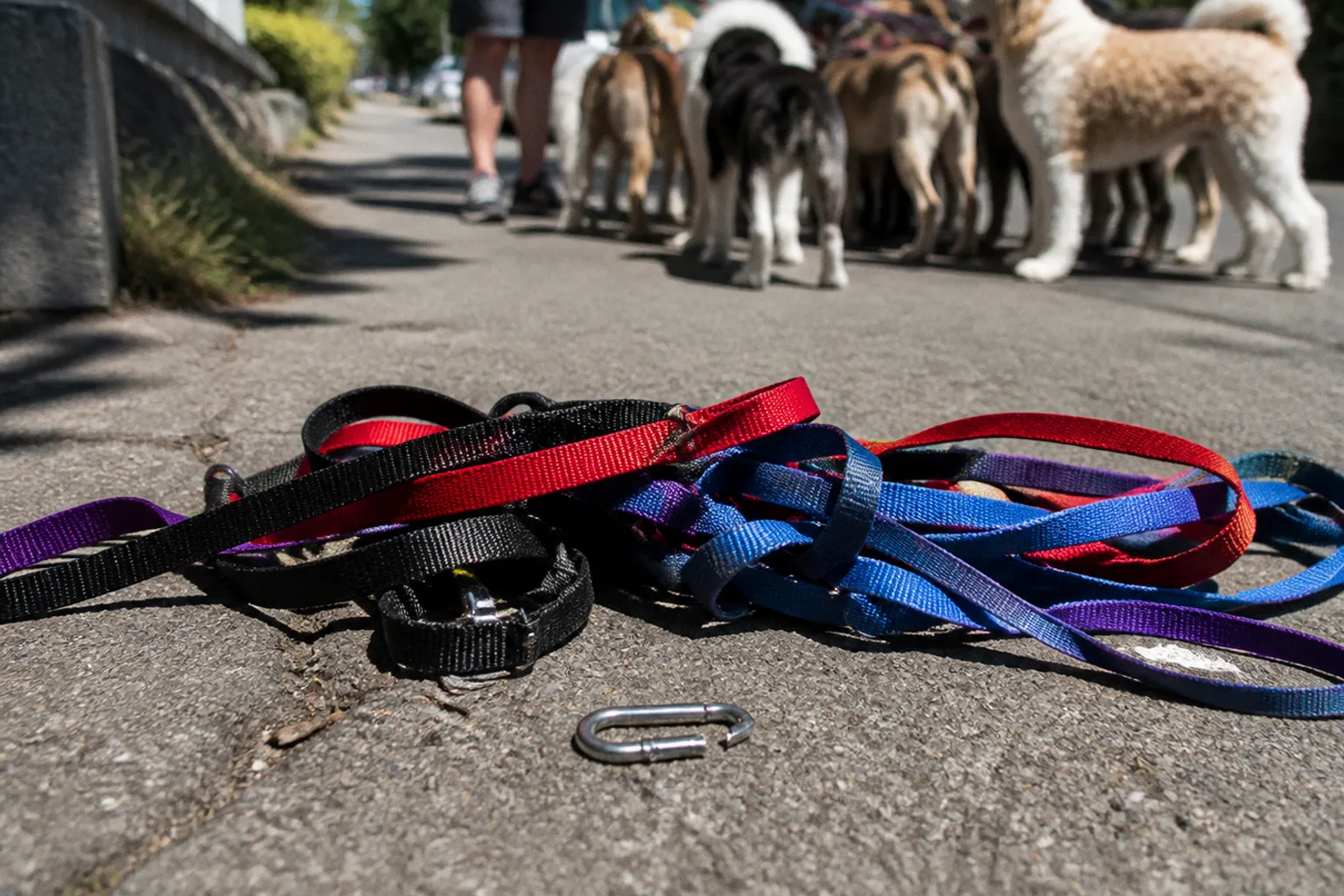
The coverage question is usually delayed until the emergency invoice arrives.
That delay is where owners lose control of the case. Standard pet insurance may reimburse eligible veterinary treatment, but many policies restrict claims when the dog was under a professional’s care. At the same time, a walker’s basic business liability policy may exclude the dog because it was in that walker’s care, custody, or control.
This is the coverage gap behind many pet insurance dog walker accidents. The owner assumes the pet policy pays. The walker assumes general liability pays. The insurer identifies an exclusion.
The hidden third-party exclusion in standard pet policies
Pet insurance is designed primarily around the owner-insurer relationship. The insured animal is usually expected to be in the owner’s household and under the owner’s ordinary control. Once a paid walker, sitter, trainer, groomer, or boarding provider takes over, the claim can enter a different risk category.
The wording varies by insurer and jurisdiction, but several restrictions recur:
- A third-party care exclusion may limit or reject a claim if the injury occurred while another person was responsible for the dog.
- A commercial-use exclusion may apply where the animal is involved in a commercial activity or commercial service arrangement.
- A liability exclusion may remove cover for damage or injury caused to other people, animals, or property.
- A policy may cover the dog’s veterinary treatment but not reimburse the owner for costs that should be recovered from the negligent care provider.
The distinction is operational. “My dog has accident insurance” does not answer the question, “Does my policy cover an accident while a paid walker had physical control of the leash?”
Pet insurance covers a veterinary risk. It does not automatically cover a transfer of responsibility to a commercial caretaker.
Owners should not assume that a denied liability claim means the veterinary claim is also denied, or vice versa. These are separate coverage pathways. A policy may pay for an eligible fracture repair but leave the insurer free to pursue recovery from the walker. Another policy may identify third-party care as an exclusion and deny the claim from the start.
This is why an incident report matters. The exact time, location, leash configuration, number of dogs, route conditions, weather, and sequence of events can determine which policy responds.
The wording that changes the result
Read the definitions section, not only the coverage summary. Search the policy for these terms:
- “Third party”
- “Commercial use”
- “Professional care”
- “Custody”
- “Control”
- “Exclusions”
- “Subrogation”
- “Bailee”
- “Bodily injury”
- “Property damage”
A dog is legally treated as property in many insurance frameworks. That language can feel cold. It is still the language that controls payment.
If the policy excludes incidents involving a sitter or walker, ask whether the exclusion applies to all professional care or only to liability claims. Ask whether emergency stabilization is treated differently from follow-up treatment. Ask whether the insurer requires the owner to first seek payment from the walker’s insurer.
Do this before the first booking. Not while a hospital is waiting for a payment authorization.
Why general liability insurance fails to protect the dog
General liability is often misunderstood. It normally protects a business when its operations injure a third party or damage third-party property. It is not automatically an insurance policy for the animals the business is actively handling.
The problem is the Care, Custody, or Control exclusion, commonly shortened to CCC.
A walker clips a leash to a dog’s harness. The dog is now under the walker’s direct physical control. If the dog is injured during the walk, a standard general liability insurer may say the animal was in the insured’s care, custody, or control at the time of loss. That can remove coverage for the dog’s veterinary expenses.
This exclusion is not obscure fine print. It is a core boundary in many home, renters, and general liability policies.
| Incident | Standard pet insurance | Walker’s general liability without CCC | Walker’s policy with CCC or animal bailee protection |
|---|---|---|---|
| Dog cuts a paw on debris during a paid walk | May be restricted by third-party care terms | Often excluded because the dog was in the walker’s control | May respond, subject to policy terms and limits |
| Dog bites a passerby | May not cover third-party liability | May respond if no other exclusion applies | May respond, subject to breed, handling, and limit conditions |
| Dog is injured in the walker’s vehicle | May be restricted by professional-care terms | Usually excluded without business auto or animal transit cover | May respond only if transit is specifically insured |
| Dog escapes during an off-lead group walk | May be disputed or excluded | May be excluded under CCC and off-lead conditions | May respond only if off-lead activity is permitted and documented |
The table is not a promise of coverage. It is a map of the likely fault lines.
The correct protection for a professional walker is usually a policy that includes a CCC endorsement, an animal bailee endorsement, or equivalent language specifically covering animals entrusted to the business. Insurers use different labels. The functional question is consistent: does the policy pay if an animal in the walker’s temporary care is injured, lost, or dies?
A public liability limit can look substantial while answering the wrong question. In some dog-walking policies, a £5 million public liability limit is common and may be extendable. That figure does not matter if the policy excludes the dog in the walker’s custody. Limit size is secondary to coverage trigger.
Care, Custody, or Control: the coverage that must be named
CCC coverage is the structural control point in a walker’s insurance stack. It addresses property entrusted to the insured. In pet care, that means the dog being walked, transported, boarded, or supervised.
Do not accept “we are insured” as a usable answer. That phrase can describe many policies, including policies that do not cover injury to a client’s dog.
A competent verification sequence is short.
1. Ask for the insurer and policy type. A business name and a statement of confidence are not documentation. The walker should be able to identify whether the policy is designed for pet-care operations.
2. Ask whether care, custody, or control is included. Use those words. Also ask whether the policy uses “animal bailee” terminology. The answer should identify the endorsement, not merely repeat “public liability.”
3. Confirm the per-animal and aggregate limits. A policy can carry a large overall liability limit while placing a smaller cap on veterinary costs for an animal in care. Determine whether deductibles apply and whether emergency treatment is included.
4. Confirm the claim process. Ask who authorizes emergency care, which clinic the walker uses, whether the walker pays the clinic directly, and whether the owner must pay first and recover later.
5. Match the policy to the actual service. Group walks, off-lead exercise, medication administration, transport, overnight sitting, and trail walks are separate exposures. A policy that covers on-lead neighborhood walks may not cover all of them.
“Insured” is not a coverage category. CCC or animal bailee protection is.
This is also where pet sitter liability vs pet insurance becomes clear. Pet insurance follows the animal under the owner’s policy, subject to exclusions and reimbursement rules. Pet sitter or walker liability follows the service provider’s operations, subject to the service scope and policy endorsements. One policy does not replace the other.
The robust arrangement is layered:
- The owner maintains pet insurance for illness and accidents that meet the policy terms.
- The walker maintains commercial pet-care liability with explicit protection for animals in care.
- The service agreement defines emergency authority, financial responsibility, and release procedures.
- Both parties keep current veterinary contact information and an emergency authorization on file.
No single policy eliminates the need for the others.
The operational traps that void otherwise valid cover
Insurance disputes often begin with a mismatch between the policy application and the actual walk. The walker may be covered for a low-risk operating model but perform a higher-risk service on the ground.
Pack size is not a minor administrative detail
Many dog-walking policies specify a maximum number of dogs handled at one time. A typical UK policy limit is six dogs. The relevant number is not the number of dogs booked under one owner. It is the number physically under the walker’s control during that route.
From a biomechanics and handling perspective, group size changes the load on the handler’s kinetic chain and reduces available response time. One dog can surge. Two dogs can create opposing leash vectors. Multiple dogs can turn a simple obstacle into a traction event.
The risk accelerates when the group includes:
- Dogs with substantial body-mass differences.
- Dogs using retractable leashes.
- Dogs with known leash reactivity.
- Dogs with incompatible gait speeds.
- Dogs requiring separate toileting or recovery intervals.
- Dogs walked near vehicle traffic, cyclists, loose dogs, or construction zones.
A walker who exceeds the insured pack limit may create a coverage issue before any injury occurs. The owner does not need to audit every route. But the owner should know the walker’s maximum group size, actual operating group size, and separation policy for incompatible dogs.
Off-lead rules are often binary
Off-lead activity creates a different risk profile. Recall reliability is not an insurance endorsement. A verbal assurance that a dog “has good recall” does not establish that the service is covered for off-lead handling.
Policies may restrict off-lead exercise unless the owner has given written permission. They may impose conditions on enclosed areas, dog selection, staffing, or location. A walker may also have a blanket policy of never releasing a client dog in unfenced space. That is usually the cleaner operational standard.
Written consent should state:
- Whether off-lead activity is allowed at all.
- Whether it is allowed only in a fully enclosed area.
- The dog’s recall history and known trigger profile.
- Whether the dog may be released with unfamiliar dogs.
- The required collar, harness, GPS device, muzzle, or long line.
- The instruction if the dog does not respond to recall.
For dogs with predatory behavior, flight risk, pain-related reactivity, or poor thermal regulation, off-lead group exercise is not a casual add-on. It is a distinct hazard class.
Vehicle transport requires separate protection
A walker’s personal auto policy is not necessarily business auto coverage. Standard dog-walking insurance may also exclude transport unless the policy specifically includes animal transit cover or the business has appropriate commercial vehicle insurance.
This matters for more than a collision. The operational exposure includes:
- A dog escaping during loading or unloading.
- Heat accumulation in a parked vehicle.
- Poor crate anchoring during braking.
- Two dogs fighting in an unsegregated cargo area.
- A dog becoming entangled in a seatbelt tether.
- Delayed access to veterinary care after a crash.
Thermal regulation must be treated as a transport control, not a comfort feature. A vehicle can become unsafe long before the outside temperature appears extreme. Transport procedures should identify crate or restraint type, ventilation, loading sequence, and the rule against unattended waiting.
If the walker transports dogs, ask directly: “Does your insurance cover animals while they are in your vehicle?” A clear answer should distinguish business vehicle liability from care of the animal during transit.
Medication and special-care instructions create another boundary
Some insurers restrict claims where a sitter administers medication. The same issue applies when a walker deviates from written owner instructions, changes a feeding schedule, uses an unapproved restraint, or undertakes a medical intervention beyond the agreed scope.
That does not mean a walker should ignore an emergency. It means the emergency protocol must be defined before the emergency.
For dogs on medication or with known conditions, the intake record should include:
- Diagnosis or functional limitation relevant to the walk.
- Medication name, dose, timing, and administration authority.
- Signs that require ending the walk.
- Heat, cold, exertion, and terrain restrictions.
- Veterinary clinic, backup clinic, and owner contact sequence.
- Maximum emergency authorization amount, where local practice permits it.
A dog with osteoarthritis, brachycephalic airway risk, cardiac disease, seizure history, spinal instability, or prior heat injury needs a customized movement plan. Insurance does not correct poor load distribution, excessive duration, or a route that exceeds the dog’s safe capacity.
The emergency invoice is not the first problem
Dog walker emergency vet bills are visible. The preceding failures are often not.
The dog may have been walked during unsafe heat. The harness may have compressed the shoulder assembly and altered gait. The group may have moved at the pace of the fastest dog. The walker may have delayed stopping because the route was scheduled for another twenty minutes. The emergency invoice then becomes the final document in a chain of preventable decisions.
A sound walker protocol uses early termination criteria. These are not vague observations such as “seems tired.” They are observable changes in movement or physiology:
- Repeated stopping, lagging, or refusal to bear weight.
- Sudden shortening of stride or asymmetrical gait.
- Persistent panting that does not normalize during rest.
- Excessive salivation, disorientation, weakness, or collapse.
- Repeated paw lifting or abrasion on pads.
- Head turning toward the flank, yelping, or defensive response to harness contact.
- Escalating reactivity that alters leash tension and handler control.
- A dropped leash, damaged clip, or compromised harness fit.
The response sequence should be fixed: stop movement, secure the dog, move to a lower-risk location, assess airway and mobility, contact the owner and veterinary provider, and document the event. Continuing the route to “see if it settles” is a poor control decision.
The service agreement should also establish who can authorize care if the owner cannot be reached. A clinic may require consent before diagnostics or treatment. A walker without authorization may be limited to stabilization. A walker with unlimited authority may expose the owner to unexpected costs. The balance needs to be written.
How to vet a walker before a coverage dispute exists
The goal is not to interrogate a local business as if it were a claims department. The goal is to determine whether the walker’s operations, equipment, and insurance describe the same service you are buying.
Start with the dog’s actual risk profile. A healthy adult dog on an individual, on-lead walk has a different exposure from a senior dog with reduced proprioception, a young dog with poor impulse control, or a dog requiring transport to a trailhead.
Then ask these questions in plain language:
1. How many dogs are physically walked together, and what is the insured maximum? Do not settle for an average. Ask for the maximum on a busy day.
2. Are walks on-lead, long-line, or off-lead? If any off-lead activity occurs, request the written consent process and location rules.
3. Do you carry Care, Custody, or Control or animal bailee coverage? Ask what happens if a client dog is injured while in the walker’s direct care.
4. Does your insurance include vehicle transport? If transport is used, ask about crates, restraint systems, ventilation, loading protocols, and business auto coverage.
5. What are your heat and weather thresholds? A useful answer specifies route modifications, walk shortening, cancellation criteria, water access, and pavement-temperature controls.
6. What is your emergency veterinary protocol? The walker should identify the nearest clinic, owner-contact sequence, emergency authorization procedure, and incident documentation process.
7. Do you administer medication or manage special-needs dogs? If yes, confirm both the operational procedure and whether that activity is covered under the policy.
8. What equipment is used for each dog? Harness selection, leash length, backup connection, identification, and fit checks affect control forces and escape risk.
The best answers are specific and unembellished. They include limits. A walker who says, “I do not transport dogs,” “I do not walk more than four together,” or “I do not release client dogs off-lead” may be describing stronger risk control than one who promises to accommodate every request.
Coverage is a safety control, not a substitute for one
The question “does pet insurance cover dog walker accidents?” has no universal yes or no answer. Standard policies can contain third-party or professional-care exclusions. Standard general liability can exclude the very dog the walker was paid to handle. Vehicle use, off-lead activity, pack size, medication, breed restrictions, and failure to follow instructions can all alter the result.
The correct approach is procedural.
Before the first walk, confirm these parameters:
- The owner’s pet insurer has been asked, in writing where possible, how professional walker incidents are handled.
- The walker holds commercial pet-care coverage, not only general liability.
- CCC, animal bailee, or equivalent cover is explicitly included for animals in the walker’s care.
- The policy’s per-animal limit, deductible, exclusions, and claims process are understood.
- The number of dogs per walk stays within both the insurer’s limit and the handler’s safe control capacity.
- Off-lead activity has written authorization and defined location controls.
- Transport is covered separately if dogs enter the walker’s vehicle.
- Emergency veterinary authority, contact order, and documentation requirements are in the service agreement.
- The dog’s gait, thermal tolerance, medical restrictions, and equipment fit determine the walk plan.
Insurance is the financial containment layer after an incident. The primary layer is competent handling. The second is a policy that actually covers the dog when that handling fails.