How Shelf-Stable Human-Grade Dog Food Simplifies Pet Care Logistics
According to Business Wire, The Pets Table has rolled out EasyFresh™, a shelf-stable, human-grade dog food line.
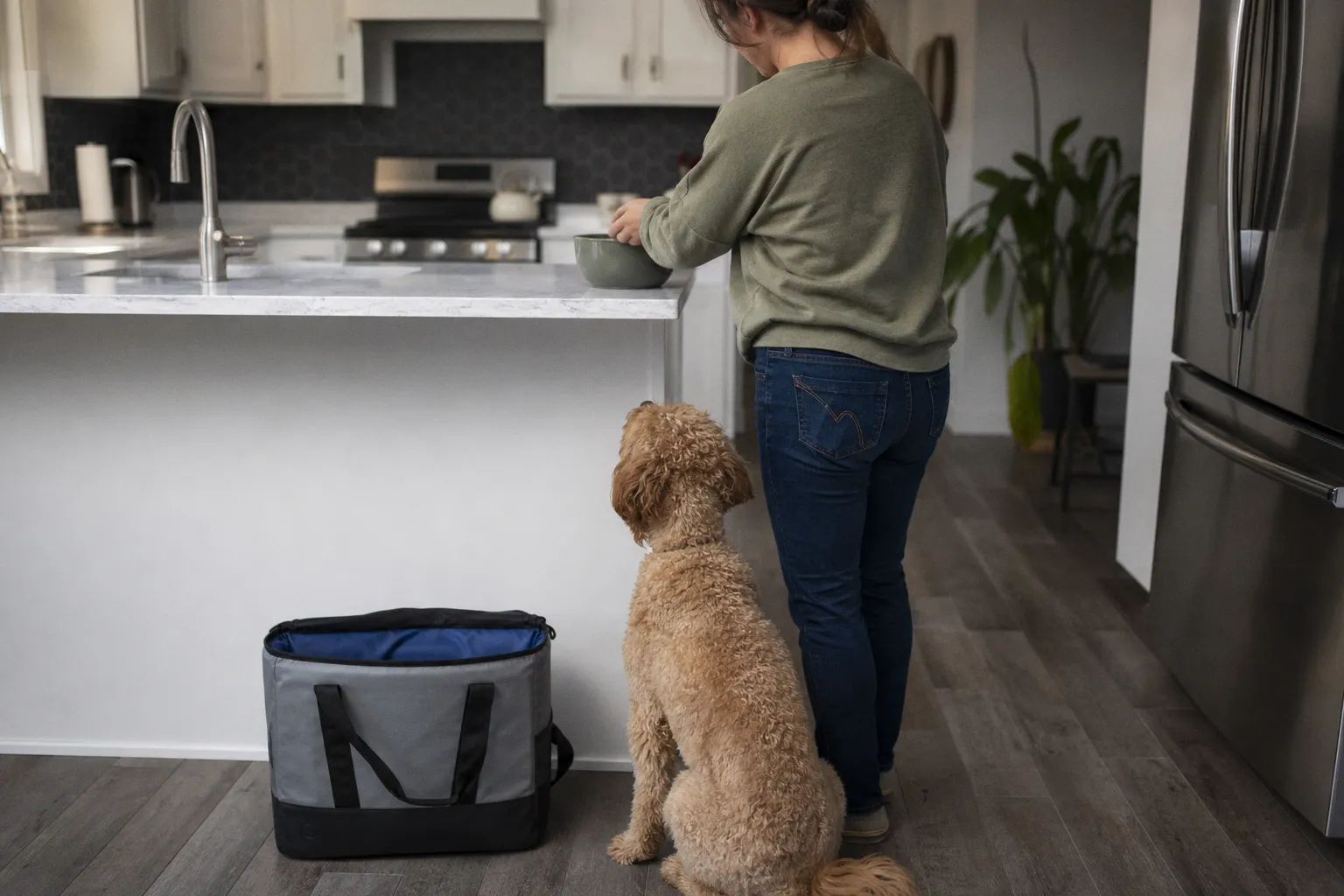
For professional dog walkers and pet sitters managing feeding routines across client households, a shelf-stable product reshapes cold-chain logistics, storage footprints, and prep steps during drop-ins and overnights — three variables that directly affect how a sitter sequences visits on a packed day.
Operational shift for walkers and sitters
Shelf-stable dog food removes the refrigeration window that fresh, raw, or refrigerated formats impose. That eliminates a measurable failure point: ambient-temperature food left on a counter past safe limits during back-to-back visits. Walkers and sitters should note three variables the new format changes:
- Storage footprint. No fridge allocation required. Clients with small kitchens, shared pet-supply closets, or food staged in mudrooms and entryways now have one fewer constraint to coordinate during intake.
- Visit timing and bowl protocol. Kibble or portioned servings can sit in a labeled container for a longer window without the same thermal-load risk a fresh or wet format carries — provided the bowl, scoop, and storage bin are kept clean per standard hygiene protocols, and portions are pre-measured off-site where possible.
- Inventory turnover and transport. Bulk-bag storage becomes more practical for multi-dog households, shared supply stations, or sitters building a portable kit for vehicle-based routes.
Parameters to confirm before switching a client
The available reporting — Business Wire, Pet Food Processing, and Trend Hunter — confirms the EasyFresh™ launch and its shelf-stable, human-grade positioning only. Specific ingredient panels, AAFCO adequacy statement, caloric density, and shelf-life duration are not present in the snippet data and must be verified on the product label or direct manufacturer documentation before recommending or substituting it into a client's feeding plan.
Verify, at minimum:
- AAFCO nutritional adequacy statement for the specific life stage (maintenance, all life stages, growth, and so on).
- Complete ingredient list and any allergen or sensitivity flags relevant to the client dog.
- Caloric density per cup, scoop, or package — cross-checked against the dog's current daily ration and the sitter's pre-portioning math.
- Expiration date format, lot code, and recommended storage temperature range on the unopened package.
- Intended use: complete meal, mixer, or topper. Human-grade positioning alone does not equal complete-and-balanced.
- Reconstitution requirements, if any, and how they affect water-intake calculations for the visit.
Tracking parameters
Two signals are worth monitoring over the next reporting cycle: whether independent reviewers publish measured shelf-life data under realistic storage conditions — kitchen pantry, garage, vehicle kit — and whether veterinary nutrition bodies issue guidance specific to shelf-stable human-grade formats. Until both land, treat EasyFresh™ as a logistical option worth piloting with one client at a time, not a blanket substitution across a roster.