Pet emergency plan setup: milestones for sitters
A sitter without written medical authority has a transport function, not a decision-making function.
In a time-critical veterinary emergency, that distinction can delay care, create payment disputes, and leave the animal without an approved treatment path.
A pet emergency preparedness plan for sitters is not a first-aid bag stored under a sink. It is an operational system: authority, contacts, supplies, transport, evacuation routes, and handoff procedures. Each component must work when the owner is unreachable, mobile service is degraded, the animal is stressed, and normal routines have failed.
The plan should be completed before the first unsupervised visit. Building it during a storm, a seizure, a poisoning event, or an evacuation order is already a protocol failure.
Legal authorization comes before the first visit
The most common administrative failure in emergency pet care is assuming that a signed service agreement automatically authorizes veterinary treatment. It does not necessarily do that. A service agreement may define dates, access instructions, fees, and visit frequency while saying nothing about medical consent or spending limits.
A sitter needs a separate, signed Veterinary Release or Emergency Pet Care Authorization Form. The form establishes what the sitter may do if the owner cannot be reached.
At minimum, the authorization should identify:
- The pet by name, species, age, breed or physical description, sex, and microchip number if available.
- The owner’s primary and secondary phone numbers.
- At least one local emergency contact who can make decisions if the owner is unavailable.
- The regular veterinary clinic, its phone number, address, and normal operating hours.
- The nearest emergency veterinary facility.
- Known medical conditions, current medications, allergies, prior anesthetic concerns, and behavioral handling restrictions.
- The owner’s approved spending limit for emergency examination, diagnostics, stabilization, or treatment.
- Whether the sitter may authorize treatment within that limit.
- Payment instructions, including whether a card is on file with the veterinary practice.
- The owner’s signature and date.
A vague phrase such as “do whatever is necessary” is poor operational language. It does not define treatment authority, financial limits, or who assumes responsibility if a procedure is recommended. Use clear instructions. If the owner wants a cap, record the cap. If they want a specific person consulted first, record that person and the maximum time allowed for contact attempts.
Emergency authority is a written chain of custody for medical decisions. If the chain is missing, the sitter is operating on assumption.
Build the pet emergency contact sheet as a field document
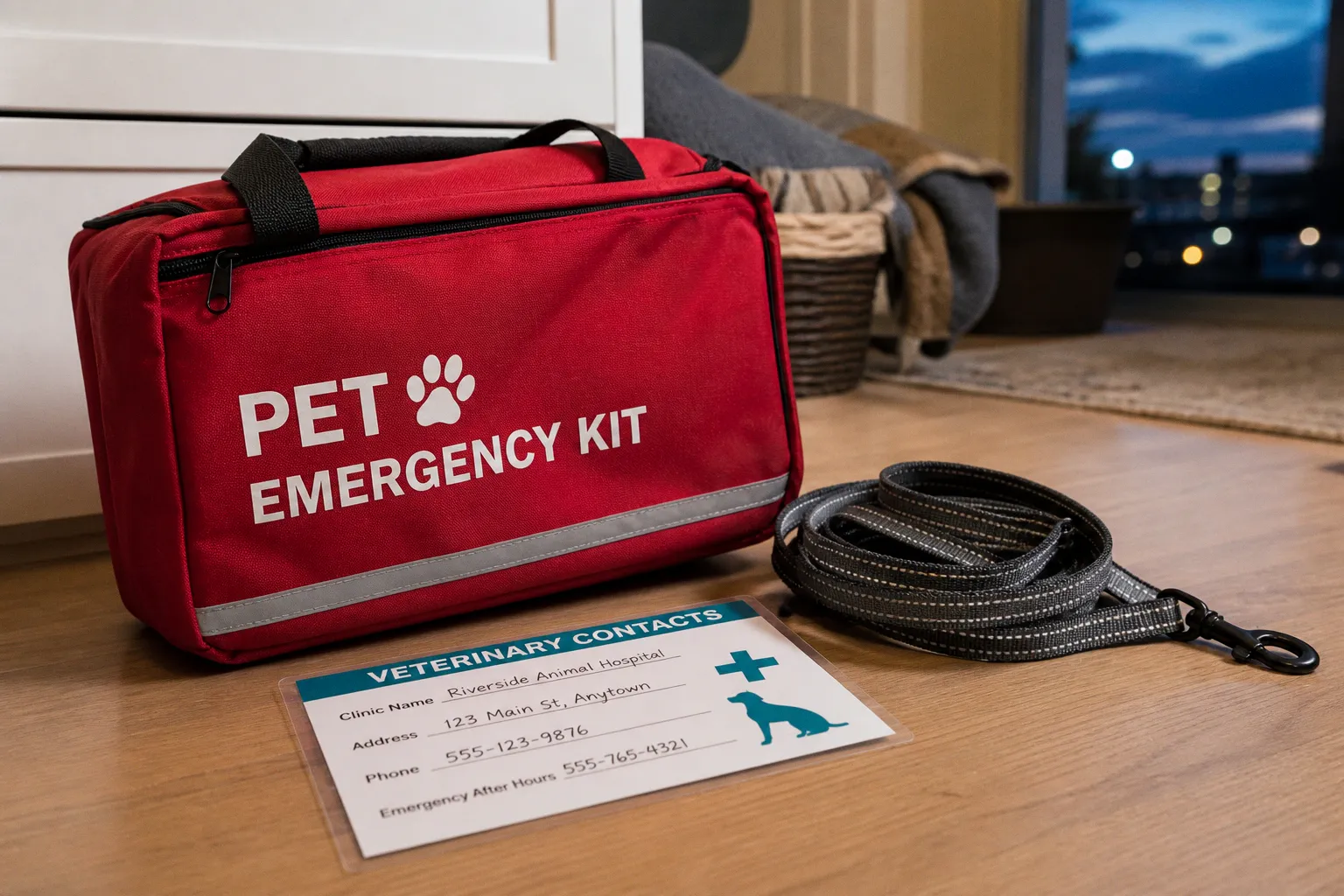
A pet emergency contact sheet should exist in two formats: a secure digital copy and a paper copy carried during visits or transport. A phone locked behind a dead battery, failed network, or forgotten password is not a reliable sole record.
The sheet should be readable in under 30 seconds. Avoid burying the emergency clinic number beneath paragraphs of routine feeding notes.
| Information category | Required detail | Operational purpose |
|---|---|---|
| Owner contact | Primary number, secondary number, travel location if relevant | Establishes first notification path |
| Medical authority | Signed release, spending limit, payment method | Allows veterinary intake and approved treatment |
| Veterinary care | Primary vet and 24-hour emergency hospital | Prevents route selection under stress |
| Medical profile | Diagnoses, medications, allergies, dietary restrictions | Reduces treatment and dosing errors |
| Handling profile | Bite history, muzzle tolerance, leash setup, carrier requirements | Protects clinic staff and transport personnel |
| Identification | Microchip number, current photo, license details | Supports recovery after separation |
| Emergency contacts | Local backup caregiver and decision-maker | Creates redundancy if owner is unreachable |
Keep the sheet current. A veterinary clinic change, discontinued medication, expired credit card, or moved emergency contact can invalidate the whole document.
For recurring clients, verify the sheet at least before major travel periods, seasonal storms, or extended sitting assignments. June, recognized as National Pet Preparedness Month, is a practical annual audit point. The month itself is not the safeguard. Updating records is.
Build the supply kit around duration, not convenience
A decorative “pet first-aid kit” with a few bandages is not an emergency supply system. It does not address food continuity, medication access, containment, identity, transport, sanitation, or evacuation.
The baseline supply target is three to seven days of food and water. Some public-health guidance recommends planning for up to 14 days. The correct duration depends on local risk exposure, access to supply routes, the number of animals under care, and whether the sitter may be cut off from the owner’s home.
For a professional sitter, the practical model is two-tiered:
1. Grab-and-go kit. Portable. Stored near the exit or in the sitter’s vehicle when conditions warrant. It supports rapid relocation and initial veterinary transport.
2. Shelter-in-place reserve. Larger supply stock at the pet’s home. It supports disrupted utilities, delayed delivery, blocked roads, or an owner’s extended absence.
Food and water should be stored in airtight, waterproof containers. If canned food is part of the animal’s normal diet, pack a manual can opener. Do not abruptly substitute a novel emergency diet unless no normal food is available. Gastrointestinal upset during a disaster adds a preventable clinical problem.
Medication management requires tighter control than food management. A sitter should know the medication name, dose, schedule, storage requirements, last administered time, and remaining quantity. “Pills in the kitchen cabinet” is not medication documentation.
Minimum contents for a functional pet emergency kit
The kit must support stabilization and transport. It is not a substitute for veterinary intervention in severe trauma, respiratory distress, poisoning, heat illness, or neurologic events.
Include:
- Three to seven days of the pet’s normal food and water, with a larger reserve where the local risk profile supports it.
- Bowls or collapsible feeding containers.
- Prescribed medications in original labeled containers.
- A written medication schedule and administration notes.
- Wound-cleaning supplies.
- Sterile gauze and self-adhering wrap.
- Tweezers.
- A digital thermometer.
- Clean towels. These function as insulation, absorbent material, visual shielding, and temporary handling aids.
- Disposable gloves.
- A leash, backup slip lead, harness, and waste bags for dogs.
- A correctly sized carrier for cats and small animals, with a spare towel or absorbent liner.
- Copies of vaccination records, medical records, emergency authorization, and contact sheet.
- Current photographs showing the pet’s coat pattern, body shape, and identifying marks.
- Microchip and license information.
- A flashlight and portable phone power source.
- Cleaning supplies for vomit, urine, feces, and contaminated surfaces.
Do not preload a kit with medication selected by guesswork. Human pain relievers, leftover antibiotics, sedatives, and anti-diarrheal products can create a second emergency. The only medications in the kit should be those specifically prescribed or approved for that individual animal by its veterinarian.
Map evacuation logistics before there is an evacuation order
A home is not automatically a safe shelter. A sitter must assess the building, local hazard type, transport access, and destination capacity.
The primary evacuation question is simple: where does the animal go if the home becomes unsafe?
Standard disaster shelters often cannot accept pets because of health and safety restrictions. A sitter should not arrive at a general shelter with an animal and assume accommodation will be available. The route must be mapped in advance.
Identify at least three destination categories:
- A pet-friendly hotel or temporary lodging option along likely evacuation routes.
- A boarding facility, veterinary boarding service, or emergency veterinary hospital that may accept animals under disaster conditions.
- A pre-arranged private location, such as a family member, colleague, or client-approved backup caregiver outside the immediate hazard zone.
Availability changes during disasters. A listed facility is not a confirmed placement. The plan should state who is responsible for calling ahead, what documentation the facility requires, and what happens if the first destination is full.
Transport is a restraint problem before it is a driving problem
Animals under acute stress do not move normally. Gait becomes unstable. Load distribution changes when the animal is weak, painful, overheated, sedated, or panicking. A dog that normally walks in a controlled heel may pull, brace, rotate, or attempt escape. A cat that tolerates a carrier may become defensive during transfer.
The sitter’s transport equipment must account for this altered kinetic chain.
For dogs, use the handling system appropriate to the individual animal:
- A standard leash and fitted harness for dogs with stable behavior and no neck injury concern.
- A backup slip lead for retrieval or equipment failure, used only by a trained handler and never as a substitute for secure restraint.
- A muzzle only if the dog is already conditioned to it or the immediate bite risk outweighs the handling burden. Do not muzzle a vomiting dog, a dog with breathing difficulty, or a dog with facial trauma.
- A towel, blanket, or rigid surface for limited movement when injury is suspected. Do not repeatedly reposition an animal with possible spinal or limb trauma.
For cats, carrier control is non-negotiable. Carrying a frightened cat loose, even briefly, creates an escape risk that can exceed the original emergency. Use a secured carrier, cover it with a towel if visual stimulation is escalating stress, and maintain airflow.
For every pet, record:
1. The usual restraint system.
2. The backup restraint system.
3. The vehicle used for transport.
4. The carrier or crate location.
5. The safest pickup route from the home.
6. The alternate route if roads are blocked.
7. The designated destination if the primary veterinary clinic is closed.
An evacuation route without a confirmed animal destination is only a direction of travel.
Manage acute events with a triage sequence
A pet sitter emergency protocol should not try to turn the sitter into a veterinarian. Its purpose is to reduce decision lag, preserve relevant evidence, prevent unsafe handling, and move the animal into professional care.
Use this sequence for any acute medical event:
1. Secure the scene. Remove the pet from traffic, standing water, exposed wiring, aggressive animals, toxic substances, or other immediate hazards. Protect the sitter from bites and scratches.
2. Assess basic function. Observe consciousness, breathing effort, bleeding, posture, mobility, and visible distress. Do not perform a prolonged examination while the pet remains in danger.
3. Call the owner and emergency contact. Use the agreed order. State the condition, location, planned destination, and callback number.
4. Contact the veterinary facility. Provide species, approximate size, chief problem, known toxin or injury mechanism, and estimated arrival time.
5. Transport. Use the recorded restraint plan. Bring the authorization, contact sheet, medication list, and relevant packaging or samples.
6. Document the handoff. Record the time, facility, staff member if known, instructions received, and every contact attempt made.
For dogs with mobility problems, do not force a walk test to “see if it improves.” A sudden limp, collapse, reluctance to rise, hunched posture, or altered gait can indicate pain, neurologic dysfunction, internal injury, joint instability, or heat-related compromise. The correct response is controlled movement and veterinary direction, not repeated loading of the affected kinetic chain.
Thermal regulation also changes fast in confined vehicles, direct sun, humid conditions, and reduced airflow. If a dog is panting heavily, weak, disoriented, vomiting, collapsing, or unable to recover after activity, treat the situation as urgent. Move to a cooler environment, begin safe cooling measures while contacting veterinary care, and avoid forcing water.
Poisoning requires evidence preservation
Suspected poisoning is not a wait-and-see event. The sitter needs to identify the possible toxin, prevent further exposure, and contact a veterinarian or poison-control resource immediately.
Common household and food hazards include chocolate, grapes, xylitol-containing products, medications, cleaning agents, rodenticides, and plant material. Cats have separate high-risk exposures, including lilies.
Do not induce vomiting unless a veterinary professional specifically directs it. The wrong intervention can increase aspiration risk, chemical injury, or delay appropriate treatment.
Take the following items to the veterinary facility when possible:
- Product packaging, label, or ingredient list.
- Remaining food, bait, plant material, or chewed object.
- A photo of the scene if transport of the item is unsafe.
- The estimated time of exposure.
- The estimated amount consumed or contacted.
- The pet’s current weight if known.
- A list of symptoms and the time each began.
This information changes triage. “The dog ate something” is not clinically useful. “Possible xylitol gum exposure, package recovered, approximately 20 minutes ago” gives the veterinary team a usable starting point.
Verify caregiver status during disaster operations
During an evacuation or police, fire, or animal-control response, a sitter may need to demonstrate why they are entering, removing, or transporting an animal that does not belong to them.
Carry a signed pet-sitting contract and a pet alert wallet card or equivalent credential identifying you as the designated caregiver. Keep the owner’s authorization with those documents. This will not override every access restriction during a public emergency, but it provides first responders with a coherent record of your role.
The verification packet should include:
- Your name, phone number, and business identification.
- The client’s name, address, and contact information.
- The dates and scope of care.
- The signed emergency veterinary release.
- The pet’s identification details and current photograph.
- The owner’s emergency contact and local backup contact.
- Proof of vaccination or medical records if boarding intake may require them.
Digital records are useful, but paper redundancy matters. Print documents in a format that can survive a dead phone and can be protected in a waterproof sleeve.
For multi-pet households, create one profile per animal. Do not rely on a household-level summary. Medication, handling tolerance, carrier assignment, microchip data, and evacuation capacity differ animal to animal. A two-dog household may require two separate handlers. A cat household may require one carrier per cat. Those are operational limits, not minor details.
Safety parameters before accepting an emergency-care assignment
A sitter should be able to answer every item below without searching through old text messages.
- Is there a signed veterinary release with a defined spending limit?
- Are the regular veterinarian and emergency clinic identified, with current phone numbers?
- Is there a primary owner contact and at least one reachable backup decision-maker?
- Are medications labeled, current, and documented with dose and schedule?
- Is there at least a three-to-seven-day food and water reserve, protected from moisture and contamination?
- Is the evacuation kit physically accessible in under one minute?
- Does each animal have a secure leash, harness, carrier, or crate assigned to it?
- Is the transport vehicle known, fueled where relevant, and compatible with safe restraint?
- Are two or more pet-capable evacuation destinations mapped?
- Are current photos, microchip data, medical records, and authorization documents available in paper and digital form?
- Does the sitter know the pet’s bite risk, escape behavior, mobility limitations, and handling restrictions?
- Is the client’s plan reviewed before travel, severe weather, or any extended absence?
If one answer is no, the pet emergency preparedness plan for sitters is incomplete. Correct the gap before the sitter becomes the only available caregiver.