Pet care environments: home sitting versus boarding facilities
The choice between in-home pet sitting and boarding facility care is rarely a simple question of which service is “better.” It is a question of environment: where your pet can remain physically safe…
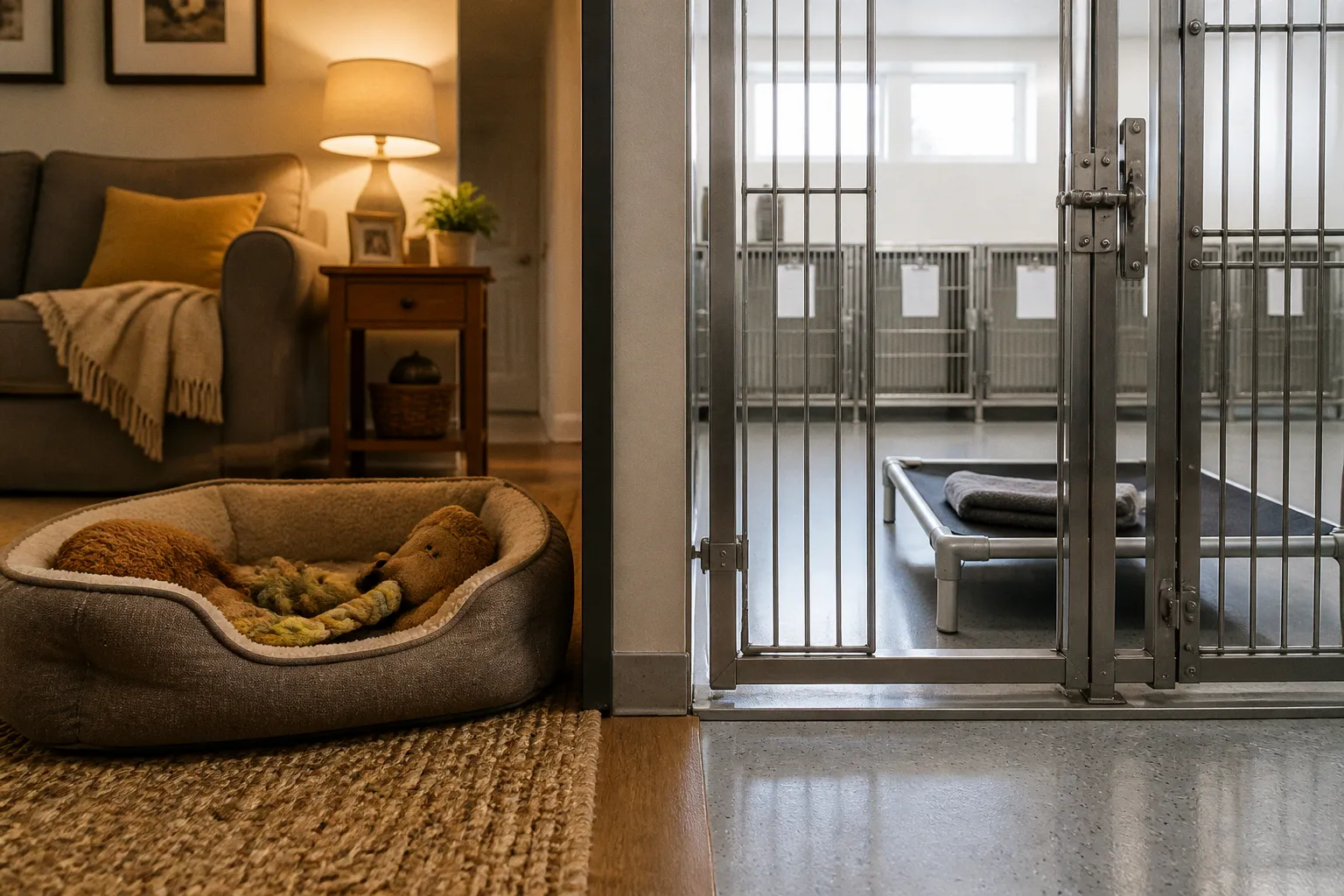
The choice between in-home pet sitting and boarding facility care is rarely a simple question of which service is “better.” It is a question of environment: where your pet can remain physically safe, emotionally regulated, medically supported, and reasonably close to its normal routine while you are away.
Compare car rental deals in United Kingdom
See available offersPartner link — DiscoverCars comparisonA confident, healthy dog may settle well into a carefully managed boarding facility, particularly when the facility offers appropriate supervision, secure housing, and a predictable daily schedule. A noise-sensitive dog, a cat that depends heavily on familiar territory, or a pet with complex medical needs may do better at home with a professional sitter who can preserve feeding times, medication routines, rest periods, and familiar surroundings. The right decision begins with the animal in front of you, not with the service category on a provider’s website.
The psychology of environment: familiarity versus structured routine
A pet’s surroundings influence more than comfort. They affect appetite, sleep, elimination, social behavior, exercise tolerance, and the way an animal responds to handling. During a temporary care arrangement, the goal is not to recreate the owner’s presence perfectly; that is usually impossible. The goal is to create a stable transition phase with as few unnecessary stressors as possible.
In-home pet sitting offers the strongest continuity of territory. Your dog or cat remains surrounded by familiar smells, resting places, sounds, feeding equipment, litter-box locations, and household rhythms. Those familiarity anchors can be particularly valuable for cats, senior pets, animals recovering from illness, and dogs that become reactive or unsettled in unfamiliar settings.
That does not mean home care automatically prevents distress. A pet may still show separation-related behavior when the owner leaves, especially if the service consists only of brief visits rather than continuous companionship. A dog left alone for long stretches can remain anxious even in its own house, and a cat may become withdrawn if visits are too short to support feeding, litter maintenance, medication, and social contact.
Boarding changes the environment more substantially, but that change can be beneficial when it is well managed. A reputable facility may provide a consistent schedule, secure containment, regular exercise, trained staff, and easier access to assistance if a health concern develops. Some dogs are more settled when their day has a clear pattern of meals, rest, activity, and supervised interaction rather than an empty home and intermittent visits.
The relevant question is therefore not whether home is always calmer or boarding is always stressful. It is whether the proposed setting matches your pet’s tolerance for novelty, confinement, handling, noise, social contact, and changes in routine.
A practical comparison
| Consideration | In-home pet sitting | Boarding facility care |
|---|---|---|
| Familiar territory | The pet remains in its own home, with established smells, sleeping areas, and household equipment | The pet must adapt to a new physical environment, sounds, handling patterns, and daily schedule |
| Routine continuity | Feeding, exercise, medication, and rest can usually follow the existing household plan | The facility’s operating schedule shapes meals, activity, quiet periods, and staff interactions |
| Overnight supervision | Depends entirely on the contract; scheduled visits do not equal continuous overnight care | May offer overnight staffing or monitoring, but the actual schedule and coverage must be confirmed |
| Medical support | A sitter can follow written instructions, but emergency escalation may require outside veterinary care | Some facilities have trained staff or veterinary-supervised arrangements; others do not |
| Social exposure | Contact with unfamiliar animals can often be minimized | Group play, shared spaces, or nearby animals may increase stimulation and exposure |
| Best fit | Pets that rely on territory, have special routines, or become distressed by unfamiliar settings | Pets that tolerate new environments and benefit from structured care and secure supervision |
| Main point of verification | Visit frequency, time spent in the home, communication, key control, and emergency procedures | Sanitation, security, staffing, housing, group-management practices, and veterinary response |
This comparison is a starting map rather than a verdict. The same dog may need different care at different stages of life. A sociable adult dog that boarded comfortably two years ago may no longer tolerate a busy facility after surgery, a new diagnosis, or the onset of noise sensitivity.
The best environment is the one that reduces avoidable stress while preserving the care your pet actually needs—not the one with the most attractive amenities.
When a boarding facility is the more suitable environment
Boarding can be a strong option for pets that are comfortable outside the home and for owners who need dependable supervision across a full day and night. It is also worth considering when a pet requires a level of containment or observation that a drop-in sitter cannot provide.
For example, a dog that needs multiple medication doses, frequent bathroom assistance, or close observation after a procedure may be safer in a setting with staff available according to a documented schedule. That conclusion depends on the facility’s actual capabilities, not on the word “medical” in its marketing. Some boarding providers have veterinary partnerships or veterinary-supervised programs; others are general-care businesses that contact an outside clinic when necessary.
A boarding facility may also suit a dog that enjoys predictable activity and controlled social contact. The phrase “socialization” should be handled carefully, however. Group play is not automatically enrichment, and more interaction is not automatically better. Play groups need appropriate screening, compatible temperaments, supervision, separation procedures, and rest periods. A dog that becomes over-aroused, guards resources, or struggles to disengage may need individual exercise and quiet time rather than a full social calendar.
Cats require a different assessment. Many cats experience a larger environmental disruption when moved from home to a boarding setting because territory is central to their sense of security. A cat may still board successfully if the facility provides quiet housing, hiding options, clean litter arrangements, vertical space, and a low-conflict routine. A loud, highly trafficked area with constant dog noise may be unsuitable even when the individual enclosure is clean.
What to inspect before booking
A facility visit should be part of the decision process, not an optional extra. Ask to see the areas where pets actually sleep, rest, exercise, and transition between spaces. Observe whether the facility can explain its routines in concrete terms.
Look for:
- Secure doors, gates, latches, and procedures that reduce escape risk during arrival and departure.
- Clean housing with a realistic sanitation plan rather than a strong fragrance that simply masks odors.
- Separate or carefully managed areas for dogs and cats, especially where noise levels could affect feline rest.
- Comfortable resting spaces, suitable enclosure dimensions, and protection from drafts, heat, and excessive noise.
- A clear process for feeding, medication administration, accident cleanup, and recording changes in appetite or behavior.
- Defined group-play policies, including temperament screening, supervision, rest periods, and what happens when a dog is not a good match for group activity.
- A written emergency plan identifying who makes medical decisions, which clinic receives animals, and how owners are contacted.
- Staff who can describe a normal day without relying only on broad phrases such as “lots of love” or “constant care.”
There is no single national standard that determines the correct staff-to-pet ratio, overnight schedule, enclosure size, or enrichment program for every facility. Those details must be evaluated provider by provider, and local licensing or inspection rules may add requirements. Ask for the operational answer: who is physically present, during which hours, and what happens outside those hours?
Vaccination and parasite-prevention requirements also vary. Many boarding facilities request current vaccination records before accepting a pet, but the exact requirements and timing depend on the facility, veterinarian, and applicable jurisdiction. Discuss the boarding plan with your veterinarian, particularly if your pet is elderly, immunocompromised, taking medication, or due for preventive care.
Professional in-home care: preserving routine without lowering standards
In-home pet sitting is often described as the gentler option because the pet stays at home. In practice, it still requires careful logistics. The quality of the environment depends on what the sitter does there, how long they remain, what they document, and how quickly they respond when the routine changes.
A professional sitter should be able to convert your household routine into an actionable care plan. “Feed dinner” is not enough if one pet eats from a slow feeder, another requires a restricted diet, and a third needs medication hidden in a specific food. “Let the dog out” does not explain whether the yard is secure, whether the dog can be around other animals, or how long outdoor time should last in poor weather.
A useful care plan usually covers:
- Exact meal amounts, timing, food storage, treats, and dietary restrictions.
- Medication names, doses, administration method, and instructions for a missed or refused dose.
- Exercise expectations, leash rules, yard access, and restrictions related to age or health.
- Normal appetite, drinking, elimination, sleep, and behavior, so the sitter can identify meaningful changes.
- Household access, alarm procedures, emergency contacts, veterinary authorization, and backup arrangements.
- The communication schedule, including visit reports, photographs, arrival and departure updates, and escalation thresholds.
- Care for multiple pets when their routines, diets, or tolerance for one another differ.
The sitter’s professional status deserves the same practical attention as the physical care plan. Pet-sitting certification is not generally a government license or a universal legal requirement, and certification alone does not prove that a provider is right for your household. A knowledge-assessed credential, such as the Certified Professional Pet Sitter designation, can demonstrate structured study and an agreement to follow professional standards, but it should sit alongside references, experience, clear procedures, and appropriate insurance.
For a professional pet sitter or dog walker, the relevant liability coverage should be specific to the work. Industry standards commonly distinguish general liability insurance that includes care, custody, and control coverage, because the provider is responsible for animals in their possession or under their supervision. Ask what the policy covers, whether subcontractors are included, and how incidents are reported. A polished profile is not a substitute for a defined business process.
The difference between visits and overnight care
This distinction causes avoidable misunderstandings. A service with two or three daily visits may provide feeding, exercise, litter maintenance, and companionship, but it does not provide continuous supervision between visits. If your pet cannot safely remain alone for that interval, you need a longer stay, an overnight sitter, a live-in arrangement, or a boarding option with confirmed coverage.
Clarify:
1. How long each visit lasts from arrival to departure.
2. Whether the sitter remains in the home overnight or only returns for scheduled checks.
3. What happens if a visit is delayed by weather, illness, traffic, or an emergency.
4. Whether a backup sitter is assigned and introduced before your departure.
5. How quickly the sitter will contact you and your veterinarian if your pet refuses food, vomits, has diarrhea, escapes, or shows a sudden behavior change.
The comfort of home care comes from continuity, but continuity requires reliable execution. A written schedule, visit records, and predictable communication are not excessive formalities; they are how the owner and sitter maintain the same baseline comfort standard while separated.
Separation anxiety and behavioral triggers during absences
A change in care arrangement can expose separation-related behavior, but it does not necessarily cause it. Dogs may bark or howl, pace, drool, destroy doors or windows, attempt to escape, soil the house, or become distressed when departure cues appear. These signs can have other causes, including pain, gastrointestinal illness, urinary problems, or changes in the home environment, so persistent house soiling and other new symptoms warrant veterinary discussion before assuming a behavioral diagnosis.
Boarding and in-home care create different triggers. At home, the major trigger may be the owner’s absence and the length of time between visits. At a facility, the pet may face owner separation plus unfamiliar people, unfamiliar dogs, confinement, noise, altered sleep, and new handling. A dog that becomes distressed during short absences may not be ready for a long first boarding stay simply because the facility offers supervision.
For moderate or severe separation anxiety, abrupt long absences are usually a poor training strategy. Behavior work generally relies on gradual desensitization and counterconditioning, with absences short enough that the dog remains below its panic threshold. ASPCA guidance describes beginning with very brief intervals in some cases—potentially only one or two seconds—and building tolerance gradually. Many anxious responses occur within the first 40 minutes alone, and a dog may need to remain calm for roughly 90 minutes before longer absences are attempted. These are reference points, not a universal schedule.
The care provider should know:
- Which departure cues trigger concern, such as keys, shoes, bags, or a particular door.
- Whether the dog can eat, rest, or play when alone.
- Which confinement tools are tolerated and which increase distress.
- Whether background sound, a familiar bed, or a food puzzle has been helpful.
- What behavior means the sitter should stop an exercise, shorten an absence, or contact the owner.
- Whether a veterinarian or qualified behavior professional is already involved.
Do not ask a sitter or boarding facility to improvise medication or behavior treatment. Any sedative or anti-anxiety medication decision belongs with a veterinarian, who can consider the pet’s medical history, other drugs, age, and the specific care environment.
A transition plan should be tested before the real absence, because the first long separation is the wrong time to discover that a pet cannot tolerate the arrangement.
A short trial can reveal practical issues that a questionnaire will not. For in-home care, schedule a meet-and-greet followed by a paid trial visit or an overnight stay if that is the intended service. For boarding, consider a facility tour, a brief daytime visit, or a short stay before committing to a longer booking. Watch the recovery period afterward: does the pet return to normal eating, sleeping, elimination, and interaction?
Environmental enrichment for cats and dogs in temporary care
Enrichment is not a luxury layer added after safety. It helps make the temporary environment usable for the animal, especially when normal territory, household activity, or exercise patterns have changed.
For dogs, enrichment may include sniffing walks, food-dispensing toys, short training sessions, individual play, chewing opportunities approved by the owner, and protected rest. The correct balance depends on the dog’s age, physical condition, arousal level, and social tolerance. A highly stimulating schedule can leave a reactive dog more unsettled, while too little activity can increase frustration. Ask how the provider separates exercise from forced interaction and how rest is protected.
For cats, environmental design is particularly important because a cat may respond to uncertainty by hiding rather than openly resisting. A suitable temporary space should include accessible food and water, a clean litter box, a comfortable resting location, a hiding place, scratching surfaces, and opportunities to use vertical space. Feline environmental-enrichment guidance also supports distributed resources rather than placing everything in one crowded area.
At home, a sitter can maintain the cat’s existing layout and rotate familiar toys. A window perch positioned approximately two to three feet high may offer useful observation space when the window itself is secure and the view is not a source of agitation. Scratching posts in several locations, daily interactive play when the cat wants it, and rotating toys every few days can provide novelty without removing all familiarity.
At a boarding facility, ask how feline housing supports choice and retreat. A cat should not be expected to interact simply because a staff member is available. Some cats will benefit from gentle engagement; others need a quiet approach, gradual contact, and permission to remain concealed while they assess the environment. Appetite, litter-box use, grooming, and posture should be monitored alongside visible sociability.
Multi-pet households need a separate plan
Families with several pets often assume that keeping everyone together is automatically the least stressful solution. Sometimes it is. Sometimes one animal’s needs prevent the others from resting or eating normally.
Before arranging care, identify:
- Which pets can share space safely and which need separate feeding or rest areas.
- Whether one animal guards food, toys, beds, doorways, or human attention.
- How medications and diets will be kept separate.
- Whether the pets settle when left alone together or become more reactive.
- Which pet’s needs determine the visit frequency or supervision level.
- How the provider will record observations for each individual rather than describing the household as one unit.
A professional sitter should be comfortable following a divided routine when necessary. A boarding facility should explain whether household pets can share accommodations, under what conditions, and what happens if they become uncomfortable together. Familiarity between animals is valuable, but it does not remove the need for supervision and individual assessment.
Building the decision around risk, not marketing
The most reliable comparison between in-home pet sitting and boarding facility care is built from specific risks and specific protections. “Luxury boarding” may mean larger rooms, but it does not by itself tell you how often staff check on animals, how quickly they clean accidents, or what happens during a medical emergency. “Personalized home care” may sound reassuring, but the service still needs defined visit lengths, backup coverage, and clear communication.
Use the following sequence to organize the decision:
1. Describe your pet’s baseline. Record normal meals, medication, sleep, elimination, exercise, social tolerance, and reactions to unfamiliar people or animals.
2. Identify the non-negotiables. These might include continuous overnight supervision, individual exercise, quiet housing, temperature control, medication at fixed times, or separation from other animals.
3. Match the environment to the temperament. A pet that is noise-sensitive, reactive, medically fragile, or intolerant of confinement may require home care with adequate supervision or a veterinary-supervised facility, depending on the circumstances.
4. Verify the provider’s actual operating model. Ask who is present, when they are present, how visits are recorded, and what happens if the planned caregiver becomes unavailable.
5. Run a trial before the main booking. The trial should test the care arrangement, not merely introduce the provider.
6. Leave a transition document. Include routine details, veterinary contacts, authorization, emergency preferences, household instructions, and the signs that require immediate communication.
7. Review the first report critically. Good communication includes observations and exceptions, not only cheerful photographs.
You can also use a simple decision table when several factors point in different directions:
| If your pet… | The first option to investigate |
|---|---|
| Becomes distressed by unfamiliar spaces, loud noise, or confinement | In-home care with enough visit time or overnight coverage |
| Needs close observation, frequent assistance, or structured containment | A facility that can document staffing and veterinary escalation |
| Is comfortable with new people and predictable group or individual activity | A well-screened boarding environment may be appropriate |
| Is a cat that depends on territory and has no medical need for relocation | Professional in-home cat sitting is often the less disruptive starting point |
| Has significant separation-related behavior | A pre-departure veterinary and behavior plan, followed by a tested care arrangement |
| Lives with other pets that have different diets or social needs | Any provider able to document individual routines and safe separation |
| Has never experienced either arrangement | A short, controlled trial before a longer absence |
The outcome depends on preparation and provider fit
There is no universal winner in the in-home pet sitting versus boarding facility care comparison. Home sitting preserves territory and can support highly customized care routines, but only when the contract provides enough human presence for the pet’s needs. Boarding can offer structure, containment, and access to trained staff, but the facility must demonstrate safe housing, sanitation, supervision, enrichment, and emergency procedures in practice.
The strongest plan is usually the one that makes the fewest unsupported assumptions. Confirm whether “overnight” means a person remains in the home. Confirm whether “supervised play” means a trained staff member is physically present. Confirm how a cat can hide, rest, scratch, and use the litter box without constant disturbance. Confirm what happens when a pet stops eating or develops diarrhea at 2 a.m.
When the environment, provider, and transition plan are aligned, the expected outcome is not perfection; it is a controlled period of care in which your pet’s baseline comfort is protected, changes are noticed early, and the return home is supported rather than made more difficult. That is the practical standard to aim for: not the most impressive service description, but a care arrangement that your particular animal can tolerate safely and predictably.