Overnight Pet Care: Hidden Costs of Boarding vs Sitting
The advertised price of overnight care is rarely the number that decides what you will actually spend.
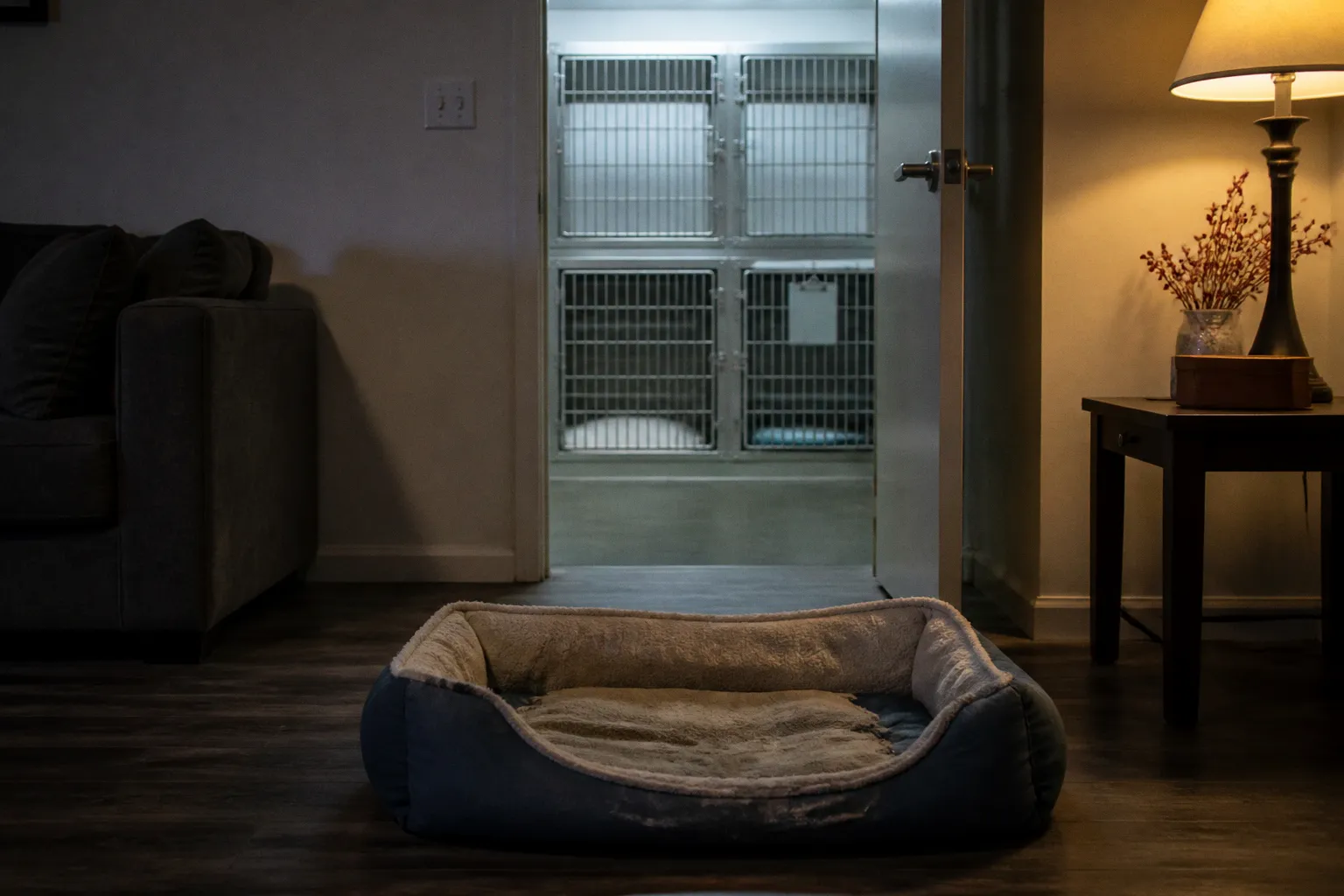
A commercial boarding stay may begin with a nightly kennel rate, then grow through medication charges, holiday pricing, enrichment sessions, meal-preparation fees, grooming requirements, or a late pickup charge. An in-home sitter may quote a higher daily rate at first glance, but that rate is sometimes attached to the household rather than to each individual animal.
Compare car rental deals in United Kingdom
See available offersPartner link — DiscoverCars comparisonThat is why the useful comparison is not simply overnight pet care boarding vs sitting cost. It is the total cost of the arrangement, including the services your dog actually needs, the number of pets involved, the timing of the trip, and the possible consequences of a stressful or illness-producing stay.
A boarding facility may be the right choice for one dog and one set of circumstances. A sitter may make more sense for another. The important distinction is not that one model is automatically cheaper or safer. It is that the two models distribute cost and risk differently.
The Anatomy of a Boarding Bill: Beyond the Base Rate
Boarding facilities do not all price care in the same way. Some bundle medication, routine walks, or basic play into the nightly rate. Others separate those services into individual charges. The advertised price may cover only the accommodation and standard care, or it may include considerably more. The first question, therefore, is not “What is the nightly rate?” but “What does this facility consider standard?”
For a five-night stay, a base rate of $50 per night would produce a starting total of $250. That number is useful only if the dog’s care fits the basic package and the booking does not fall under special holiday or peak-season terms. An illustrative facility-specific estimate might look like this:
| Fee category | Possible pricing structure | Illustrative five-night impact |
|---|---|---|
| Medication administration | Per dose or daily fee; sometimes included | $25–$75 |
| Special-preparation meals | Per feeding or daily charge | $10–$30 |
| One-on-one play or additional walks | Per session or timed block | $50–$100 |
| Holiday or peak-season pricing | Flat nightly surcharge or higher seasonal rate | $50–$75 |
| Exit bath or grooming | Optional at some facilities, required by others | $25–$65 |
| Late pickup | Hourly charge or flat fee | $10–$25 |
These figures should be treated as examples for comparison, not as an industry-wide schedule. A facility may include medication at no extra cost, charge more for a prescription diet, offer a package for enrichment, or waive a bath entirely. The same service can move from an add-on to an included feature depending on the contract and the type of accommodation.
Using the example above, a five-night stay that starts at $250 could reach roughly $450 to $620 if several additional services apply. That is not evidence that every boarding bill will rise by a particular percentage. It is a reminder that a base rate and a final invoice answer different questions.
The most common source of surprise is not necessarily deceptive pricing. It is incomplete comparison. Owners often compare a sitter’s all-inclusive household quote with a boarding facility’s room-only rate. Those are not equivalent products. If a dog needs two medication administrations, individual walks, a special diet, and a bath before pickup, those requirements belong in the first estimate rather than being discovered at checkout.
Before booking, ask the facility to identify:
- what feeding arrangements are included;
- whether routine medication administration costs extra;
- whether group play is part of the base rate;
- how individual walks or quiet time are priced;
- whether holiday dates use a different rate;
- whether grooming is optional, recommended, or required;
- how early pickup, late pickup, and unused nights are handled; and
- whether charges apply per household or per animal.
A written estimate is more useful than a general statement such as “most things are included.” It also gives you something to compare with an in-home sitting quote.
The nightly boarding rate is a starting point, not a universal definition of care. The meaningful number is what your dog’s actual routine costs under that facility’s contract.
The Hidden Financial Burden of Premium Boarding Add-ons
Premium boarding changes the starting point, but not always the pricing logic. A suite, webcam access, climate control, scheduled enrichment, and spa-style grooming may offer genuine convenience. They may also create more opportunities for the final price to diverge from the advertised rate.
A facility charging $120 per night for a higher-end suite would begin at $600 for five nights. If medication is charged separately, two enrichment sessions are added each day, and a seasonal surcharge applies, the total could approach $975 to $1,100 in a facility-specific example. Another premium facility might bundle those same services and produce a lower final total. The difference is not a contradiction; it reflects different package definitions.
Location can matter as well. A facility near a major airport or another high-demand area may use seasonal or demand-based pricing. If a $120 suite carries a 10 to 20 percent location or peak-demand premium, the nightly rate becomes approximately $132 to $144 before additional care is added. That calculation illustrates how a rate can change; it does not establish that every airport-adjacent facility uses the same markup.
Luxury features also need to be judged on their actual function. A private suite may give a dog more separation from other animals. A webcam may make communication easier. Additional exercise may help a high-energy dog cope with a new environment. None of those features should be treated as automatically equivalent to a lower-stress stay, however. The result depends on how the facility operates: how often dogs are removed from rooms, whether rest periods are protected, how group play is managed, and how staff respond to anxiety or conflict.
A more expensive room can improve comfort in some respects without removing the basic change in environment. The dog is still away from home, following a different schedule, hearing unfamiliar sounds, and being handled by unfamiliar people. Those factors may affect sleep, appetite, behavior, or general adjustment. The available evidence and the individual animal’s response do not justify a universal claim that premium boarding either solves or fails to solve those problems.
The right question is more specific: what problem is the upgrade meant to address?
- If the dog becomes overwhelmed by group play, does the premium package provide genuinely separate rest and exercise?
- If the dog is elderly, does the facility offer more frequent bathroom breaks rather than simply a larger room?
- If medication is complicated, is trained administration included and documented?
- If the owner is anxious about communication, does the webcam provide useful observation or only occasional access?
- If grooming is bundled, is it a service the dog needs, or simply a condition of the booking?
An add-on has value when it changes the care the dog receives. It is less valuable when it only changes the presentation of the accommodation.
Why Multi-Pet Households Often Favor In-Home Sitting
The arithmetic often changes when more than one animal needs care. Boarding facilities commonly price by animal, while in-home sitters may price by visit, overnight, or household. Neither pattern is universal, but the distinction can be substantial.
Suppose two dogs are boarded at a facility with a $50 nightly rate per dog. A 10 to 15 percent multi-pet discount would bring the combined nightly charge to approximately $85 to $90. Over five nights, the accommodation portion would be $425 to $450 before medications, enrichment, holiday pricing, grooming, or other charges.
An in-home sitter might quote $70 to $80 per day for both dogs, particularly if the animals share a routine and do not require separate handling. Over five days, that produces a base estimate of $350 to $400. The sitter may then add a travel charge, holiday rate, or fee for extra care. Another sitter may charge separately for a second dog, especially if the animals need different walks, feeding schedules, or medication protocols.
A comparison using illustrative—not universal—figures could look like this:
| Cost factor | Boarding: two dogs, five nights | In-home sitting: two dogs, five days |
|---|---|---|
| Base care | $425–$450 after an example multi-pet discount | $350–$400 household quote |
| Medication | May be charged per dog, per dose, or included | Often included, but contract-specific |
| Additional exercise | May be charged per dog or session | May be included or priced by time and complexity |
| Holiday pricing | Facility-specific seasonal rate or surcharge | Sitter-specific seasonal rate or surcharge |
| Travel or commute | Usually built into the facility arrangement | May add $0–$50 or another distance-based amount |
| Illustrative total | Approximately $625–$1,050 | Approximately $375–$500 |
The ranges are intentionally broad because the service definitions are not standardized. They should not be read as a promise that sitting will cost less, or as a typical result for every two-dog household. A sitter who stays overnight for a high-needs household may charge considerably more than a sitter who makes scheduled visits. A boarding facility may offer a package that makes its total competitive, especially for dogs who need structured activities that would require a sitter to spend additional time at home.
Still, in-home sitting is often financially attractive for multiple pets because the household rate may not increase in direct proportion to the number of animals. The saving becomes more plausible when the pets can be walked together, eat the same food, remain safely in the same area, and do not require separate medication or behavior management.
The reverse can also happen. Three dogs with different feeding plans, one dog with mobility limitations, and another who cannot be handled alongside the others may require enough sitter time to erase the apparent advantage. The relevant comparison is not “three boarding rates versus one sitting rate.” It is the amount of labor required to provide competent care.
In-home care has a separate value that is difficult to express on an invoice. The animals stay in familiar surroundings, use their normal sleeping spaces, and usually keep more of their established schedule. That continuity may be particularly useful for senior dogs, animals with separation-related behavior, and households where moving several pets is itself disruptive.
It does not mean that sitting has no risks. A sitter can miss a visit, misunderstand instructions, mishandle medication, or fail to notice a developing problem. The home also has its own hazards, from unsecured gates to spoiled food or an inaccessible emergency contact. Familiar surroundings reduce some forms of disruption; they do not replace careful supervision.
For a multi-pet household, the strongest financial case for in-home sitting is usually the way labor is priced—not a guarantee that one model is always cheaper.
The Unseen Price of Stress: Veterinary Costs Post-Boarding
Illness after boarding is one of the costs owners may not include because it is uncertain. Communal facilities bring multiple animals into close proximity, which can increase opportunities for respiratory or gastrointestinal infections. Cleaning, ventilation, vaccination policies, isolation procedures, and staff practices all affect that risk, but no facility can promise that exposure will never occur.
Kennel cough, including infections associated with Bordetella bronchiseptica, canine influenza, and gastrointestinal illness are examples of conditions that may spread more readily in group settings. Vaccination can reduce the likelihood or severity of some illnesses, but it does not create a guarantee against every infectious cause. A dog may also become unwell for reasons that have nothing to do with a contagious disease, including a sudden diet change, poor appetite, exertion, or the strain of an unfamiliar routine.
A veterinary visit after a boarding stay might cost approximately $80 to $300, depending on the problem, the clinic, testing, medication, and location. That is a possible cost, not a routine outcome and not a charge that should be assigned to every boarding decision. It can be useful to include it in a risk-aware budget when a dog has a history of respiratory illness, a fragile medical condition, or a particularly difficult response to boarding.
Facilities may ask owners to acknowledge the possibility of communicable disease in their boarding agreement. That waiver does not show how often illness occurs. It shows that the facility has identified the possibility and has set terms for responsibility and treatment. Ask what the facility does when a dog develops a cough, vomiting, diarrhea, or unusual lethargy, and how quickly the owner is contacted.
Stress is also individual. Some dogs eat and sleep normally after a stay. Others may be quieter, more reactive, less interested in food, or unsettled in their sleep for a period after returning home. These signs can have several explanations, and a precise recovery window cannot be assumed for every dog. If the changes are severe, persist, or occur alongside respiratory, gastrointestinal, or neurological symptoms, the owner should consult a veterinarian rather than assuming the issue is simply post-boarding stress.
The same caution applies to claims about cortisol. A change in environment can be stressful, but the owner cannot determine a dog’s cortisol level from appetite or behavior alone. More expensive boarding does not automatically produce a measurable improvement in every welfare outcome, and in-home care does not guarantee a completely stress-free experience. The practical question is whether the arrangement supports the individual dog’s known needs: adequate rest, predictable handling, appropriate exercise, safe feeding, and prompt response to problems.
In-home sitting can reduce exposure to unfamiliar animals because the dog remains in its own home. It does not eliminate infectious risk entirely. The sitter may have contact with other households, may bring contamination into the home, or may become ill themselves. A dog can also develop an unrelated illness while its owner is away. The more accurate description is reduced communal exposure, not zero immunological risk.
A post-stay veterinary visit is a possible part of the total-cost calculation, not an industry-wide certainty. Treat it as a risk to investigate and plan for—not as an inevitable boarding fee.
Evaluating Total Value: When Convenience Meets Care
The most reliable comparison weighs money against the specific work being performed. Start with the same assumptions on both sides: the number of nights, the number of animals, the feeding plan, medication, exercise, overnight supervision, transportation, and emergency arrangements.
Count the animals and the work
For one healthy dog who eats a standard diet, takes no medication, and is comfortable in a well-run facility, boarding may be competitive. A multi-pet household may find that a household-based sitting rate compares favorably, but only if the animals can be cared for together without adding substantial labor.
Ask what happens when the pets are not interchangeable. Separate walks, different foods, timed medication, mobility support, or reactivity around other animals can change the estimate quickly. A sitter’s lower household rate is not a bargain if it assumes a simple routine that does not match reality.
Separate included care from optional care
A price comparison should label each item as included, optional, required, or unknown. That distinction is more useful than a long list of amenities.
For example, “playtime available” does not answer whether play is included. “Grooming available” does not answer whether a bath is required before pickup. “Medication accepted” does not answer whether administration is included in the daily rate or charged per dose.
When requesting an estimate, describe the dog’s actual routine:
1. State the number of pets and their approximate size or handling needs.
2. List every medication, including frequency and administration method.
3. Describe feeding requirements, especially raw, wet, prescription, or refrigerated food.
4. Specify the exercise routine and whether dogs can safely walk or play together.
5. Identify the exact travel dates, including holidays and pickup timing.
6. Ask for the total under those conditions rather than a general starting rate.
This approach prevents a common mistake: comparing the cheapest possible version of boarding with the most complete version of sitting, or the reverse.
Consider the health and behavior profile
A dog who becomes distressed around unfamiliar animals may need private rest, individual handling, or a home environment. A dog who is social, adaptable, and accustomed to kennel stays may do well in a carefully managed facility. Age, medical history, vaccination status, previous boarding experience, and the ability to settle at night all matter.
Medication is a particularly important cost and care variable. Some facilities include routine pills but charge for injections or complex administration. Some sitters are comfortable giving medication; others may require a veterinary professional. The cheapest option is not useful if the provider cannot perform the required care safely and consistently.
Price the risk without pretending to know the outcome
A possible veterinary visit can be included as a contingency rather than added automatically to the bill. The same principle applies to missed work, an emergency transport, replacement food, or an extra night caused by travel disruption. These are not guaranteed expenses, but they may matter when two options have similar base prices.
Risk also needs to be described precisely. Boarding can increase communal exposure compared with care in a private home, but the size of that increase depends on the facility and the dog. Sitting can reduce environmental displacement and contact with unfamiliar animals, but it still depends on the sitter’s reliability and the safety of the home. Clear language produces a better decision than dramatic certainty.
Ask for the operational details in writing
Before committing, request a line-item estimate that addresses:
- the base rate and whether it is charged per animal or per household;
- medication administration and any special handling fee;
- meal preparation, refrigeration, or dietary surcharges;
- individual walks, enrichment, and one-on-one care;
- holiday, weekend, or peak-season pricing;
- grooming or exit-bath requirements;
- late pickup, early return, cancellation, and unused-night policies;
- emergency veterinary authorization and payment expectations;
- communication frequency and the person responsible for updates; and
- the procedure for illness, injury, escape, or a change in behavior.
If a provider cannot explain the price, ask whether the uncertainty comes from a service that has not yet been assessed or from a policy that is genuinely variable. A quote can change after the provider learns more about the dog. That is different from discovering mandatory fees only after the stay has begun.
What the Total Comparison Should Look Like
A useful comparison might be written as two complete scenarios rather than two headline numbers.
Boarding scenario
- Five nights at the facility’s actual seasonal rate
- Care for the correct number of dogs
- Medication and meal-preparation charges
- Any required exercise or enrichment
- Grooming if mandatory
- Transportation or late pickup
- A realistic emergency reserve for veterinary care
In-home sitting scenario
- The sitter’s overnight, daily, or visit-based rate
- Any additional-pet charge
- Travel or holiday surcharge
- Extra time for medication, separate walks, or special feeding
- Supplies and instructions needed in the home
- A backup plan if the sitter is delayed or cannot attend
This method may show that boarding is less expensive for a single dog with simple needs. It may show that a sitter is more economical for two or three pets who share a routine. It may show that the financial difference is small enough that the decision should rest primarily on the dog’s behavior, medical needs, and the quality of the provider.
There is no meaningful universal percentage that applies to every household. A 20 to 45 percent saving for in-home sitting may appear in a particular comparison when boarding charges per animal and sitting is priced per household, but it should not be presented as a guaranteed result. The same household could see the difference narrow or disappear if the sitter charges for long overnight coverage, separate walks, holiday dates, or complex medication.
The Care Arrangement Matters More Than the Label
“Boarding” and “sitting” describe broad categories, not identical services. A small boarding operation with quiet rooms, limited intake, strong illness protocols, and attentive staff may provide a calmer experience than an inexperienced sitter making brief visits. A professional overnight sitter who understands the dogs, follows written instructions, and has a dependable backup may be a better fit than a crowded facility for animals who struggle with displacement.
The provider’s operating details deserve as much attention as the price:
- How are dogs assessed before group interaction?
- Are rest periods protected?
- How are dogs separated if one becomes ill or overwhelmed?
- Who gives medication, and how is each dose recorded?
- What happens if a dog refuses food?
- How often does the owner receive an update?
- Is there a backup caregiver?
- What is the emergency veterinary process?
- Are insurance and liability arrangements clear?
- How are gates, doors, crates, and medication stored?
For in-home care, the home itself should be prepared. Secure doors and gates, remove hazardous food and objects, label medications, leave clear feeding instructions, and provide written veterinary authorization. For boarding, ask to see the sleeping and exercise arrangements when possible, and find out where dogs go if they need quiet separation from the main group.
The financial comparison is therefore also a care comparison. An inexpensive arrangement that produces confusion, missed medication, or an emergency surcharge may not be inexpensive in practice. A more expensive arrangement may be reasonable if it includes the labor and supervision the dog genuinely needs.
Overnight pet care boarding vs sitting cost cannot be reduced to a single nightly figure. Boarding may carry per-animal pricing and facility-specific extras. Sitting may carry a household rate but require additional travel, time, or specialized attention. Communal boarding can increase exposure to unfamiliar animals, while in-home care can reduce that exposure without eliminating health risks altogether. Stress, illness, and recovery should be considered as possible factors, not treated as guaranteed outcomes.
Run both options using the same dates, the same animals, and the same care requirements. Ask for the total in writing. Then choose the arrangement that makes the cost, responsibilities, and risks visible before the stay begins.