Protecting Dogs from Extreme Heat: Essential Safety Protocols for Pet Professionals
According to KSN.com, Wichita veterinarians are warning dog owners to treat September’s 100-degree days as a direct heat-safety risk.
The concern is not limited to heatstroke: extreme overheating can damage internal organs, while hot pavement can cause paw-pad lacerations that may take weeks or months to heal. For dog walkers and pet sitters, the operational issue is clear: exercise must be shifted, shortened, or relocated when thermal load exceeds the dog’s tolerance.
The primary failure points
Dr. Adlyn Crockett of Wichita’s Prairie Ridge Animal Hospital says severe heat can trigger cellular breakdown and inflammation. Reported damage may involve the brain, heart, kidneys, or gastrointestinal tract. Extreme overheating can be fatal.
Paw-pad injury is a separate risk pathway. A dog may appear capable of walking while the pavement is already damaging the pads. The resulting wound is not a minor interruption to the walking schedule. Crockett reports that paw pads can require weeks to potentially months to regrow after laceration.
For professional walkers, this changes the risk assessment:
- Heat exposure: Monitor the duration and intensity of outdoor activity.
- Surface exposure: Treat hot pavement as a potential injury source, not a neutral route.
- Hydration access: Carry water rather than relying on an unplanned stop.
- Recovery window: Do not assume a dog is safe because it completes the walk without collapsing.
The source does not provide a universal pavement-temperature cutoff or a fixed safe walking duration. Do not substitute a generic number for an individual assessment.
Adjust the walking protocol
Crockett recommends scheduling walks around sunrise and sunset, when temperatures are less extreme. This is the most direct adjustment available to walkers managing a regular exercise route.
A portable water setup is also recommended. The practical options identified by the veterinarian are a bottle with an integrated bowl or a collapsible bowl carried with the dog. The objective is continuous access to water during the outing.
A basic route decision tree:
1. If the walk falls outside the cooler morning or evening window: Reschedule where possible.
2. If outdoor exercise remains necessary: Carry water and reduce exposure to hot surfaces.
3. If pavement becomes a concern: End the surface-based walk rather than extending the route.
4. If the dog shows signs of heat-related distress: Stop the activity and seek veterinary guidance. The source establishes the potential severity of overheating but does not define a symptom checklist or treatment protocol.
Pet sitters should record the revised exercise plan for the owner. A missed pavement walk is preferable to a paw injury that compromises activity for months.
Indoor exercise is a separate route, not a substitute claim
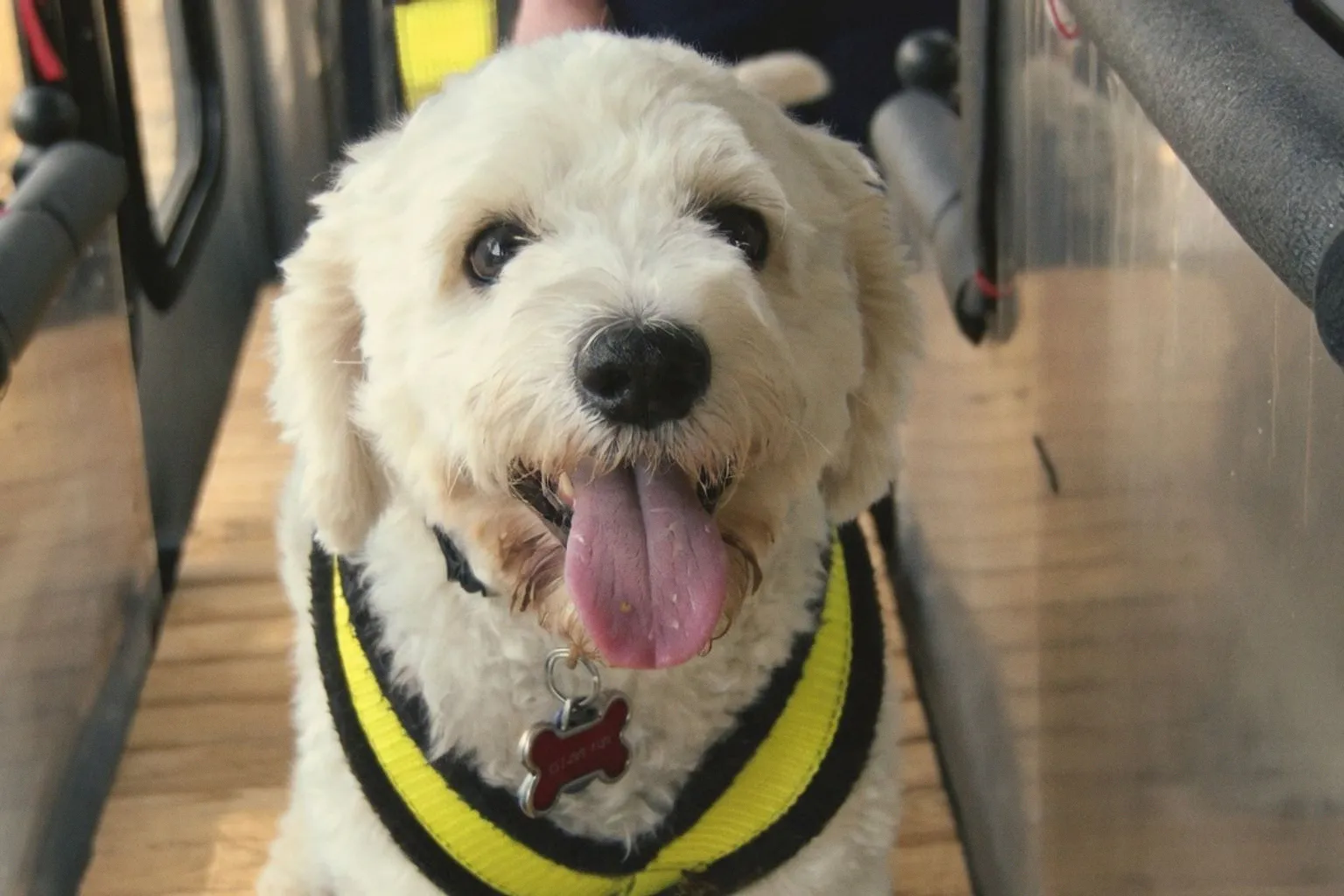
KSN.com also reports on Dog Tired Mobile Dog Gym, a Wichita business offering supervised workouts on dog-powered treadmills inside an air-conditioned vehicle. The business has two air-conditioning systems, one serving the front and another serving the rear of the bus. Its owner, Katie Turner, says bookings have increased as local owners prioritize heat safety while maintaining exercise.
This option is relevant to professional dog walking because it separates physical activity from outdoor surface exposure. It may provide an alternative for dogs whose exercise needs cannot be met safely on hot pavement. The report does not establish that treadmill work is suitable for every dog, nor does it provide comparative safety or veterinary outcome data. Treat it as a local service option requiring individual screening, not as a universal replacement for outdoor walking.
Heat-safety checklist
- Schedule outdoor walks near sunrise or sunset.
- Carry a portable water source.
- Use a bottle with a bowl or a collapsible bowl.
- Reassess routes when pavement is hot.
- Do not use completion of a walk as proof of safety.
- Consider supervised, air-conditioned exercise when outdoor conditions are unsuitable.
- Document schedule and route changes for the pet owner.
- Escalate suspected overheating or paw injury to a veterinarian.