Expert Vet Insights on Choosing Natural Dog Food for Your Clients
Forbes has published a vet-informed guide to natural dog food, with one physical problem at its center: the label “natural” does not establish nutritional adequacy.
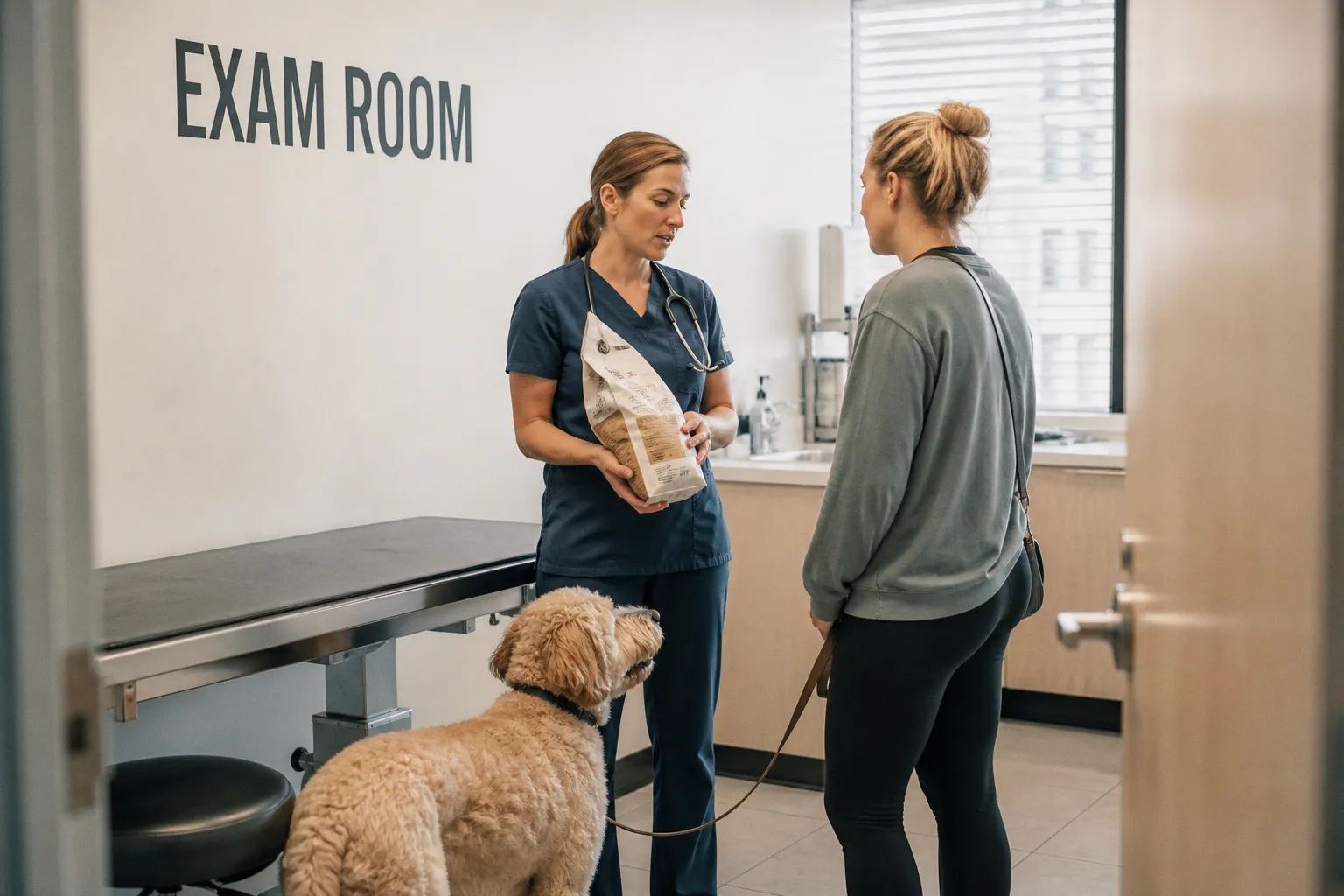
For dog walkers and pet sitters, this matters when a client changes food, portion format, or feeding routine. The relevant check is not branding. It is whether the food is complete and balanced, appropriate for the dog’s life stage and health status, and produced under credible quality controls.
“Natural” is not a nutritional specification
According to Forbes, veterinarian Dr. Hillary Wolfe identifies four higher-value checks:
- The diet is complete and balanced.
- It matches the dog’s life stage and health status.
- It was formulated by qualified nutrition experts.
- The manufacturer follows strong quality-control practices.
For a professional walker or sitter, these checks belong in the handover record when food is supplied for a stay or when the owner reports a recent change. “Natural” describes an ingredient or processing position. It does not, by itself, confirm that the diet provides one complete source of nutrition.
Forbes names The Farmer’s Dog as its overall pick. The service provides vet-developed fresh-food plans and says its recipes meet the Association of American Feed Control Officials’ definition of “natural.” The food uses whole animal proteins including chicken, turkey, beef, and pork. Forbes lists crude protein at 9% to 11%, with calories varying by plan. Added vitamins are included.
The service begins with a questionnaire covering breed, weight, activity level, and health conditions. Forbes says the brand then recommends one of four protein types. Customers can select a full portion, a half-portion to combine with another food texture such as kibble, or a topper that must be combined with another primary nutrient source.
That distinction is operationally important. A topper is not a complete replacement for the dog’s main food. A half-portion is also designed to be combined with another food. The feeding instruction supplied by the owner must identify which format is being used.
Fresh and frozen options have different handling requirements
Forbes also lists Maev, a frozen raw-food product sold through subscriptions or as single bags. Its formulas combine frozen fruits and vegetables with one of five USDA-certified raw proteins. Listed proteins include beef, chicken, lamb, and Nordic fish. The food is cut into bite-sized pieces and combined with a multivitamin blend.
The source lists six formulas aimed at different concerns, including whole health, digestion, mobility, coat health, and calming, plus a puppy-specific formula. Forbes gives crude protein figures from 40.9% to 48.13% and calories from 87 to 130 kilocalories per cup. The products are described as AAFCO-compliant and include added vitamins.
For a sitter, the key control is format identification. Frozen food, fresh food, a half-portion, and a topper are not interchangeable instructions. The owner’s written feeding plan should state the product, quantity, storage requirement, and whether another primary food must be served with it. If that information is missing, do not infer it from the word “natural” or from the package design.
Safety parameters for the handover
Before accepting a dog whose food has changed, verify:
- The label or feeding plan identifies a complete and balanced diet, if it is intended to be the primary food.
- The food is appropriate for the dog’s life stage and health status.
- The owner states whether the serving is a full portion, half-portion, or topper.
- Fresh or frozen products have clear storage and preparation instructions.
- The dog’s activity level is recorded alongside the feeding plan, since The Farmer’s Dog uses activity level in its customization process.
- Subscription food is not treated as automatically superior to a single-bag option.
- Any change in diet is documented rather than improvised during a walk or sitting visit.
The practical conclusion is narrow. Choose by nutritional adequacy, formulation, manufacturing controls, and feeding format. Use “natural” as a descriptive label, not as a safety shortcut.