Dog pain or fatigue: how to tell the difference
Most dog owners read their dog's slowing pace on a walk as one of two things: "he's getting old" or "he's being stubborn." Neither reading is usually correct, and the cost of that mistake lands on the dog, not the owner.
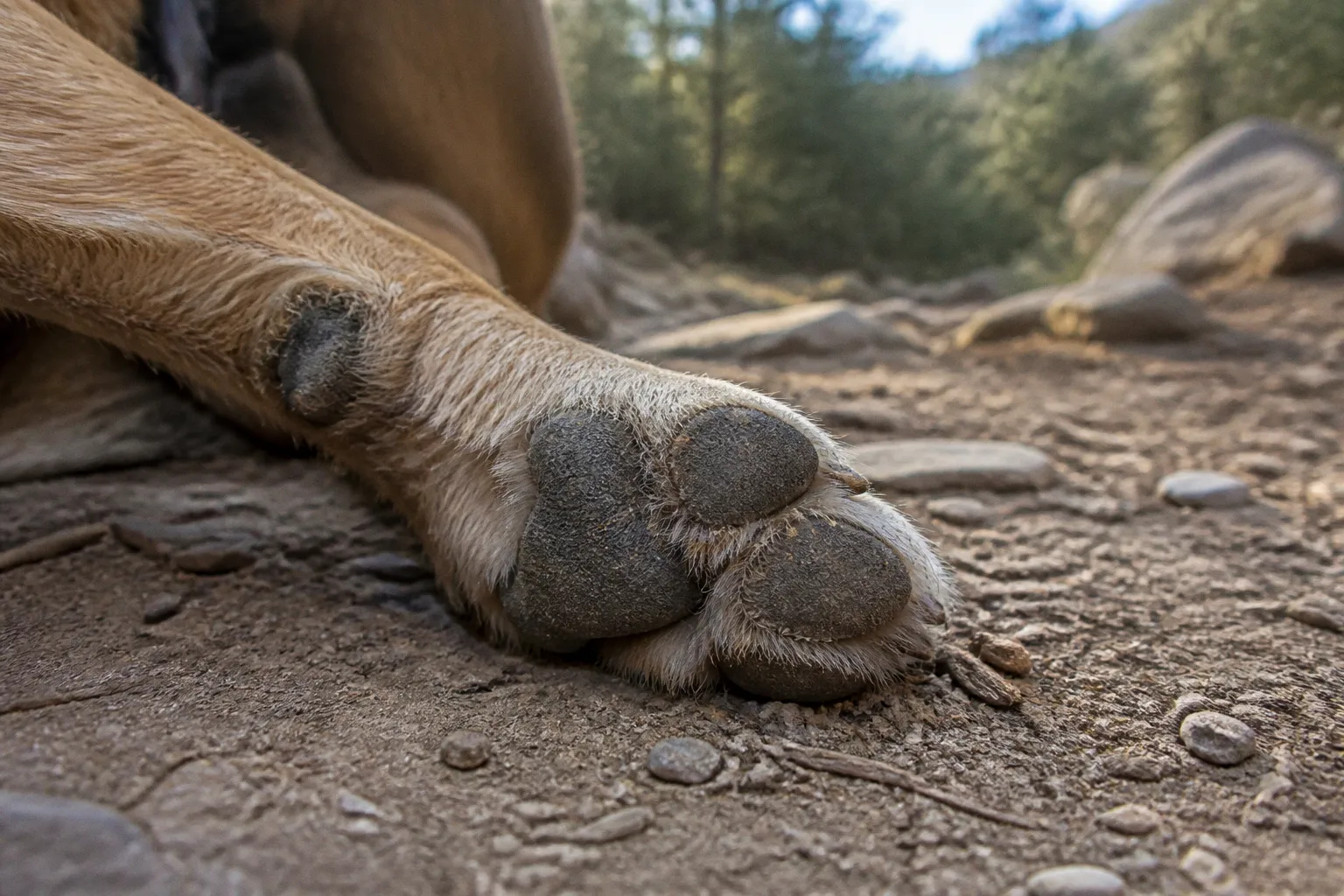
A dog that lags behind on the third block isn't philosophizing about the meaning of the leash — the body is telling him something. The job is to learn the language of that message, because tired dogs and dogs in pain behave fundamentally differently, even when both end up sitting down in the middle of the sidewalk.
Walking a dog is supposed to be a baseline skill, but it is also the single most revealing diagnostic moment most owners get with their animals. You see the gait, the recovery time, the breathing pattern, and the social appetite — all in real conditions, all on the animal's terms. Veterinary behaviorists will tell you that owners consistently under-report pain because the dog "seemed fine" between episodes. The walk is where those episodes happen.
The Physiology of Fatigue: Why Dogs Slow Down
Fatigue is a legitimate, healthy state. Dogs typically sleep 12–14 hours a day depending on age and breed, and a working walk — sniff-heavy, route-driven, on-leash for thirty to sixty minutes — is real cardiovascular work. A genuinely tired dog recovers quickly once home. He eats, drinks, flops down, and within an hour or two he's either asleep or back to baseline behavior. That's the signature of normal exertion.
The misleading part is what happens during the walk. A fatigued dog slows down, sits, maybe lies down, but the body language reads differently than pain. He still scans the environment. He still reacts to stimuli — squirrels, other dogs, a rustling leaf. He just doesn't have the fuel to act on it. His breathing is elevated but rhythmic, not ragged. He'll get up and move again after a brief rest, even if reluctantly.
Age and breed matter more than most owners realize. A three-year-old Labrador and a nine-year-old Labrador are not running the same engine. Senior dogs of any breed have lower cardiovascular reserves, and brachycephalic breeds — Bulldogs, Pugs, French Bulldogs — hit their respiratory ceiling faster in warm weather, sometimes within fifteen minutes of moderate walking. Giant breeds carry more joint load per step, which means fatigue and joint stress arrive together more quickly than in a forty-pound dog. Knowing your dog's baseline capacity — not the capacity you wish he had — is the foundation of reading the walk correctly.
The classic mistake here is treating fatigue like a behavioral problem. "He's testing me," an owner will say. "He does this every walk." Sometimes true, sometimes the dog is genuinely cooked from a previous day of activity, especially adolescent dogs whose owners over-correct for "too much energy" by stacking hour-long walks back-to-back. A tired dog being dragged home on a leash because the owner has a schedule is a small, quiet welfare problem that compounds across weeks.
Tired dogs recover within hours. Dogs in pain recover on their own timeline, which is almost always longer than yours.
Red Flags: Identifying Joint Strain and Chronic Discomfort
Pain has a different texture than fatigue, and it's mostly visible in what the dog stops doing, not what he starts doing. Watch for these on the walk itself:
- Falling behind on a familiar route when the dog usually leads or matches pace
- Hesitation before stairs, curbs, or jumping into the car at the end of the walk — anything that loads a specific joint
- Licking or biting at a single joint, paw, or limb during or immediately after exercise
- Weight shifting — standing with the front legs wider than normal, or favoring one hip
- Taking noticeably longer to stand up after a sit-stay or water break
- Stiff gait on the return leg of the walk, especially if the first half looked fluid
- Reluctance to walk on certain surfaces — a dog who suddenly avoids pavement in favor of grass may be managing impact on inflamed joints
The owners who catch this early usually catch it because something in the dog's rhythm broke, not because he yelped. Dogs are famously variable about vocalizing pain — some dogs yelp at minor discomfort while others endure significant pain in complete silence. A dog who never vocalized but gradually stopped greeting people at the door may be dealing with chronic discomfort just as serious as the dog who yelped once and is now limping visibly. The second dog is showing you something obvious. The first dog is showing you something subtler and often just as concerning. Behavioral changes — withdrawal, avoidance, loss of interest in previously enjoyed activities — are legitimate pain indicators even in the absence of any sound.
Sore muscles from over-exercise are a special case. They typically don't show up during the activity. They show up after the dog rests. The classic pattern: the dog ran, played, fetched, walked hard all weekend. Sunday night he slept deeply. Monday morning he can barely stand. That's delayed-onset muscle soreness — real, painful, and entirely preventable by the owner who thought "more exercise" was the answer to every behavior question.
The subtler presentation is chronic low-grade discomfort, the kind that builds over weeks rather than announcing itself in a single moment. These dogs don't limp. They stop jumping on the bed. They hesitate at the car door. They choose to lie down in a different spot than usual because getting to their old spot requires navigating a step or a slippery floor. Owners often frame these shifts as personality changes — "he's just getting picky" — when the dog is engineering his environment around pain he cannot explain.
Mental Exhaustion vs. Physical Overexertion
Here's where the line blurs and where most well-meaning owners get the diagnosis wrong. Mental fatigue looks like physical fatigue from the outside but has nothing to do with the legs or the heart. New environments, travel, busy sidewalks, dog-dense parks, hotel lobbies, vet offices — these all tax a dog's processing capacity the same way a four-hour meeting taxes yours.
Signs of mental fatigue during exercise:
- Ground-sniffing becomes compulsive rather than investigative
- Excessive thirst disproportionate to the activity level
- Loss of basic self-control — pulling, ignoring recall, ignoring commands he knows cold
- Over-excitement, including the "zoomies," which is often a dysregulated release rather than joy
- Forgetting familiar cues or familiar people, even briefly
The dog isn't tired in his body. He's overloaded in his brain. More walking doesn't fix this. A different kind of rest does — decompression time, low-stimulation space, sometimes just being left alone in a quiet room. Telling a mentally cooked dog to "walk it off" is like telling a hungover colleague to "sleep it off" at their desk. The wrong intervention makes the next one harder.
The harder diagnostic call is when mental and physical fatigue stack. Travel day plus new park plus long walk plus social interaction equals a dog who collapses that evening and the owner calls it "great exercise." Sometimes it was. Sometimes the dog is on the edge of a behavioral fallout — reactivity spike, resource guarding, shutdown — that gets blamed on "the breed" or "poor training" when really it's a debt that came due.
Context switching is the hidden tax nobody warns new owners about. A dog who spends the morning at daycare, the afternoon at a friend's house, and the evening on a neighborhood walk isn't getting "lots of socialization." He's processing three different social environments, three different sets of rules, three different scent profiles, and three different arousal levels — all in a single day. The walk at the end of that chain isn't diagnostic of anything except a brain that ran out of bandwidth two transitions ago.
A dog who "can't settle" after a big day isn't misbehaving. His nervous system is still processing inputs the way a computer fans spin after you close the heavy program.
The High-Drive Trap: When Dogs Mask Their Pain
This is the part of the conversation most dog-walking content skips, and it's the part that ends with dogs in surgery. High-drive dogs — working breeds, sport dogs, young retrievers, terriers, herding types — will push through severe musculoskeletal warning signs to keep doing the thing they love. They will limp and still chase the ball. They will refuse to sit at the end of a hike and still try to climb the next rock.
The owner watches this and reads it as resilience. It is not resilience. It is a behavioral override on top of a deteriorating body. The dog has not been trained out of his work ethic by his ancestors in the same way a low-drive pet dog has, and he will self-destruct cheerfully if the owner doesn't impose the boundaries the dog cannot impose on himself.
I have seen working-line dogs present with partial cruciate tears the owner swore "just happened today" that imaging showed were clearly not fresh injuries — consistent with weeks or more of compensation. The dog had been shifting weight, slowing slightly on stairs, and avoiding certain movements — all signals the owner dismissed as the dog being "a bit off." The dog was not off. The dog was in chronic pain, and the dog's job, as the dog understood it, was to keep working anyway. Imaging can suggest chronicity — signs of inflammation, remodeling, tissue changes — but it rarely pins down exactly when the damage started. What matters is that the behavioral signals were present long before the diagnosis, and nobody was reading them.
The high-drive dog presents a paradox that catches experienced owners off guard: the more the dog wants to work, the less reliable he is as a reporter of his own condition. A Border Collie who refuses to stop herding is not telling you he feels fine. He is telling you he values herding more than comfort, which is not the same thing at all. The owner's job is to know the difference.
| Behavior | Likely Fatigue | Likely Pain |
|---|---|---|
| Sitting down mid-walk | Restores within 1–2 minutes of stopping | Remains stiff or reluctant to stand after extended rest |
| Breathing pattern | Elevated but even | Panting at rest with no exertion |
| Recovery at home | Back to baseline in 1–2 hours | Stiffness, lethargy, or appetite loss past 24 hours |
| Response to touch | Tolerates or enjoys | Flinches, moves away, or guards a specific area |
| Gait on return leg | Symmetrical, slightly slower | Favoring, limping, shortened stride |
| Interest in environment | Diminished but present | Withdrawn, avoids greeting, hides |
| Post-rest mobility | Stands normally after lying down | Stiff getting up, "warms out" slowly or doesn't |
The high-drive dog demands more vigilance from the owner, not less. Walking a working-line dog is not a fitness partnership where both sides self-regulate. The owner is the governor on an engine that doesn't know when to stop. If you cannot tell when your high-drive dog is in pain, you are not walking him — you are wearing him out.
When to Seek Veterinary Intervention
Owners consistently wait too long to call a vet because they don't want to be "the person who rushed to the clinic over nothing." Here's the rule that cuts through the hesitation: if you're asking the question, the answer is probably yes, go.
Specific thresholds worth acting on:
- Food or water refusal, or sustained lethargy, lasting more than 24 hours — that's not fatigue, that's a sick dog
- Visible limping that persists past a night's rest
- Panting at rest with no exertion, especially in a cool environment — joint pain, internal discomfort, or dental pain are all on the table
- Any yelp, whimper, or growl on being touched that wasn't there a week ago
- Sudden behavioral shifts — withdrawal, new resource guarding, new reactivity — in a dog with no history of these patterns
- A gait change that doesn't reverse after two days of reduced activity
The cost of a wrong call here is usually a $65 flat fee for an online veterinary consultation through services like TelaVets. The cost of being wrong in the other direction — assuming the dog is fine and watching a torn cruciate or a bloat episode unfold — lands in the $500 to $5,000 range depending on the issue. The math is not subtle.
What I tell fosters and adopters at intake: your first job is not to train the dog, not to bond with the dog, not to fix the dog's issues. Your first job is to learn what this specific dog looks like when he is normal. Because the day he is not normal — and that day will come — you will not have a baseline to compare against. Owners who skipped this step come to me weeks later saying "I think he's always walked like that" and the dog has been compensating for a torn ligament the entire time.
Your job on the walk is observation. The leash is not a steering wheel. It is a diagnostic tool.
The hard truth of dog ownership is that most of the medical decisions get made by people who are not veterinarians, who are tired, who are on a schedule, and who are looking at an animal that cannot describe what hurts. The walk is the closest thing you get to a daily exam, and you do it every single day. Treat it that way.
Stop telling yourself your dog is "just tired" when he has stopped doing three things he used to do. Stop interpreting slow walks as stubbornness when the body underneath is quietly failing. The cost of paying attention is small. The cost of not paying attention is the dog pays it, in a currency he can't tell you about until it's already spent.