Why Combining Dog Care and Housekeeping Requires Clear Professional Boundaries
According to AOL.co.uk and The Mirror, a Bracknell household is seeking a housekeeper with dog-care duties at £25 per hour. The role centres on a nine-year-old Labrador: walking, feeding, daytime care and companionship are stated as the priority.
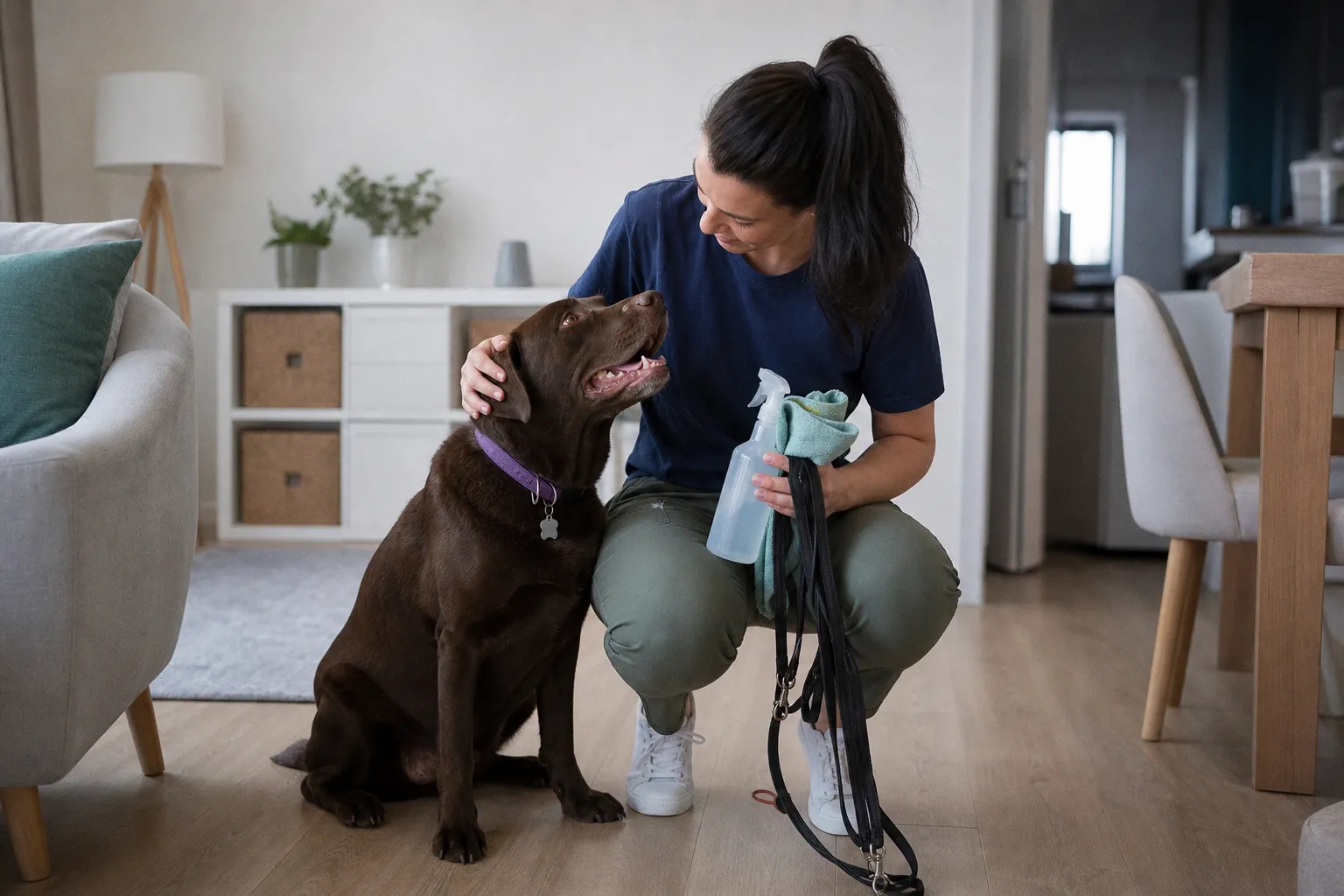
For clients hiring a walker or sitter, the listing is a useful reminder that “dog care” can conceal several separate jobs with separate risk controls.
The post describes roughly 25 hours of work across Mondays, Wednesdays and Thursdays. It also asks for possible flexibility around pet sitting, overnight care and weekend cover, with those arrangements to be negotiated separately. A vehicle would be provided while on duty, and the position is expected to start in mid-September.
One role, multiple duty profiles
This is not a standard dog-walking vacancy. The advertised work combines:
- daily walking, feeding and in-home supervision;
- attendance at veterinary appointments when needed;
- possible overnight and weekend pet sitting;
- housekeeping, shopping, laundry and household administration.
That combination matters. A walker’s core task is controlled outdoor handling and route management. A sitter’s task is continuity of care inside the home. A household employee may also be responsible for access, scheduling and domestic systems. These functions should not be treated as interchangeable simply because one person performs them.
The listing asks for previous private-household experience, dog-care experience, a full driving licence, discretion and the ability to work independently. Those are hiring criteria, not a substitute for a written care protocol.
The operating brief to require
Before engaging a professional for a blended role, separate the dog’s care plan from the household task list. The dog-care section should specify the operational details that affect handling decisions.
Start with the walking plan:
- approved routes and maximum walk duration;
- whether the dog is walked alone or alongside other dogs;
- lead, harness and vehicle-loading requirements;
- thresholds for heat, rain or reduced activity;
- permitted off-lead areas, if any;
- the return-home routine: water, drying, paws, coat and rest.
Then define feeding and medication boundaries. The sources say the successful applicant would feed and care for the Labrador, but they do not describe a feeding schedule, diet or health instructions. Those details need to be recorded rather than transferred informally between family members and caregiver.
Veterinary support needs its own decision tree. State who can authorise transport, which clinic to use, who must be contacted first and what information travels with the dog. “Attend appointments as needed” is too broad unless the authority limits are clear.
Do not price flexibility as routine care
The £25 hourly figure applies to the stated three-day weekly role. The reports say overnight sitting and weekend cover would be negotiated separately. That distinction is practical: daytime companionship, an overnight stay and emergency cover use different time blocks and impose different availability requirements.
Use a short safety checklist before agreeing to any arrangement:
- Written schedule for walks, meals and rest periods.
- Named emergency contacts and veterinary instructions.
- Clear vehicle and transport rules.
- Defined handover process for any change in caregiver.
- Separate agreement for overnight, weekend or travel-period cover.
- A precise list of household duties that cannot interrupt active dog supervision.
The central lesson is straightforward. A premium, multi-duty arrangement can work, but only when the dog’s care requirements remain operationally distinct from the rest of the household workload.