Water Safety Protocols for Professional Dog Walkers and Pet Sitters
Dogs Trust has launched a water safety campaign tagged "If in doubt, keep your dog out," flagging toxic blue-green algae, strong currents, and steep banks as the three primary failure points for dogs and handlers around UK open water.
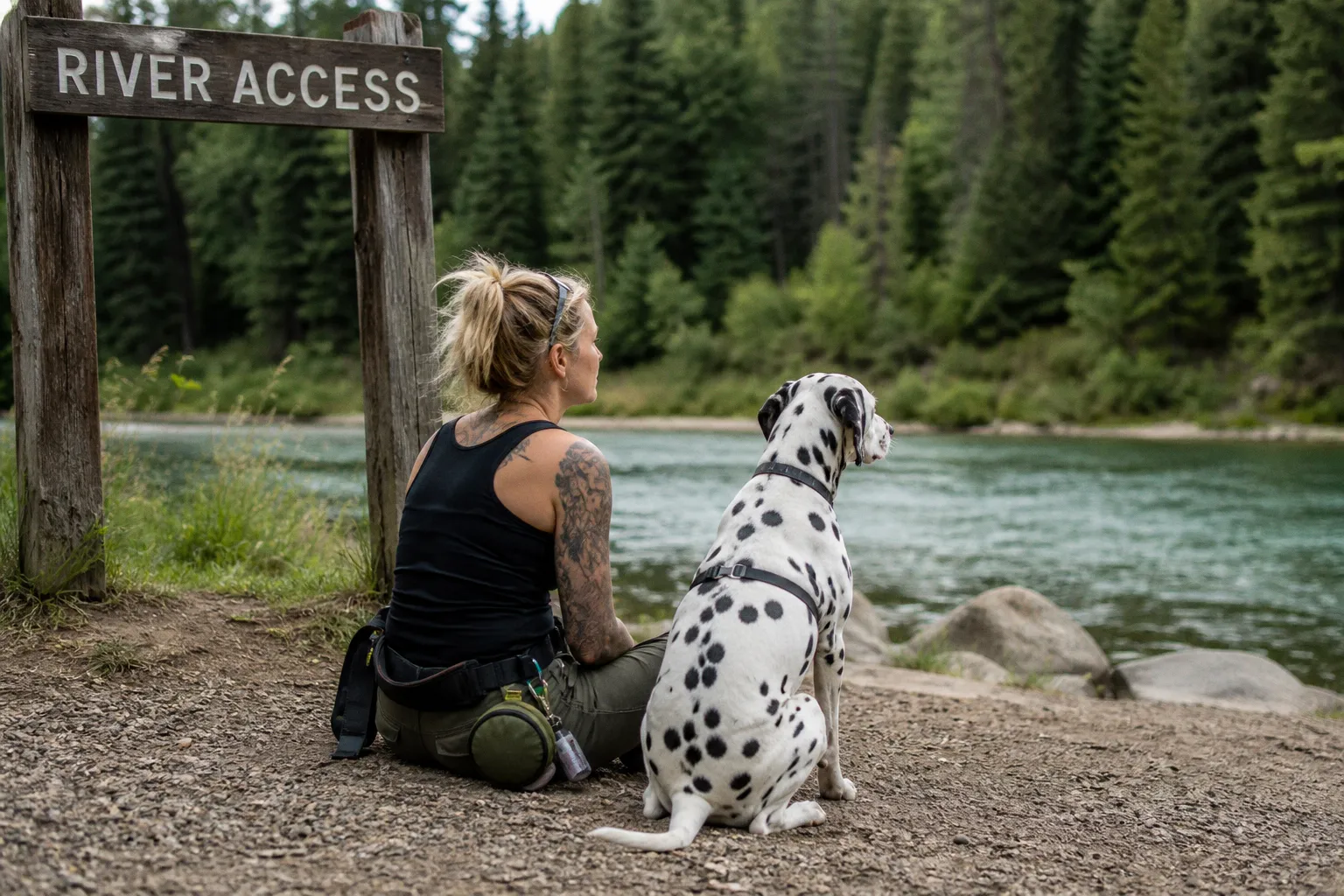
Per RNLI figures cited by the charity, UK waters logged 308 dog-related incidents between 2021 and 2025, with roughly one-third concentrated in June through September — the peak thermal regulation and exercise window where dogs are most often walked near lakes, canals, rivers, and the coast. For professional walkers and sitters this is not a lifestyle brief; it is a routing and protocol update.
Hazard Inventory
Three exposure vectors dominate the incident data.
- Blue-green algae (cyanobacteria). Blooms intensify in warmer weather, forming scums at water margins. Toxins are not identifiable by sight; any scum must be treated as potentially lethal. Per Dogs Trust veterinary projects manager Emily Mills, symptoms can appear within 15 minutes of ingestion or grooming exposure and may progress rapidly to fatality.
- Steep banks and hidden debris. A dropped bank severs the dog's exit vector. Once a dog circles a feature, the return path no longer aligns with the entry point; submerged trolleys, glass, weed mats, and branches compound extraction failure.
- Currents and fatigue. Tidal flow and cold-water exhaustion break the dog's kinetic chain before the handler registers the risk. The RNLI data shows the majority of recorded incidents occurred on the coast.
Cumulative UK numbers frame the scope: 308 open-water dog incidents 2021–2025 (RNLI), 10 accidental drowning deaths in England 2019–2025 linked to animal rescue and 12 linked to dog walking (National Water Safety Forum), and a 39% year-on-year rise in dog-related incidents reported to the Canal & River Trust in 2025.
Walker Protocol Adjustments
Treat open water as a controlled access point, not a rest stop.
1. Pre-walk site scan. Check Environment Agency and local signage for blue-green algae alerts. Note water type, bank gradient, and visible scum. Route around if alerts are posted or conditions are marginal.
2. Entry control. Short lead at the water's edge. Permit paddling only where the dog can re-enter and exit at the same point without a jump.
3. Recall discipline. Test response before any off-lead water access. A verified recall overrides prey and thermoregulatory drive.
4. Ingestion and grooming limits. No drinking from open water. Rinse paws, undercarriage, and coat before the dog licks itself.
5. Rescue refusal. Do not enter the water after a struggling dog. Per Dogs Trust rehoming manager Emma-Jane Thomas, this converts one emergency into two; the correct action is to direct the dog to a visible safe exit via recall, or to call emergency services.
Pre-Walk and On-Site Checklist
- Water body cross-checked against current blue-green algae alerts
- Bank slope and exit point assessed visually before approach
- Lead length fixed at short once on the shoreline
- Recall verified before any off-lead access
- Rinse water and towel staged for post-contact decontamination
- Emergency services number pre-saved
- No rescue attempt under any condition — call, do not enter