Tokyo Skytree tickets: Online booking versus same-day entry
Tokyo Skytree tickets are easiest to manage when you decide first how much flexibility you actually need.
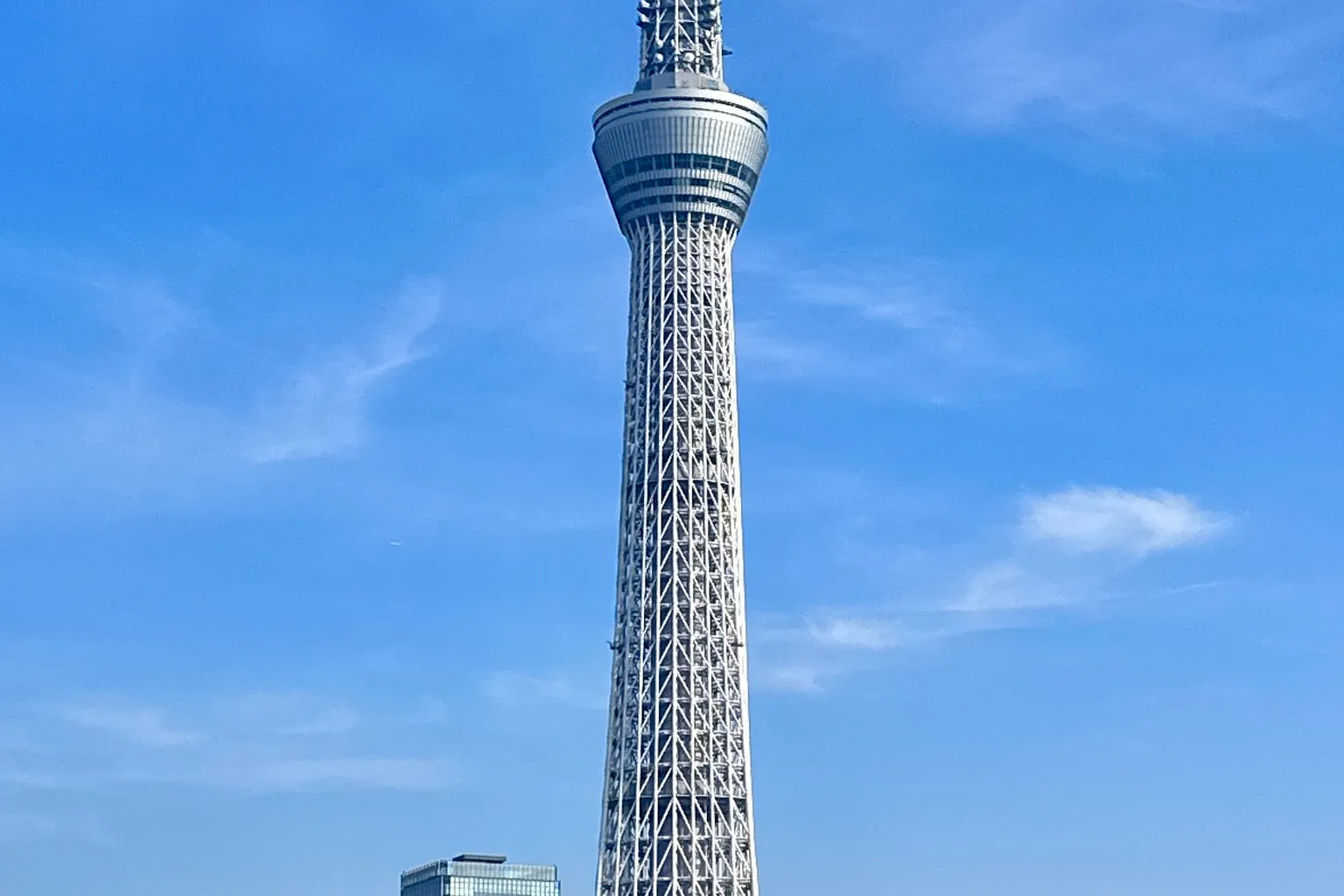
Advance online booking gives you a timed entry plan, a QR code for admission, and a clearer arrival schedule; same-day purchase at the tower offers more spontaneity, but it also leaves you exposed to queues, limited availability, and possible suspension of counter sales on busy days.
Tickets and prices
Tokyo Skytree
Tokyo
01 · GetYourGuide
Entry ticket · Optional upper deck upgrade
JPY2146
02 · GetYourGuide
Private guided tour · 2 hours
JPY10907
−5%03 · Official
Official admission ticket
JPY4000
That difference matters even more when your day includes a pet-care handoff, a service animal, or a tightly coordinated Tokyo sightseeing itinerary. Tokyo Skytree is not simply a single observation floor with one universal ticket. It has two elevated viewing experiences, separate entry considerations, and a busy visitor flow that rewards preparation without requiring an overcomplicated plan.
Start with the two observation levels
Tokyo Skytree rises 634 meters above Tokyo, but visitors do not travel to the top of the broadcast tower. The public observation experience is divided between the Tembo Deck at 350 meters and the higher Tembo Galleria, which reaches 450 meters. The highest point of the Galleria is Sorakara Point at 451.2 meters.
The distinction is practical because the two levels are not interchangeable ticket products.
The Tembo Deck occupies floors 340, 345, and 350. It is the primary observation area and the part most visitors mean when they refer to Tokyo Skytree observation deck entry. The Tembo Galleria continues upward through floors 445 and 450, with a sloping glass corridor that creates a different viewing experience from the broader, multi-level Tembo Deck.
The Galleria ticket cannot be purchased as a completely independent visit. It is sold either as part of a combined ticket with the Tembo Deck or as an add-on to a Tembo Deck admission. That means the correct decision is not simply whether to visit the lower or upper deck; it is whether your base admission should include the higher level as well.
| Planning question | Tembo Deck | Tembo Galleria |
|---|---|---|
| Position | 350 meters, across floors 340, 345, and 350 | 450 meters, across floors 445 and 450 |
| Ticket relationship | Main observation deck admission | Available only with or alongside Tembo Deck admission |
| Best fit | A complete first visit with broad viewing areas and multiple floors | Visitors who want the higher viewpoint and extended observation route |
| Booking implication | Can form the base of an advance reservation | Must be included as a combined set or added to the Tembo Deck ticket |
| Time planning | Easier to fit into a compact sightseeing schedule | Requires additional time after reaching the Tembo Deck |
This structure is worth sorting out before you arrive, particularly if you are coordinating Tokyo sightseeing with a dog walker, boarding provider, or service-animal travel plan. A ticket decision made at the entrance can turn into a longer visit than expected, while the person caring for your pet may be working within a fixed handoff window.
The most efficient Tokyo Skytree ticket is not automatically the most comprehensive one; it is the option that matches your available time, viewing priorities, and care arrangements.
Advance online booking gives the day a workable shape
The strongest reason to book online is not merely that you avoid standing at a counter. It is that you create a reliable transition phase between arriving in the Tokyo Skytree complex and entering the observation area.
Visitors who reserve through the official online ticket platform receive a QR code at the time of purchase, which must be presented for entry. Membership registration is required when purchasing through that platform, so the booking process includes an account setup step rather than functioning as a completely anonymous checkout.
For an international visitor, this is manageable, but it should be completed before the day of the visit. Building an account, selecting a date and entry time, retrieving the QR code, and confirming that the code is accessible on your phone are small tasks individually; together, they form the baseline preparation that prevents avoidable delays at the entrance.
Advance online booking is generally the better fit when:
- You have a fixed reservation elsewhere in the city and cannot absorb an uncertain queue.
- You are visiting during a weekend, holiday period, or another high-demand date.
- You are traveling with a service animal and need extra time for arrival coordination.
- You have arranged a pet-care handoff before or after the visit.
- You want to include the Tembo Galleria without making the ticket decision at the tower.
- You are building a full-day Tokyo itinerary around Tokyo Solamachi, Tokyo Skytree Station, or nearby attractions.
Advance tickets also offer lower base pricing than same-day counter purchases under the current ticketing structure, while on-site purchases may include a counter service fee. Exact amounts should be checked at the time of booking because ticket prices now vary by date and demand, with dynamic pricing implemented in April 2026.
That last point changes how travelers should read older planning advice. A price quoted in a previous guide may no longer describe the amount available for your date, particularly if the visit falls during a high-demand period. The practical advantage of booking early is therefore a combination of timing control and clearer cost visibility, rather than a promise that every online ticket will have the same price. Dynamic pricing means that the earlier you compare dates, the more useful the comparison becomes; rates can shift as capacity fills, and what looks reasonable one week may not be available the next.
What to prepare before opening the booking page
A short preparation sequence makes the online process much less disruptive:
1. Choose the observation level before selecting the ticket. Decide whether the Tembo Deck meets your needs or whether the Tembo Galleria should be included as a combined option or add-on.
2. Select the date around your care logistics. If a dog walker, sitter, or boarding provider is involved, allow a realistic buffer before and after the Skytree visit rather than placing the timed entry directly against a handoff.
3. Complete membership registration early. The official web ticketing platform requires registration, and leaving this step until the station or tower entrance creates unnecessary pressure.
4. Save the QR code where it can be retrieved quickly. Keep the booking email or digital ticket available even if mobile reception becomes inconvenient in a crowded complex.
5. Check the current visitor information before leaving. Opening hours, entry procedures, and operational notices should be confirmed for the chosen date because they can affect the usable arrival window.
The goal is not to over-plan every minute. It is to create enough familiarity anchors that your arrival remains calm even if the station is busy or your group is moving at different speeds.
Same-day entry is flexible, but not guaranteed
Same-day tickets are sold at the ticket counter on the fourth floor, at the tower's Main Entrance. This option is useful for visitors whose plans depend on weather, energy levels, or an itinerary that cannot be fixed in advance.
It can also work well for a shorter, locally based visit when you are already in the area and have no downstream reservation. If the day is open-ended, purchasing at the tower allows you to decide after seeing the conditions in person. That flexibility has real value when visibility is poor and the main reason for visiting is a distant view, such as a possible Mount Fuji sightline.
The limitation is that same-day sales are subject to demand. On busy days, ticket sales at the fourth-floor counter may be suspended temporarily. A visitor who has already traveled to Tokyo Skytree can therefore reach the entrance and still be unable to secure the preferred admission.
This is the central difference between the two routes:
| Factor | Advance online booking | Same-day counter purchase |
|---|---|---|
| Arrival planning | Built around a selected entry time | Depends on current availability |
| Queue exposure | Reduces dependence on the ticket counter | May involve a long queue |
| Availability | Secured in advance for the selected option, subject to booking terms | May be limited or temporarily suspended on busy days |
| Payment process | Requires official-platform membership registration | Completed at the fourth-floor Main Entrance counter |
| Ticket access | QR code required for entry | Counter-issued admission process |
| Flexibility | Lower once the date and time are selected | Higher if the day remains open |
| Suitability for fixed pet-care plans | Usually stronger | Less predictable |
Same-day entry is therefore not a bad choice; it is a choice that transfers more responsibility to the day itself. You must be comfortable with the possibility of waiting, changing the timing, or revising the plan if tickets are not being sold when you arrive.
When the counter option still makes sense
There are situations where the on-site route is reasonable:
- Your schedule is genuinely flexible and you do not have a timed handoff.
- You are already visiting Tokyo Solamachi and can accept a longer or delayed visit.
- Weather conditions are central to your decision and you prefer to assess visibility first.
- You are traveling outside the busiest periods and are prepared for availability to change.
- You do not want to create an online account before deciding whether to enter.
The key is to treat same-day admission as an availability-based plan, not as a guaranteed backup. If the visit is a priority rather than an optional addition, advance booking provides a more stable foundation.
The fast-track question: what does it actually solve?
Travelers often search for the benefits of a Skytree fast-track ticket, but the useful question is more specific: which part of the visit are you trying to make faster or more predictable?
Different ticket products and sales channels can change how much time you spend at the counter, but no booking format eliminates every stage of the visit. You may still need to reach the correct entrance, present the required QR code or admission documentation, pass through the venue's entry procedure, and move with the visitor flow inside the tower.
For most travelers, the practical value of an advance or priority-style ticket is reduced uncertainty. It can be particularly helpful when:
- You are working around a restaurant reservation or another timed attraction.
- A child, older traveler, or service animal needs a predictable pace.
- Your pet is resting at a hotel or with a sitter and the care period has a defined end.
- You are visiting on a date when counter queues are likely to be substantial.
- You want to avoid making a ticket decision in a crowded entrance hall.
It is less useful to pay for a faster option simply because the label sounds premium. If your entire day is open and you are comfortable waiting, the additional convenience may not justify the more structured choice. The right product depends on the operational problem you need to solve, not on which tier sounds most authoritative.
Build the visit around a realistic transition phase
Tokyo Skytree sits within a larger visitor district, and many people combine the observation decks with Tokyo Solamachi, shopping, dining, or transport through Tokyo Skytree Station. That makes time planning more complex than the elevator ride itself.
A reliable itinerary separates the visit into phases:
Before leaving your accommodation
Confirm the ticket type, entry date, and selected time. If you have booked online, make sure the QR code is accessible and that the account details used for the reservation are available if the venue requires them during the entry process.
If a pet is staying at your accommodation, agree on the care window with the sitter or dog walker in advance. Give the provider a clear expected return time, but avoid promising a return based only on the admission time. Queues, security procedures, elevators, viewing time, and movement through a busy shopping complex can all extend the outing.
Reaching the tower
Allow enough time to identify the Main Entrance and reach the fourth-floor ticket area if you are purchasing on-site. Online ticket holders should still avoid arriving at the last possible minute, particularly if they are unfamiliar with the complex or managing mobility equipment, luggage, or a service animal.
A small arrival buffer protects the entire itinerary. It also gives you time to resolve a phone, ticket, or navigation problem without turning it into a rushed entrance.
Inside the observation experience
The Tembo Deck is spread across several floors, so the visit is not limited to one viewing platform. If you add the Tembo Galleria, the route continues higher and takes additional time. Visitors who want photographs, a slower viewing pace, or a glass-floor experience should not schedule the attraction as if it were a brief stop between train connections.
A clear endpoint is helpful when another person is caring for your pet. Decide in advance whether the plan is to visit both observation levels, stop at the Tembo Deck, or continue into Tokyo Solamachi afterward. That decision prevents the common problem of extending the outing simply because the district offers more to see.
Returning to your care arrangement
Keep a practical buffer between the expected end of the Skytree visit and the end of a sitter's scheduled period. If you are traveling with a service animal, allow time for the animal to decompress after a crowded, elevated attraction before moving into another busy area.
For broader planning around animals in Tokyo, a separate guide to pet-friendly travel planning in Tokyo would normally be useful; however, the rules for ordinary pets and the access rights of trained service animals are not interchangeable, so each venue must be checked on its own terms.
Pets and service animals require separate planning tracks
The presence of an animal changes the logistics, but it does not create one universal category of access.
A pet traveling with you may need a sitter, a dog walker, or a boarding arrangement while you visit the observation decks. A service animal may accompany its handler under applicable access rules, but the venue's own entry procedures and documentation expectations still need to be confirmed before arrival. These are different planning situations and should not be combined under the general phrase pet-friendly travel.
Tokyo Skytree ticket information does not, by itself, establish the complete policy for ordinary pets, emotional-support animals, or service animals. Do not assume that a ticket purchase confirms animal access, and do not assume that a service-animal policy is identical to the rules at another Tokyo attraction.
A careful planning sequence looks like this:
1. Identify the animal category accurately. A household pet, a trained service animal, and an emotional-support animal may be treated differently under venue rules.
2. Contact the venue before finalizing the itinerary. Ask about access, documentation, carrier requirements, routes, and any areas where animals cannot enter.
3. Choose the ticket timing around the animal's needs. A timed reservation can reduce uncertainty, but it does not replace a conversation about access procedures.
4. Prepare a baseline comfort plan. Bring the items the animal normally relies on, follow the established feeding and medication schedule, and avoid stacking several demanding attractions together.
5. Keep a care alternative available. If the venue cannot accommodate an ordinary pet, arrange a sitter or boarding option rather than relying on an unconfirmed assumption at the entrance.
For service animals, the handler may also want to plan a quieter arrival window, identify relief opportunities where available, and allow additional time for staff communication. These are practical steps that hold up better than assumptions, and they matter even more at a high-traffic attraction where the elevator, corridor, and viewing floors can feel intense for an animal working in public.
Pet logistics and service-animal access are not the same problem; treat them as two parallel planning tracks, each with its own conversation with the venue.
How to read the choice in practice
The decision between advance online booking and same-day entry is rarely about finding the cheapest ticket or the shortest queue in isolation. It is about matching the ticket process to the rest of the day.
When the rest of the day has fixed points, a timed online reservation removes one of the variables. When the rest of the day is genuinely open, a same-day counter purchase gives the visit a more honest shape, because the decision is made in context. Both routes can produce a good visit; the difference is whether you want your planning weight concentrated before arrival or distributed across the day itself.
For travelers coordinating with a pet-care provider, the online route usually wins on predictability. The QR code, the timed entry, and the registration step are mild inconveniences compared with the prospect of reaching the entrance and discovering that counter sales have been paused, or that the only remaining slots push the visit well past the end of a sitter's window. That is the practical case for booking ahead, and it does not depend on any single feature of the booking platform.
For travelers whose day has no fixed downstream commitments and who simply want to decide on the spot, the same-day counter remains a legitimate option. The tower will not penalize a walk-up customer for being undecided; it will, however, ask them to wait if demand is high. Comfort with that uncertainty is the real test of whether the counter route is appropriate.
What neither route should be treated as is a substitute for the basic preparation: knowing which observation level you want to visit, confirming the venue's animal policy if one is traveling with you, and checking current visitor information before leaving. Those three steps cost very little and resolve most of the friction that turns a Skytree visit into a stressful afternoon. Everything else, including the dynamic pricing now in effect, the membership requirement, and the question of whether the Tembo Galleria is worth the add-on, becomes much easier to decide once those foundations are in place.
Practical info
Currency: JPY
Driving: on the left