Training Therapy Dogs to Support Pediatric Patients and Reduce Medical Anxiety
According to BBC, Assistance Dogs Northern Ireland (ADNI) places temperament-screened Labradoodles into hospitals and schools to reduce pediatric medical anxiety.
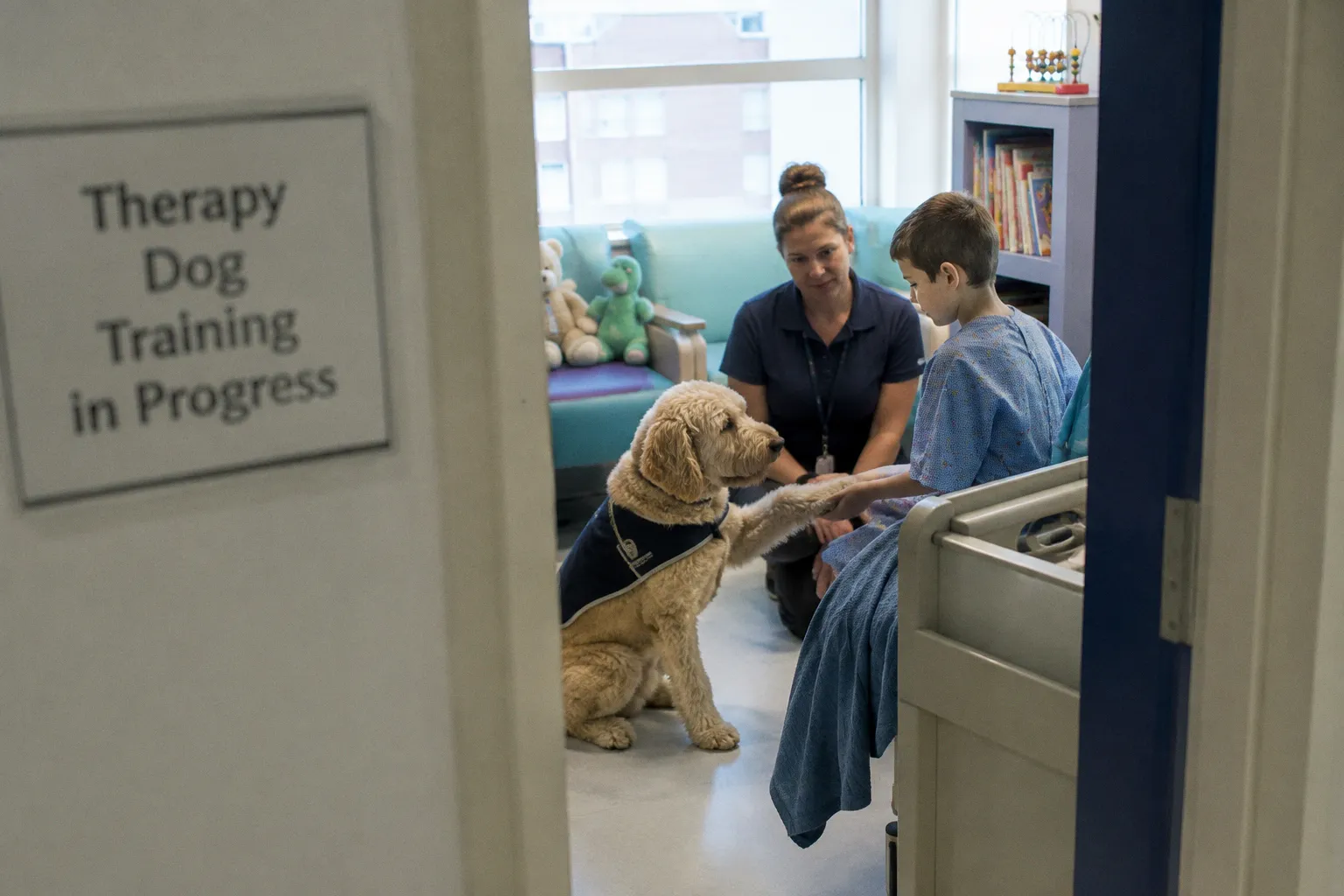
The documented outcomes — including restored appointment compliance in children who had been housebound for months — establish a baseline any handler can reference when evaluating therapy-track work. For professional walkers and sitters, the operational criteria behind these deployments warrant direct review.
Deployment Functions and Selection Criteria
ADNI dogs are trained across four primary functions: calming children with autism, monitoring blood sugar, supporting mobility, and assisting in classroom environments. Mia, a four-and-a-half-year-old Labradoodle, is the documented working case. She rotates through hospitals, care facilities, and schools across Northern Ireland. Selection prioritized stable temperament and trainability over breed novelty or handler preference.
The mother of one pediatric patient told BBC News NI that Mia transformed her daughter's healthcare appointments. "She was losing hair around school settings, we couldn't get her to attend appointments, and she became house bound for six months," Karinne Doherty said. After Mia's introduction, appointment compliance returned. "Mia has helped Caoilfhionn relax loads, she used to struggle after blood appointments but that's done with now," Karen Carlin told BBC News NI. The core variable: consistent canine presence during repeated clinical exposure, not occasional visits.
Documented Shifts in Pediatric Patients
Two pediatric cases show measurable baseline changes. One child, previously housebound for six months due to medical anxiety, resumed regular blood draws after therapy dog introduction. Another child completed phlebotomy without post-procedure exhaustion — a reversal from prior appointments where she would be "sparked out" for hours afterward, according to her own account.
Play specialist nurse Cathy Grady described the effect as "very powerful" for anxious children. The operational requirement behind that result: the same dog, the same handler protocol, predictable session structure across every visit. Novelty is not the mechanism. Repetition is.
Parameters Handlers and Programs Should Verify
ADNI CEO Geraldine McCaughey notes a shifting demand pattern within the program. "Autism doesn't stop at 12 years, it's a lifelong condition," she told BBC. Adult autistic clients now represent a growing share of intake. That has direct implications for working timelines. A dog placed with a child at age eight may remain in active deployment through that child's twenties.
Handlers and program managers evaluating therapy-track work should verify:
- Independent temperament certification, not owner-reported
- Veterinary clearance appropriate to clinical deployment
- Handler-dog bond stability across unfamiliar settings and personnel turnover
- Defined exit conditions for each session, including child distress, dog fatigue, and environmental triggers
- Documented re-evaluation schedule for working dogs
Mia's case is a working template, not an anecdote. The protocol is reproducible. The outcomes are measurable.