Pet Relocation Service Traps That Inflate Bills
The initial quote from a pet relocation service is usually a route estimate, not a complete transport budget. The advertised number may cover the booking, airline coordination, and basic documentation.
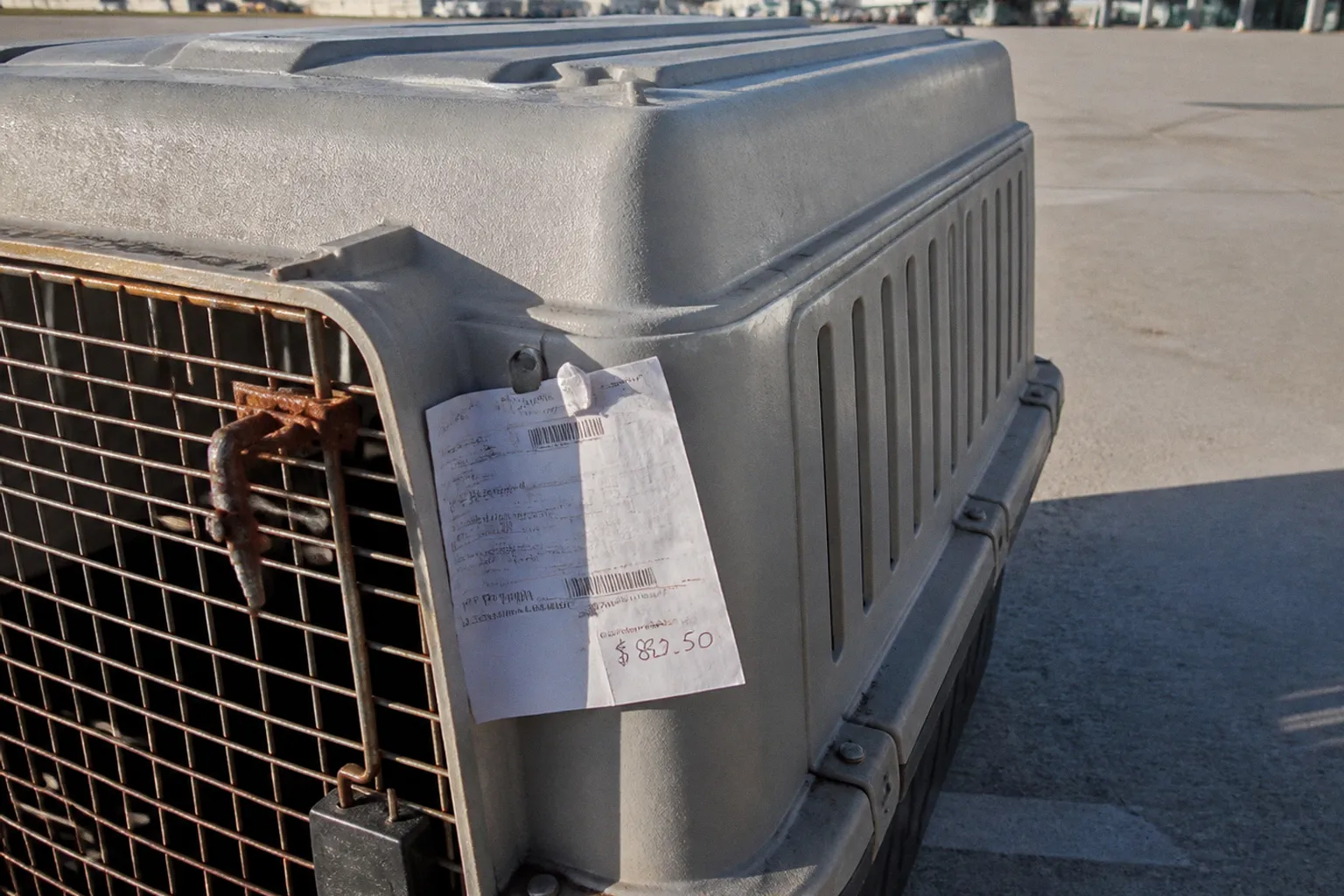
It may exclude the crate, customs release, veterinary testing, overnight boarding, medication administration, and destination handling.
For a single-pet international relocation in 2026, the total commonly reaches $4,000 to $6,000 or more. The final amount depends on the destination, route, animal size, regulatory requirements, and failure points in the itinerary. A low quote is not proof of a pet transport company scam. It is a signal to inspect the exclusions.
Treat the first quote as an incomplete load calculation. Until every fee has an owner, trigger, and payment deadline, the transport price is unknown.
The anatomy of an initial quote
A pet relocation service typically builds its first estimate from a limited set of inputs:
- Origin and destination airports.
- Travel date or date range.
- Animal species, weight, and dimensions.
- Airline availability.
- Basic veterinary documentation.
- Standard handling at departure.
That estimate may not include events outside the planned route. Pet transport companies often price the normal case first, then add charges when the animal requires non-standard equipment, a different connection, a customs broker, or care during a delay.
The problem is structural. Airline shipping is not priced only by the animal’s body weight. The crate dimensions can determine the chargeable volume. A larger dog may require a reinforced kennel, a different aircraft, or a route with fewer connection options. A brachycephalic dog may face airline restrictions or require ground transport for part of the journey. A destination country may require an import permit, rabies titer test, quarantine reservation, or customs payment before release.
A quote that lists only “transport” does not define the full service.
Read the quote as a scope document
Do not start with the total. Start with the line items and exclusions. A usable quote should identify:
1. What the company performs.
This may include itinerary planning, airline booking, crate delivery, veterinary coordination, document review, airport transfer, customs brokerage, or destination delivery.
2. What the company pays on your behalf.
Some agencies advance airline or customs charges. Others require the owner to pay each third party directly.
3. What remains conditional.
A fee may apply only if the airline changes the crate requirement, the flight is cancelled, a document is rejected, or the pet misses a connection.
4. When each payment is due.
Customs and import processing fees may be payable before release at the destination airport. Some destinations require cash in a specified currency.
5. What happens when the itinerary fails.
The agreement should address rebooking, overnight boarding, kennel replacement, medication, and additional ground transfers.
A vague line such as “government fees as incurred” is not a price. It is an open liability. The same applies to “airline charges subject to change” without a defined adjustment method.
A practical quote comparison
| Cost category | Often included in a basic quote | Common source of additional cost |
|---|---|---|
| Airline transport | Initial airline booking | Route change, aircraft restriction, crate-size adjustment, airline surcharge |
| Crate | Standard plastic kennel estimate | Reinforced or custom crate, replacement during a layover |
| Veterinary work | Basic examination or document review | Rabies titer, laboratory tests, additional certificates, medication |
| USDA documentation | Sometimes listed separately | Endorsement fee based on destination and testing requirements |
| Destination handling | May be excluded | Customs clearance, import processing, broker, airport handling |
| Delay management | Usually not included | Overnight boarding, rebooking, after-hours collection |
| Ground transport | May cover one airport transfer | Additional legs caused by airline changes or destination restrictions |
A service agreement should distinguish between a fixed fee and a pass-through charge. A pass-through charge is not automatically improper. It becomes a risk when the customer cannot see the trigger or the maximum exposure.
Hardware and logistics: crates create the first major variance
The travel crate is a load-bearing component of the transport system. It affects containment, ventilation, posture, turning clearance, airline acceptance, and chargeable dimensions. It is not an accessory selected after the route is booked.
A mid-size plastic crate commonly ranges from $300 to $500. Custom or reinforced crates for strong-jawed dogs or snub-nosed dogs can start at $600. The final price may increase when the dog requires a non-standard height, reinforced door, additional fasteners, or a custom build.
Crate fit is a biomechanics problem
The dog must be able to stand without the head or ears contacting the roof, turn around without compression, and lie in a normal position. Excess space is not always safer. A crate that allows uncontrolled movement can increase impact loading during handling and turbulence. A crate that is too small restricts posture and thermal regulation.
Assess the following dimensions:
- Nose-to-tail body length.
- Floor-to-top-of-head height while standing.
- Shoulder width.
- Turning radius inside the crate.
- Clearance for normal posture.
- Door and ventilation configuration.
- Structural resistance to chewing and escape attempts.
For air transport, the crate must also comply with the carrier’s acceptance rules. The relevant dimensions may differ from the owner’s assumptions. A crate accepted by one airline or aircraft type may be rejected by another.
Crate replacement is a common contingency cost. If airport staff determine that the crate is damaged, incorrectly sized, or unsuitable for the aircraft, the pet may not be loaded. A relocation company may then need to source a replacement at the airport or a nearby supplier. The quote may include a 10% airline-shipping surcharge to cover possible fluctuations, including crate-size changes or replacement during a layover.
That percentage is not universal. The contract should state whether it is a reserve, a service charge, or an amount billed only against an actual airline adjustment.
The crate inspection should happen before the travel date
A competent transport plan includes a physical or documented crate inspection before departure. The inspection should confirm:
- Door latch integrity.
- Ventilation openings.
- Fastener condition.
- Floor stability.
- Water container attachment.
- Absorbent bedding.
- Identification labels.
- Ties or approved security hardware.
- Clearance for the dog’s full standing posture.
Do not rely on a photograph of the crate alone. Photographs can conceal warped doors, cracked corners, loose fasteners, and inadequate internal clearance.
The load distribution inside the crate also matters. Heavy bowls, loose objects, and rigid accessories can become impact hazards. Water systems should be secured without reducing the dog’s ability to rotate or lie down.
Regulatory hurdles: the paperwork is a cost system
International pet transport is governed by destination-specific rules. The same dog may require different documents depending on the country, route, transit point, and ownership status.
A general certificate of good health may have a validity window of 30 days before flying, but this does not mean all destination requirements fit inside that window. Some countries require tightly timed examinations, specific laboratory forms, microchip verification, rabies documentation, or government endorsement.
USDA endorsements and laboratory testing
USDA endorsement fees for international health certificates range from $38 to $275, depending on the destination and the number of laboratory tests required. The fee is not a flat universal charge.
Rabies-free destinations may require a rabies antibody titer test, commonly called a FAVN test. Laboratory fees can range from $79 to $90, excluding the veterinarian’s blood draw and examination charges. Some destinations impose a waiting period of 180 days after the blood sample or laboratory result. A booking made before this timeline is complete can trigger a full itinerary change.
The financial error is often not the test itself. It is the failure to connect the test timeline to the flight date. If the result is late, inadequate, or submitted in the wrong format, the owner may pay for:
- A new veterinary visit.
- A repeat blood draw.
- Additional laboratory processing.
- Certificate reissue.
- Flight change.
- Boarding during the delay.
- New ground transportation.
A pet relocation agent should provide a dated document schedule rather than a general statement that “papers will be handled.”
Import permits are separate from health certificates
An import permit is not the same document as a health certificate. It may be issued by the destination authority and can carry its own application fee, processing timeline, and validity period.
Australia, for example, charges AUD $603 for the first animal’s import permit. Highly regulated destinations may also require quarantine reservations. Quarantine fees in some countries range from $500 to $2,000. These charges may sit outside the initial relocation quote.
The operational question is not only whether the permit exists. It is whether the permit will be valid when the animal arrives. A flight change can move the arrival date beyond the permit window or create a mismatch between the permit, the airline booking, and the health certificate.
Ownership changes can change the rules
Some destinations apply different import rules when the animal changes ownership during the move. A relocation involving a family move may not be treated the same way as a commercial transfer, adoption, resale, or shipment by a third party.
This distinction can affect customs documentation, import taxes, inspection, and release procedures. The transport company should record the legal relationship between the shipper, consignee, and owner. If those names do not match across documents, the delay can become a fee event.
Regulatory fees are not a single paperwork line. They are a sequence of deadlines. A missed date can convert a document problem into a transport, boarding, and rebooking problem.
The cost of contingency: delays, rush bookings, and medication
Travel plans fail at connection points. Delayed aircraft, cancelled flights, weather restrictions, cargo-capacity changes, and documentation errors can interrupt the route. The pet still requires controlled care while the humans and carriers resolve the problem.
A relocation contract should state who receives the animal after a failed connection, where the animal is boarded, and how the owner authorizes additional care.
Common contingency fees
Pet relocation agencies may charge:
- Up to $125 per night for overnight boarding of the first dog.
- About $60 per night for the first cat in some service schedules.
- $200 for weekend, holiday, or after-hours check-in.
- A $200 rush fee for bookings made within 10 days of departure.
- $100 to $200 for medication administration during layovers.
These figures are examples from published relocation pricing structures, not universal tariffs. The trigger matters more than the label. “After-hours support” may refer to a phone call, physical collection, airport attendance, or a complete emergency transfer. Those are different services.
Medication is another point of failure. If a dog takes a prescribed drug, the transport company needs written instructions, the medication in its original container, dosing times, and a responsible administrator. Sedation is not a routine solution for air travel. It can interfere with gait, respiratory function, thermal regulation, and the dog’s ability to stabilize itself during handling. Any medication plan should come from the attending veterinarian.
Rush booking is a planning failure with a price
A rush fee does not necessarily indicate misconduct. It compensates for compressed coordination. But the owner should identify what the fee buys.
A booking inside 10 days of departure may leave inadequate time for:
- Veterinary scheduling.
- Laboratory turnaround.
- USDA endorsement.
- Airline confirmation.
- Crate procurement.
- Import permit approval.
- Transit-country review.
- Quarantine reservations.
If a company accepts a departure date that cannot satisfy the destination’s regulatory timeline, the rush fee is not the primary risk. The failed shipment is.
A competent agent should reject an impossible schedule rather than collect a rush payment and proceed with unresolved documentation.
Destination-specific financial traps
Destination charges are the least visible part of many international relocations. They may be payable to customs, airport authorities, quarantine facilities, brokers, or local transport providers. The U.S.-based service may not control the amount.
Customs clearance charges are frequently excluded from initial quotes. In some cases, the owner must settle those fees before the pet is released at the destination airport. The pet can therefore arrive while the transport account remains financially incomplete.
Customs and airport release
Ask for a destination-side cost map that identifies:
- Customs clearance.
- Import processing.
- Broker fees.
- Airport handling.
- Inspection fees.
- Quarantine or holding.
- Local tax or duty.
- Ground delivery after release.
- Cash or card payment requirements.
Some countries require import processing fees in cash, including U.S. bills, when the owner appears in person. This creates a practical failure point. A traveler may have paid the relocation company in advance and still be unable to collect the animal because the local authority requires a separate payment method.
Currency rules should be treated as operational requirements. Confirm the amount, currency, payment location, and permitted payment method before departure.
Transit countries can add a second regulatory layer
A route may involve a transit country even when the animal never leaves the airport’s controlled area. That transit point can impose carrier-specific or government-specific requirements. The risk rises when the animal changes airlines, terminals, or handling providers.
A direct flight is not automatically the best option. It may be unavailable, restricted by aircraft type, or unsuitable for the dog’s crate dimensions. But each connection adds another handoff in the kinetic chain:
1. Origin collection.
2. Export handling.
3. Airline loading.
4. Transfer handling.
5. Transit inspection.
6. Arrival unloading.
7. Customs release.
8. Destination delivery.
Every handoff is a potential delay, damage, or documentation checkpoint. The plan should show who owns each handoff and what happens if the scheduled transfer fails.
How to identify pet relocation agent red flags
The strongest warning signs are not high prices. They are undefined responsibilities and resistance to documentation.
Use this troubleshooting sequence.
1. The quote is dramatically below competing estimates
A low quote may reflect a simpler route or fewer services. It may also exclude customs, crate procurement, veterinary work, or destination delivery. Compare scope, not totals.
2. The company promises a fixed final price without reviewing the destination rules
No agency can responsibly guarantee every government, airline, customs, and emergency charge before confirming the route. A fixed management fee is possible. A guaranteed all-in transport cost may not be.
3. The service refuses to identify third-party charges
Airline, government, laboratory, quarantine, and customs fees should be distinguishable from the agency’s own charges. If all costs appear under one unexplained line, the account cannot be audited.
4. The company avoids a written contingency policy
Ask who pays for overnight boarding after a cancelled flight. Ask whether rebooking is included. Ask who authorizes medication or crate replacement. Verbal assurances have no operational value during a missed connection.
5. The agent proposes a flight before confirming the paperwork timeline
The route must follow the regulatory calendar. It cannot replace it.
6. The company discourages direct questions to the airline or destination authority
A professional intermediary may handle communication. It should still provide the airline, destination agent, and relevant authority details needed to verify the plan.
7. The deposit is large, immediate, and non-refundable without a defined service milestone
The agreement should identify what work begins after payment and what happens if the airline, veterinarian, or government rejects the proposed itinerary.
A transport company scam often depends on information asymmetry. The customer sees one total. The provider controls the exclusions. The solution is not suspicion of every agency. It is a written chain of responsibility.
Build a risk-adjusted transport budget
Use three columns when reviewing any relocation estimate:
| Budget layer | What it contains | How to control it |
|---|---|---|
| Planned cost | Agency fee, confirmed airline booking, standard crate, scheduled veterinary work | Require itemized pricing and written inclusions |
| Conditional cost | Crate replacement, additional tests, import permit, customs, quarantine | Identify the trigger, payer, and estimated range |
| Failure cost | Rebooking, overnight boarding, after-hours handling, extra ground transport | Require a contingency policy and authorization process |
The conditional layer is where most pet relocation service hidden costs appear. The failure layer determines whether a manageable delay becomes a major bill.
For interstate pet shipping fees within the United States, the regulatory burden may be lower than for an international relocation, but the same cost logic applies. Ground transport can expand when the dog cannot fly, when the origin or destination is remote, or when an airline refuses a breed or crate configuration. Fuel, driver hours, overnight lodging, tolls, and emergency changes may be billed separately.
Do not compare an airline quote with a ground quote by price alone. Compare total handling exposure. Ground transport may reduce airport handoffs but increase travel duration. Airline shipping may reduce elapsed time but introduce cargo restrictions and connection risk.
Final safety and cost checklist
Before paying a deposit, verify every parameter below.
- The quote names the exact animal, route, travel window, and service scope.
- The crate dimensions are calculated from the dog’s standing height, body length, shoulder width, and turning clearance.
- The airline has accepted the crate type and animal profile for the proposed aircraft and route.
- Airline shipping surcharges have a defined formula or maximum.
- USDA endorsement fees are separated from veterinary and laboratory charges.
- FAVN or other rabies titer requirements include the test fee, blood draw, result timeline, and waiting period.
- Import permits are identified with their fee, application deadline, and validity window.
- Customs clearance and destination handling are either included or listed as separate liabilities.
- Quarantine charges are identified where the destination requires them.
- Currency and payment rules are confirmed for destination authorities.
- The contract defines the cost of flight cancellation, rebooking, overnight boarding, and extra ground transport.
- Weekend, holiday, after-hours, and rush fees are stated in advance.
- Medication administration has a written protocol and fee.
- The owner knows who has physical custody of the pet at every transfer point.
- The company provides a document calendar tied to the departure date.
- The deposit terms specify refund conditions and service milestones.
- No material fee depends on an undefined phrase such as “as incurred” without a description of the trigger.
The best pet transport plan is not the one with the lowest first quote. It is the one that exposes the full cost structure before the animal enters the logistics chain.
A safe relocation has measurable crate fit, confirmed regulatory timing, assigned custody at every handoff, and a contingency budget for failure. If those parameters are absent, the transport is not fully planned. It is only booked.