Pedestrian Safety Strategies for Professional Dog Walkers and Pet Sitters
The National Highway Traffic Safety Administration timed its pedestrian safety guidance to National Dog Day, flagging a variable most road-safety protocols omit: the dog.
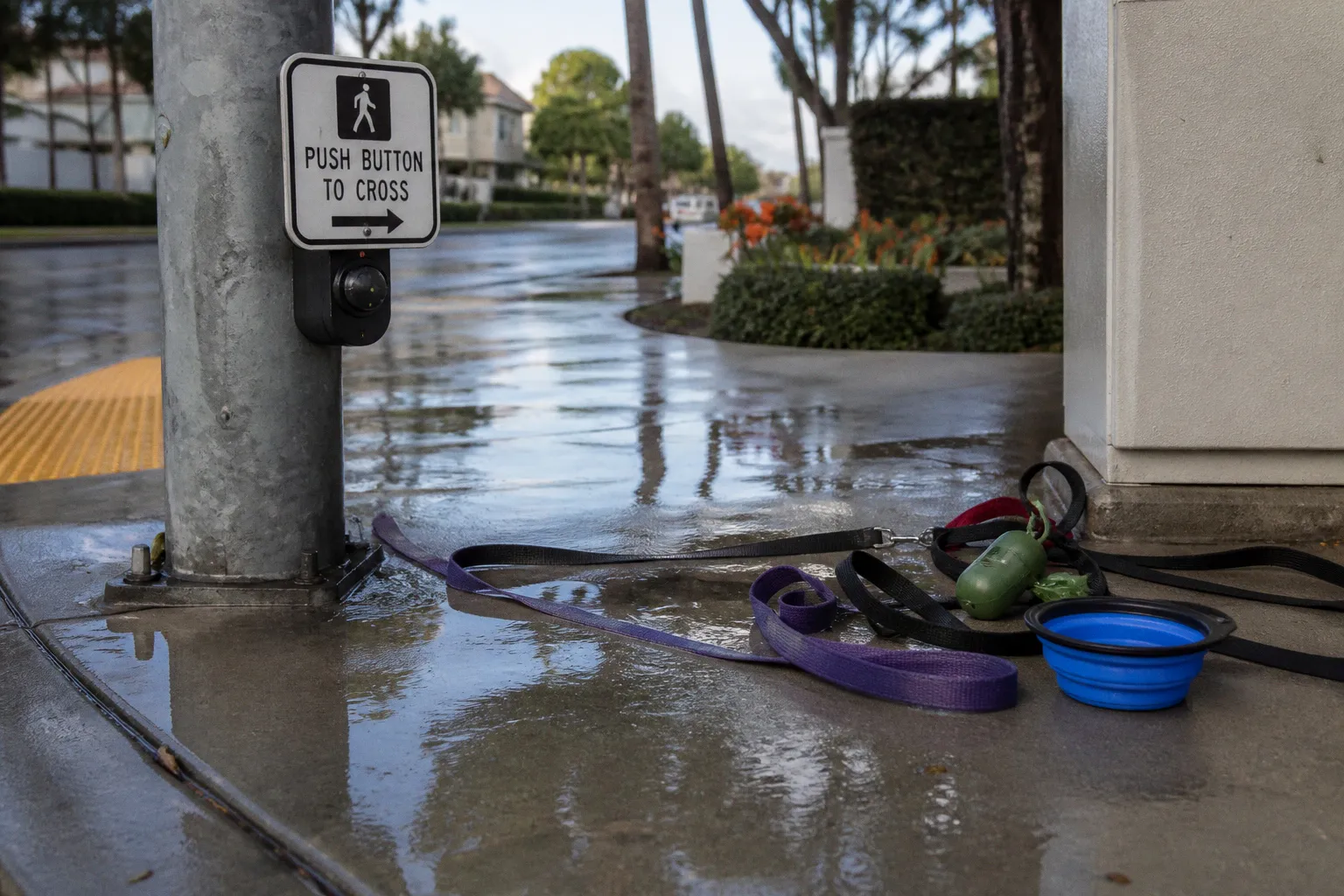
When an animal at the end of a lead bolts, stops, or shifts laterally, the handler's center of mass follows, producing an unplanned step into the roadway that driver awareness alone cannot prevent. For professional dog walkers and pet sitters managing routes on public roads, the federal recommendations translate directly into operational protocols.
The Kinetic Hazard
The core problem is mechanical, not informational. A dog on a lead introduces a second body into the pedestrian system—one with independent decision-making, scent-driven attention shifts, and the physical capacity to redirect the handler's trajectory in under a second. Standard road-side rules apply, but with the leash factored in, each condition carries higher consequence and a tighter decision window. NHTSA's guidance addresses the roadway environment; the handler's task is to map each rule onto a two-body system where the second body has no training in traffic compliance:
- Traffic compliance: obey signs and signals; treat intersections as controlled points, not advisory suggestions.
- Driveway and parking exits: primary conflict zones in residential walking routes. Vehicles entering or backing out constitute the dominant collision vector for off-sidewalk segments.
- Sidewalk absence: face oncoming traffic and maximize lateral distance from the vehicle lane.
- Crosswalk protocol: scan in all directions, including turning vehicles, before committing to a crossing.
- Visibility: do not assume drivers see you—or the low-profile animal at heel, which can sit below standard driver sightlines.
Handler Protocol
1. Route audit. Identify sidewalk gaps before the walk begins. In segments without a sidewalk, position the dog on the handler's inside (away from the lane) and orient the body to face oncoming vehicles.
2. Juncture behavior. Reduce speed at every driveway and parking exit. The dog's head turn or sudden orientation shift is the leading indicator of an impending pull.
3. Leash configuration. Fixed-length lead in active roadway zones. Variable-length leads expand the dog's reaction radius into the traffic lane, converting a controlled system into an uncontrolled one.
4. Crossing sequence. Full stop at the curb. Visual confirmation across all directions, including dedicated turning lanes. Proceed only on confirmed lane clearance—not on driver eye contact.
Verification checklist:
- Sidewalk continuity confirmed for the full route?
- Driveway and parking-exit density mapped?
- Crosswalk positions identified before the walk begins?
- Lead type: fixed-length, short hold maintained in roadway segments?
- Handler attention: unobstructed peripheral scan, no phone, no conversation that breaks focus?