New Seasonal Leash Mandates for Boulder Trails Amid Increased Bear Activity
Starting August 15, the City of Boulder's Open Space and Mountain Parks Department will impose seasonal leash requirements on specified open space trails to eliminate that closure speed during a critical foraging window.
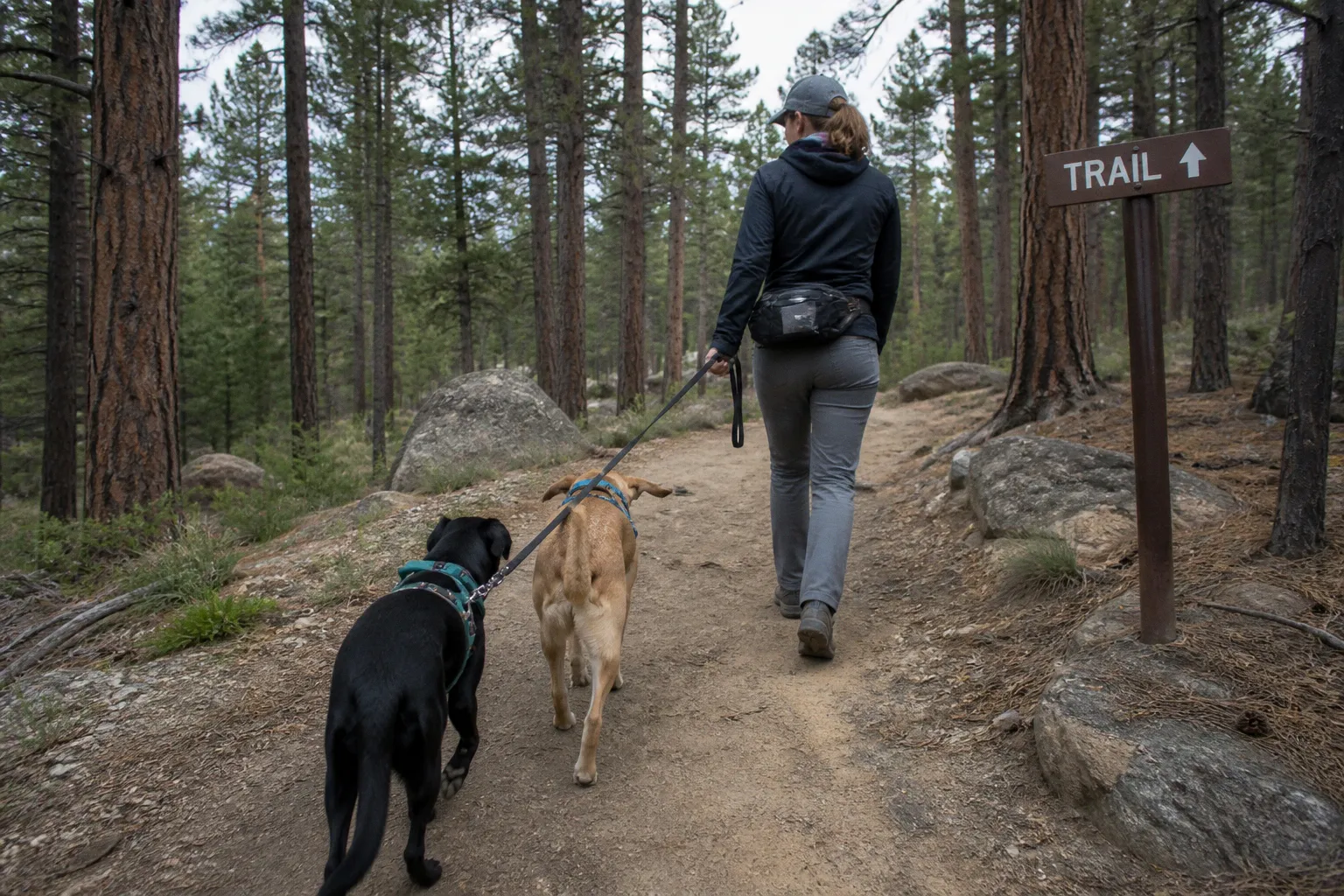
-roaming dogs on bear-active corridors can close a 50–100 meter gap to a bear in under 15 seconds — a vector the handler cannot interrupt. Starting August 15, the City of Boulder's Open Space and Mountain Parks Department will impose seasonal leash requirements on specified open space trails to eliminate that closure speed during a critical foraging window.
What the Rule Covers
The on-leash mandate applies to designated open space trails only, not the full Boulder trail network. Enforcement is seasonal, timed to peak bear foraging — a period when bears expand caloric intake and movement radii across habitat edges bordering trail corridors. The order is temporary; the city has not published a fixed end date in available materials. Trails outside the seasonal designation remain under existing city code, which already combines fixed leash zones with voice-and-sight control corridors.
Handlers should treat any trail confirmation as time-sensitive. Seasonal orders shift based on resource availability and wildlife monitoring data, not a fixed calendar block.
Risk Parameters for Off-Leash Transit in Bear Habitat
Off-leash dogs generate three documented failure modes in bear-active terrain:
- Vector closure speed. A free-roaming dog can cover a 50–100 meter gap to a bear in under 15 seconds. Bears interpret rapid canine approach as a chase vector and shift to defensive or predatory response. A leashed dog operates at handler pace — roughly 1.5 m/s — restoring reaction time and providing a physical anchor.
- Kinetic chain break. Off-leash dogs operate outside handler recall radius. The handler loses the ability to redirect the animal mid-encounter, converting a controllable approach into a two-species conflict the handler cannot terminate through voice or recall alone.
- Scent transfer and conditioning. Off-leash dogs that contact kill sites, scat deposits, or carcass remains develop a pursuit profile that persists across subsequent trail sessions. Conditioning compounds over repeated exposure and is difficult to reverse without structured desensitization work.
Restoring leash compliance reconnects handler to dog, lengthens the reaction window, and reduces probability of escalation to a physical encounter.
Pre-Walk Verification Checklist
- Confirm the trail segment against the current seasonal order on the City of Boulder Open Space and Mountain Parks page before departure.
- Use a fixed-length leash between 4 and 6 feet. Extendable flexi-leads extend reach beyond standard handler control radius and may not satisfy the requirement.
- Carry a secondary containment option — vehicle crate or rigid carrier — for bail-out if a bear is sighted on approach.
- Maintain continuous visual contact. The handler functions as the primary sensor for wildlife cues before the dog detects them.
- Log trail name, time, and date. Citations attach to the handler, not the dog, and accumulate across repeated violations.
Handlers who operate Boulder open space on a routine schedule should audit their route inventory before August 15 and flag any segments converting from voice-control to mandatory leash for the season.