Essential GPS Tracking Features for Professional Dog Handlers
Forbes has published its latest roundup of dog GPS collars, naming the Tractive Smart Dog GPS Tracker as its top recommendation after hours of hands-on testing.
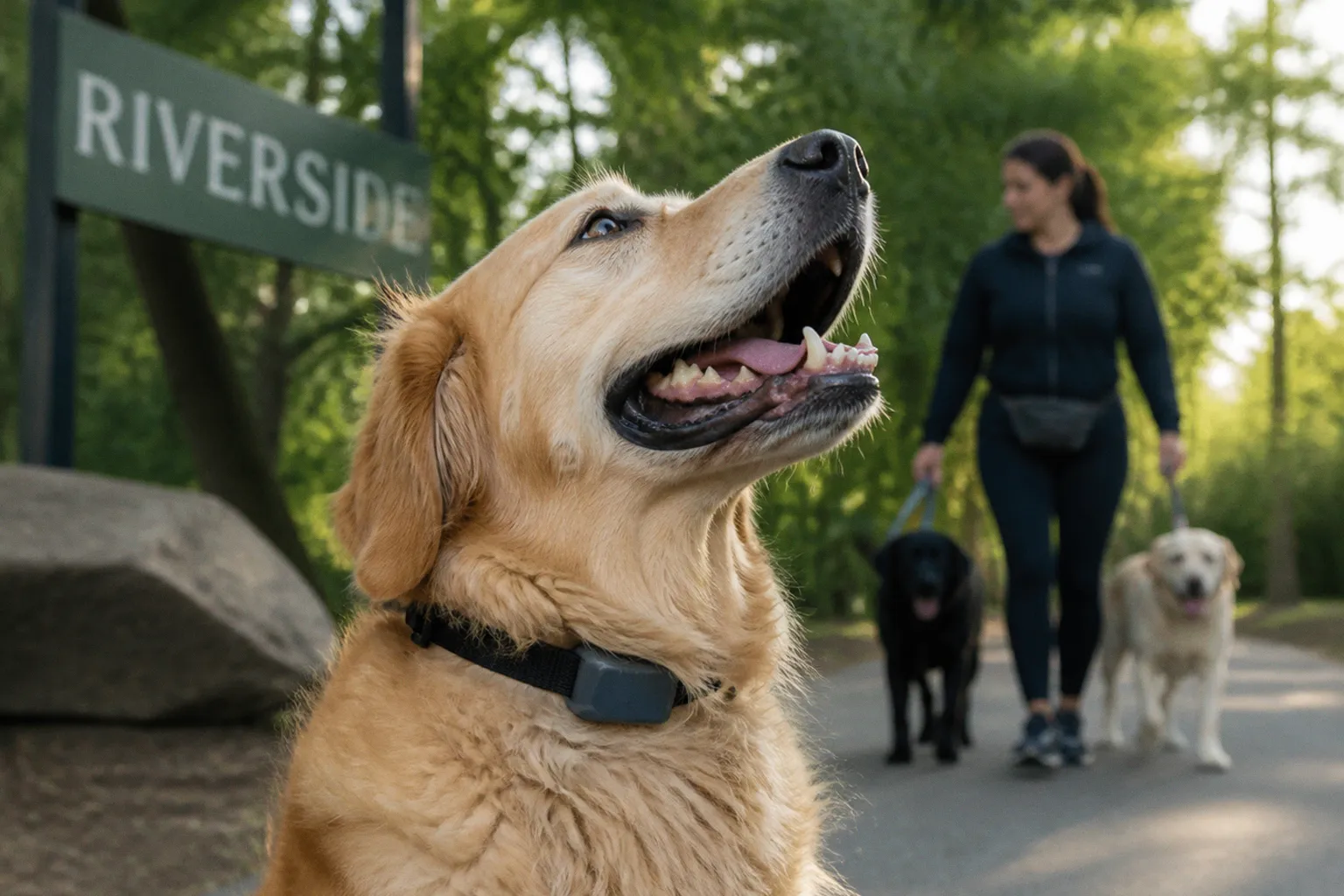
For professional walkers and sitters managing off-leash or escape-prone dogs, the category carries direct safety weight: a tracker is the final layer of a containment-failure protocol, not a substitute for leash control or secure perimeter management.
Hardware parameters that matter
Forbes flags the Tractive's two-to-three-second location refresh as the differentiator that defines its utility. For a handler working multiple dogs in an open area, that interval compresses the recovery window when a dog breaches a boundary. The unit is waterproof and rated for 14 days of battery life per charge. Two operational constraints follow:
- Subscription requirement: $120, $168, or $300 per year depending on plan. The fee is mandatory for live tracking, family sharing, and 365-day location history.
- False-alarm reports: users have received Escape Alerts with the dog still beside them. Treat geofence pings as triage signals, not confirmed breaches, until visually verified.
The unit also streams respiration, heart rate, and barking spikes to the app. For a sitter monitoring a boarded dog, this functions as a passive vitals layer, though Forbes does not position it as a diagnostic instrument.
Alternative hardware and the non-GPS fallback
Forbes lists the Invoxia Minitailz as a secondary pick. It uses Wi-Fi plus cellular triangulation, carries an IP67 rating, and runs up to 15 days per charge. Health metrics including heart rate, breathing, and sleep are accessible without a subscription; the $129.95 annual fee unlocks real-time GPS only. On-board AI produces daily health summaries.
For handlers who need proximity recovery rather than continuous tracking, the same roundup routes iPhone households to Apple AirTag and Android households to Life360 Tile Pro. Neither uses GPS; both rely on Bluetooth crowdsource networks, which degrade sharply in low-density areas and are not suitable for rural or off-grid routes.
Pre-deployment checklist
Before mounting a tracker on a working dog, verify each parameter:
- Subscription cost is logged into the operational budget; fees recur annually without service interruption.
- Geofence radius is calibrated to the actual walking route, not the default circular boundary.
- Recharge interval is scheduled against the 14-to-15-day rating; continuous live-tracking reduces that window.
- False-alarm thresholds are documented so the handler does not abandon a dog mid-search on a spurious ping.
- Hardware mass and width are checked against the dog's neck girth and coat density; added collar load affects gait and thermal load, particularly in dense coats during warm-weather sessions.
Per Forbes, the selections were made independently by its editorial team; commission may be earned through outbound links, which does not factor into the hardware assessment above.