Museum Speelklok Tickets: Where to Leave Your Dog in Utrecht
Buying tickets to Museum Speelklok is the easy part. Figuring out where your dog goes while you're inside is the actual project.
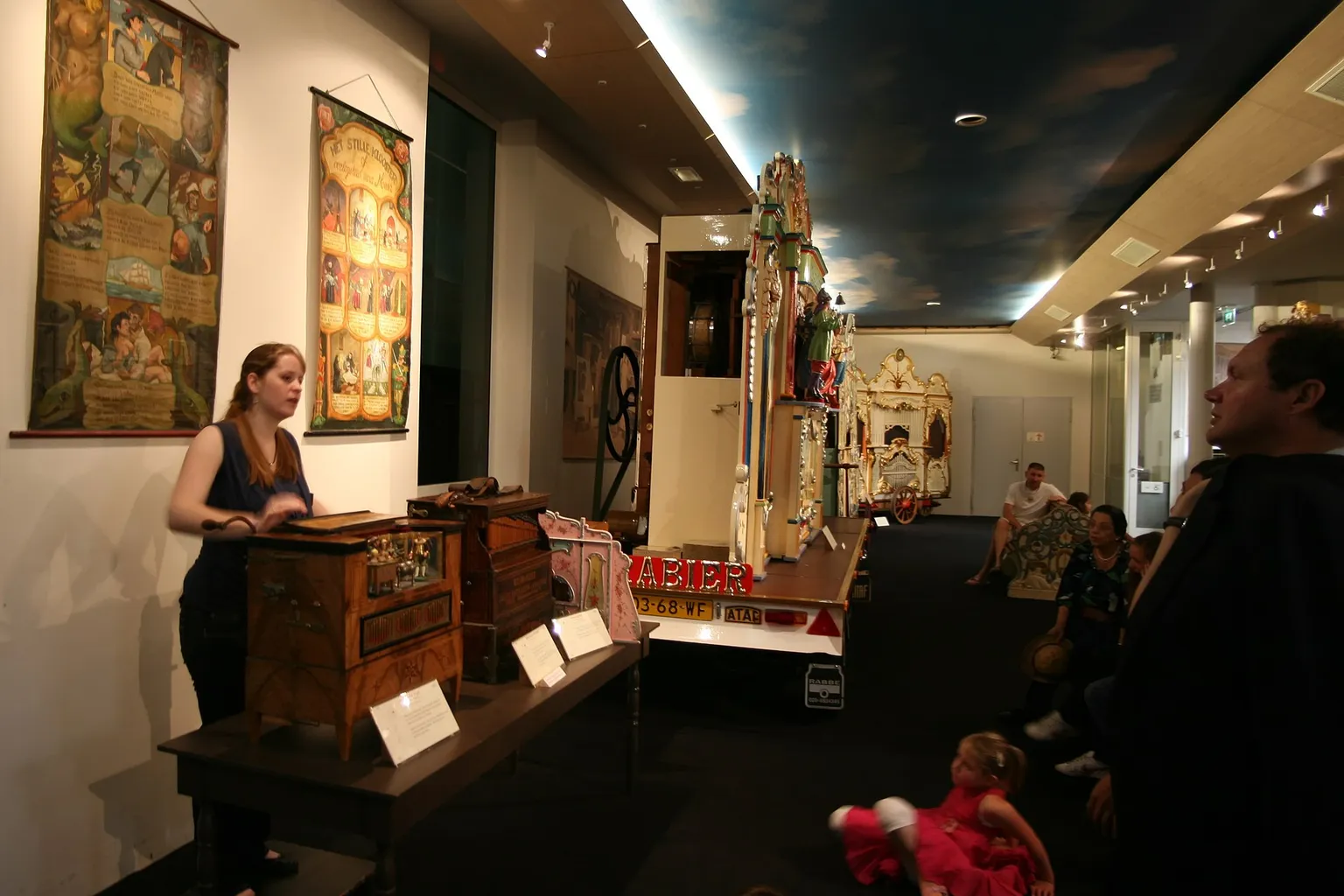
The museum sits at Steenweg 6 in central Utrecht, and its visitor policy is clear about the important point: pets are not allowed inside. Guide dogs and assistance dogs are the stated exception. A family Labrador, however calm, cannot come along for the museum visit.
Tickets and prices
Museum Speelklok
Utrecht
01 · GetYourGuide
Entry ticket · 1-day validity
€17
02 · Official
Official ticket · Adult
€17
Box office and online booking
Museum Speelklok — At the box office
That makes this less a museum review than a logistics brief. You are not only planning a visit to a collection of self-playing musical instruments; you are coordinating a few hours of care for the dog who cannot enter with you. Get that second part wrong and the orchestrions will not be the only thing ringing in your head.
Museum Speelklok Admission: Pricing and Entry Requirements
Museum Speelklok uses a standard tiered admission structure. Adult tickets cover regular entry, younger visitors may qualify for a reduced youth rate, and children in the youngest age bracket can enter under the museum's child-ticket rules. Exact prices are shown through the live booking system at the time of purchase. That is the figure to trust: ticket prices, booking conditions, and available slots can change more quickly than a static article does.
If you want to buy tickets Museum Speelklok offers, there are several practical routes.
1. Book online through the museum's booking system or an authorized ticket channel. This is usually the least complicated option. Depending on availability, same-day and next-day tickets may be offered, and the digital ticket can be scanned at the entrance.
2. Buy at the box office. Walk-up admission is possible when the museum is open, although a counter purchase does not guarantee immediate entry if a particular time slot is full. Weekends, school holidays, and popular periods are the moments when turning up without a reservation becomes a needless gamble.
3. Use a guided-tour platform or city-pass bundle. Some Utrecht sightseeing products include Museum Speelklok as part of a wider itinerary. Check what is actually included: some products cover admission, while others only organize the tour or combine entry with another attraction.
The age rule needs a little more nuance than the usual one-line summary. Children under four generally do not need a ticket, while older children normally require the relevant child or youth admission. However, free admission can also apply to visitors who hold a valid Netherlands Museum Pass, an ICOM card, a U-pas, or Friends of the Museum membership. Check the conditions attached to the specific pass and bring the required proof with you.
| Visitor or booking situation | What to check |
|---|---|
| Adult visitor | Regular admission and the available entry time |
| Child under four | Whether the museum requires registration even when admission is free |
| Older child or teenager | The correct child or youth ticket category |
| Netherlands Museum Pass holder | Whether the pass is valid for the selected visit and must be scanned or shown |
| ICOM card, U-pas, or Friends of the Museum member | The current free-entry conditions and proof of eligibility |
| Guided tour or city-pass booking | Whether the product includes museum admission or only the wider activity |
The dog does not need a museum ticket because the dog cannot enter as a pet. That sounds obvious, but it is worth stating plainly when you are building a booking around a whole family or group: the admission plan and the care plan are separate arrangements.
Before paying for a ticket, check whether someone in your group already qualifies for free admission through a pass or membership. The saving is easy to miss when everyone is booking in a hurry.
Navigating the No-Pet Policy at Steenweg 6
Museum Speelklok does not treat the no-pet rule as a matter of whether an animal is quiet, small, or accustomed to public places. Companion animals and emotional-support animals should not be assumed to qualify. The relevant exception is for guide dogs and assistance dogs recognized under the museum's access policy. If your dog is a pet, plan on leaving the dog outside the museum with a responsible carer.
This is not the sort of rule to test at the door. Museum Speelklok is housed in a historic city-centre setting and displays delicate mechanical instruments. Visitor routes can be compact, guided tours can be busy, and staff need to apply access and safety rules consistently. A dog that behaves perfectly in a café can still be unsuitable for a museum environment, particularly when the building is crowded or the visit includes narrow passages, sudden sounds, and groups moving together.
There is an important distinction here: the museum's no-pet policy tells you that a pet cannot accompany you into the galleries. It does not, by itself, answer whether the venue has any temporary holding, crating, or other behind-the-scenes arrangements. Public visitor information should not be treated as proof that such facilities either exist or do not exist. If you have a specific access need or an unusual circumstance, ask the museum directly before relying on an assumption. For an ordinary pet dog, though, the sensible plan is independent care arranged in advance.
That means three bad ideas can be removed immediately:
- Do not plan to tie the dog outside while you tour.
- Do not leave the dog unattended near the entrance or on a busy Utrecht street.
- Do not leave the dog in a parked car while you visit the museum.
Central Utrecht is not a controlled waiting area. Pedestrian traffic, bicycles, noise, weather, and unfamiliar people all create unnecessary risk. A dog left outside may become frightened, be approached by strangers, or attract the wrong kind of attention. A car is no safer: temperatures inside a vehicle can rise rapidly, even when the weather does not feel extreme from the pavement.
The museum visit is optional. Your dog's safety is not. Treat the no-pet policy as a planning constraint, not as an invitation to improvise.
Securing Reliable Pet Care Services in Utrecht
This is the part that deserves real thought, not a panicked search on the morning of your visit. If you live in Utrecht, you may already have a trusted neighbour, regular dog walker, family arrangement, or familiar daycare. If you are travelling with a dog, or your usual sitter is unavailable, Utrecht pet sitting services give you several ways to cover a short museum visit.
The platforms most likely to appear in a search for local care include Pawshake, Petbnb, Yoopies, and PetBacker. They work in broadly similar ways: enter your dates and neighbourhood, review sitter profiles, compare services, read feedback, and message potential carers before booking. The details still matter. Some sitters visit your accommodation, some host dogs in their own homes, and others offer walks, daycare, or overnight boarding.
For a Museum Speelklok visit, a full overnight booking may be unnecessary. A dog walker or drop-in sitter can be the better match if your dog is comfortable at the accommodation and your total time away is limited. A dog that struggles with being alone, needs medication, or becomes destructive when routines change may need more than a quick walk.
| Care option | Best fit | Questions to settle before booking |
|---|---|---|
| Drop-in home visit | An independent dog during a short museum trip | Will the sitter walk the dog, or only provide a brief visit, food, and water? |
| Dog-walking service | A dog that needs exercise during your time away | Where will the walk take place, and how will the sitter handle traffic, bicycles, and other dogs? |
| In-home boarding | A dog that settles better with company | Who lives in the home, which animals are present, and where will the dog sleep? |
| Daycare | Social, energetic dogs that enjoy group care | What are the group sizes, rest arrangements, and policies for reactive, elderly, or intact dogs? |
| Care at your accommodation | Travellers who want the dog to remain in familiar surroundings | Can the sitter access the property, and what instructions are needed for keys, alarms, and emergencies? |
The platform interface will make almost every profile look reassuring. Your job is to find out whether the person can handle your actual dog rather than the generic dog in the profile photo.
- Message before booking. Ask how the sitter handles food guarding, lead reactivity, separation distress, medication, crate refusal, or a dog that hides from strangers. The point is not to produce an interrogation for its own sake. It is to see whether the sitter gives concrete answers.
- Describe the care window precisely. Include the time you expect to leave, the time you expect to return, the route between the accommodation and Steenweg 6, feeding instructions, toilet needs, and what happens if your museum visit runs late.
- Arrange a meeting when the dog is unfamiliar with the sitter. A short introduction is especially useful for nervous, newly adopted, elderly, or reactive dogs. You want to see the interaction before the booking becomes urgent.
- Confirm the arrangement in writing. A vague promise to drop in later is not a care plan. A written schedule should state the visit or walking times, feeding instructions, access details, emergency contact, and update expectations.
- Ask about backup arrangements. If the sitter is delayed, becomes ill, or cannot access the property, what happens next? A professional answer will be more useful than another string of five-star adjectives.
- Do not hide the difficult information. If your dog has snapped, escaped, guarded food, panicked alone, or struggled around children, say so. The right sitter can plan for a known issue. The wrong sitter is created by an incomplete description.
Watch for warning signs: refusal to meet before the first booking, unclear answers about where dogs are kept, no willingness to discuss emergencies, or a price so low that the promised level of care makes no sense. Cost is not a perfect measure of quality, but a care arrangement that cannot be explained clearly is not ready to book.
A sitter who cannot describe how they would handle your specific dog in specific situations is a sitter you have not interviewed hard enough.
For dogs with a history of fear, reactivity, or separation problems, choose predictability over novelty. A familiar sitter at the accommodation may be kinder than a busy daycare. For a highly social dog, the opposite may be true, but only if the daycare can explain its supervision and rest routine. “Dog-friendly” is not a care standard by itself. It is a starting label that needs details behind it.
Planning Your Visit: Opening Hours and Holiday Closures
Museum Speelklok's regular opening pattern is Tuesday through Sunday, from 10:00 AM to 5:00 PM, with Mondays closed. The museum is also closed on New Year's Day, King's Day on April 27, and Christmas Day. Around Easter and other Dutch public holidays, check the current calendar rather than assuming that normal opening hours apply. Reduced hours, special programming, and altered tour schedules can affect how long you will actually be away from the dog.
A typical museum visit may take roughly 90 minutes to two hours, depending on whether you join a guided tour, how much time you spend with the collection, and whether you build in time for arrival and departure. Do not book the sitter for the advertised gallery time alone. Add the walk to the museum, the time needed to find the entrance, ticket scanning, and a margin for a delayed return.
Weekday mornings are often the cleanest option for visitors arranging utrecht dog walkers or a short drop-in. Sitters may have more flexibility, daycare groups can be less crowded, and your dog is less likely to be handed over during the busiest part of the day. Weekend afternoons and school holidays require more planning because popular care slots disappear first.
King's Day deserves separate attention. Utrecht on April 27 is crowded, noisy, and full of movement. For a sound-sensitive, reactive, elderly, or easily overwhelmed dog, a busy central-city walk is a poor choice. Arrange care away from the festival route, keep the dog in a calm familiar setting where possible, and do not assume that a normal walking appointment will operate normally on a city-wide celebration day.
The same principle applies to other changes in the city's rhythm. A major event, a large market, unfamiliar accommodation, or a long train journey can turn an ordinary two-hour absence into a more demanding day for the dog. Look at the whole itinerary, not only at the museum's entry slot.
If your plans include several days in Utrecht, place the museum visit on a quieter weekday and reserve canal-side walks or outdoor café time for activities where your dog can actually participate. That is where dog friendly activities Utrecht can be useful: parks, outdoor routes, and dog-welcoming spaces give the animal a real part in the day rather than forcing every outing into a workaround.
Preparing the Dog for the Change
The museum guide will tell you where to buy tickets. It will not tell you what happens when a dog moves from a familiar routine to a stranger, a new room, a different walking route, and several hours without its owner. That transition is often where a perfectly reasonable care plan starts to wobble.
A dog may be restless after you return, demand more attention, eat differently, sleep badly, or show a temporary flare-up of an existing habit. That does not automatically mean the sitter failed. It may simply be the dog's response to disrupted routine. The best way to reduce the effect is to make the arrangement as legible and repetitive as possible.
- Keep feeding and walking times close to the normal schedule. A sitter can work with a routine; they cannot work with instructions such as “whenever convenient.”
- Bring the dog's own food, bed, harness, lead, medication, and familiar items if you are staying somewhere new. Avoid changing food and care arrangements at the same time.
- Write down the dog's habits and triggers. Include whether the dog takes treats from strangers, reacts to bicycles, pulls toward other animals, guards toys, or needs a quiet room after a walk.
- Leave practical emergency information: your mobile number, a local contact if available, veterinary details, medication instructions, and permission requirements for urgent care.
- Agree on updates in advance. One photo after the first visit may be enough for one dog and completely inadequate for another. Decide what will reassure you without turning the sitter into a live camera operator.
- Plan a quiet return. After the museum, give the dog time to decompress before adding a crowded café, a long city walk, or another unfamiliar activity.
For newly adopted dogs and dogs already working through behavioural issues, a single museum trip should not become an avoidable stress test. A short trial visit with the sitter, followed by a low-pressure return home, tells you much more than a polished online profile.
Book the Care Before You Lock in the Tickets
The cleanest version of this trip is simple: arrange the dog care first, complete a meet-and-greet if needed, confirm the schedule in writing, and then buy the museum ticket for a time that fits the care window. Reverse the order and you may end up trying to find a sitter for the only remaining entry slot, asking someone to take a dog they have never met.
When searching for utrecht pet sitting services, keep the museum's location in the calculation. A sitter based far outside the centre may technically accept the booking but still struggle with access, parking, bicycles, or a tight handover. A local sitter who knows the streets around Steenweg may be a better choice, particularly if the care involves a walk rather than a stay at the accommodation.
Also allow for the fact that a ticket time is not the same as the moment you leave the dog. You may need to check in, find the entrance, wait for the group to assemble, or stay longer after a guided tour. Build in enough time that the sitter is not forced to choose between rushing the dog and extending care without notice.
Museum Speelklok is worth the preparation. Its self-playing instruments and mechanical music collection offer something genuinely unusual, and a guided visit can add context that is easy to miss when you move through the displays on your own. But the experience improves when the dog-care question has already been settled.
The museum's no-pet rule is not a problem to negotiate at the entrance. It is a fact to plan around. Check the ticket conditions, use any valid free-admission pass, arrange a responsible carer, and give your dog a routine it can understand. Then you can listen to the instruments instead of spending the whole visit wondering whether the other half of the day is falling apart.
Practical info
Currency: EUR
Driving: on the right
Emergency number: 112
FAQ
Can I bring my dog into Museum Speelklok?
Where can I leave my dog while visiting Museum Speelklok?
Can I leave my dog outside Museum Speelklok or in the car?
What are Museum Speelklok’s usual opening hours?
How long should I book dog care for during a Museum Speelklok visit?
Can I buy Museum Speelklok tickets at the entrance?
Photo: bertknot from scarborough, australia / CC BY-SA 2.0 — Wikimedia Commons