How to Travel Stress-Free With Your Anxious Dog: 10 Expert Strategies
A familiar dilemma surfaces every holiday season: the dog who adores the destination but dreads the journey, and the family whose plans quietly shrink around one anxious passenger.
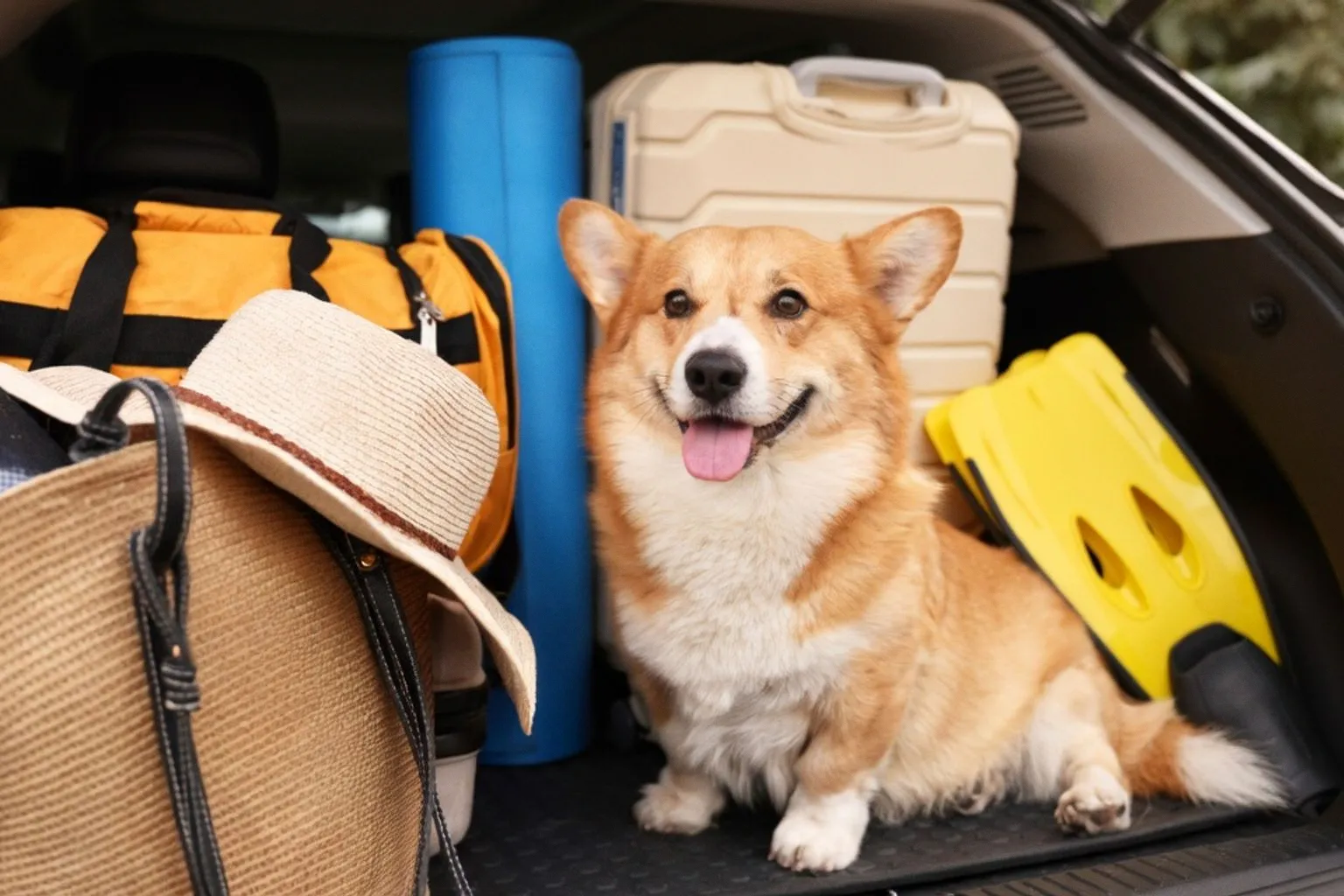
According to expert guidance published by Saga, professional trainers and pet travel specialists are seeing the same trigger again and again — dogs whose anxiety begins long before the engine starts, in the boot, the hallway, or the sight of a packed suitcase.
Reading the signals before the transition phase begins
Dog trainer Nina Fotara of Confident Canine worked with one retired couple whose travel plans were effectively on hold because their dog refused to get in the car. Her starting point is always the same: find the exact moment behaviour shifts. Worried dogs often drool, yawn, lick their lips, make a low whine, or show the whites of their eyes. Some pace. Others go completely still — what Nina describes as shutting down.
Once the trigger is mapped — packing, keys in hand, the boot opening — the next phase is rehearsal without departure. Practice loading the boot and then staying home, so the cue stops predicting motion. Short drives, chosen routes, and gradually longer distances form the preparation ladder. Dogs comfortable on motorways can still feel unwell on winding country lanes, so adapting the path is part of the plan, not a workaround.
Mapping the logistics across car, train, and ferry
Pet travel specialist Rebecca Pratt of Ladyhaye notes that "dog-friendly" means different things depending on the operator, and the logistics should be confirmed before any booking is confirmed. On P&O's Dover–Calais route, dogs stay in the vehicle unless a space in the Pet Lounge is reserved in advance. Brittany Ferries may offer kennels, pet-friendly cabins, or vehicle spaces depending on the sailing. National Rail generally allows up to two pets free of charge, provided they remain on a lead or in a carrier and off the seats — bringing a familiar mat helps establish a baseline comfort in an unfamiliar carriage.
For any trip crossing into the EU, regulatory compliance enters the picture. Residents of Great Britain — England, Scotland, and Wales — need an Animal Health Certificate (AHC) issued by a vet, no more than ten days before entering the EU, with a fresh certificate required for each trip. The dog must be microchipped and hold a current rabies vaccination, and a full 21 days must pass after the first vaccination before any EU-bound travel begins. When those conditions hold, the AHC covers onward movement within the EU and re-entry into Britain for up to four months — provided the vaccination stays current throughout.
Building the familiarity anchors before departure day
The most reassuring part of any travel plan is the part that happens at home. Short practice drives, a packed bag left untouched in the hallway until it stops causing a reaction, and a designated mat that travels from the back seat to the train cabin to the ferry kennel all act as stability points. Combined with confirmed bookings, up-to-date paperwork, and realistic expectations about your dog's individual tolerance for motion, noise, and confinement, the logistics become something closer to a repeatable process than an open question.
For families planning a getaway this season, the preparation timeline is friendlier than it looks — and starting early tends to be the difference between an itinerary that happens and one that quietly shrinks around a worried dog.