Ground transport vs air rescue for shelter dogs
Choosing between ground transport and air rescue for a shelter dog is rarely a simple question of distance.
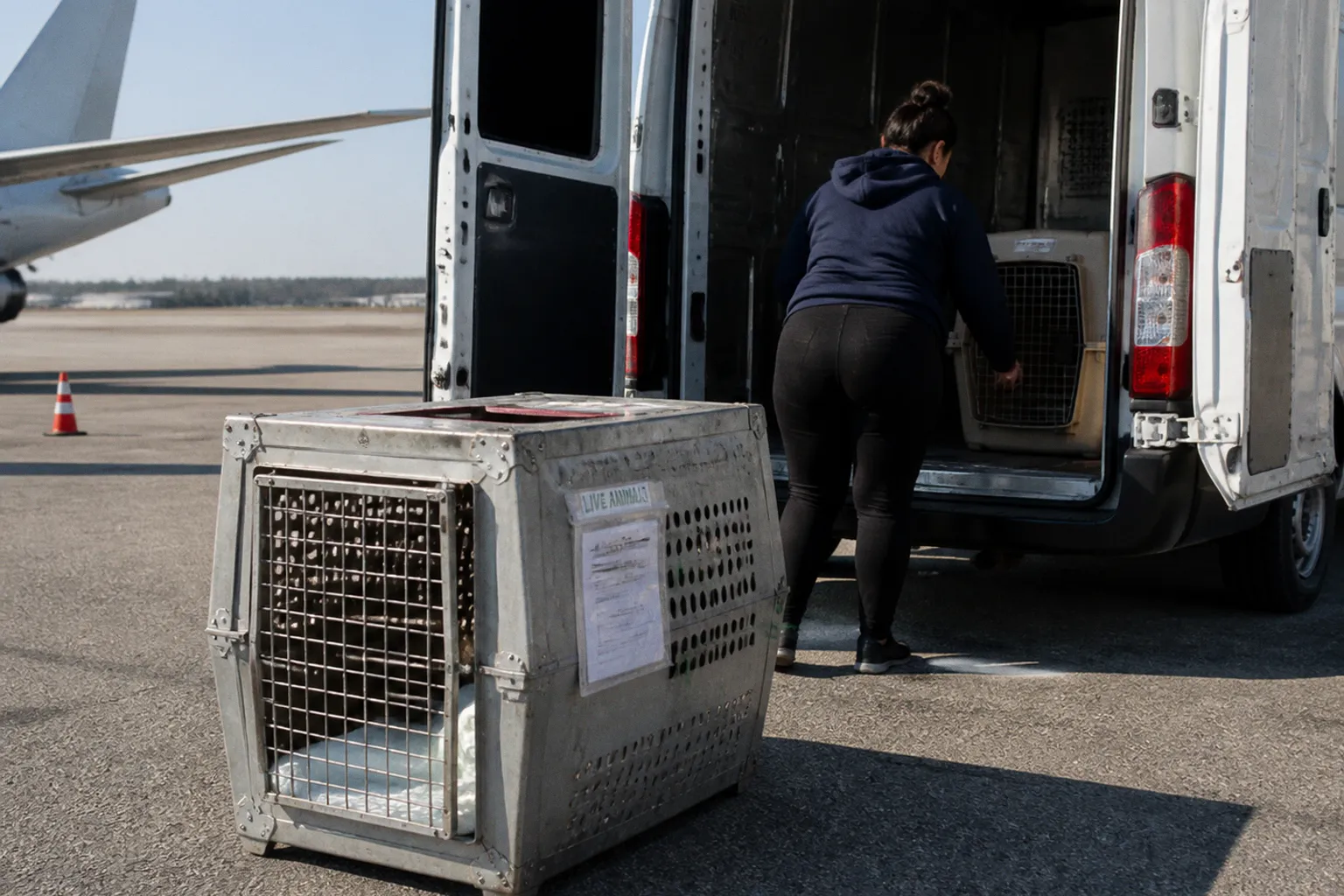
The receiving rescue may have an open foster placement, a transport coordinator may have only one available departure window, or a dog at high risk of euthanasia may need to leave immediately. At the same time, the animal’s age, health status, temperament, breed, vaccination history, and ability to tolerate confinement can change the safest plan.
Compare car rental deals in United Kingdom
See available offersPartner link — DiscoverCars comparisonThe practical comparison is not really “road versus airplane.” It is a decision about travel duration, handling intensity, regulatory compliance, medical oversight, and how quickly the dog can reach a stable foster or adoption environment. For many trips under approximately 12 hours of driving, a well-managed ground route offers the best balance of comfort, supervision, and cost. For cross-country relocation or journeys expected to exceed roughly 18 hours by road, air transport can reduce the transition phase from several days to a few hours—but only when the dog is medically and behaviorally suited to the process.
Start with the dog, not the vehicle
Shelter dog relocation methods work best when the transport plan is built around the animal’s baseline comfort rather than around the most convenient available vehicle. A healthy, confident adult dog may handle a long road journey with regular breaks, while a medically fragile puppy or a dog with severe respiratory disease may face greater risk in any enclosed transport environment.
Before a route is assigned, the sending shelter and receiving organization should establish a shared intake picture:
- Current examination findings, vaccination status, parasite treatment, and any active medications.
- Recent symptoms of coughing, nasal discharge, vomiting, diarrhea, fever, or unusual fatigue.
- Whether the dog has shown signs of kennel cough, distemper, parvovirus exposure, Giardia, tick-borne illness, or other contagious conditions.
- Tolerance for crating, vehicle movement, unfamiliar handlers, noise, and separation from familiar people.
- Whether the dog is brachycephalic, elderly, pregnant, recovering from surgery, or otherwise vulnerable to heat, respiratory stress, or prolonged confinement.
- The exact destination, including the receiving shelter, foster home, veterinary clinic, or transfer hub.
This information is not administrative padding. Interstate relocation can move infectious disease along with the animal if intake and quarantine protocols are weak. A dog that appears well at departure may still be incubating an illness, and the stress of transport can make symptoms more visible after arrival. The receiving organization therefore needs enough time and documentation to separate transport logistics from medical improvisation.
A useful transport file usually includes the health certificate required for the route, vaccination and treatment records, identification details, emergency contacts, feeding instructions, medication schedules, and written authorization for veterinary care if an unexpected problem develops. The more organizations involved, the more essential it becomes to keep one current version of the plan rather than relying on scattered messages.
The safest transport is the one that preserves continuity: the same health information, feeding routine, identification, and emergency plan should follow the dog from departure to intake.
Ground transport for shelter dogs: slower, but highly controllable
Ground transport remains the most practical option for many regional and short-to-medium-distance rescue movements. When the driving time is under approximately 12 hours, the vehicle can provide direct supervision, scheduled hydration and bathroom stops, and door-to-door delivery without the additional airport handling required for air travel.
The strongest advantage is control. A driver or transport team can observe the dog during the journey, adjust the temperature, respond to vomiting or diarrhea, and contact a veterinary provider without waiting for an aircraft to land. The route can also be designed around the animal’s needs, with quieter rest stops and fewer transfers when the coordinator has enough lead time.
Ground transport is especially suitable when:
- The dog needs to arrive at a specific foster home rather than a large transfer facility.
- The route can be completed in one day or with a carefully managed overnight stop.
- The dog is anxious but settles with calm human contact and predictable handling.
- The animal requires medication or monitoring during transit.
- The receiving team needs to preserve a familiar feeding, toileting, or decompression routine.
- A flight would create several airport handoffs, long periods in a crate, or exposure to temperature changes.
A direct vehicle trip is not automatically low-risk. Multi-stop relays can become complicated when drivers change frequently, dogs are moved between unfamiliar crates, or the schedule is too tight to allow cleaning and rest. A transport that looks efficient on paper may become exhausting if each segment adds loading, unloading, noise, and new handlers.
For that reason, the route plan should specify who has custody of the dog at every stage. It should also identify where the animal can be taken for emergency veterinary care, which supplies travel with the dog, and how the team will respond if the vehicle is delayed by weather, mechanical problems, or a missed handoff.
The hidden workload of a road relay
Volunteer-based ground transport often depends on several drivers covering separate legs. This can make rescue movement financially accessible, but it increases coordination requirements. Each handoff needs a clear time window, a confirmed location, a secure crate or harness arrangement, and a brief health update.
A dog may also need a longer decompression period after a relay than after a single direct trip, even if the total driving time is similar. Repeated transitions interrupt the animal’s familiarity anchors: the smell of the original shelter, the voice of a known handler, the expected feeding pattern, and the opportunity to sleep without being moved again.
Cleaning procedures matter just as much as scheduling. Crates, vehicle surfaces, bedding, and water bowls can carry pathogens between dogs. Rescue organizations that move multiple animals should use documented sanitation procedures and avoid mixing dogs from different sources without an appropriate intake plan.
Air transport for rescue dogs: speed with stricter constraints
Air transport can dramatically shorten a long relocation. A journey that would require multiple days on the road may take only a few hours in the air, which can be decisive when a dog is at immediate risk in an overcrowded or high-euthanasia shelter. Volunteer flight organizations and charter programs may also provide transport at no charge to participating shelters or rescues, allowing animals to move when commercial options would be financially unrealistic.
That speed is the central benefit, but it does not make air transport universally preferable. Airports involve noise, unfamiliar personnel, loading procedures, changes in temperature, and periods during which the dog cannot be observed as closely as it could inside a vehicle. Sensitive, medically unstable, or respiratory-compromised animals may not tolerate those conditions well.
Commercial air transport also introduces formal carrier requirements. Depending on the airline and route, the dog may need an IATA-compliant crate, a recent veterinary health certificate, specific labeling, and documentation that satisfies destination rules. Breed restrictions can affect brachycephalic dogs in particular, because short-nosed breeds may have an elevated risk of breathing difficulty under heat, stress, or reduced ventilation. Airline policies vary widely, and not every carrier accepts live animals as cargo.
For in-cabin travel, commercial carriers commonly limit the combined weight of the dog and carrier to approximately 15–20 pounds, while the carrier itself must fit beneath the seat. A frequently cited soft-carrier size is approximately 18 by 8 by 14 inches, although the permitted dimensions differ by airline and aircraft. Larger shelter dogs generally require another arrangement, such as checked or cargo transport where available, a volunteer pilot, or a charter flight.
The distinction between commercial cargo and rescue aviation should remain clear. A volunteer pilot transporting dogs through a nonprofit rescue network may use a different aircraft, staffing model, loading process, and receiving arrangement from a commercial airline. Those programs can be highly effective, but they still require health screening, secure crates, accurate manifests, and a plan for delays or weather cancellations.
Ground versus air: the operational comparison
The right choice becomes easier when the two options are compared across the full route rather than by travel time alone.
| Transport factor | Ground transport for shelter dogs | Air transport for rescue dogs |
|---|---|---|
| Best distance profile | Regional and short-to-medium routes, especially under approximately 12 hours of driving | Cross-country or very long routes, particularly when road travel would exceed approximately 18 hours |
| Travel speed | Slower, with possible overnight stops or relay legs | Much faster once the dog is accepted and the flight operates |
| Direct supervision | High; handlers can observe the dog throughout the route | More limited during airport and flight segments |
| Handling pattern | Can be direct or involve multiple driver handoffs | Usually includes check-in, loading, unloading, and receiving handoffs |
| Comfort adjustments | Water, bathroom breaks, ventilation, temperature, and route can be adjusted en route | Conditions are more standardized and less adjustable once the dog is in transit |
| Documentation | Health records and destination requirements still apply, especially across state lines | Strict carrier rules, crate specifications, health certificates, and breed restrictions may apply |
| Medical response | Easier to divert to a veterinary clinic during the route | Requires advance planning around airports, flight timing, and receiving care |
| Cost structure | Often more flexible; volunteer relays may reduce direct cost but add coordination | Volunteer flights may be free to shelters; commercial cargo and charters vary substantially |
| Main operational risk | Fatigue, repeated handoffs, sanitation failures, and prolonged confinement | Noise, airport stress, temperature exposure, restricted observation, and policy-based rejection |
| Receiving arrangement | Can often deliver directly to a foster home or veterinary facility | Requires a precise airport pickup and immediate onward care plan |
The table shows why a simple mileage calculation is not enough. A 10-hour direct drive may be easier for one dog than a short flight involving an airport transfer and several hours of waiting. Conversely, a two-day road relay across the country may create more fatigue and handling exposure than a carefully organized rescue flight.
Air rescue is a time-saving tool, not a universal welfare upgrade. Its value is greatest when the long road alternative creates a longer, more disruptive transition phase.
Health screening must shape the route
Transport decisions should follow veterinary clearance, not replace it. Shelter dogs may carry respiratory or gastrointestinal infections without obvious signs at the moment of transfer, and crowded facilities can increase exposure to distemper, parvovirus, upper respiratory infections, Giardia, tick-borne illnesses, and other parasites.
A sound process separates three questions:
1. Can the dog travel at all?
Active illness, dehydration, breathing difficulty, uncontrolled vomiting or diarrhea, severe injury, or unstable medication needs may require treatment before relocation.
2. Can the dog tolerate this particular mode of travel?
A dog may be fit for a monitored road trip but unsuitable for air travel because of respiratory risk, extreme anxiety, age, or the inability to manage airport handling safely.
3. What happens immediately after arrival?
The receiving organization should know where the dog will sleep, how it will be isolated if necessary, when the next veterinary examination will occur, and which symptoms require escalation.
Health certificates are not a substitute for a current condition assessment. They document compliance with a route’s requirements, but the dog can change between examination, departure, and arrival. The transport team should have a clear policy for postponing a trip if the animal develops symptoms before loading.
Quarantine and isolation planning are equally important. A newly arrived dog may need separation from resident animals while the receiving shelter or foster program observes for illness. That space should be available before the transport is booked. Otherwise, a successful relocation can create preventable disease pressure inside the destination facility.
Building a reliable timeline
The most manageable transport plans are organized in phases. This gives every participant a defined task and leaves room for the delays that commonly occur in rescue logistics.
Phase one: confirm the placement
The receiving organization should confirm that a foster home, shelter kennel, veterinary facility, or adoption partner is ready to accept the dog. A reservation without a physical destination is not a complete placement. The plan should include the address, contact person, arrival hours, after-hours procedure, and who has authority to make medical decisions.
This is also the stage for confirming whether the dog is traveling alone or with other animals. Pairing dogs can reduce separation distress in some circumstances, but shared transport requires careful assessment of compatibility, crate arrangements, and disease-control implications.
Phase two: complete the health and compliance file
The sending shelter gathers the dog’s medical records, identification information, vaccination history, parasite treatments, medications, and any behavioral notes that affect handling. The veterinarian determines whether the dog is fit for the intended route and whether additional documentation is required.
For commercial flights, crate dimensions and carrier rules should be confirmed before the appointment is finalized. A dog that cannot meet the carrier’s requirements should not be placed on a last-minute airport plan. Breed restrictions, aircraft limitations, seasonal temperature rules, and airline-specific policies can all change the available options.
Phase three: choose the route against the dog’s profile
This is where the ground-versus-air comparison becomes practical. A direct ground route may be the most reassuring choice for a dog who needs frequent observation. A volunteer flight may be the most protective choice for a dog facing a very long road journey and a narrow adoption opportunity at the destination.
The decision should account for:
- Total door-to-door time, not only flight or driving time.
- Number of transfers and unfamiliar handlers.
- Availability of water, toileting, rest, and temperature control.
- Medical access during the route.
- Risk created by delaying departure.
- Whether the dog can remain safely housed while waiting.
- Arrival time and the receiving team’s ability to provide immediate care.
A short flight can still become a long day if the dog must wait at the airport, transfer to a vehicle, and travel to a distant foster home after landing. Conversely, a direct vehicle may deliver the dog directly to care with fewer handling events, even if the drive itself takes longer.
Phase four: prepare familiarity anchors
Shelter dogs often have very little control over their surroundings, so small consistencies can provide meaningful baseline comfort. Familiar bedding, a securely labeled collar or harness, a known food, and written feeding instructions can help reduce unnecessary change. A short behavioral summary can also prevent handlers from misreading fear, freezing, guarding, or overstimulation as disobedience.
These items do not eliminate travel stress, and they should never compromise safety. Bedding must not obstruct ventilation, identification must be duplicated on the crate and paperwork, and food should be packed according to the transport team’s ability to manage meals without increasing nausea or contamination risk.
Phase five: close the handoff
Arrival is not complete when the crate leaves the vehicle or aircraft. The receiving team should confirm the dog’s identity, inspect its condition, review medications and feeding instructions, and record any symptoms or injuries. If isolation is part of the disease-control plan, the dog should move directly into that space rather than passing through common areas.
A short arrival report helps connect transport to rehabilitation. It can record appetite, hydration, urination, stool, coughing, energy level, and behavior after settling. That information gives the foster or medical team a usable baseline and may reveal a problem that was not visible during transit.
Common planning failures and how to correct them
Rescue transport rarely fails because one person does not care enough. It fails when responsibility is distributed across several organizations without a shared operating picture.
Booking the fastest option before confirming medical suitability
A flight departure may appear to solve an urgent shelter problem, but speed can create pressure to overlook respiratory symptoms, dehydration, or a dog’s inability to tolerate airport handling. The correction is simple in principle: veterinary clearance and mode selection should be linked, with a documented alternative if the dog’s condition changes.
Treating a relay as one continuous trip
A multi-leg road movement may involve several independent drivers who each know only their own segment. Without a central coordinator, feeding can be duplicated, medications can be missed, and symptom changes may not reach the receiving team. Every relay needs one current itinerary, one emergency contact structure, and a written custody handoff.
Assuming a health certificate covers all destination requirements
Interstate and carrier requirements can differ. A certificate may be current while the crate fails airline specifications, a breed restriction blocks boarding, or the destination lacks the isolation capacity required by its own disease-control plan. Regulatory compliance must be confirmed for the actual route and carrier, not inferred from a previous transport.
Underestimating the arrival phase
Dogs that reach a new location after a long, noisy trip may appear quiet, withdrawn, or unusually compliant. That does not necessarily mean they are comfortable. The first hours should prioritize rest, hydration, safe containment, and observation rather than immediate introductions or adoption events.
Sending incomplete behavioral information
A transport team needs practical handling notes: whether the dog backs away from leashes, panics when lifted, guards food, reacts to other dogs, or settles when covered. The goal is not to label the animal permanently. It is to give each handler enough context to avoid turning predictable fear into a safety incident.
Making the final decision
For many rescue programs, the decision can be organized around three route categories.
Choose ground transport when the drive is reasonably contained, the dog benefits from frequent observation, a direct handoff is available, or the animal’s medical and behavioral profile makes airport handling unnecessarily complex. Ground transport is also the more adaptable option when a veterinary diversion may be needed.
Consider air rescue when the road journey would take more than a day, the dog is in immediate danger at the sending shelter, a reliable volunteer or charter flight is available, and the receiving organization can provide prompt airport pickup and post-arrival care. The air route should have confirmed crate compliance, health documentation, weather contingencies, and a backup plan if the flight is canceled.
Pause either option when the dog has active or unexplained illness, unstable breathing, severe dehydration, uncontrolled gastrointestinal symptoms, or no confirmed destination. A delay for treatment or placement is often safer than transferring uncertainty across state lines.
The final question is not which mode looks more efficient on a spreadsheet. It is which plan produces the shortest safe transition from shelter to stable care, with the fewest avoidable handoffs and the clearest response if conditions change.
A coordinated plan protects the rescue outcome
Ground transport and air rescue both have a legitimate place in shelter operations. Ground routes provide flexibility, visibility, and direct supervision; air routes provide speed when long-distance relocation would otherwise take several exhausting days. Neither method is automatically gentle, inexpensive, or appropriate for every dog.
A well-run transfer connects four elements: medical readiness, route compliance, predictable handling, and an arrival environment prepared in advance. When those elements are aligned, the dog is not simply moved from one facility to another. The animal enters the next stage of care with records intact, risks identified, and enough familiarity anchors to begin settling.
That is the practical standard for shelter dog ground transport versus air rescue: not the fastest vehicle in isolation, but the most reliable path to safety, recovery, fostering, and eventual adoption.