Beyond the Walk: Expert Veterinary Strategies for Canine Enrichment
According to ABC News, veterinarian Dr. Dani Shecter defines enrichment as an activity that lets a dog use normal, genetically ingrained behaviors in a positive way.
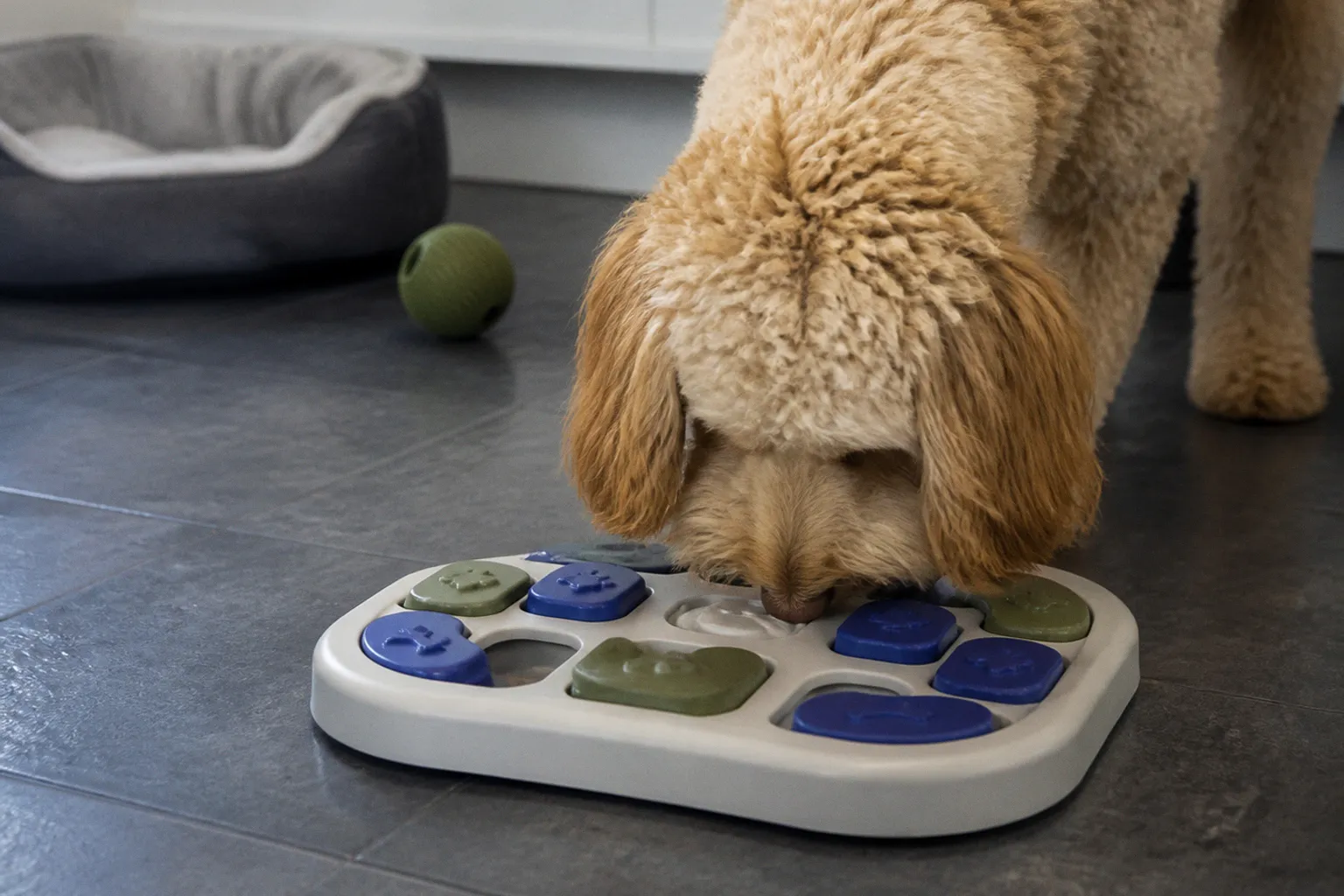
The distinction is mechanical: walking produces locomotion, while enrichment engages the nose, brain, and natural instincts. For professional dog walkers and sitters, the requirement is to deliver both components and record the behavior used.
Separate movement from mental work
A route completed at speed or over distance is not automatically a complete walk. It may provide substantial physical work while leaving the dog’s sensory and decision systems underloaded.
Treat the visit as two linked assignments:
- Locomotion: Maintain enough walking or other appropriate movement to support physical activity.
- Enrichment: Add sniffing, licking, chewing, or problem-solving so the dog can use natural behaviors through an appropriate outlet.
Sniffing should not be treated as wasted route time. ABC’s report says dogs can be allowed to investigate outdoor scents for as long as they like, within the walker’s existing route, leash, traffic, and escape-control procedures. The service objective is not to maximize mileage at the expense of investigation.
Food-based tasks require the same discipline. A lick mat gives a dog a defined licking behavior, while a slow-release treat toy can require nose work to reach the reward. The food is the reinforcement, not the task. If the dog can obtain it without investigating, licking, chewing, or solving, the activity is feeding rather than enrichment.
Match the task to the dog
Enrichment selection is a load-distribution decision. The behavioral objective must remain clear while the physical entry requirement changes with the dog’s current mobility.
This matters for low-mobility dogs. ABC notes that lick mats can provide an engaging activity for food-motivated dogs that cannot play as they once did. A sitter should not reject enrichment because the dog cannot complete a high-motion task. The correct response is to reduce the physical demand without removing the behavior.
Use this sequence:
1. Select the behavior. Choose sniffing, licking, chewing, or problem-solving.
2. Check mobility. Match the task to what the dog can perform during the current visit.
3. Define the sensory route. Determine how the dog will investigate, manipulate, lick, or search.
4. Add reinforcement. Use positive reinforcement to sustain engagement.
5. Observe the response. Record the behavior the dog actually uses.
Do not use more walking as the default response to poor engagement. The distinction presented by Dr. Shecter points in the opposite direction: physical movement and mental stimulation are separate requirements. A dog that returns from a long walk without an appropriate behavioral task has not necessarily completed the enrichment component.
For professional records, avoid a generic note such as “enrichment provided.” Record the channel:
- Sniffing during the route
- Licking from a mat
- Chewing
- Problem-solving to obtain a reward
- Limited-mobility food-based activity
That distinction makes future scheduling more precise. It also prevents the same toy or task from being assigned to every dog without checking its physical and behavioral fit.
Apply a controlled visit checklist
The main failure mode is confusing motion with engagement. Use a short pre-walk check, then control the task during the visit.
Pre-walk check
- Identify the primary enrichment behavior: sniff, lick, chew, or problem-solve.
- Match the physical demand to the dog’s current mobility.
- Select a food-motivated task when appropriate.
- Confirm that the reward requires the intended behavior.
In-visit control
- Preserve normal walking or other appropriate physical movement.
- Allow the dog to investigate the environment.
- Use positive reinforcement to maintain engagement.
- Reduce the physical entry requirement when a lower-demand outlet is needed.
- Stop changing the task until the intended behavior is clear.
Completion check
- Movement was provided.
- At least one natural behavior was used.
- The outlet matched the dog’s mobility.
- Engagement came through positive reinforcement.
- The visit record identifies the behavior rather than listing only the equipment used.
A walk is complete when the dog has moved. A professional care visit is complete when the dog has also received an appropriate outlet for natural behavior. Distance is one measurement. Behavioral engagement is the second.