Ambras Castle tickets: a visitor guide for pet owners
Ambras Castle operates on a fixed daily schedule: 10:00 AM to 5:00 PM. The site closes completely for the entire month of November. For pet owners, the critical constraint is not ticket purchase.
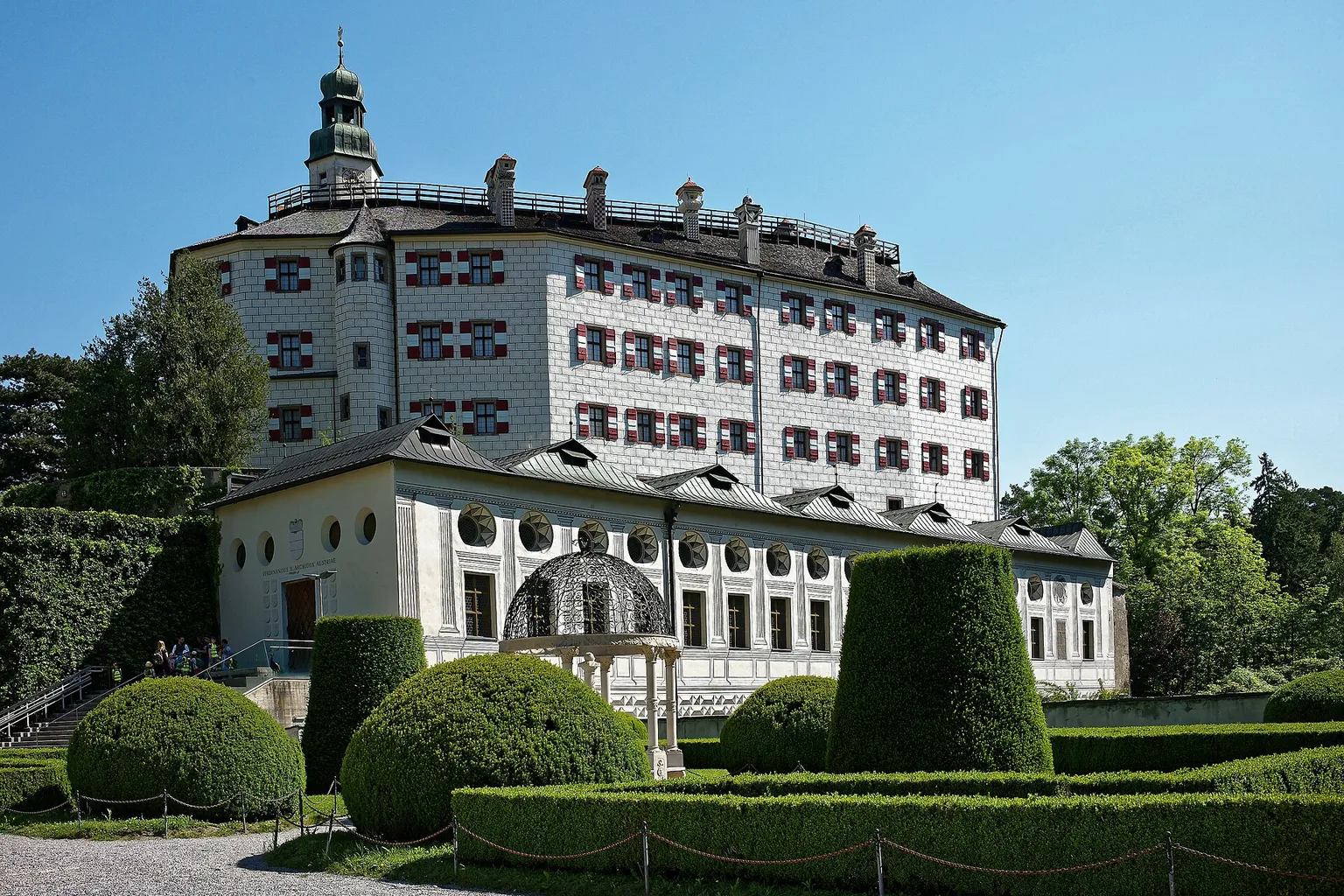
It is access separation: dogs may enter the outdoor grounds on a leash, but museum interiors have restricted animal access.
Tickets and prices
Ambras Castle
Innsbruck
01 · GetYourGuide
Entry ticket · Available today and tomorrow
€16
02 · Official
Official ticket · Adult
€16
The practical route is simple. Buy your admission online when the lower presale rate is available, select a visit date within the operating season, and plan the dog component as an outdoor visit only unless the animal qualifies for an indoor exception. Carrying equipment, leash control, thermal exposure, and the timing of the castle tour all affect the safety margin.
Securing entry: online tickets or the box office
There are two standard access routes for Schloss Ambras Innsbruck:
1. Online purchase before arrival. This is the more efficient option when the visit date is known. Advance online tickets use a lower rate than the museum box office for the same general admission categories.
2. On-site purchase. The museum box office remains useful for flexible itineraries, same-day decisions, and visitors who need to resolve admission questions in person.
The difference is operational rather than conceptual. An online ticket does not change the dog-access rules, the opening hours, or the areas available to visitors. It only reduces transaction time and, under the current 2026 pricing structure, costs less than buying the equivalent ticket at the entrance.
Do not treat the online ticket as a guarantee of immediate access to every section of the castle. Seasonal closures still apply. A ticket gives access according to the operating schedule and the areas open on that date.
When planning to buy tickets for Ambras Castle, use this sequence:
- Confirm that the visit falls outside the November closure.
- Check whether the planned date is within the seasonal period for the Habsburg Portrait Gallery.
- Select the correct admission category for each visitor.
- Complete the online purchase if the itinerary is fixed.
- Save the ticket where it can be displayed without delaying the entrance queue.
- Build a separate plan for the dog, because the animal may not follow the same route as the visitor.
Children and young adults under 19 receive free admission. This is an age-based policy, not a general assumption about family groups. Have identification available if age verification is required at the entrance.
Online purchase solves the admission transaction. It does not solve indoor dog access.
What the online ticket does not establish
Several assumptions create avoidable problems:
- It does not permit a medium or large dog inside the museum buildings.
- It does not convert the castle grounds into an unrestricted off-leash area.
- It does not confirm that every gallery operates year-round.
- It does not indicate that a pet-care locker, crate service, or holding area is available.
- It does not replace a plan for heat, water, or transport after the visit.
The available visitor information does not establish whether Ambras Castle provides dog crates, pet lockers, or a supervised holding service at the entrance. Do not build an itinerary around those facilities.
Ambras Castle opening hours and seasonal access
Ambras Castle is open daily from 10:00 AM to 5:00 PM, except for the complete November closure. The daily schedule is narrow enough to affect transport planning, particularly for visitors arriving from central Innsbruck, traveling with a dog, or combining the castle with another cultural site.
The main seasonal divisions are:
| Operating factor | Practical effect |
|---|---|
| Daily opening hours | Entry and museum access are scheduled between 10:00 AM and 5:00 PM |
| November | The entire site is closed |
| November 1 to March 31 | The Habsburg Portrait Gallery is closed seasonally |
| April 1 to October 31, 2026 | Summer pricing period and broader seasonal access for the listed gallery |
| Outdoor grounds | Dogs may enter when kept on a leash |
| Museum interiors | Dogs are prohibited except for carried small dogs and registered assistance dogs |
The November closure is absolute in the supplied visitor information. It is not a reduced-hours period. Do not arrive expecting limited access, exterior-only admission, or a partial museum route.
The Habsburg Portrait Gallery has a separate seasonal limitation. It remains closed from November 1 through March 31. That distinction matters because the castle can be open during much of the winter while one of the named museum sections is unavailable. A ticket during the winter period should therefore be evaluated against the actual route, not against the assumption that every gallery is operating.
For a pet owner, an early or late visit within the daily window can reduce the duration of outdoor heat exposure. The museum closes at 5:00 PM, but that does not mean the grounds function as an evening access area after closing. Keep the return journey inside the confirmed operating period.
Visiting Ambras Castle with pets
Dogs are permitted in the castle grounds and park if they remain on a leash. This is the usable part of the site for most dog owners. The rule establishes access to the outdoor areas, not unrestricted movement across the property.
The museum buildings operate under a stricter rule. Dogs are not allowed inside the interior museum spaces. The two stated exceptions are:
- A dog small enough to be carried by the owner throughout the visit.
- A registered assistance dog.
The carrying exception is continuous. It should not be interpreted as permission to place a small dog on the floor, carry it only through the entrance, or use a carrier that is not suitable for sustained handling. The available information does not specify a maximum dog weight, required carrier dimensions, or exact bag specifications. If the dog’s size or carrying method is borderline, confirm the policy with the castle before arrival.
A dog that can walk safely through the grounds may still be unsuitable for the indoor route. These are different physical environments. Outdoor walking involves variable surfaces, open exposure, and leash control. Indoor museum access involves crowd spacing, display protection, stairs or transitions, and sustained carrying if the animal qualifies for the exception.
Leash and movement control in the grounds
Use a fixed leash with sufficient length for controlled walking. Avoid retractable leads in crowded areas. They increase the radius of movement and create a longer kinetic chain between handler, dog, and passing visitors.
Assess the route using four parameters:
- Surface: Check for changes between paved paths, compacted ground, steps, and uneven sections.
- Load distribution: Observe whether the dog is compensating for a painful limb or shifting weight during turns.
- Gait analysis: A shortened stride, repeated stopping, toe dragging, or asymmetric loading indicates that the planned walking distance may exceed current tolerance.
- Thermal regulation: A dog that is panting heavily before the route begins has limited reserve for additional exposure.
The correct response to fatigue is not to lengthen the leash or allow the dog to pull toward shade. Reduce movement, provide water, and exit the exposed section. A castle visit is not a suitable setting for testing endurance.
Outdoor visit versus indoor visit
| Visit component | Dog access | Main control point |
|---|---|---|
| Castle grounds and park | Permitted on a leash | Maintain handler control and monitor gait |
| Museum buildings | Not permitted in general | Plan separate care or remain outside |
| Indoor route with a small carried dog | Permitted only if the dog can be carried throughout | Confirm the carrying method before arrival |
| Indoor route with a registered assistance dog | Permitted under the stated exception | Carry documentation if normally required |
| November visit | No access because the castle is closed | Reschedule outside the closure |
Do not assume that a dog can wait unattended near the entrance while the owner visits the galleries. No pet-care service, locker, or supervised waiting area is confirmed in the available information.
Managing the museum interior
The interior restriction changes the itinerary. A visitor traveling with a dog must choose one of three workable arrangements:
1. Outdoor-only visit. The handler visits the grounds and park with the dog and does not enter the museum buildings.
2. Separate-care visit. The dog remains with another responsible adult outside the museum while the visitor completes the indoor route.
3. Eligible carried-dog visit. A small dog is carried for the entire museum visit, subject to the castle’s access conditions.
The first option is the simplest. It provides no museum access but removes the highest uncertainty. The second option preserves the indoor visit without requiring the dog to tolerate carrying, crowds, or extended confinement. The third option requires the most preparation.
A suitable carrier must maintain stable support and prevent the dog from being placed under uneven load. Poor carrying technique can produce rotation through the handler’s trunk and inconsistent load distribution through the dog’s body. A soft bag that allows the animal to hang unsupported is not equivalent to a stable transport carrier.
For a carried dog, monitor:
- Breathing rate and visible heat stress.
- Head and neck position.
- Ability to reposition without slipping.
- Contact pressure across the chest and abdomen.
- Handler fatigue and loss of balance.
- Whether the carrier obstructs stairs, doorways, or other visitors.
The castle’s published information does not specify an exact weight limit for carried dogs. Do not infer that a dog is accepted solely because it fits inside a bag. The stated condition is that the dog must be small enough to be carried by the owner throughout the visit.
Registered assistance dogs are treated as a separate category. Carrying is not required under the stated exception, but the dog must be a registered assistance dog. Standard pet status does not create the same access right.
Planning a visit around the grounds
Ambras Castle is a poor location for an improvised pet-care plan. The correct sequence is to separate the cultural itinerary from the animal-management itinerary before leaving the hotel or transport hub.
If the dog remains with you
Use the castle grounds as the primary destination. Keep the dog leashed. Avoid adding a long urban walk before or after the visit if the dog already shows reduced stride length or delayed recovery after exertion.
A short pre-visit walk can support elimination and reduce restlessness. It should not become a conditioning session. Dogs arriving already fatigued have lower thermal reserve and less stable gait control on uneven surfaces.
Water management should be explicit. Carry enough for the planned route and return journey. Do not rely on finding a water station unless its availability has been confirmed separately. Heat exposure can increase even on a moderate day when the route includes open ground and the dog has a dense coat, respiratory limitation, excess body mass, or reduced fitness.
If the dog stays outside with another adult
Define the handoff point before entering the castle. The responsible handler should retain the leash, water, waste bags, and any medication required during the visit. Do not transfer the dog to a person who is unfamiliar with its reactivity threshold or escape behavior.
A basic handoff protocol should establish:
- Who holds the leash.
- Where the dog will wait.
- How long the indoor visit is expected to last.
- What signs require immediate movement to shade or cooler ground.
- Which route will be used if the dog becomes distressed.
- How the group will reconnect after the museum visit.
This is load management. One person should not simultaneously control the dog, carry tickets, manage bags, navigate the entrance, and supervise children. Divide tasks before arrival.
If the dog remains at the accommodation
This is often the lowest-risk option for a dog that cannot tolerate heat, crowds, or prolonged leash walking. The visit then becomes a standard castle itinerary, without the restrictions created by outdoor animal management.
If professional care is required, confirm the timing of the sitting or walking service against the castle’s fixed opening period. A missed return connection can extend the dog’s alone time beyond the agreed care window. Travel planning should include admission queue time, museum movement, and transport delays, not only the scheduled castle visit.
Group visits and admission logistics
Groups of 10 or more require advance registration. The maximum group size is 25 people per group. This applies to the human group structure; it does not create a special pet-access arrangement.
For a group traveling with dogs, assign a dedicated animal handler before registration. The person coordinating the booking should not be assumed to have time to manage leash control, ticket presentation, and route separation at the entrance.
A practical group structure is:
1. Admission lead: Holds the reservation or ticket details and manages the entry process.
2. Dog handler: Remains responsible for each dog outside the museum interior.
3. Route lead: Confirms which galleries are open on the selected date.
4. Return coordinator: Tracks the group’s exit time and the location of the outdoor handlers.
If a group includes visitors under 19, identify those visitors during planning. Their admission is free, but the group still needs a coherent entry process and a headcount.
Do not register a large group and assume that all members can move through the museum as one unit. Museum capacity, gallery layout, dog restrictions, and the 25-person group limit all affect the route. Advance registration removes one administrative problem. It does not remove the physical constraints of the property.
A practical troubleshooting route
Use the following decision path before buying tickets:
1. Is the planned date in November?
If yes, stop. Ambras Castle is closed for the entire month.
2. Is the Habsburg Portrait Gallery a required part of the visit?
If yes, schedule between April 1 and October 31, because that gallery is closed from November 1 through March 31.
3. Will the dog enter the museum buildings?
If no, plan an outdoor-only visit or arrange separate care. If yes, verify that the dog qualifies as small enough to be carried throughout or is a registered assistance dog.
4. Can the dog tolerate the expected outdoor walking and waiting period?
Assess gait symmetry, thermal regulation, water needs, and behavioral control before departure.
5. Is the visit for 10 or more people?
Arrange advance registration. Keep each group at or below 25 people.
6. Are the ticket conditions clear for the selected date?
Buy online when the schedule is fixed. Use the box office only when flexibility is worth the additional transaction time and higher on-site rate.
7. Is any part of the plan based on an unconfirmed facility?
Remove it. Pet lockers, crates, and supervised animal holding are not confirmed.
Final safety parameters
Ambras Castle is manageable for pet owners if the visit is designed around access boundaries rather than convenience assumptions. The grounds support leashed dogs. The museum interiors generally do not. The November closure is complete. The Habsburg Portrait Gallery has a separate winter closure. Group visits require advance coordination.
Before departure, confirm:
- The date is outside November.
- The desired seasonal galleries are open.
- Tickets are purchased through the selected channel.
- Visitors under 19 are identified for free admission.
- The dog has a leash suitable for controlled movement.
- Water and waste supplies are packed.
- The handler has assessed gait, load tolerance, and thermal regulation.
- Indoor access is limited to a carried small dog or registered assistance dog.
- No plan depends on an unconfirmed locker, crate, or pet-sitting facility.
- Groups of 10 or more have completed advance registration.
- The return route remains within the 10:00 AM to 5:00 PM operating window.
The most reliable itinerary is the one with no unresolved access question at the gate. Buy the ticket online when the date is fixed. Treat the castle grounds and museum interiors as separate environments. Keep the dog’s movement, heat load, and handling requirements within known limits.
Practical info
Currency: EUR
Driving: on the right
Emergency number: 112
FAQ
Can I bring my dog inside the Ambras Castle museum buildings?
Is there a place to leave my dog while I tour the museum?
Are there any seasonal closures I should know about?
Do children need a ticket for Ambras Castle?
Should I buy my tickets online or at the box office?
Photo: Burkhard Mücke / CC BY-SA 4.0 — Wikimedia Commons