Château d'Angers Tickets: Pet Care Options for Castle Visitors
The hard truth lands before you board the plane: your dog is not walking through the gate at Château d'Angers. Not on a leash, not in a tote, and not because you have a note from your vet.
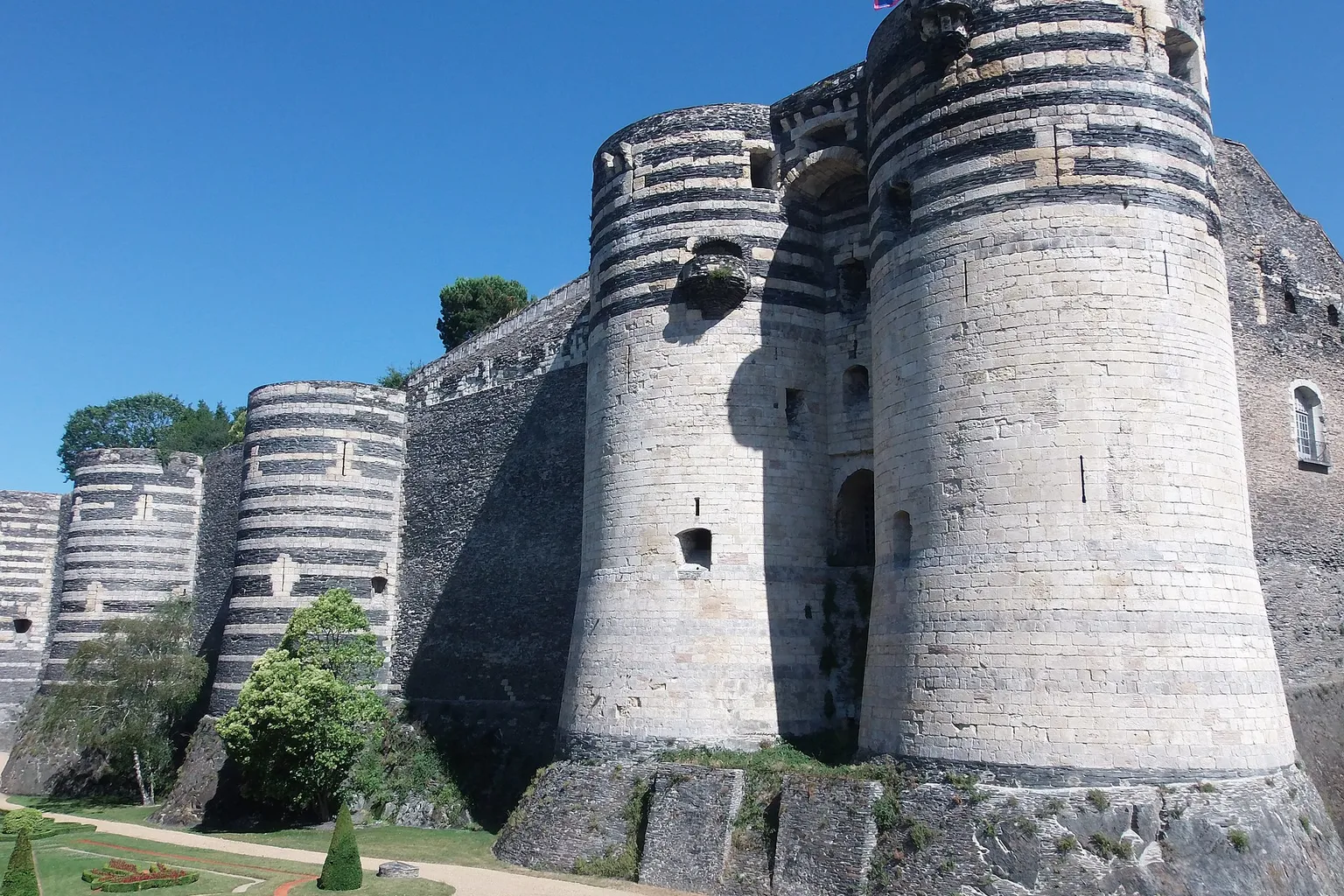
Pets are prohibited inside the castle, the keep, the chapel, and the galleries. The exception is limited to guide dogs and registered assistance animals.
Tickets and prices
Château d'Angers
Angers
01 · GetYourGuide
Entry ticket · 1-day validity
€11
02 · Official
Official ticket · Free for under 18s
Many travelers searching for “buy tickets Château d'Angers” are doing so with a leash in hand and a pet-care problem still unresolved. That is how a cultural visit turns into a rushed negotiation at the entrance, a stressed dog waiting somewhere unfamiliar, and a schedule that starts slipping before the first ticket is scanned. The better approach is less dramatic: accept the policy early, then build the dog’s care into the day as deliberately as you build the castle visit itself.
Navigating the Château d'Angers Pet Policy: Why Your Dog Must Stay Behind
The policy is straightforward. Pets cannot enter the Château d'Angers site’s interior visitor areas, including the keep, chapel, and galleries. Guide dogs and registered assistance animals are the recognized exceptions. A dog being calm, small, carried, or kept on a short lead does not change the category in which the site places that animal.
That distinction matters because travelers often treat castle access as a matter of physical control. If the dog can stay beside you, the reasoning goes, surely the visit can work. But the restriction is not presented as a test of whether a particular dog is well behaved. It is an access rule for the site. Staff at the entrance are not there to assess your dog’s temperament or decide whether your carrier is convincing enough.
Do not build a plan around persuading someone at the gate. It creates a poor situation for everyone: you have already spent time getting to the castle, the dog has absorbed the stimulation of travel and a busy city, and the answer is still likely to be no. A pet sitter, dog walker, or another prearranged care option gives you an actual plan rather than a hopeful argument.
The fact that the castle has exterior spaces does not mean that every part of a visitor’s route is automatically open to pets. The verified restriction concerns the castle, keep, chapel, and galleries; the safest practical decision is to confirm the current access conditions for any exterior area you intend to approach with a dog instead of assuming that the word “outside” settles the question. If the purpose of the outing is to visit the interior of Château d'Angers, your dog needs to remain elsewhere.
That is particularly important for rescue dogs and dogs whose behavior is still developing. Travel can combine unfamiliar transport, new smells, a different sleeping space, altered feeding times, and periods alone with a sitter. Add a fortress visit to that list and you have a lot of variables in one day. A dog with separation anxiety, a history of reactivity, resource guarding, or a recent adoption may need a quieter arrangement than a hotel room and a long afternoon without its people.
This is not an argument that rescue dogs should never travel. It is an argument for reading the dog in front of you rather than the itinerary in your booking confirmation. A dog who is comfortable with a sitter in a familiar-feeling environment may manage the day well. A dog who is still learning that a new room is safe may be better served by staying with a trusted caregiver for the duration of the trip.
If the castle does not allow your dog, that is not an inconvenience to negotiate. It is the first fact your itinerary has to respect.
Before you buy tickets, answer a few practical questions:
- Where will the dog stay while you are inside the castle?
- Is the arrangement suitable for the dog’s age, medical needs, and behavior?
- Can the caregiver handle feeding, medication, toileting, and rest without constant instructions from you?
- What is the backup plan if your visit runs late or transport is delayed?
- Does the dog cope better in a private home, a hotel room with a walker, or a professional boarding environment?
The right answer will vary by dog. The wrong answer is discovering that there is no answer once you are standing at the entrance.
Seasonal Ticket Pricing and Admission Logistics for Fortress Visitors
Château d'Angers uses seasonal admission periods, with a peak window running from early May through early September and a lower-season period covering the rest of the year. Adult admission is generally higher during the peak period, while the admission structure itself remains tied to the same castle visit. Check the current official rate when you are ready to book, because prices and practical booking information can change.
The useful point for pet owners is not merely the difference between one adult price and another. It is the relationship between the ticket, the visit length, and the care arrangement. A cheaper ticket does not make a rushed or poorly supervised dog-care plan workable. Conversely, paying a peak-season rate may be reasonable if the date gives you better transport connections or allows you to fit the castle into the dog’s normal routine.
Several admission categories and practical rules should be checked before you finalize the day:
- Visitors under 18 may qualify for free admission.
- EU and EEA residents aged 18 to 25 may qualify for free admission under the applicable conditions.
- Disabled visitors and a companion may qualify for free entry.
- The first Sunday of the month from November through March is a free-admission opportunity.
- European Heritage Days, held during the third weekend of September, may provide free admission for visitors.
- Children under 15 must be accompanied by an adult.
- Large luggage, scooters, and bicycles are not permitted inside the site.
- Audio guides may be available on site for an additional charge.
The exact terms attached to free admission can depend on proof of eligibility and the current visitor information. Keep the required documents accessible rather than buried in checked luggage or left in the hotel room. That is basic travel administration, but it becomes surprisingly important when your dog’s care window has been booked around a fixed departure and return time.
There is no verified basis for treating Château d'Angers admission as a timed-entry contest in which peak-season windows regularly sell out. Do not plan around that assumption. Instead, check the current ticketing information, opening schedule, and any booking requirements before you travel. If tickets can be purchased online for your chosen date, doing so may simplify the morning, but the central pet-care question remains the same: how long will your dog be without you, and who is responsible during that period?
A simple planning comparison is more useful than a promise that one season is always better:
| Planning factor | Peak period | Lower-season period |
|---|---|---|
| Typical adult admission | Usually higher | Usually lower |
| Opening schedule | Longer daily hours may apply | Shorter daily hours may apply |
| Pet-care planning | Useful to reserve enough caregiver time for a full visitor day | Shorter hours may make a compact care window possible |
| Free-admission opportunities | Heritage Days may apply | First Sunday free-admission period may apply |
| What to verify | Current ticket price, opening hours, and access conditions | Current ticket price, opening hours, and access conditions |
If you are traveling with a professional sitter, give them the castle’s address, your planned admission time, your expected return, and a realistic buffer. “We will be back after the castle” is not a schedule. A caregiver needs to know whether the dog will be alone for an hour, several hours, or most of the afternoon.
What to ask an Angers pet sitter before booking
Angers pet sitting services are not interchangeable. A sitter who is excellent with an easy adult dog may not be the right person for a newly adopted rescue, a dog who guards food, or an animal that needs medication at a precise time.
Ask direct questions before confirming the arrangement:
1. Where will the dog stay?
Clarify whether the service is in your accommodation, in the sitter’s home, or in a dedicated boarding setting. Each option creates a different level of stimulation and supervision.
2. How many animals will be present?
A private visit may suit a dog who is overwhelmed by other animals. Group care may work for a social dog with an established history of coping well in that environment.
3. What happens during the castle visit?
Ask whether the caregiver will remain with the dog, provide scheduled walks, or combine several clients during the same period.
4. How are emergencies handled?
The sitter should know who may authorize veterinary treatment, how to reach you, and where the dog’s records and medication are stored.
5. What information do they need from you?
A responsible sitter will want the dog’s feeding routine, triggers, escape risks, medical details, and behavior around strangers and other dogs. That is a positive sign, not an interrogation.
The goal is not to find someone who will say yes to everything. It is to find someone who can make an informed decision about your dog.
Planning Your Visit: Opening Hours and Last Entry Requirements
The published schedule divides the year into different opening periods. During the peak summer window, Château d'Angers is open from 10:00 a.m. to 6:30 p.m.; during the lower-season period, the stated hours are 10:00 a.m. to 5:30 p.m. Last entry is 45 minutes before closing. The site is closed on January 1, May 1, and December 25.
Those times are not just information for the person holding the ticket. They are the boundaries of your pet-care booking. If you arrive close to last entry, even a small delay can affect the visit. If you plan to leave the dog with a walker, the caregiver needs enough time to complete the handoff, settle the animal, and manage the return without turning every traffic delay into an emergency.
A visit commonly takes around 90 minutes to two hours, depending on how thoroughly you explore and how much time you spend with the Tapestry of the Apocalypse. Treat that as a planning estimate, not a guarantee. People move at different speeds, queues and access arrangements can change, and the length of a castle visit is rarely as tidy as the length of a calendar appointment.
The better question is not, “What is the earliest ticket I can buy?” It is, “What part of the dog’s routine am I asking another person to carry?” If your dog normally eats at midday, arrange the meal rather than expecting the sitter to guess. If the dog needs a quiet break after walking, do not schedule a long outing immediately before the handoff. If unfamiliar people increase the dog’s arousal, allow time for a calm introduction instead of meeting the caregiver at the last possible minute.
A workable day might look like this:
- The dog receives its normal morning meal and a familiar walk.
- The caregiver arrives or the dog is transferred with enough time for a calm handoff.
- You enter the castle with a ticket that leaves room for the visit rather than forcing a last-entry rush.
- The sitter follows the dog’s ordinary feeding, rest, and toileting pattern.
- You return with a buffer for delays, conversation with the caregiver, and the dog’s transition back to you.
That arrangement is less exciting than improvisation, which is precisely why it works. A castle visit is one event. Your dog’s sense of safety is the longer project.
The site’s closure dates deserve the same attention as the ticket price. If your trip overlaps January 1, May 1, or December 25, do not assume the castle will offer a partial schedule or a special exception. Move the visit to another day and keep the pet-care booking aligned with that change.
Alternative Sightseeing: Exploring Angers with Your Dog via the Little Tourist Train
If your dog is comfortable with public transport, crowds, and the movement of a sightseeing vehicle, the Angers Little Tourist Train offers a different way to experience the city. The train accepts both small and large dogs, and its route includes a tour of the exterior of Château d'Angers. That gives dog owners a way to see the fortress as part of the city without taking the dog into areas where pets are prohibited.
It is important to describe this accurately. The train is not an alternative entrance to the castle, and it does not bypass the pet policy. It is an exterior sightseeing option. You see the building from the city route while your dog remains with you, subject to the train operator’s current conditions.
That can be a good solution for a dog who would enjoy a calm shared outing but would not benefit from being left alone for the duration of an indoor visit. It can also be a poor solution for a dog who finds vehicles, crowds, unfamiliar dogs, or confined seating difficult. “Dog-friendly” describes the operator’s access policy; it does not guarantee that every dog will find the experience comfortable.
Before choosing the train, consider the dog’s actual history:
- Has the dog traveled calmly in a moving vehicle?
- Can the dog settle when strangers are nearby?
- Does the dog react to other dogs at close range?
- Can the dog tolerate vibration, noise, and a fixed route without leaving?
- Has the dog shown stress in crowded streets or busy waiting areas?
- Can you identify early signs that the dog needs to leave rather than pushing through?
If you do not know the answers, this is not the day to run a full-scale experiment. A sightseeing train may be manageable for one dog and far too intense for another. A newly adopted rescue may need more time to learn the city from the ground, at its own pace, with opportunities to pause and retreat.
A dog-friendly attraction is an option, not a challenge. The right choice is the one your dog can handle without being pushed past its limit.
Check the train’s current operating schedule and boarding conditions before relying on it as the centerpiece of your day. Seasonal sightseeing services can vary, and a service that is available during one travel period may operate differently during another. Keep a second plan: a quiet walk, an outdoor café where dogs are accepted, or time with the sitter while you visit the castle alone.
You also do not need to make the dog participate in every part of the itinerary. Some travelers treat separation as a failure of the trip, then place the dog in increasingly difficult situations to compensate. Responsible travel is more flexible than that. The dog can join a suitable city outing, rest during the castle visit, and return to a calm environment afterward. Inclusion is not measured by the number of attractions entered together.
Strategic Pet Care Planning for Travelers in the Loire Valley
The Loire Valley is often marketed as an easy destination for travelers with dogs, but “dog-friendly” is never a blanket promise. It may describe outdoor streets, selected transport, or particular accommodation providers. It does not override the Château d'Angers pet policy, and it does not tell you whether your individual dog will cope with a full day of travel and sightseeing.
A sensible plan begins before the flight or train journey.
Decide whether the dog should make this part of the trip
Not every dog should accompany every itinerary. A senior dog, an animal in active medical treatment, or a dog with serious separation anxiety may be better cared for at home or by a trusted professional than moved between airports, hotels, and unfamiliar streets.
For a rescue dog, timing matters. A recently adopted animal may still be learning basic household patterns and safe ways to respond to new people. An international trip can remove the familiar cues that support that learning. If the dog comes with you, keep the schedule modest: predictable meals, adequate sleep, familiar food, a secure harness or collar, and fewer ambitious day trips.
That decision is not a judgment about whether the dog is brave. It is a judgment about whether the environment gives the dog a realistic chance to succeed.
Choose care that matches the dog, not just the location
A professional dog walker may be enough for a short castle visit if your dog is comfortable resting in the accommodation and the service allows that arrangement. A longer visit may require in-home sitting, care at the sitter’s home, or a boarding option. The choice should reflect the dog’s needs and the provider’s capacity.
Look for:
- Experience with rescue dogs and the specific behaviors your dog displays.
- Clear procedures for feeding, medication, walks, and emergency contact.
- References or other evidence of reliable prior work.
- A willingness to discuss triggers rather than dismiss them.
- A written care plan for dogs who may bolt, guard resources, react to other animals, or struggle when left alone.
- A clear cancellation and late-return policy.
Be precise when disclosing behavior. Saying that a dog is “a little mouthy” can conceal anything from playful mouthing to a serious bite risk. Explain what happens, when it happens, what the warning signs are, and what management has worked before. The sitter cannot plan safely around a softened description.
Keep the routine recognizable
Travel does not require perfection, but it does require continuity. Bring the dog’s usual food if possible, maintain familiar meal timing, and preserve the dog’s normal opportunities for rest. Avoid stacking every demanding activity on one day.
If the dog spends the morning traveling, a crowded afternoon on the Little Tourist Train may be too much. If the dog has already been introduced to a sitter, do not add several new dogs and an unfamiliar boarding environment without a reason. If the castle visit is the priority, let the dog’s part of the day be deliberately quiet.
A dog’s schedule does not have to copy its home routine minute by minute. It does need to remain understandable enough that the animal is not constantly guessing what happens next.
Build in recovery time
The day before a major excursion and the day after returning are good opportunities for lower-demand plans. Quiet walks, sleep, familiar food, and limited social pressure may do more for the dog than another attraction.
This is especially relevant after air travel, a long train journey, or a crowded public outing. Stress is cumulative even when the dog appears functional. A dog that seems fine during the day may become restless, withdrawn, vocal, or reactive later. Give the animal room to recover instead of interpreting every sign of fatigue as a reason to add more exercise.
There is no responsible basis for predicting an exact behavioral setback after one difficult experience. Dogs respond differently, and recovery depends on the animal, the context, and the support available afterward. The practical lesson is simpler: do not use a major sightseeing day to test a behavior you have never tested before.
Prepare for a medical problem
Know how to contact veterinary care in the area before you need it. Keep vaccination and medical records accessible, store medication according to the instructions, and make sure the caregiver knows what constitutes an emergency for your dog.
Save important details offline in case your phone connection is unreliable:
- The accommodation address.
- The sitter’s full contact information.
- The dog’s microchip and identification details.
- Medication instructions and the prescribing veterinarian’s information.
- The location and contact details of a local veterinary clinic.
- Your travel companion’s contact information if you become unreachable.
This is not overplanning. It is a way to prevent a late-night emergency from becoming an administrative puzzle.
Put the handoff in writing
A written care note should include the dog’s meal portions, walk preferences, medication, sleep habits, triggers, and escape precautions. Add a recent photo and the number of the person authorized to make decisions if you cannot be reached.
For the castle visit itself, provide the sitter with:
- Your intended entry time.
- The expected duration of the visit.
- A buffer for delays.
- Your transport plan.
- The place where you will meet after the visit.
- Instructions for what to do if you are late.
Then send a message when you enter the site and another when you leave. That small habit prevents the caregiver from wondering whether you are still inside the castle, delayed in traffic, or dealing with a separate problem.
The most useful way to plan Château d'Angers is to stop treating the dog-care question as a footnote to the ticket purchase. The pet policy is part of the admission logistics. Opening hours are part of the sitter’s schedule. The Little Tourist Train is a possible shared activity, not a guaranteed fit. And a professional caregiver is not merely someone who fills the hours while you sightsee; that person is responsible for protecting the dog’s routine while the trip changes everything around it.
Buy the ticket only after the care plan makes sense. The castle will remain where it is, and Angers offers more than one way to experience it. Your dog does not need to enter every attraction for the journey to be worthwhile. It needs a plan that respects what the animal can actually handle.
FAQ
Are dogs allowed inside Château d'Angers?
Can I bring my dog if it is small or stays in a carrier?
What are the opening hours for Château d'Angers?
Is there a way to see the castle with my dog?
When is admission to Château d'Angers free?
Photo: Nataloche / CC BY-SA 4.0 — Wikimedia Commons