Why Keeping Your Dog on a Lead is Essential for Wildlife and Livestock Safety
Northumberland County Council has launched a campaign directing dog walkers to keep animals on leads in areas shared with wildlife and livestock.
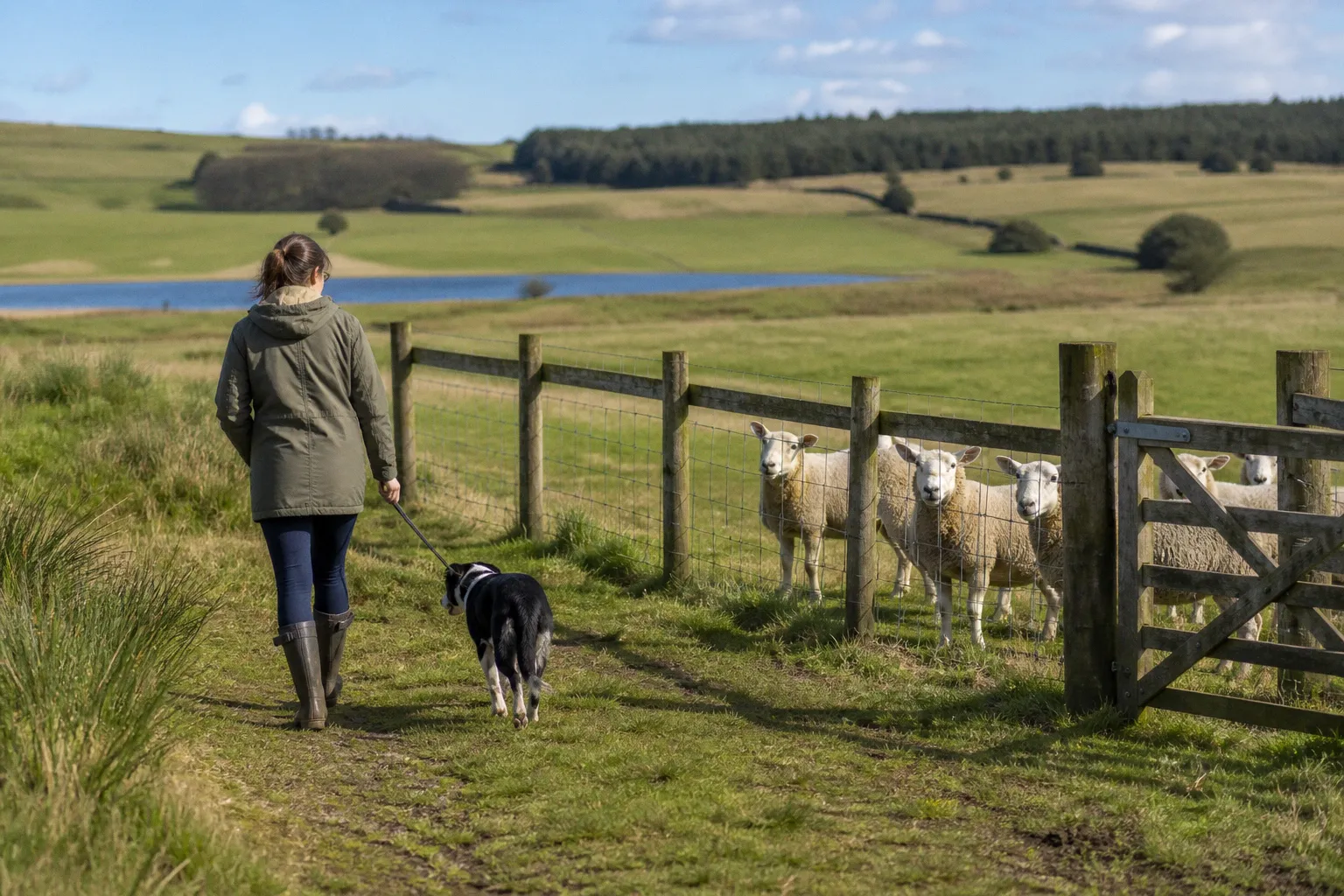
The initiative frames lead control as the primary mitigation against stock disturbance and ecological harm across the county.
Risk profile in mixed-use terrain
An off-lead dog in livestock country produces three measurable problems.
First, direct contact. A running dog collides with sheep or cattle. Contact ranges from chase-driven bumps to sustained attacks. Stock suffer physical injury, abortion from stress, or death. The handler faces civil liability and potential criminal proceedings under existing livestock welfare statutes.
Second, ecological disturbance. Ground-nesting birds flush from cover during breeding season. Repeated disturbance raises nest abandonment rates. Other fauna — deer, badgers, waterfowl — shift foraging patterns when pressured by canid pursuit.
Third, defensive response. Guarding livestock kick, gore, or charge. The dog sustains trauma, frequently to the thorax or limbs. The handler risks injury attempting intervention.
Biomechanics of the chase sequence
A dog at full pursuit deploys a rapid acceleration-pivot-brake cycle. Acceleration spikes propulsive load through the hindlimb extensors and lumbar spine. Hard pivoting transfers shear load to the carpus and stifle. Braking from speed loads the forelimb in compression, with peak force through the shoulder girdle and cervical spine.
Controlled walking paces stay inside normal gait parameters. The lead enforces this constraint. It removes the dog's capacity to reach the velocities and turning radii that generate the injurious load profiles above. From a safety-design standpoint, the lead is the lowest-cost control intervention available.
Operational checklist for walkers
- Default to on-lead movement on any path adjoining grazing land. Treat the lead as standard equipment, not a contingency.
- Maintain line-of-sight scan for livestock and seasonal wildlife signage. Scan distance should exceed typical dog sprint range.
- Reduce group size when transiting ground-nesting zones during breeding months. Smaller cohorts reduce flush events.
- Cross at designated field boundaries. Avoid cutting through active pasture.
- Log every incident and near-miss. Pattern data feeds future policy and supports insurance claims.
Verification parameters before booking or operating
Walkers and clients should confirm the following before committing to a route or a service:
- Current council guidance for the specific walking zone. Rules vary by parish and season.
- Seasonal restrictions tied to protected wildlife schedules. Breeding windows shift annually.
- Insurance coverage extending to livestock and wildlife incidents. Standard pet liability may exclude agricultural claims.
- Handler-to-dog ratio aligned with professional standards, not marketing claims. A reliable ceiling is one handler per four dogs in rural terrain; lower in high-disturbance zones.
- Lead policy written into the service contract. Verbal assurances carry no weight during an incident.