Pet health tracking: manual observation logs vs smart wearables
A sitter notices that an older dog has left half her breakfast twice this week, slept through the usual afternoon walk, and asked to go outside at an unusual hour.
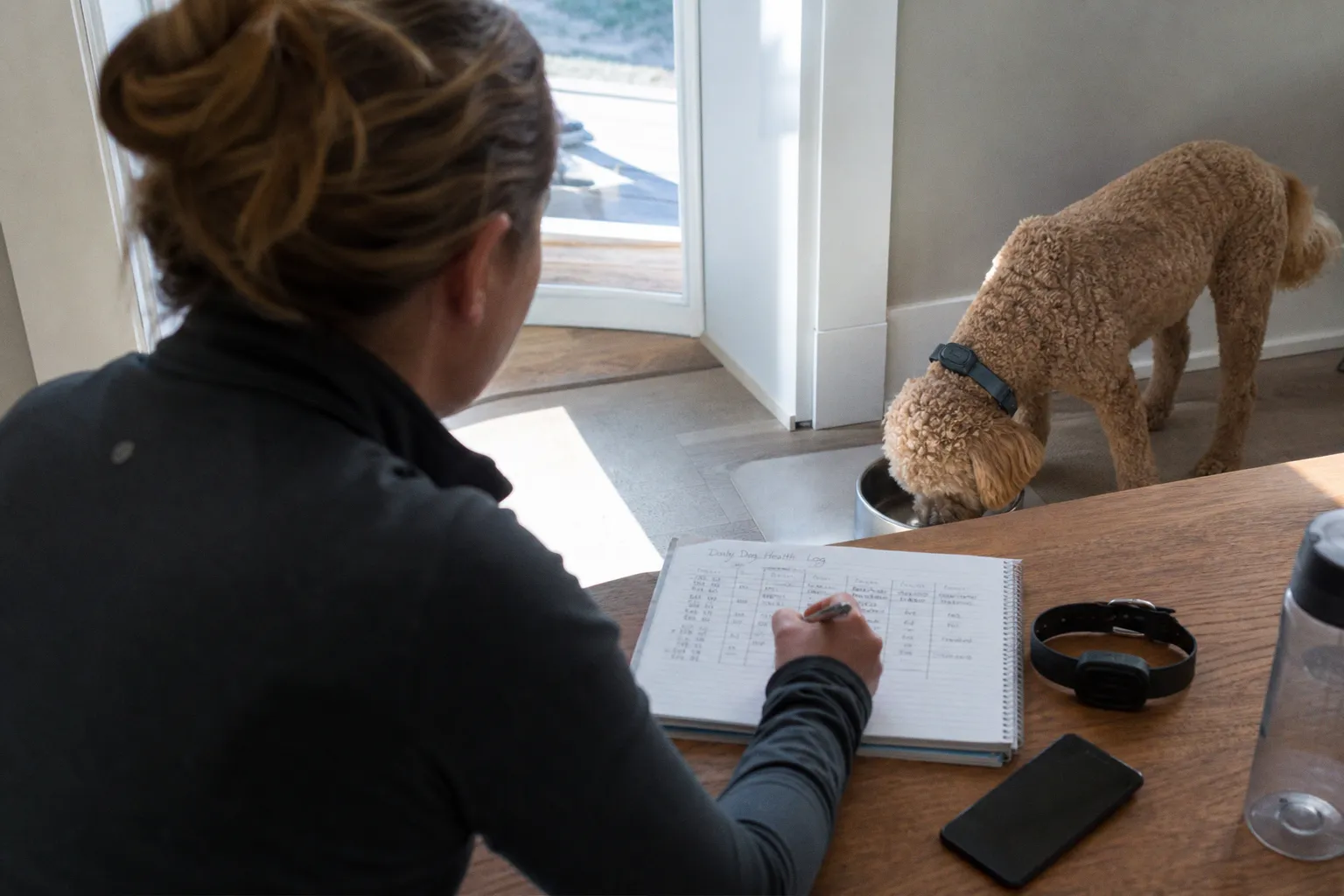
A smart collar may show reduced activity, but it cannot tell the veterinarian that the dog hesitated before lying down, drank more after a warm car ride, or seemed unsettled when the household’s second dog was away.
Compare car rental deals in United Kingdom
See available offersPartner link — DiscoverCars comparisonThat is the practical dividing line in pet health monitoring logs vs wearable trackers. A manual record preserves the circumstances around a change; a wearable can reveal patterns no person could reliably watch around the clock. Neither one is a diagnosis, and neither should become an argument against what a caregiver can plainly see. Used together, they create a steadier transition from “something seems different” to a useful veterinary conversation.
For owners, boarding teams, and professional sitters, the goal is not to collect the most data. It is to establish a baseline comfort level for one specific dog, notice meaningful departures from it, and hand over information that a veterinary team can actually use.
Manual observation logs capture the clinical context a collar cannot see
A manual pet health journal is not an old-fashioned substitute for technology. It is the place where the details with medical meaning tend to live: what changed, when it started, what was happening around it, and whether the change repeated.
This matters particularly during a transition phase. A dog staying in a new home, adjusting to a sitter, recovering from a boarding stay, starting a medication, or coping with a family schedule change may eat, sleep, eliminate, and move differently for reasons that are not immediately medical. A tracker may register less movement. A careful log can record that the dog was reluctant to leave a newly unfamiliar yard, that it rained heavily all day, or that appetite returned once the owner’s usual food bowl appeared.
For senior dogs, dogs with chronic conditions, and pets receiving medication, the record should be simple enough that every caregiver can complete it consistently. The most useful entries are dated, timed when relevant, and descriptive rather than interpretive. “Drank one full bowl between 7 a.m. and noon; weather was hot; had a longer-than-usual walk” is more useful than “seems extra thirsty.”
A practical daily entry can include:
- Appetite and food completion: how much of the normal meal was eaten, whether food was refused, whether treats were accepted, and any nausea-like behavior such as lip licking or walking away from the bowl.
- Water intake and urination: bowls refilled, unusual urgency, accidents indoors, larger or smaller urine clumps, and whether a change followed heat, exercise, dry food, or a medication adjustment.
- Stool and vomiting: frequency, stool appearance, straining, mucus or visible blood, vomiting episodes, and whether the dog remained bright and interested in normal activities.
- Mobility: stiffness after resting, reluctance on stairs, a new limp, shortened stride, difficulty rising, or changes that only appear late in the day.
- Breathing and resting behavior: panting at rest, coughing, pacing overnight, sleeping in an unusual position, or a respiration pattern that appears different from the dog’s normal sleep.
- Mood and routine behavior: withdrawal, clinginess, irritability, confusion, hiding, altered response to handling, or reluctance to participate in a reliably enjoyed activity.
- Medication and care administration: dose, time given, whether it was accepted, and any relevant change after the dose.
For a diabetic dog, daily owner observations are especially useful. Veterinary guidance commonly includes appetite, thirst status, and insulin dose in the home record, because these signs gain meaning when viewed alongside glucose monitoring and veterinary assessment. A notebook, shared digital form, or structured digital pet health record can all work; the format matters far less than the continuity.
The best health log does not try to turn a sitter into a diagnostician. It makes the next veterinary call more specific, calmer, and easier to act on.
Water intake is a good example of why context belongs beside a number. Healthy dogs typically consume roughly 40–60 mL of water per kilogram of body weight per day, though diet moisture, exercise, heat, and individual routine all matter. Intake above 100 mL/kg/day meets the definition of polydipsia, or excessive drinking. That threshold is a reason to document and contact a veterinarian—not a reason to limit access to water. Restricting water before veterinary assessment can create dehydration and dangerous electrolyte problems.
A sitter should also resist the tempting but unhelpful habit of recording only “normal” days. The log becomes valuable when it contains the small deviations: one skipped meal, three nights of early waking, a slow recovery after a routine walk, or a water bowl suddenly needing a second refill. Those details form a timeline that a veterinary professional can interpret in the context of examination and diagnostic testing.
What wearable trackers contribute: continuity, not a verdict
Dog activity trackers are strongest where people are weakest: continuous observation of repetitive behaviors. A collar-mounted accelerometer can measure patterns of movement and, depending on the device and its algorithms, may identify periods associated with walking, running, rest, eating, drinking, or sleep.
That continuity is particularly helpful for sitters who cover only part of a day. The morning walker may see a dog behaving normally, while the owner receives a notification that nighttime rest has been unusually fragmented for several days. Neither person has the complete picture alone. The wearable may supply the missing pattern, while the caregiver’s notes explain it.
Research on certain validated collar-mounted triaxial accelerometers has shown high classification accuracy for several behaviors in healthy dogs. In one study of 51 dogs, walking, trotting, cantering or galloping, eating, drinking, and head shaking were correctly classified more than 95% of the time; sleep and inactive states exceeded 90%. Another real-world study of a specific commercial collar system reported strong sensitivity and specificity for detecting eating and drinking.
Those results are encouraging, but the operational language matters: they validate particular devices, algorithms, attachment methods, and study populations. They are not a blanket performance guarantee for every smart collar sold to dog owners, nor do they mean a “sleep score” or activity total has one universal veterinary interpretation.
| Monitoring question | Manual observation log | Smart wearable |
|---|---|---|
| Did the dog eat less than usual? | Records portion size, food changes, reluctance, nausea signs, and whether treats were accepted | May identify time spent eating on certain validated systems |
| Is water intake changing? | Can capture bowl volume, refill timing, heat, exercise, and urination changes | Some systems can detect drinking events, but may not quantify actual volume consumed |
| Has mobility changed over several days? | Captures limping, stiffness, stair avoidance, gait asymmetry visible to the caregiver | Can reveal lower overall movement or altered active/rest periods |
| Did a schedule disruption affect behavior? | Documents visitors, travel, boarding, weather, medication changes, and household routine | May show a pattern shift without explaining why it occurred |
| Can this diagnose pain or illness? | No; it supplies observations for veterinary review | No; it supplies trend data for veterinary review |
| Is it useful during sitter coverage? | Yes, especially with a shared standardized entry format | Yes, when worn consistently and checked against caregiver notes |
The value of a tracker is often highest after the dog has worn it long enough to establish its own pattern. There is no single normal activity target for all dogs. Age, breed, body size, orthopedic status, weather, home layout, routine, food, and temperament all reshape what “normal” looks like. A young working-breed dog in a rural home and a senior dachshund in an apartment should not be judged against the same daily score.
For health tracking for senior dogs, this is where wearable data can be genuinely helpful without being overpromised. A gradual decline in daily movement, a shift in rest patterns, or less frequent engagement in familiar activity can justify a closer look at the manual record and, if the pattern continues, a veterinary appointment. It cannot confirm arthritis, pain, cognitive decline, cardiac disease, or any other condition by itself.
The collar setup can change the data before the dog changes at all
Wearable data is only as stable as the way the device is worn. This is a small logistical point with large consequences, particularly in multi-caregiver households and professional care arrangements.
Studies have found that activity readings can be affected when a leash is clipped to the same collar that holds the tracker, when a protective case changes the device’s position, or when the monitor is attached loosely. Collar rotation, car rides, rough play with other dogs, and variations in collar tightness can all create noise in the data.
That does not make the device unreliable. It means the setup needs a care protocol, just as medication administration or feeding instructions do.
For dog activity trackers for sitters, I recommend writing down the following before the first monitoring period:
1. Use a dedicated tracker collar whenever possible. Do not attach the walking leash to it. A separate well-fitted walking harness or collar protects both the dog’s neck and the consistency of the readings.
2. Keep the attachment method unchanged. If the tracker sits at the underside of the neck on Monday, it should not migrate to the side or back of the collar for the rest of the monitoring period. Photograph the correct placement for all caregivers.
3. Set a consistent fit. The collar should be secure enough that the unit does not swing or rotate freely, while remaining comfortable and safe. Changing from a snug fit to a loose fit can look like a change in activity when it is only a change in hardware behavior.
4. Log off-collar periods. Bathing, charging, grooming, swimming, collar removal overnight, and an accidental loss of the device should all be noted. An apparent drop in activity may simply mean the tracker was on the kitchen counter.
5. Mark unusual routine events. Car travel, a dog park session, boarding arrival, an extended crate rest period, a heat wave, or a visiting dog can distort a normal weekday pattern. These are not errors; they are context.
6. Do not compare proprietary scores across brands. There is no universal standard that makes one company’s activity score, calorie estimate, step count, or sleep label directly equivalent to another’s. Even research literature is still working toward consistent processing and interpretation of canine accelerometer data.
A professional sitter does not need access to every dashboard metric. In fact, a pared-down handoff is usually safer: confirm the device is on, identify the one or two trends the owner is watching, and report anything that looks visibly different in the dog. That keeps attention on the animal rather than on a stream of notifications.
Senior and diabetic care needs a layered monitoring plan
The more medically complex the dog, the less sensible it is to choose between manual notes and technology as though one replaces the other. A layered plan creates familiarity anchors for the dog and a clear operational routine for the people caring for them.
For a senior dog, the manual log may be the primary tool for signs that collars cannot meaningfully assess: difficulty standing, altered stool, changes in urination, sensitivity to touch, confusion, or a new reluctance to jump. The wearable can support that picture by showing whether reduced willingness to walk matches a broader week-long reduction in movement and disrupted rest.
For a diabetic dog, the care plan should follow the veterinarian’s specific instructions regarding feeding, insulin, glucose checks, and emergency escalation. A daily log of appetite, thirst, and insulin dosing is valuable because a missed meal or unusual drinking pattern may matter in relation to treatment. A wearable may add useful behavior data, but it cannot confirm blood glucose status or determine whether insulin should be given, withheld, or adjusted.
The same principle applies to monitoring pet vitals. Consumer wearables may estimate or infer certain behaviors, but owners and sitters should not assume that a collar can accurately diagnose dehydration, fever, seizure activity, infection, heart disease, pain, or respiratory distress. A quiet dog with a reassuring activity score may still need care; an active dog with one anomalous alert may be completely well.
There are also situations that do not belong in a “let’s watch the trend for another day” plan. Seek prompt veterinary guidance or emergency care based on the clinic’s instructions when a dog has severe or escalating signs such as pain accompanied by lethargy, refusal to eat or drink, sudden abdominal enlargement with unsuccessful attempts to vomit, marked breathing difficulty, collapse, or other acute changes. A tracker notification is never emergency triage, and neither is a neat-looking spreadsheet.
Trends are useful because they slow down guesswork. Emergencies are different: visible severe signs always take priority over the dashboard.
A shared record is the bridge between owner, sitter, and veterinarian
The strongest system is not the most elaborate one. It is the one that survives a busy week, a last-minute coverage change, and a veterinary appointment without losing the thread.
For households using both a manual journal and a wearable, I generally organize the information in three phases.
Establish the baseline before a concern appears
Collect at least a representative stretch of ordinary routine: normal meal behavior, walk schedule, sleep location, water-bowl refills, medication times, and usual tracker patterns. This is especially helpful before boarding, a move, post-operative recovery, or the arrival of a new sitter.
The baseline should reflect normal life, not an unusually quiet week. If the dog routinely goes hiking every Saturday and naps most of Sunday, both patterns belong in the record.
Record exceptions in plain language
When a tracker reports less activity, the accompanying note should answer practical questions:
- Was the dog wearing the device in its usual position?
- Was the weather unusually hot or cold?
- Did the dog have a longer walk, a grooming appointment, a car trip, or active play with another pet?
- Did the dog eat, drink, urinate, and stool normally?
- Was there limping, stiffness, restlessness, coughing, vomiting, panting at rest, or a behavior change?
- Did the change last one interval, one day, or several days?
This is where a digital pet health record becomes more than a folder of screenshots. The most effective shared record combines the automated trend with a brief human account of what the dog was actually doing.
Escalate patterns, not isolated numbers
A single low-activity day after a long family outing may be ordinary recovery. A lower-activity pattern paired with reduced appetite, stiffness, and altered sleep is more meaningful. Similarly, a drinking alert may be harmless if it follows hot weather and extended exercise, but increased measured water intake over several days, especially alongside more urination or appetite change, deserves veterinary discussion.
Owners should send a concise summary rather than a raw data dump: dates, what changed from baseline, relevant context, medication details where applicable, and a few screenshots or exported trends if the clinic requests them. This respects the veterinary team’s time and makes it easier for them to see the sequence.
The better choice is usually not one method—it is a disciplined combination
Manual logs and smart wearables serve different jobs. The manual record carries the observations that make a dog’s day understandable: appetite, stool, mobility, mood, medication, household changes, and the caregiver’s direct view of comfort. The wearable supplies consistent, objective behavior trends that can be difficult to notice across overnight hours or split sitter shifts.
If you are choosing only one system to start, begin with a simple shared observation log. It costs little, works during travel and device charging gaps, and creates the context every later tool will need. Add a wearable when continuous activity or rest trends would solve a real gap in care—not because an app promises certainty.
With a stable collar setup, short daily notes, and a clear veterinary escalation plan, pet health tracking becomes manageable rather than overwhelming. The expected outcome is not perfect prediction. It is something more useful: earlier recognition of meaningful change, cleaner handoffs between caregivers, and a veterinarian receiving a coherent record instead of a worried recollection.