Leave it: Dog trainers help pets avoid venomous snakes
WKMG reports that dog trainers in snake-prone areas are using aversion sessions to interrupt a dangerous approach sequence before a dog reaches strike range.
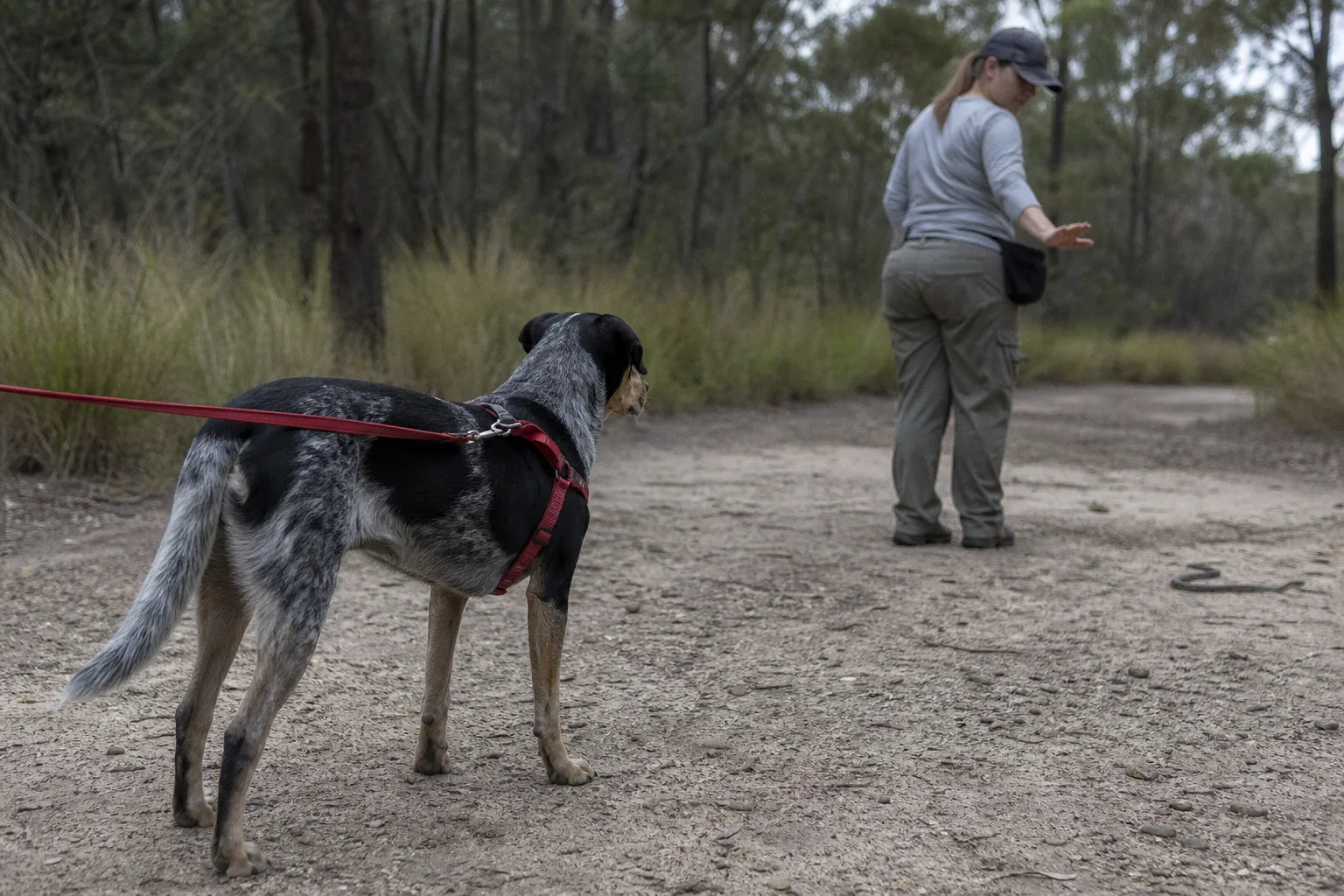
For professional walkers and pet sitters, the operational issue is not whether a client’s dog has “good recall.” It is whether the handler can prevent contact when prey drive, scent interest and fast movement override routine cues.
The report follows training in Tucson, Arizona, where a dog was exposed to a western diamondback rattlesnake whose venom glands had been removed. The trainer used an electronic collar correction intended to create avoidance of the snake’s appearance, texture and rattle. Similar programs are offered in Western deserts, woods and grasslands, as well as in areas with eastern diamondbacks, timber rattlers and other venomous snakes.
Snake exposure is a route-planning problem
A venomous snake can strike in less than a second when threatened. That timing leaves no margin for a handler to identify the animal, assess the dog’s intent and then retrieve a dog already at the end of a leash or off lead.
The relevant risk profile is straightforward:
- Dogs with strong prey drive may approach rapidly and repeatedly.
- Natural desert, grassland and wooded routes create more uncontrolled visual and scent contacts.
- A dog that hunts small animals may not generalize a standard “leave it” cue to a live snake.
- Off-leash work removes the handler’s mechanical control at the point it matters.
The ASPCA estimates that venomous snakes bite as many as 150,000 dogs annually in the United States. In Arizona, an emergency veterinarian quoted by WKMG said the Veterinary Specialty Center of Tucson sees four to six dogs a day for rattlesnake bites, plus occasional cats.
For a walking service, this changes the intake conversation. A route cannot be rated only for traffic, heat, loose dogs and leash laws. Ask whether the property or regular route includes natural desert, brush, grassland or other known snake habitat; whether the dog pursues wildlife; and whether any snake-avoidance training has occurred.
Training claims need a narrow reading
The Tucson trainer told WKMG that one electronic-collar correction should be enough to keep a dog away from venomous snakes, with a free follow-up session available a year later. He described the technique as fast and effective, and said he has trained pet, working, search-and-rescue and police dogs.
That is a trainer’s account, not a settled result for every method or every dog. A University of Arizona veterinary researcher cited in the report is participating in a study on whether rattlesnake-aversion training works and which approach is most effective.
The method itself is contested. The American Humane Society opposes electronic training collars as cruel. The ASPCA does not explicitly oppose them, but says they must be used correctly. A sitter or walker should not attempt to reproduce a snake-aversion session in the field, improvise collar levels or use a live animal as a training prop.
The correct operational boundary is simple: if an owner wants this type of training, refer them to a provider who can explain the procedure, the animal welfare controls, the follow-up plan and the limitations. Record the outcome in the dog’s care notes, but do not treat a past session as permission for off-leash wildlife exposure.
Field protocol: distance first, treatment second
If a dog notices or approaches a snake, the priority is to stop forward load through the leash and create distance. Do not move closer to inspect the species. Do not allow the dog to investigate. Do not attempt to catch, relocate or bring the snake to a veterinary clinic.
The veterinarian quoted by WKMG emphasized that the snake does not need to be brought in for treatment. The report says antivenom used for rattlesnake bites can be administered without identifying the exact species.
Use this minimum protocol for snake-risk walks:
- Keep the dog on leash in identified habitat.
- Avoid pushing through vegetation or terrain where the handler cannot see the dog’s approach path.
- At the first snake cue—visual contact, rattle, sudden fixation or abrupt scenting—turn out and increase separation.
- Notify the owner immediately after any suspected bite or close contact.
- Move the dog to emergency veterinary care without delay if a bite is suspected.
- Log the location, route conditions, dog behavior and any access-control failure for future route decisions.
WKMG reports a 94% survival rate for pets receiving quick treatment, although care may cost thousands of dollars depending on antivenom and hospitalization. That makes speed, route discipline and clear escalation authority the relevant safety parameters—not confidence in a verbal cue alone.