Expert Guidelines for Calculating Optimal Daily Dog Walking Durations
Kennel Club experts have published exercise duration guidelines that translate directly into load management protocols for canine musculoskeletal systems.
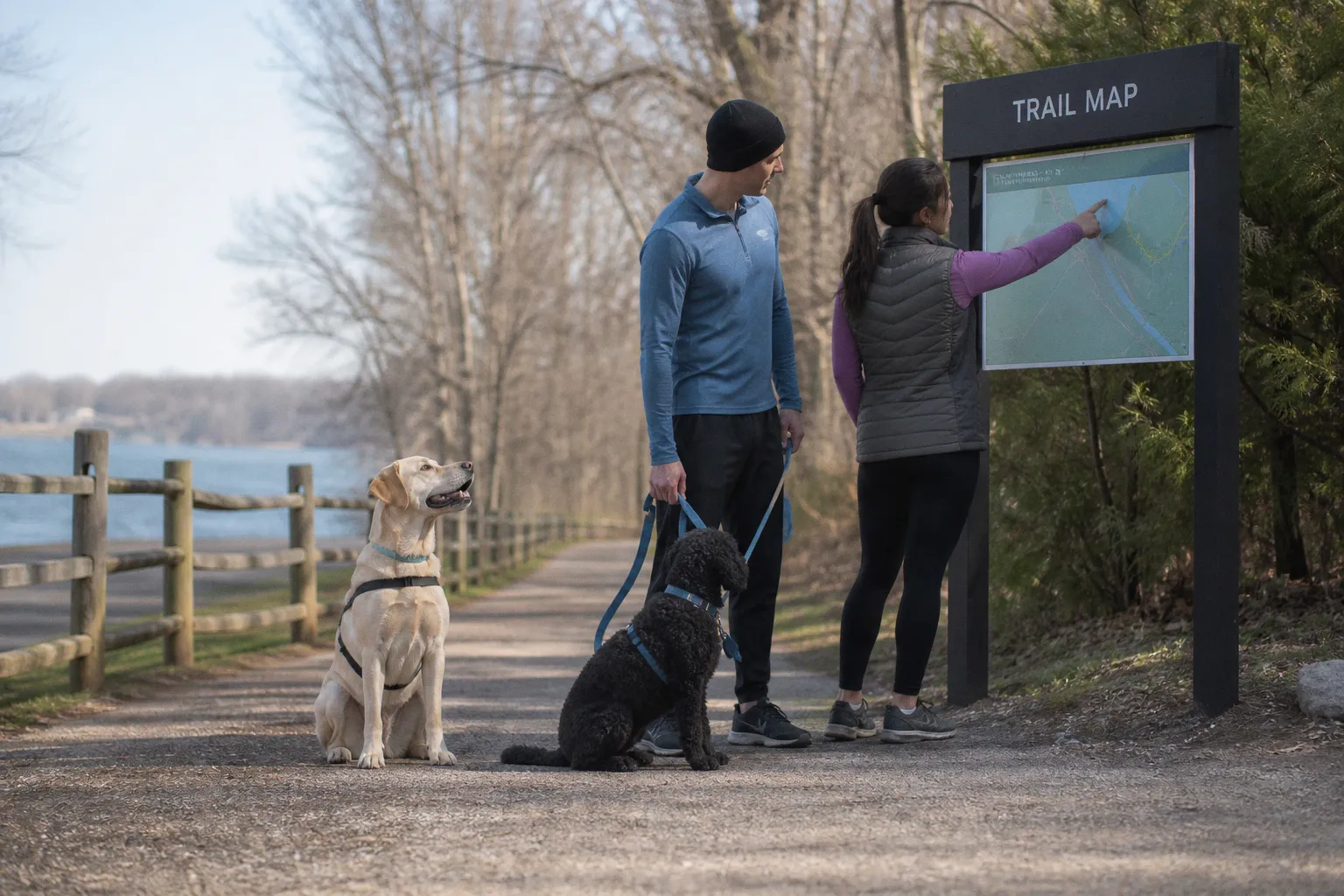
The parameters — minimum one walk per day, often two, with breed-specific and age-specific adjustments — give professional dog walkers and sitters a measurable baseline for session planning. For a field that has largely operated on anecdotal timing ("he seemed tired"), this is a shift toward structured, repeatable standards.
Protocol Parameters by Age
The Kennel Club's rule of thumb: five minutes of formal exercise per month of a puppy's age, up to twice daily, until skeletal maturity. A three-month-old puppy gets 15-minute sessions; four months, 20 minutes. The underlying concern is kinetic chain integrity — immature joints and growth plates cannot absorb sustained repetitive loading without risk of developmental stress.
This is not a suggestion to cap energy expenditure entirely. It caps formal structured walking. The distinction matters. A puppy self-regulating movement on soft ground is a different load profile than being led on-leash at a handler's pace on pavement. For professionals managing young clients, the protocol demands session-time logging, not guesswork.
Breed Variance: No Single Number
Adult dogs require breed-adjusted duration. The Kennel Club confirms that exercise needs "vary according to its breed," but offers no universal minute count for adults — and correctly so. A brachycephalic breed operates under respiratory thermal regulation constraints that a working-line retriever does not. Joint angle biomechanics differ between a dachshund's spinal load distribution and a greyhound's stride mechanics.
For professional walkers and sitters, the operational takeaway: default to the 30-minute baseline referenced by the UK Government's general exercise recommendation, then adjust upward based on breed, observed gait quality, and environmental conditions (ambient temperature, surface hardness, humidity). If gait deteriorates — shortened stride, lateral sway, persistent lagging — session terminates. That is not anecdotal. That is a load-distribution failure signal.
Veterinary Override Conditions
The Kennel Club explicitly flags that "under veterinary advice, the dog should be rested." This means any dog on a post-surgical recovery protocol, showing lameness, or diagnosed with orthopedic conditions (hip dysplasia, patellar luxation, cruciate ligament issues) has a modified — often reduced — exercise envelope. The walker's role is to confirm these restrictions before the first session and document them.
Operational Checklist for Professionals
- Session duration: Record actual walk time per session. Minimum: one walk daily. Two preferred.
- Puppy clients: Apply the 5-minutes-per-month-of-age formula. Log age in weeks for precision.
- Adult clients: Establish breed-appropriate baseline at intake. Document owner-reported veterinary restrictions.
- Environmental monitoring: Ambient temperature above 20°C with high humidity — reduce duration or shift to shaded, lower-impact routes. Hard pavement in heat — thermal paw pad injury risk escalates.
- Termination triggers: Gait change, excessive panting without recovery, refusal to continue, lateral sway, or any acute lameness. End session. Report to owner with specific observations, not subjective impressions.
The debate was always a proxy for a larger operational gap: the absence of standardized load management in an unregulated profession. These guidelines do not close that gap entirely, but they provide a documented starting framework. Use them.