Why Pet Anxiety Is Reshaping the Future of Professional Care Services
The pet wellness conversation is quietly shifting gears, and according to GlobalPETS, a Bloomberg Intelligence survey now identifies anxiety as the most commonly reported pet condition at 19.6% — a…
The pet wellness conversation is quietly shifting gears, and according to GlobalPETS, a Bloomberg Intelligence survey now identifies anxiety as the most commonly reported pet condition at 19.6% — a figure that reframes behavioral and emotional wellbeing as a mainstream health category rather than a behavioral footnote, and points to continued growth in the support services built around it.
For anyone who has watched a dog pace through a thunderstorm, hide from the vacuum, or struggle through the first days of a boarding stay, this number lands differently than a typical market statistic. It validates the planning weight that anxiety already carries in real households.
Where the trend points for everyday care arrangements
When anxiety becomes a measurable slice of the pet health conversation, the practical question for families is what changes in the actual handoff to a sitter, walker, or boarding facility. The data points to growth in behavioral and emotional wellbeing support — which, on the ground, translates into a different intake conversation than the one most owners are used to. Instead of a quick checklist on vaccinations and feeding schedules, expect questions about triggers, comfort items, and how a dog typically signals stress.
For families already navigating a transition phase — a new sitter, a relocation, a return-to-office schedule that changes walking routines — that deeper intake becomes a logistics asset. The more precisely a care provider understands a dog's baseline comfort, the more reliably familiarity anchors — a favorite blanket, a consistent drop-off voice and routine — hold up during the actual visit.
Therapy dogs are setting a visible template
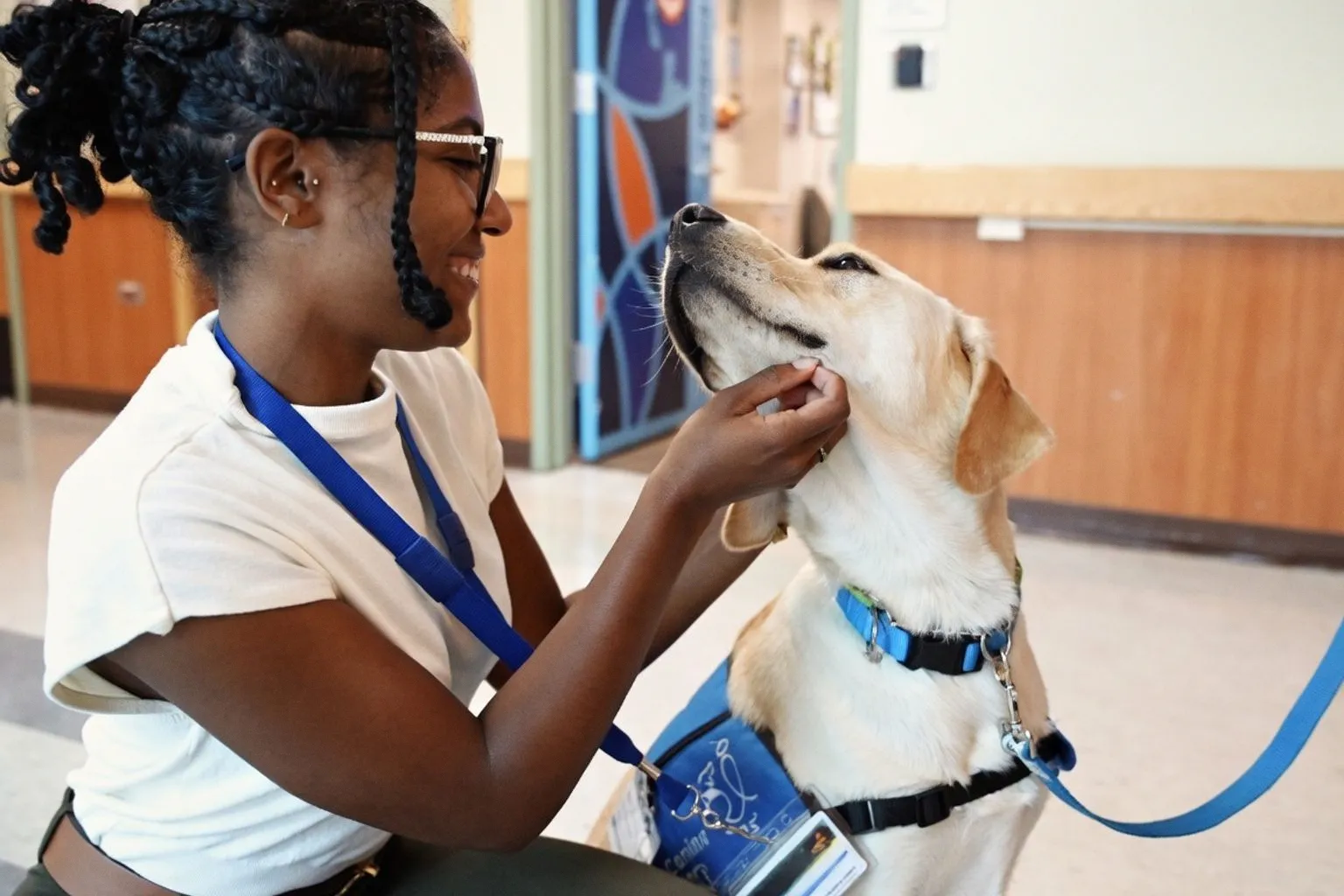
The human healthcare side of this same shift is becoming visible too. NYC Health + Hospitals/Elmhurst recently introduced Weasley, a two-year-old Labrador/Golden Retriever mix trained by Canine Companions, through the hospital's PAWS to HEAL program. Weasley supports adult, adolescent, and forensic inpatient behavioral health units, with sessions designed around emotional regulation, anxiety reduction, socialization, communication, and self-esteem. Group sessions typically run 30 to 45 minutes, and Weasley works four days a week with designated rest periods built into his clinical schedule.
Handlers Angelica Terepka, Elmhurst's Director of Psychology, and Erin Carroll completed an intensive two-week hands-on training program with Canine Companions before working with patients, and at least one trained handler is always present during sessions. The program tracks Weasley's own comfort, behavior, and engagement throughout the day — a useful parallel for any reader evaluating whether a working animal in their care has similar welfare protections built into the daily routine.
What to check before your next care arrangement
The throughline across both the market data and the hospital program is straightforward: emotional wellbeing is being treated with the same planning seriousness as physical health. For readers arranging dog walkers, pet sitters, or boarding stays, that shift translates into a few practical checkpoints worth running before signing on:
- Ask prospective sitters and walkers how they identify anxiety signals and what their plan looks like if a dog becomes overwhelmed during a walk or overnight stay.
- For a dog with a known anxiety profile, request a written baseline comfort plan before any new arrangement begins. Familiarity anchors tend to reduce stress more reliably than verbal assurances alone.
- Confirm that any boarding facility has documented handler training and welfare monitoring, not just physical care protocols.
- Build rest periods into long sitting or walking days. A working therapy dog like Weasley has designated downtime between visits, and the same principle applies to a dog walker covering a full day of solo outings.
The takeaway for owners is not a sudden overhaul, but a small calibration. Treating behavioral health with the same logistical seriousness as vaccinations, diet, and parasite prevention — not as a concern to revisit later — is becoming the new baseline for arranging care that actually holds up under real-world conditions.