Canine CPR certification traps that cost sitters time
A pet sitter completes a 35-minute online module, downloads a PDF certificate, adds "Canine CPR Certified" to the profile, and lands a new client. Three weeks later, the client's insurance carrier asks for a certificate serial number. None exists.
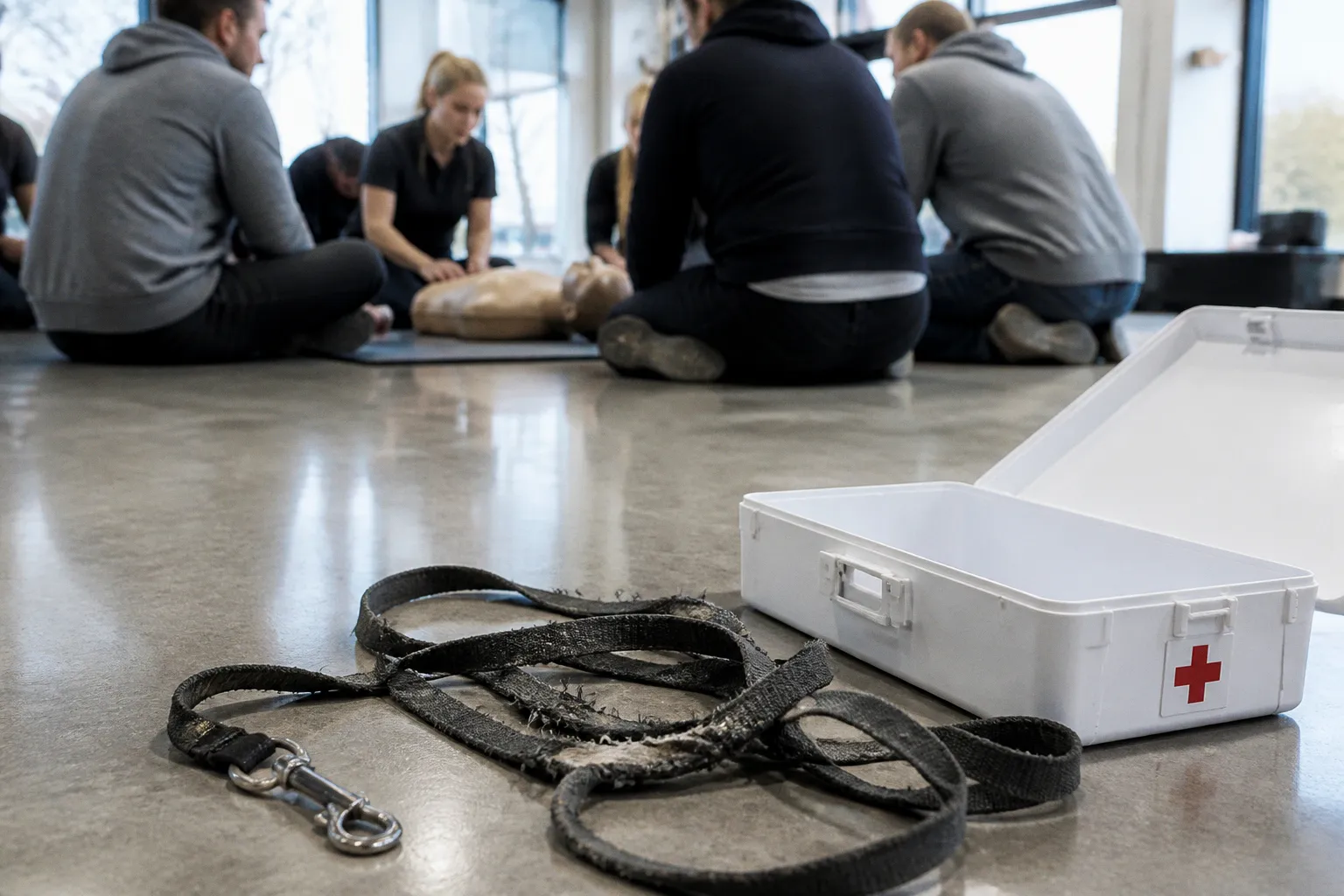
Canine CPR Certification Traps That Cost Sitters Time and Money
The certificate is rejected. The booking is canceled. This scenario repeats across the pet care industry at a measurable rate, driven by the gap between what an online-only course issues and what professional gatekeepers actually accept.
The trap is structural. Online-only canine CPR certification exists in a regulatory vacuum: no single national body governs pet first aid credentials in the United States, which means the marketplace fills with courses ranging from RECOVER-accredited instruction to $19 video modules that print a certificate with no verification infrastructure. For a working sitter, the distinction is not academic. It is the difference between a credential that opens doors and a document that triggers a refund request.
A certificate without a verifiable serial number or QR code is not a credential. It is a printout.
The problem compounds because sitters often discover the inadequacy only after committing time and money. Recertification cycles, employer vetting, and insurance underwriting all run on timelines that leave little room for course retakes. Understanding the architecture of pet CPR certification before spending a dollar is the only reliable defense.
The Hidden Risks of 100% Online Pet CPR Training
Online-only canine CPR courses fail professional sitters for three documented reasons: lack of hands-on skills assessment, absence of accredited oversight, and certificate formatting that does not survive institutional verification.
The first risk is mechanical. CPR is a motor task. Chest compressions require specific depth, rate, and recoil mechanics that cannot be evaluated through a multiple-choice quiz. The RECOVER Initiative, endorsed by the American College of Veterinary Emergency and Critical Care (ACVECC) and the Veterinary Emergency and Critical Care Society (VECCS), requires a hands-on workshop component precisely because compressions on a manikin produce measurable feedback that video modules cannot replicate. A 100% online course removes this feedback loop entirely.
The second risk is oversight. Unaccredited providers operate without peer review or curriculum validation. The American Red Cross Cat & Dog First Aid online course, while published by a recognized organization, explicitly notes that the online-only format does not satisfy official workplace certification requirements. This is not a marketing caveat. It is a published limitation that employers and insurance carriers act on.
The third risk is document integrity. Low-quality certification platforms have faced complaints for issuing certificates without unique serial numbers or verification QR codes. Without a serial number, an insurance underwriter cannot confirm the credential existed. Without a QR code, an employer cannot verify the issuing body. The certificate becomes decorative.
| Risk Category | Online-Only Outcome | Professional Requirement |
|---|---|---|
| Skills assessment | Video module only | Manikin compressions, evaluated |
| Curriculum oversight | Self-published | RECOVER, ACVECC, VECCS review |
| Certificate verification | No serial number or QR code | Unique serial, QR verification |
| Workplace acceptance | Frequently rejected | Accepted by insurers, employers |
| Validity period | Often 1 year | 2 years (standard) or 3 years |
The financial arithmetic is straightforward. A $19 online course that produces a rejected certificate costs the sitter the course fee, the booking revenue, and the time required to locate and complete a replacement course. The replacement is rarely free and rarely fast.
Why Insurance Providers and Employers Demand Hands-On Assessment
Insurance underwriters and employer vetting departments apply the same criterion to pet CPR as to human CPR: a hands-on skills assessment is non-negotiable. The reasoning is actuarial, not ideological. Hands-on evaluation confirms that the certificate holder can perform compressions at the correct depth and rate under physical feedback, not merely answer questions about them.
Workplace regulators and insurance companies frequently reject 100% online-only CPR certifications because they lack a physical, hands-on skills assessment on a manikin. This is not a fringe position. It is standard practice across pet care platforms, grooming facilities, and veterinary clinics that require CPR credentials for staff or contractors.
For pet sitters, this translates into specific operational constraints. Platforms that vet sitters through insurance carriers require credentials that the carriers recognize. Carriers recognize credentials that include hands-on components. The chain is unbroken: no hands-on, no carrier recognition, no platform acceptance.
The exception that confirms the rule is the blended-learning model. Some accredited providers, including ProTrainings, offer a SUMO® option where a physical manikin kit is mailed to the student and a Zoom-based skills evaluation is conducted remotely. This format satisfies the hands-on requirement without requiring travel to a physical classroom. It is not 100% online. It is 100% online instruction paired with 100% physical assessment.
Hands-on does not mean in-person. It means manikin compression under evaluation.
Sitters evaluating online courses should ask three questions before enrolling:
- Does the course include a physical skills assessment, either in-person or via mailed manikin with remote evaluation?
- Does the issuing body hold accreditation from a recognized veterinary authority (ACVECC, VECCS, or equivalent)?
- Does the certificate include a unique serial number and a QR code linked to a verification database?
A negative answer to any of these three questions predicts rejection by professional gatekeepers.
Distinguishing Accredited Gold Standards from Low-Cost Digital Certificates
The pet CPR certification market contains four tiers. Each tier carries different consequences for professional use.
The gold standard is RECOVER Initiative certification. RECOVER is endorsed by ACVECC and VECCS, requires online course completion before attending a hands-on workshop, and is valid for 2 years. The 2024 RECOVER CPR guideline updates are included in recertification cycles, meaning credentials reflect current veterinary consensus. This is the credential that insurance carriers and veterinary employers recognize without dispute.
The second tier includes accredited blended programs. The American Red Cross Cat & Dog First Aid course runs 35 minutes online and is widely recognized, though the online-only format is noted as insufficient for workplace certification. ProTrainings offers blended options with remote skills evaluation. Dogsafe 101 canine first aid certification carries a 3-year validity period, longer than the standard 2-year cycle.
The third tier consists of unaccredited providers with functional certificates. MyCPR NOW, for example, requires a minimum passing score of 80% and issues certificates that are valid for 1 year. The shorter validity period signals a lower-tier credential, but the certificate itself includes verification infrastructure. These credentials may be accepted by some pet care platforms, though rejection by insurance carriers remains common.
The fourth tier is the trap. Unaccredited providers issuing certificates with no serial number, no QR code, and no verification pathway. These certificates look identical to accredited credentials at a glance. They fail under any institutional review.
| Credential Tier | Provider Example | Validity | Hands-On | Professional Acceptance |
|---|---|---|---|---|
| Gold standard | RECOVER Initiative | 2 years | Required (workshop) | Universal |
| Accredited blended | Red Cross, ProTrainings | 2 years | Required (in-person or remote) | High |
| Unaccredited functional | MyCPR NOW, Pet Sitters International CPPS | 1 year | Not required | Variable |
| Unaccredited decorative | Various low-cost platforms | Unverifiable | Not required | Low to none |
Sitters should match credential tier to target market. A sitter working exclusively through a platform that does not vet credentials via insurance carriers may function with a tier-three credential. A sitter seeking contracts with veterinary clinics, luxury pet hotels, or insurance-backed platforms requires tier one or two.
Navigating Blended Learning: The Remote Skills Evaluation Alternative
Blended learning resolves the geographic barrier that historically made hands-on CPR training inaccessible to sitters in rural or low-density markets. The model pairs online instruction with a physical skills evaluation conducted remotely.
ProTrainings SUMO® is the documented example. A physical manikin kit is mailed to the student. The student completes the online coursework at their own pace. A Zoom-based skills evaluation is scheduled, lasting 30 to 45 minutes. The evaluator observes chest compression depth, rate, and recoil on the physical manikin, confirms rescue breathing technique, and signs off on the assessment. The resulting certificate carries the same professional weight as an in-person workshop completion.
The blended model is not a compromise. It is an accredited pathway that satisfies the same hands-on requirement as classroom-based instruction. For sitters who cannot travel to a RECOVER workshop or a Red Cross training site, the blended option is the primary route to a tier-one or tier-two credential.
Geographic isolation is not a credentialing barrier. Blended learning closes the gap.
The cost structure differs from 100% online courses. Blended programs run higher because they include physical materials (manikin, shipping) and evaluator time. Sitters should budget accordingly and treat the cost as a professional investment rather than a line item.
When evaluating a blended program, sitters should confirm:
- The manikin kit is shipped before the skills evaluation is scheduled.
- The evaluator holds current RECOVER or equivalent instructor certification.
- The certificate issued carries the same serial number format and validity period as the in-person equivalent.
- The provider's verification database is accessible to third parties (employers, insurers).
Managing Recertification Deadlines to Avoid Costly Retakes
Recertification traps are as costly as initial certification errors. The RECOVER Initiative, for example, requires recertification to be completed before the 2-year expiration date. If the certification lapses, there is no grace period. The sitter must retake the entire original course, including the hands-on workshop.
This is not a soft deadline. It is a hard reset. A sitter who lets a RECOVER certification expire on day 731 faces the same retake requirement as a sitter who never certified. The time and cost delta is significant.
The standard 2-year validity applies to RECOVER, Red Cross, and ProTrainings pet CPR certifications. Dogsafe 101 carries a 3-year validity period, offering a longer window. MyCPR NOW certificates expire after 1 year, the shortest cycle in the documented market.
Sitters should implement a recertification calendar that tracks:
- Original certification date.
- Expiration date (original date plus validity period).
- Recertification enrollment deadline (typically 30 to 60 days before expiration).
- Hands-on workshop scheduling lead time (workshops fill 4 to 8 weeks in advance in major markets).
Miss the expiration date by one day. Retake the entire course.
The arithmetic of recertification is unforgiving. A sitter who completes a RECOVER certification on January 1, 2024, has until December 31, 2025, to recertify. Missing that window by any margin triggers a full retake, including the workshop component. The cost of a missed deadline typically exceeds the cost of the original certification.
Operational Checklist for Pet Sitters Evaluating CPR Certification
The following parameters determine whether a canine CPR certification will withstand professional scrutiny. Sitters should apply this checklist before enrolling in any course.
- Accreditation status. Confirm the course is endorsed or approved by RECOVER, ACVECC, VECCS, or an equivalent veterinary authority. Unaccredited courses carry rejection risk.
- Hands-on requirement. Confirm the course includes a physical skills assessment, either in-person or via mailed manikin with remote evaluation. 100% online courses fail this parameter.
- Certificate verification infrastructure. Confirm the certificate includes a unique serial number and a QR code linked to a verification database. Certificates without these elements cannot be authenticated by third parties.
- Validity period. Confirm the validity period is 2 years (standard) or 3 years (Dogsafe). 1-year validity signals a lower-tier credential and increases recertification frequency.
- Recertification pathway. Confirm recertification is available as a refresh course rather than a full retake. Providers without refresh pathways impose higher long-term costs.
- Recognition by target employers and insurers. Confirm the credential is accepted by the pet care platforms, veterinary clinics, and insurance carriers the sitter intends to work with. Direct contact with the platform's vetting department resolves ambiguity faster than assumption.
A certificate that satisfies all six parameters is a professional asset. A certificate that fails any parameter is a liability waiting to surface at the worst possible moment.
Closing Position
The canine CPR certification market is not uniformly trustworthy. It ranges from RECOVER-accredited instruction with hands-on assessment and verifiable credentials to $19 video modules that issue decorative documents. The sitters who avoid the trap are the sitters who evaluate credentials against professional gatekeepers' standards before paying tuition, not after.
Online-only canine CPR certification fails professional sitters because it skips the hands-on assessment that insurance carriers and employers require, issues certificates that lack verification infrastructure, and operates outside the accreditation frameworks that govern veterinary emergency training. Blended learning closes the gap for sitters who cannot attend in-person workshops. Accredited providers issue credentials that survive institutional review.
The cost of getting it wrong is not the course fee. It is the booking that cancels, the contract that goes to a competitor, and the client who learns the sitter's credential does not hold up under scrutiny. Sitters who treat canine CPR certification as a professional credential rather than a compliance checkbox will avoid the trap. Sitters who treat it as a compliance checkbox will not.