Adjusting Your Dog’s Exercise Routine for the Autumn Transition
ParadePets has published operational guidance on shifting a dog's exercise regimen as summer closes.
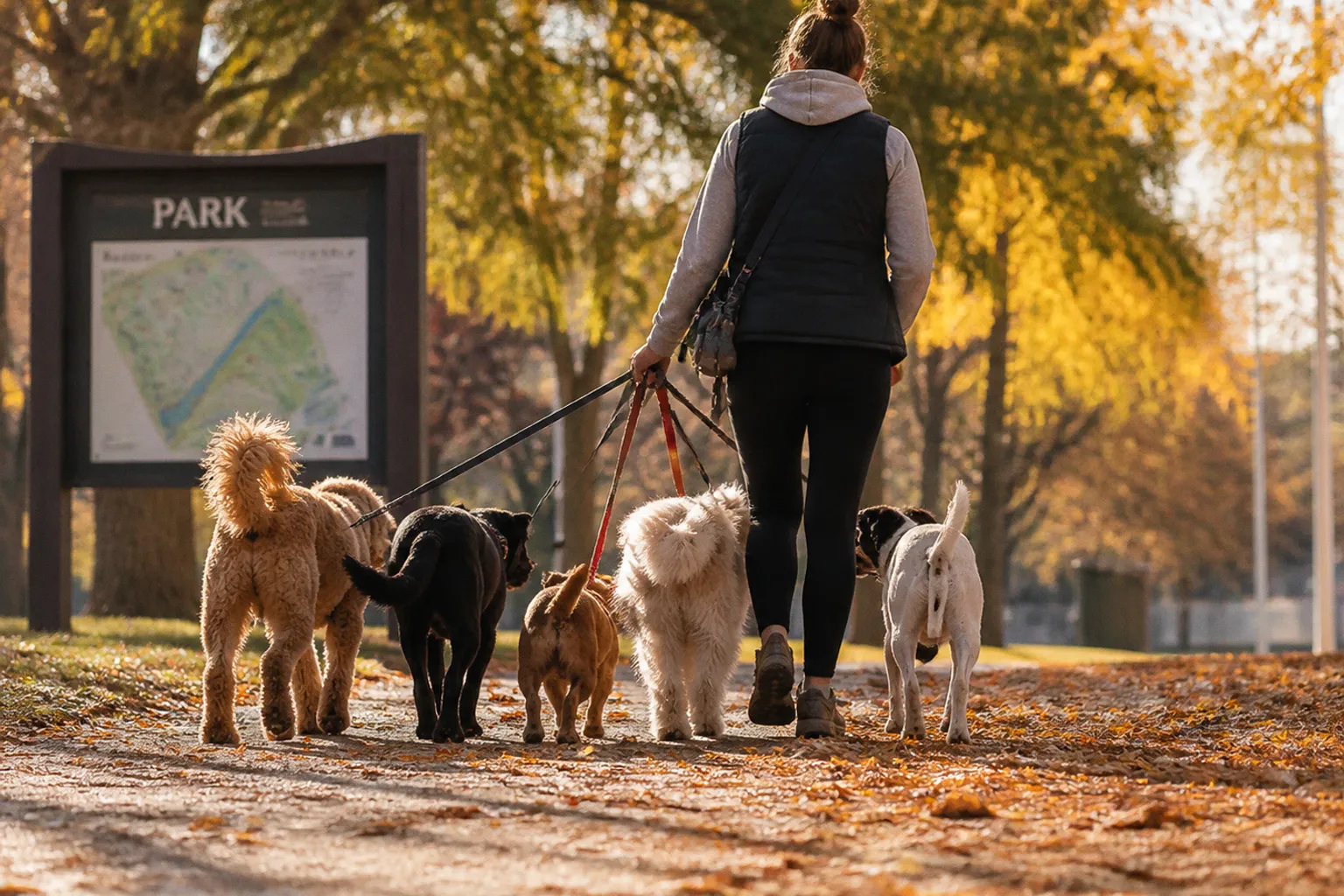
The transition window matters for thermoregulation, joint load distribution, and the kinetic chain. A defined protocol prevents soft-tissue strain, gait asymmetry, and behavioral disruption when ambient temperature and daylight hours shift.
Core Transition Parameters
Three variables require controlled adjustment. Abrupt change in any one of them elevates injury risk.
Load volume. Total weekly exertion should not drop or spike by more than 10 to 15 percent in a single week. The musculoskeletal system adapts to cumulative load over time. A sudden reduction produces deconditioning; a sudden increase produces microtrauma. Plan a two- to three-week ramp rather than a single-step change.
Thermal window. Replace midday sessions with cooler periods. Early morning and late evening reduce core temperature stress. The benchmark is respiration rate returning to baseline within roughly 90 seconds after exertion ends. Extended panting past five minutes of rest signals overexertion and indicates the session exceeded the current week's capacity.
Substrate. Ground that tolerated summer impact may not tolerate fall and winter impact. Hard-packed trails lose remaining moisture and become more rigid. Repeated loading on rigid surfaces transmits force through the carpus and tarsus with reduced shock absorption. Route selection toward grass, dirt, or sand is the lower-load option where terrain permits.
Risk Markers to Monitor
Five observable signals indicate the transition is moving too fast or the load is mismatched to current conditioning.
- Stiff gait in the first minutes of movement, particularly on cold mornings
- Visible limp or weight-shifting away from a single limb
- Post-exercise panting that exceeds five minutes of rest
- Disrupted rest cycles following exertion days
- Reluctance to initiate movement at the start of a session
Any single marker warrants a 48-hour reduction in activity and a return to the previous week's baseline. Two or more markers warrant a veterinary gait assessment before any progression resumes.
Safety Protocol Checklist
Before each session:
- Confirm bilateral gait symmetry on a flat surface
- Inspect paw condition for pad cracks, ice accumulation, or debris between digits
- Match route difficulty to the current week's load target, not the previous season's
After each session:
- Record respiration rate at one minute and at five minutes post-exertion
- Note any gait deviation observed during the cooldown walk
- Adjust caloric intake to match the current week's output rather than the prior month's
For operators managing multiple dogs:
- Document each animal's parameters individually
- Do not average data across the group; individual thermal tolerance and joint history vary
- Schedule a baseline gait assessment at the start and at the close of the transition window
The transition window typically spans the first two to three weeks of seasonal change. A controlled ramp reduces the likelihood of acute soft-tissue injury and preserves baseline conditioning through the colder months. Treat the shift as a protocol, not a one-time adjustment.